
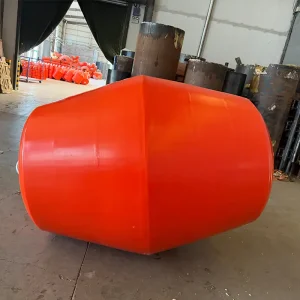
Best Foam-Filled Polyethylene Mooring Buoy for Reliable Marine Anchoring in Busan & Incheon Ports
Explore SpecificationEngineered to resist harsh yellow-sea dynamic tidal currents and east-sea high swells. Precision rotational molding ensures impact endurance and Zero-Corrosion performance.
Best Foam-Filled Polyethylene Mooring Buoy for Reliable Marine Anchoring in Busan & Incheon Ports
Explore Specification
Best Polyethylene Mooring Buoy – Reliable Floating Solutions for Korean Modern Marine Projects
Explore Specification
High-Quality Offshore Polyethylene Mooring Buoy – Safe, Durable & Maintenance-Free Floating System
Explore Specification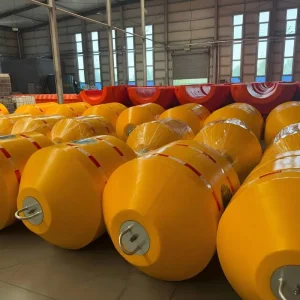
OEM Offshore Mooring Buoy for Safe Vessel Anchoring and Korean Marine Infrastructure Projects
Explore SpecificationStrategic maritime logistics, shipbuilding leadership, and mega-scale offshore wind projects establish South Korea as one of the world's most demanding marine proving grounds.
The Port of Busan stands among the world's highest-throughput transshipment hubs. Coupled with Incheon's extensive tidal ranges reaching up to 9 meters, conventional steel buoys suffer rapid cyclic corrosion and high maintenance downtime.
Our UV-stabilized virgin PE mooring buoys offer high resilience against abrasive dockings, providing consistent net reserve buoyancy across all tidal transitions.
South Korea’s Green New Deal projects—including the Shinan 8.2 GW offshore wind mega-complex and floating wind arrays off Ulsan—demand permanent support vessel mooring and offshore cable marker buoys capable of withstanding rough open-sea conditions.
Our solutions incorporate through-chain load paths with closed-cell EPS core filling to eliminate sinking hazards during severe collision events.
The Korean coastline offers contrasting hydrodynamics: the Yellow Sea features high sediment concentration and strong currents, while the East Sea is prone to deep water swells and seasonal typhoons.
Juhua's thick-wall rotomolding technology provides the mechanical flexibility required to absorb shock dynamic loads while resisting salt-encrustation and fouling buildup.
How Juhua’s Shandong automated rotomolding hub delivers rapid turnarounds and lower total lifecycle costs for Korean port authorities and marine engineering buyers.
Headquartered in Binzhou, Shandong, our factory sits within quick overland reach of Qingdao and Tianjin ports. With daily container shipping routes connecting directly to Incheon, Busan, Gwangyang, and Pyeongtaek, our supply line guarantees transit times as fast as 24 to 48 hours.
Traditional marine buoys in Korea often use coated welded steel plates. However, our continuous variable-frequency rotational molding processes create seamless polyethylene hulls with distinct operational benefits:
| Engineering Attribute | Juhua PE Mooring Buoys | Conventional Steel Buoys |
|---|---|---|
| Corrosion Resistance | Chemically inert; never rusts | Requires anodes & cyclic repainting |
| Impact Mechanics | Elastic deformation absorbs shock | Prone to hull denting & weld cracking |
| Deployment Weight | Lightweight; low vessel crane req. | Heavy; requires specialized crane barges |
| Lifespan in Seawater | 15+ Years (Maintenance-Free) | 5–8 Years (Regular dry-docking) |
Aligning with Korean Register (KR), MOF guidelines, and international IALA recommendations for dependable offshore deployments.
Marine environments off the Korean peninsula demand high UV stability. Our formulations blend high-performance hexene-based linear low-density polyethylene (LLDPE) compounded with hindered amine light stabilizers (HALS), rated for UV15+ exposure to prevent sun embrittlement and surface degradation over long-term operations.
For mooring applications, mechanical loads must not transfer directly to the plastic outer skin. Juhua employs central hot-dip galvanized or 316 stainless-steel load-bearing tension bars and through-pipe shafts that transfer hawser and anchor chain tensions straight through the buoy body, supporting loads up to 450 kN Proof Load.
In step with Korea's "Smart Port" modernization initiatives, our buoys can be customized with internal compartments for solar batteries, AIS transponders, GPS position tracking sensors, and environmental monitoring devices, providing remote telemetry to Korean port operations centers.
Explore our complete range of rotomolded buoys engineered for harbor berths, offshore anchorages, and coastal infrastructure.
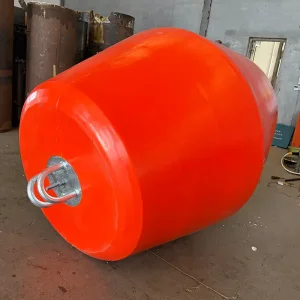
Best Offshore Mooring Buoy for Secure Vessel Anchoring and Marine Floating Systems
Explore Specification
ODM Mooring Buoy for Secure Vessel Anchoring and Stable Marine Mooring Systems
Explore Specification
Best Foam-Filled Mooring Buoy for Marinas, Anchorages and Offshore Facilities
Explore Specification
ODM Foam-Filled Mooring Buoy for Marinas and Offshore Anchorages in Korean Ports
Explore Specification
Best Custom Mooring Buoy for Boat Berths, Harbors and Offshore Stations
Explore Specification
Custom Mooring Buoy for Marinas, Harbors and Offshore Anchorage Systems
Explore Specification
ODM Mooring Buoy for Marina Berths, Vessel Anchorage and Offshore Systems
Explore Specification
ODM Custom Mooring Buoy for Vessel Berthing, Marina Use and Offshore Anchorage
Explore SpecificationDirect answers for marine contractors, shipyard procurement officers, and offshore civil engineers.
Polyethylene maintains flexible elongation and impact toughness down to -40°C. In areas like Incheon and Gyeonggi Bay where winter slush ice and surface sheet freeze occur, our ductile PE shells compress elastically without cracking, while the closed-cell internal foam core prevents water ingress even under ice abrasion.
Due to Shandong’s geographical proximity to the Korean peninsula, sailing times from Qingdao or Weihai to Incheon or Busan range from 24 to 48 hours. Total lead time—including custom molding, foaming, testing, and customs export clearance—is typically completed in 15 to 20 business days.
Yes. We customize central through-chain shafts, pad eyes, and pick-up tethers to match Korean metric chain dimensions (ranging from 16 mm to over 76 mm stud-link anchor chain). All steel elements are hot-dip galvanized to ISO 1461 / ASTM A123 standards to match Korean maritime authority project specifications.
For open sea conditions such as those around Jeju Island or the offshore wind fields off Ulsan, we recommend a minimum buoyancy reserve margin of 35% to 50% above the total deadweight of the mooring line, chain catenary, and dynamic anchor loads. This prevents full submergence during wave action and ensures continuous navigational visibility.
From anchor catenary analysis and reserve buoyancy verification to custom mold design, we deliver engineered marine flotation systems for projects worldwide.
Send Inquiry Now