
High-Efficiency Marine Mooring Systems for Singapore Waters
Engineered to handle extreme tidal currents in the Singapore Strait, heavy bunker traffic, and continuous offshore berthing cycles.
-
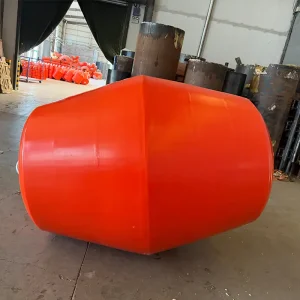
Singapore Grade Best Foam-Filled Polyethylene Mooring Buoy for Reliable Marine Anchoring Supplier Request Specifications →
-

Singapore Marina Grade Polyethylene Mooring Buoy – Reliable Floating Solutions for Modern Projects Request Specifications →
-

High-Quality Offshore Polyethylene Mooring Buoy – Durable & Maintenance-Free for Singapore Ports Request Specifications →
-
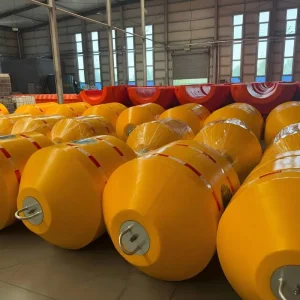
OEM Offshore Mooring Buoy for Safe Vessel Anchoring and Singapore Marine Infrastructure Request Specifications →
Singapore's Mooring Landscape: Operational Realities & Solutions
Operating in the world's premier transshipment hub requires mooring hardware engineered to withstand unique hydrodynamic pressures, high operational frequency, and rigorous MPA guidelines.
Severe Hydrodynamics in Singapore Strait
The Singapore Strait exhibits extreme tidal ranges up to 3.2 meters and peak currents surpassing 4.5 knots. Traditional hollow or steel buoys experience severe vortex-induced vibration (VIV), accelerated chain degradation, and corrosion. Our rotomolded polyolefin hulls integrate low-drag hydro-profiles, reducing lateral drag force by up to 28% compared to standard cylindrical steel buoys.
Jurong Island Petrochemical & Bunker Anchorage
Singapore’s Eastern and Western Petroleum Anchorages demand uncompromising safety. Accidental impacts during bunkering must not result in hull punctures, sparks, or chemical leaching. Juhua's closed-cell EPS foam matrices are certified spark-free, non-corrosive, and impact-absorbent, preventing hull puncturing or sinkage even when sheared by tugs or supply barges.
MPA Regulatory Compliance
The Maritime and Port Authority of Singapore (MPA) strictly regulates Aids to Navigation (AtoN) and port mooring apparatus under Port Marine Circulars. Our systems adhere completely to IALA E-108 guidelines for surface buoy coloration and retro-reflectivity, ensuring full compliance for port clearance, Lloyd's Register surveys, and DNV maritime certifications.
Steel vs. High-Performance Polyethylene Buoys
A lifecycle assessment of offshore mooring technology: Why tier-1 marine contractors are executing a structural shift away from legacy fabricated steel toward seamless polymer flotation.
| Performance Criterion | Legacy Welded Steel Buoys | Juhua Advanced Rotomolded PE Buoys | Impact on Singapore Operations |
|---|---|---|---|
| Corrosion & Biofouling Resistance | Requires sacrificial zinc anodes, anti-fouling coatings; high pitting in warm equatorial waters. | 100% chemically inert virgin polyethylene. Zero corrosion; low surface energy impedes barnacle adhesion. | Eliminates dry-dock blast cleaning and paint disposal fees in Singapore yards. |
| Impact Mechanics & Hull Puncture | Plastic deformation, denting, weld rupture upon vessel strike; high risk of ballast loss. | Elastic polymeric memory absorbs blunt forces up to 25 kJ without structural failure or deformation. | Drastically lowers repair claims in crowded Tuas / Jurong barge traffic. |
| Flotation Redundancy | Hollow chambers; single penetration can compromise overall buoyancy, leading to sinking. | High-density EPS closed-cell foam filling; keeps floating even if the outer shell is completely breached. | Guarantees zero-catastrophic-sinkage safety mandate per MPA port safety directives. |
| Handling & Deployment Weight | Heavy tare weight; requires 50-tonne crane vessels and heavy-duty derrick barges for placement. | 40%–60% lighter tare weight with equivalent or superior net reserve buoyancy rating. | Enables rapid installation using smaller, standard workboats; cuts charter costs. |
| Estimated Asset Lifespan | 8–12 years (with periodic sandblasting and re-coating every 3–4 years). | 15–20+ years virtually maintenance-free under intense UV index 11+ conditions. | Lowest Levelized Cost of Mooring (LCOM) over multi-decade terminal horizons. |
Engineering Blueprint: Singapore Application Scenarios & IoT Roadmap
From Keppel Bay marina berths to offshore deep-water multi-buoy mooring (MBM) installations.
Application 1: Tuas Mega Port Expansion Dredging
Continuous reclamation around Tuas Phase 2 & 3 necessitates high-strength anchor marker buoys and slurry pipe float line tie-ins. Our specialized mooring units provide reliable positioning markers for cutter suction and trailing suction hopper dredgers operating in proximity to commercial navigation lanes.
Application 2: Multi-Buoy Mooring (MBM) Off Pulau Bukom
Offshore tanker offloading requires balanced Multi-Buoy Mooring systems capable of restraining Aframax and VLCC class vessels. Juhua's through-chain (trough) and central tension member buoys handle dynamic proof loads exceeding 1,200 kN with high reserve freeboard margins.
Future Roadmap: Smart Buoy IoT Telemetry
Singapore’s Maritime Digitalisation Masterplan encourages connected AtoN assets. Juhua’s future-ready buoy line supports factory integration of solar-harvested AIS Transponders, GPS Geo-fencing monitors, and load-cell shackle telemetry transmitting real-time mooring line tensions over 4G/5G-NB-IoT networks directly to terminal control rooms.
Industrial-Grade Polyethylene Mooring Buoy Fleet for Singapore
Explore our complete production line of mooring buoys engineered for commercial berths, industrial anchorages, and private marine facilities.
-
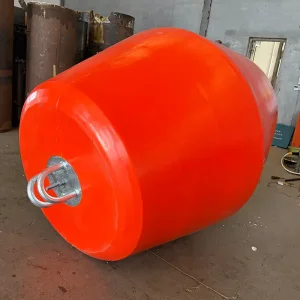
Singapore Standard Offshore Mooring Buoy for Secure Vessel Anchoring Manufacturer View Quotation Details →
-
ODM Heavy Mooring Buoy for Secure Vessel Anchoring in Singapore Straits View Quotation Details →
-

Best Foam-Filled Mooring Buoy for Singapore Marinas, Anchorages & Facilities View Quotation Details →
-
ODM Foam-Filled Mooring Buoy for Marinas & Singapore Offshore Anchorages View Quotation Details →
-
Custom Mooring Buoy for Boat Berths, Harbors & Singapore Offshore Stations View Quotation Details →
-
Custom Mooring Buoy for Singapore Marinas, Harbors & Anchorage Systems View Quotation Details →
-
ODM Mooring Buoy for Marina Berths, Vessel Anchorage & Singapore Systems View Quotation Details →
-
ODM Custom Mooring Buoy for Vessel Berthing, Marina Use & Offshore Anchorage View Quotation Details →
Frequently Asked Questions: Mooring Buoy Procurement in Singapore
Essential technical and procurement insights for harbor masters, port engineers, and marine contractors sourcing mooring systems.
What is the typical shipping lead time from factory to PSA Singapore?
From order confirmation and drawing sign-off, standard rotomolded mooring buoys are manufactured in 10–14 days. Ocean transit from Qingdao/Rizhao Port directly to Singapore (PSA Keppel/Pasir Panjang/Jurong) typically takes 7 to 10 days, allowing door-to-jetty delivery within 25 working days.
How do PE mooring buoys comply with MPA Singapore regulations?
Our buoys are manufactured in complete conformance with IALA guidelines (Recommendation E-108) for navigation markings and surface aids. Colors (yellow, white, green, red) are blended natively into the high-density polyethylene resin with grade UV20 stabilizers, eliminating fading and satisfying MPA Port Marine Safety inspections.
What internal load-bearing hardware configurations are supplied?
We supply two core configurations: Central Tension Steel Member (solid forged steel core with dual clevis or swivel pad-eyes rated up to 120T proof load, hot-dip galvanized to ISO 1461), and Through-Chain / Trough Designs where the anchor chain passes directly through the buoy center, resting on a marine-grade hawse pipe.
Can the buoys withstand extreme equatorial UV radiation and high water salinity?
Yes. The virgin polyethylene skin is compounding-stabilized with UV inhibitors (UV20+ level), formulated for equatorial exposure where Solar UV Index regularly reaches 11-12. Being non-metallic, the skin is immune to marine galvanic reactions, saline corrosion, and micro-cracking.
How is the required mooring buoy volume calculated for a specific vessel?
The total net buoyancy must equal the submerged weight of the mooring tackle (ground chain, riser chain, shackles) plus a reserve buoyancy safety factor of at least 50% to 100% under peak dynamic load. Our engineering team calculates exact hydrodynamic displacement based on your water depth, windage area, and maximum ship displacement.
Do you provide third-party marine inspection certifications (DNV, BV, CCS)?
Yes. We routinely work with DNV, Bureau Veritas (BV), Lloyd's Register (LR), and CCS. We provide material tensile test certificates, hot-dip galvanization thickness reports, foam density tests, and load-test certifications upon factory dispatch.