
Featured Heavy-Duty Marine Mooring Systems for Indonesia Waters
Factory-calibrated rotomolded polyethylene mooring systems certified for heavy swell, tropical salinity, and intensive bulk-loading operations across Southeast Asian marine corridors.
-
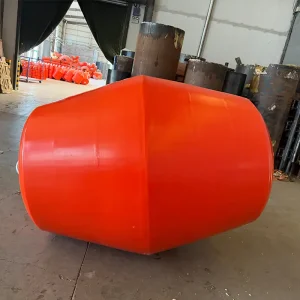
Best Foam-Filled Polyethylene Mooring Buoy for Reliable Marine Anchoring - Indonesia Port Edition
Send Inquiry Now -

Best Polyethylene Mooring Buoy – Reliable Floating Solutions for Modern Maritime Infrastructure
Send Inquiry Now -

High-Quality Offshore Polyethylene Mooring Buoy – Safe & Maintenance-Free System for Nickel Terminals
Send Inquiry Now -
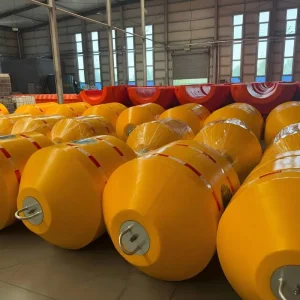
OEM Offshore Mooring Buoy for Safe Vessel Anchoring and Archipelagic Marine Infrastructure
Send Inquiry Now
Industrial Demands & Archipelagic Marine Realities in Indonesia
Indonesia's geography—an archipelago comprising over 17,000 islands positioned between the Pacific and Indian Oceans—dictates an extraordinary reliance on offshore berthing, STS (Ship-to-Ship) transfer, and marine bulk logistics. Standard industrial buoyancy cannot survive this unique operating theater without targeted engineering modifications.
Tol Laut (Sea Toll Highway) Logistics
Under the Indonesian government's Poros Maritim Dunia (Global Maritime Fulcrum) vision, regional hub ports such as Tanjung Priok (Jakarta), Tanjung Perak (Surabaya), and Bitung (North Sulawesi) require continuous expansion of outer-anchorage single-point mooring (SPM) facilities.
Mooring buoys in these shipping lanes encounter heavy cyclic bollard pulls from Handymax, Panamax, and feeder vessels during continuous transshipment operations.
Nickel & Coal Barge Transshipment
The industrial downstreaming boom across Central Sulawesi (Morowali), Halmahera (Weda Bay), and East Kalimantan demands massive fleets of 300ft to 330ft coal and nickel ore barges.
Conventional quayside berthing is economically unfeasible along rugged coastlines. Deep-draft catenary mooring buoys provide the primary infrastructure for offshore barge anchoring and direct floating crane vessel transshipment.
Extreme Equatorial Marine Degradation
Operating within the Intertropical Convergence Zone (ITCZ), Indonesian waterways exhibit aggressive bio-fouling rates, severe galvanic salinity in the Java Sea, and heavy surface UV irradiation year-round.
Traditional fabricated steel buoys undergo catastrophic coating degradation and cathodic zinc depletion within 18–24 months, accelerating the commercial shift toward rotomolded virgin polyethylene skins.
Global Energy Transition & The Polyethylene Technological Shift
The international maritime and dredging infrastructure sector is systematically retiring painted steel mooring drums in favor of high-performance polymer composites. Major port authorities and offshore operators are adjusting procurement mandates to meet stringent ESG criteria, lower life-cycle OPEX, and ensure hydro-acoustic safety.
Steel Buoys vs. Rotomolded Polyethylene: Total Cost of Ownership (TCO)
For decades, Q235 and marine-grade carbon steel were the default materials for offshore mooring. However, EPC contractors worldwide report that dry-dock sandblasting, repainting, ultrasonic plate thickness testing, and sacrificial anode replacements account for up to 140% of the initial buoy procurement cost over an 8-year span.
In contrast, rotationally molded high-density polyethylene (HDPE/LLDPE) filled with closed-cell polyurethane foam eliminates oxidation entirely. The smooth polymer skin naturally repels macroalgae and barnacle encrustation, drastically reducing diver maintenance downtime.
Global EPC Procurement Drivers for 2026–2030
International tenders across Rotterdam, Singapore, the Middle East, and Southeast Asia now prioritize single-source turnkey manufacturers capable of supplying integrated mooring packages: internal structural steel load-bearing cores, cross-linked closed-cell foam cores (density 35–45 kg/m³), and IALA-compliant pigmented outer hulls.
Furthermore, modularity that allows rapid containerized ocean freight (utilizing 40ft High Cube containers) without over-dimensional cargo surcharges has become a decisive procurement benchmark.
| Performance Dimension | Juhua Advanced Polyethylene Mooring Buoy | Traditional Welded Carbon Steel Buoy | Rubber / Elastomer Coated Floats |
|---|---|---|---|
| Corrosion Resistance in High-Salinity Tropical Seas | Complete chemical inertness (No rust, No recoating needed) | Severe oxidation; requires biannual recoating & zinc anodes | Moderate; vulnerable to skin punctures and saltwater ingress |
| Impact Resistance (Barge & Tug Collisions) | High elasticity; absorbs energy without permanent plastic denting | Permanent hull deformation; weld cracks risk total flooding | High energy absorption but prone to outer tear propagation |
| Unsinkability Under Extreme Breaches | 100% Unsinking: Closed-cell PU foam absorbs <3% water | Hollow chambers flood rapidly on puncture unless baffled | Varies by core filling; skin rupture compromises internal foam |
| Maintenance Interventions (Over 10 Years) | Near Zero (Routine eye & shackle visual check only) | 4–5 dry-dockings, blasting, ultrasound thickness surveys | Frequent skin inspection and vulcanization patch repairs |
| Weight & Deployment Efficiency | Lightweight (Up to 45% lighter than steel); lower crane demands | Heavy; requires high-capacity marine derrick crane vessels | Medium; requires specialized lifting sling configurations |
Engineered Precision: The Chinese Factory Efficiency & ODM Edge
Shandong Binzhou Juhua Rubber & Plastic Co., Ltd. combines more than two decades of rotomolding industrial leadership with optimized supply chain integration, delivering heavy offshore-grade buoyancy systems with unmatched lead-time agility and structural repeatability.
Automated Rotomolding Topology
Our workshop integrates digital variable-frequency speed control and computerized multi-point infrared temperature sensing. This guarantees that each polyethylene buoy shell achieves uniform wall thickness (up to 18–25mm depending on engineering diameter) without internal residual stress or porosity flaws.
Certified Heavy Internal Steel Structures
Polyethylene provides buoyancy and impact resilience; certified structural steel carries the tension. Our mooring buoys feature central hot-dip galvanized or epoxy-coated through-pipe assemblies (Q355B / ABS Grade A) equipped with certified swivel eyes, mooring crucifixes, or quick-release mooring hooks designed to withstand proof loads exceeding 40 to 120 tonnes.
End-to-End ODM / OEM Agility
From hydro-static reserve buoyancy calculations matching the specific gravity of the Makassar Strait to custom pad-eye orientations for multi-leg catenary anchoring (CALM), our engineering office converts client CAD schematics into manufactured sea-ready prototypes within 14 working days.
Localized Application Scenarios Across the Nusantara Archipelago
Deploying marine infrastructure in Indonesia requires acute adaptation to shallow coral atolls, intense tidal bores, and remote island logistics without shore-crane availability.
South & Central Sulawesi Nickel Terminals
Challenge: Continuous mooring and unmooring of heavy ore barges along steep drop-off reefs where seabed anchoring must avoid damaging sensitive marine ecosystems.
Juhua Solution: High-reserve buoyancy pick-up and mooring buoys with molded elastomeric chafing buffers that withstand daily abrasive contact with steel barge towing bridles.
Offshore Natuna & East Java STS Transfer
Challenge: Open-ocean wave periods creating severe heave motion during offshore oil tanker lightering operations in monsoonal currents.
Juhua Solution: Low-drag cylindrical and barrel-type mooring buoys engineered with internal tension shafts, maintaining vertical stability under dynamic wave slap and multi-directional line tension.
Raja Ampat & Komodo Eco-Mooring Systems
Challenge: Strict environmental bans on dropping anchor on live coral reef ecosystems, requiring permanent, zero-leach mooring points for cruise and liveaboard vessels.
Juhua Solution: Food-grade virgin PE buoys without toxic anti-fouling biocide coatings, coupled with eco-friendly elastic subsea rode anchors that prevent bottom chain sweeping.
Full Series Offshore Mooring Buoys Available for Indonesia Export
Select from our field-tested rotomolded buoy models configured for shallow water anchorages, deepwater catenary systems, and commercial marina installations.
-
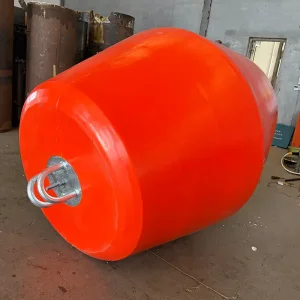
Best Offshore Mooring Buoy for Secure Vessel Anchoring and Marine Floating Systems
Send Inquiry Now -
ODM Mooring Buoy for Secure Vessel Anchoring and Stable Marine Mooring Systems
Send Inquiry Now -
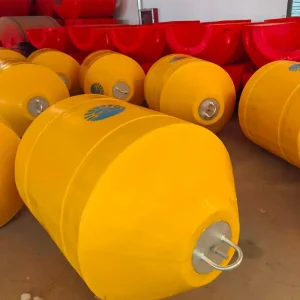
Best Foam-Filled Mooring Buoy for Marinas, Anchorages and Offshore Marine Facilities
Send Inquiry Now -
ODM Foam-Filled Mooring Buoy for Marinas and Offshore Marine Anchorages
Send Inquiry Now -
Best Custom Mooring Buoy for Boat Berths, Harbors and Offshore Stations
Send Inquiry Now -
Custom Mooring Buoy for Marinas, Harbors and Offshore Anchorage Systems
Send Inquiry Now -
ODM Mooring Buoy for Marina Berths, Vessel Anchorage and Offshore Systems
Send Inquiry Now -
ODM Custom Mooring Buoy for Vessel Berthing, Marina Use and Offshore Anchorage
Send Inquiry Now
Frequently Asked Technical & Procurement Questions
Key design verifications, export standards, and installation dynamics for offshore mooring buoys operating in Indonesia and international coastal waters.
How do you calculate mooring buoy net buoyancy for an Indonesian barge terminal?
Net reserve buoyancy must offset the total submerged weight of the mooring chain catenary (ground chain, intermediate chain, and bridle) plus a dynamic factor of 1.4 to 1.8 to prevent buoy submersion under sudden squall swells. Our engineering team sizes reserve buoyancy so that at least 40% to 50% of the buoy's volumetric height remains visible as freeboard under maximum calculated static rode tension.
Why is rotomolded polyethylene superior to steel in Indonesian waters?
Indonesian equatorial waters exhibit high salinity, year-round water temperatures near 28-30°C, and accelerated biological growth. Carbon steel buoys require frequent anode replacements, sandblasting, and drydock repainting. Polyethylene buoys are completely immune to chemical oxidation, require zero sacrificial anodes, and use resilient closed-cell polyurethane cores that remain 100% buoyant even if punctured.
What load ratings are supported by your internal central steel frameworks?
Our internal tension shafts are manufactured from high-yield structural steel (Q355B or marine-certified forged steel) hot-dip galvanized to ISO 1461. We offer standard through-chain designs and tension-bar designs rated for safe working loads (SWL) from 15 tonnes up to 100 tonnes, with destructive proof testing certified up to 2.0x SWL upon client request.
What is the typical lead time and shipping route to major Indonesian ports?
Standard ODM production runs require 15 to 25 days depending on tooling and steel fabrication requirements. Shipments are consolidated and loaded from Qingdao or Tianjin Port directly to Tanjung Priok (Jakarta), Tanjung Perak (Surabaya), or direct feeder routes to Morowali and Balikpapan, typically achieving an ocean transit time of 12 to 18 days.
Consult with Our Marine Flotation Engineering Division
Request certified buoyancy calculations, project-specific CAD drawings, and factory direct containerized freight quotes for your upcoming marine terminal installations in Indonesia.