
High-Integrity Floating Pontoon Modules for Boston Waterways
Engineered for high load-bearing endurance, tidal deflection resistance, and year-round sub-zero ice pressure tolerance in North Atlantic maritime sectors.
Boston Harbor & Global Flotation Engineering: Macro Market & Structural Realities
A rigorous examination of marine dynamics, material endurance against nor'easter storm surges, and the transformative shift from legacy timber systems to modular rotomolded pontoon infrastructures.
1. The Boston Maritime Demands: Tidal Dynamics, Salinity & Severe Winter Freezes
Boston Harbor presents one of the most mechanically demanding micro-environments on the Eastern Seaboard of the United States. Characterized by a mean tidal range of 9.5 to 12.0 feet (2.9 to 3.7 m) between Mean Lower Low Water (MLLW) and Mean Higher High Water (MHHW), marine infrastructure deployed along Boston Inner Harbor, the Fore River, Dorchester Bay, and the Charlestown Navy Yard must accommodate continuous vertical translation without racking, torsional cracking, or joint fatigue.
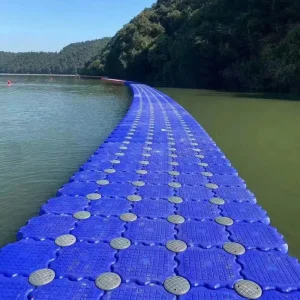
Traditional fixed docks and creosote-treated timber pilings fail rapidly under these dynamic cycles. Furthermore, winter conditions in Massachusetts Bay introduce heavy freeze-thaw fatigue. As seawater temperatures plunge toward -1.5°C (29.3°F), stationary pontoons encounter circumferential ice jacking, where surface ice bonds to porous hull walls and exerts crushing horizontal stresses during tidal shifts. Juhua's custom ODM water boat pontoon systems utilize seamless rotomolded linear low-density polyethylene (LLDPE) enriched with UV stabilizers and high-density virgin polyurethane or expanded polystyrene (EPS) cores. The ultra-slick polyethylene skin (coefficient of friction < 0.15 against wet ice) prevents ice adhesion, allowing the pontoons to shed lateral ice floes and rise vertically above pack ice without structural compromise.
- Semi-Diurnal Tidal Absorption: Articulated hinge connector pins engineered with high-yield composite polyurethane pins to absorb dynamic torsional moments during 12-foot tidal fluctuations.
- Nor'easter Energy Dissipation: Hydrodynamically contoured pontoon baffles disperse low-frequency kinetic energy from wind-driven chop inside Fort Point Channel and outer harbor approaches.
- Massachusetts Environmental Policy Act (MEPA) Alignment: 100% chemically inert, zero-leaching materials that preserve sensitive shellfish and eelgrass ecosystems in Boston Harbor.
2. Global Maritime Paradigm Shift
Worldwide, the global floating dock and pontoon industry is projected to surpass USD $5.8 Billion by 2030, accelerated by coastal urbanization, rising sea levels, and the expansion of eco-tourism.
The industrial sector has permanently shifted away from galvanized steel shells (which pit in saline estuaries within 7 years) and heavy concrete pontoons (which demand prohibitive dredging and heavy crane operations). Modern commercial operators across Rotterdam, Singapore, and New England favor lightweight, modular, interlocking LLDPE buoyancy units that permit rapid scaling, reconfigurability, and near-zero ongoing maintenance.
3. Rotomolding Polymer Chemistry
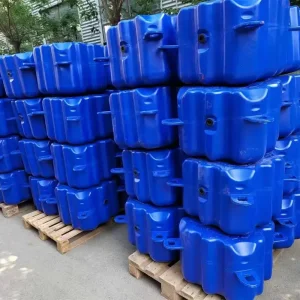
Our OEM/ODM manufacturing facility executes rotational molding using high-grade metallocene polyethylene resin with a tight melt-flow index. Microprocessor-controlled multi-axis furnace heating cycles ensure a completely uniform wall thickness ranging between 8mm and 15mm across sharp corners and structural gussets.
Every pontoon is injected with 18–20 kg/m³ closed-cell EPS foam or high-density rigid polyurethane. Even under catastrophic impact puncture from heavy vessel berthing, moisture absorption remains under 0.05% by volume, guaranteeing 100% positive buoyancy retention.
4. Comprehensive Buoyancy & Dynamic Load Equation for Modular Waterfronts
Deploying safe floating platforms requires rigorous mathematical calculation of live, dead, and dynamic environmental loads. An under-calculated pontoon configuration risks deck submersion during crowded commercial operations, while over-engineering wastes capital.
The standard minimum buoyancy equation implemented by our marine engineering team for Boston harbor projects follows:
In Boston's commercial marina applications, live load specs are benchmarked against 2.5 kN/m² (approx. 52 lbs/sq.ft) under uniform crowd loading, while wave dynamic impacts require a minimum residual freeboard of 350 mm under full rated operational displacement.
ODM Floating Pontoon Engineering Matrix
Comparative performance metrics engineered to withstand North Atlantic coastal salinity and cyclic wave fatigue.
| Performance Dimension | Rotomolded LLDPE Modular (Juhua ODM) | Galvanized Steel Encased Floats | Heavy Pre-Stressed Concrete Docks |
|---|---|---|---|
| Seawater Corrosion Endurance | Immune (Polyethylene does not oxidize or pit) | Moderate (Sacrificial anodes required; 5-8 yr repainting) | High (Risk of chloride intrusion into rebar core) |
| Sub-Zero Freeze / Ice Tolerance | Elastic flexure sheds ice; non-brittle to -40°C | Seam rupture risk under lateral ice pinch | Surface spalling under cyclic freeze-thaw |
| Dead Weight vs. Buoyancy Efficiency | Extremely High (~1:12 Dead Weight to Lift) | Moderate (~1:4 Ratio) | Low (~1:1.5 Ratio; Requires heavy crane vessels) |
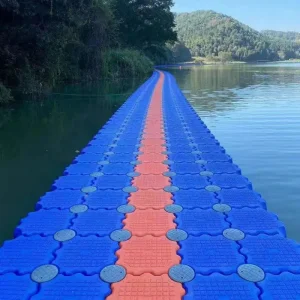
| Modular Relocation & Expansion | Rapid; hand-assembled with interlock lug pins | Rigid; requires cutting, welding, and crane barges | Fixed mooring footprint; virtually non-relocatable |
| Environmental Safety & Leaching | 100% Food-grade recyclable PE; zero toxics | Zinc runoff; anti-fouling paint flaking | Alkaline leaching in freshwater estuaries |
| Expected Service Life (Boston Waters) | 15 to 25+ Years (UV20+ Stabilized Shell) | 7 to 12 Years before hull corrosion repairs | 20 to 30 Years (High baseline capex & anchor costs) |
Targeted Application Scenarios Across the Boston Waterfront
Custom turnkey ODM pontoon solutions engineered for municipal transit, maritime commerce, elite athletics, and coastal climate resiliency.
Boston Harbor Water Taxi & Commuter Ferry Floats
Boston's Inner Harbor water transit networks connecting Logan Airport to Rowes Wharf and Charlestown require robust, high-frequency docking berths. Our reinforced pontoons feature internal steel load-distribution frames and heavy polymer fenders capable of absorbing cyclic berthing shocks from 30-passenger commercial vessels.
Charles River Basin Low-Freeboard Sculling & Rowing Docks
Home to the Head of the Charles Regatta and historic university boathouses (Harvard, MIT, BU), the Charles River demands specialized low-profile floating docks. Juhua's custom ODM low-freeboard pontoons provide a stable 12–15 cm waterline clearance, allowing effortless ingress and egress for delicate shell oars and scullers.
Boston Harbor Dredging & Pipeline Support Platforms
Navigation maintenance across President Roads and the Chelsea Creek industrial channel requires auxiliary flotation platforms for dredge de-watering pumps, pipeline discharge joints, and instrumentation. Our heavy-duty pontoon assemblies support submerged slurry pipelines and hydraulic winches in tidal currents up to 3.5 knots.
Boston Seaport Floating Hospitality & Pop-Up Platforms
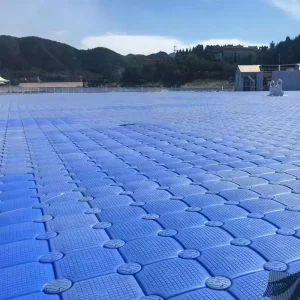
Boston's burgeoning Seaport District and Fort Point Channel increasingly activate their watersheet with floating restaurants, seasonal beer gardens, and art exhibitions. Our modular platform platforms combine immense structural buoyancy with integrated cable/plumbing chaseways and architectural composite finishes.
Climate Ready Boston: Living Shorelines & Wave Dampeners
To combat projected sea-level rise and storm surges along East Boston and South Boston, municipal civil engineers deploy artificial living breakwaters. Juhua's submerged and semi-submerged floating pontoon baffles absorb offshore kinetic wave energy while serving as floating vegetative habitats for coastal re-wilding.
Offshore Wind Marine Marshalling Staging Floats
As Massachusetts advances large-scale offshore wind developments in the Atlantic, maintenance support vessels (SOVs and CTVs) operating out of regional maritime hubs require modular floating service platforms. Our modular pontoons provide flexible, non-scratching work barges for maintenance technicians and cable reel staging.
Engineering the Future of Smart & Sustainable Marine Flotation
A multi-year technological roadmap guiding our rotomolding breakthroughs, IoT sensor integration, and carbon-neutral circular materials.
Advanced Polyolefin Formulations
Universal rollout of compound UV24-grade metallocene resins, dual-density acoustic core foaming, and patented self-aligning interlock shear pins engineered for high shear fatigue.
Embedded IoT Telemetry Modules
Integration of solar-harvesting micro-sensors directly within the pontoon wall to monitor freeboard displacement, mooring line tension, internal core moisture, and wave acceleration.
Circular Bio-Polymer Alloys
Commercialization of 40% post-consumer ocean plastic and bio-circular resins certified for zero microplastic degradation in sensitive North Atlantic coastal reserves.
Active Dynamic Wave Attenuation
Development of autonomous ballast-adjusting pontoons that self-tune internal air-water displacement chambers during extreme storm surge alerts, maximizing stability under hurricane-force fetch.
End-to-End ODM/OEM Marine Engineering Workflow
From initial naval architecture hydrodynamic FEA simulation to custom rotomolding tooling and containerized global dispatch.
1. Computational Site FEA Modeling
Our naval engineers assess local Boston bathymetry, current velocity profiles, and wind-fetch models to simulate dynamic stresses on pontoon hulls and connector lugs using finite element analysis.
2. Precision CNC Tooling & Prototyping
Custom casting or CNC-milled aluminum molds are fabricated in-house to accommodate client-specific dimensions, cable grooves, reinforced bollard recesses, and branding debossing.
3. Automated Rotomolding & Strict QA
Multi-arm variable-frequency ovens ensure uniform wall thickness. Post-molding QA incorporates hydrostatic leak testing, drop impact dart tests at -20°C, and core foam density validation.
Initiate Your Boston Marine Flotation Engineering Spec
Connect directly with our senior flotation engineering team. Receive detailed CAD layout proposals, hydrostatic buoyancy calculations, and precise container export logistics tailored for the Port of Boston within 24 hours.
Send Inquiry NowFrequently Asked Engineering Questions for Boston Projects
Clear, unvarnished technical answers regarding tidal anchoring, freezing conditions, regulatory compliance, and custom tooling.
Our modular pontoon platforms utilize specialized internal piling guides (pile hoops) lined with ultra-high-molecular-weight (UHMW) polyethylene rollers or heavy-duty Seaflex/catenary elastic mooring tethers. These allow the platform to track vertical tidal translations smoothly along steel or timber pilings without binding, lateral jamming, or excessive stress on the interlocking lugs.
No. Unlike rigid thin-walled metal floats or concrete, rotomolded virgin polyethylene possesses natural elastomeric ductility. When surrounding surface water freezes into thick sheet ice, the tapered, draft-contoured sides of the pontoons cause the rising ice sheet to slide upward, pushing the pontoons safely above the ice line. The high-density closed-cell EPS core provides internal resistance against lateral crushing pressures.
Tooling design and CNC mold manufacturing for bespoke geometries typically take 20 to 30 calendar days. Batch rotational molding production requires 10 to 15 days. Ocean freight from our factory directly to the Conley Terminal at the Port of Boston typically requires 28 to 35 days, with comprehensive export crating designed for maximized container cube efficiency.
Yes. Our polyethylene resins are non-toxic, virgin food-contact grade, fully UV-stabilized, and 100% recyclable. They do not leach heavy metals, BPA, phthalates, or micro-plastics into marine habitats, ensuring complete compliance with the Massachusetts Clean Water Act and US Army Corps of Engineers (USACE) Section 10/404 permits.
Pontoons can be manufactured with molded-in 316 stainless steel threaded blind inserts, heavy aluminum internal reinforcement channels, or perimeter galvanized steel walers. Mooring cleats, electrical conduits, water pipes, and gangway hinge shoes bolt directly into load-distributing structural sub-frames rather than relying solely on the plastic skin.
Yes. We manufacture a dedicated low-freeboard rowing series that maintains a stable 12 to 15 cm waterline clearance under normal unladen dead load, providing ideal ergonomics for competitive racing shells, scullers, and kayak clubs while maintaining high reserve buoyancy during squad loading.
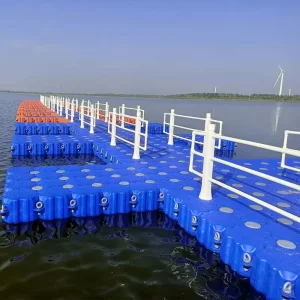
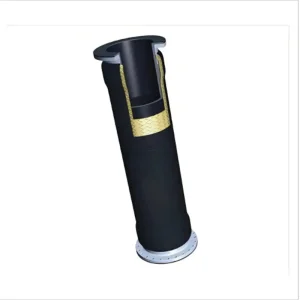
Commercial Pontoons, Dredge Floats & Slurry Hose Solutions for Boston Harbor
Explore our complete inventory of rotationally molded modular buoyancy modules, pipeline support floats, and heavy industrial water management systems.

Need Custom Tooling or Buoyancy Engineering for Your Boston Watersheet?
Send site bathymetry, required freeboard heights, or CAD drawings directly to our factory team.