
OEM Pipeline Manufacturers & Factories in the Istanbul Market
Precision Rotomolded PE Pipeline Systems, Buoyancy Integration, and Subsea Marine Architecture Engineering Across the Marmara Transit Corridor
Engineered Fluid & Slurry Pipeline Assemblies for Istanbul
Factory-calibrated, high-density rotomolded assemblies designed for rigorous hydrodynamic marine conditions and abrasive aggregate conveyance.
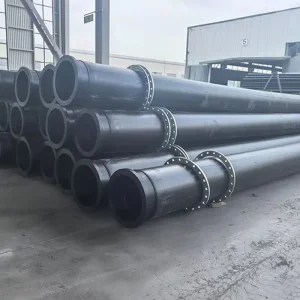
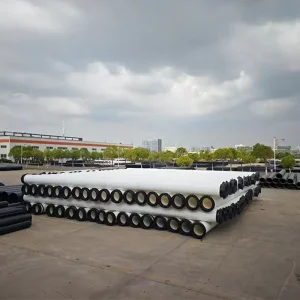
Industrial Landscape: The Istanbul Maritime & Civil Infrastructure Matrix
Strategic geographic convergence requires hyper-resilient polyethylene pipelines and engineered flotation architecture.
Istanbul occupies a unique continental juncture connecting the Black Sea and the Sea of Marmara via the Bosporus Strait. This dense maritime intersection presents extreme engineering challenges: dynamic two-layer current systems (surface salinity differences generating reverse undercurrents up to 4–5 knots), massive maritime traffic density, aggressive municipal expansion, and seismic resilience mandates. Sourcing reliable OEM pipeline systems is not merely a budgetary decision; it is a critical project containment requirement.
Global EPC Procurement Drivers in Eurasia
International engineering contractors (EPCs) operating across Turkey, Southern Europe, and the Middle East demand rigorous mechanical predictability. Pipeline procurement teams in Istanbul focus on four primary technical qualifiers: resistance to chemical corrosion from municipal effluent discharges, micro-cracking mitigation under dynamic flexure (critical along the North Anatolian Fault influence zone), high tensile retention during continuous hydraulic pumping, and verifiable resin traceabilities.
Rotational Moulding Precision
Utilizing high-stability closed-mold cycles with variable-frequency rotational control, eliminating residual stresses that cause pipeline axial warping in saline waters.
Hydrodynamic Clamping & Buoyancy
Clamp-on split configurations molded with integral locating ribs prevent float displacement during extreme current reversals within coastal Marmara channels.
Seismic Shoreline Articulation
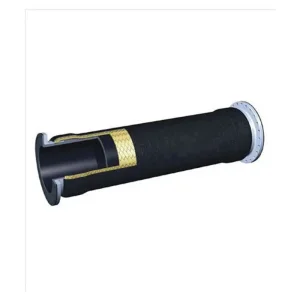
Coupling configurations with heavy-duty rubber transition elements enable floating lines to absorb onshore-to-offshore differential seismic settling movements.
Material Specification & Structural Performance Benchmark
The standard OEM specification for marine pipeline operations requires tight manufacturing tolerances. The following matrix details structural criteria required for offshore reclamation and marine municipal discharges across Turkey.
| Engineering Property | Testing Standard | OEM Virgin PE Spec | Standard Commercial Grade |
|---|---|---|---|
| Melt Flow Rate (190°C / 5.0kg) | ISO 1133 | 0.35 - 0.55 g/10min | 0.80 - 1.20 g/10min |
| Tensile Strength at Yield | ISO 527-2 | ≥ 24.5 MPa | ≤ 19.0 MPa |
| Environmental Stress Crack Resistance (ESCR) | ASTM D1693 (Cond. B) | F50 > 1,500 Hours | F50 > 350 Hours |
| Closed-Cell Foam Core Density | ISO 845 | ≥ 35 - 40 kg/m³ | < 28 kg/m³ |
| UV Degradation Index (Carbon Black Dispersion) | ISO 18553 | ≥ Grade 3 (Uniform matrix) | Non-stabilized variable |
Engineering Roadmap & Compliance Assurance for Turkish Waters
Alignment with global standards including EN 12201, ISO 4427, and Turkish Standards Institution (TSE) frameworks.
Deploying OEM pipeline installations within the Golden Horn, Ambarlı Port terminal zones, or the Gulf of İzmit requires strict compliance with port state control frameworks and environmental impact guidelines. Floating pipelines and intake assemblies must integrate verifiable reserve buoyancy calculations to prevent mid-channel submersion during peak hydraulic loading.
TSE & European Standard Alignment
Full manufacturing compliance with EN 12201-2 for plastic piping systems conveying water, backed by factory hydrostatic burst validation.
Slurry Density Safety Factor
Buoyancy modules engineered at 1.25x to 1.30x above saturated full-bore slurry weights to preserve a minimum 25% dry freeboard reserve.
Fast Logistics into Ambarlı & Gebze
Optimized container nesting profiles ensure efficient sea-freight deliveries directly to Istanbul ports without dimensional freight surcharges.
Need Project Buoyancy Modeling for Bosporus Waters?
Provide your outer pipe diameter, conveyed specific gravity, and wave profile. Our engineering team returns comprehensive displacement models and packing schemes within 24 hours.
Send Inquiry NowHeavy-Duty OEM Marine Pipelines, Rubber Hoses & Subsea Buoyancy Elements
Complete structural line of pipeline transport products, cable-integrated floating units, and high-pressure flexible transfer components.
-
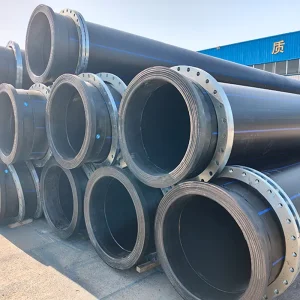
ODM High-Performance Pipeline for Istanbul Municipal Transport
-
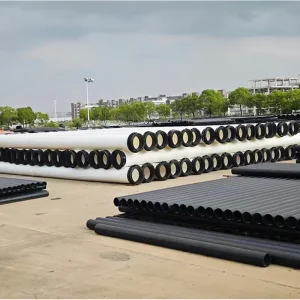
OEM Industrial-Grade Pipeline for Istanbul Harbour Fluid Transport
-
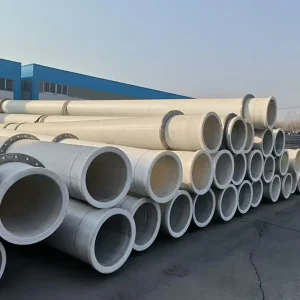
ODM Industrial-Strength Pipeline for Marmara Material Transport Quotes
-
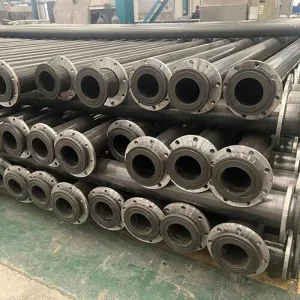
Robust Pipeline for Marmara Slurry and Industrial Material Transport
-
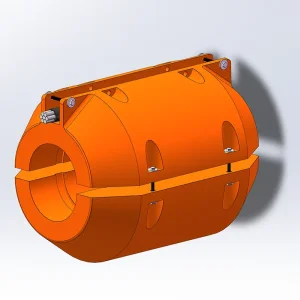
OEM Advanced Cable-Supporting Floats for Istanbul Marine Works
-

-
-

ODM Deepwater Pipeline Support Floats for Bosporus Subsea Buoyancy
Frequently Asked Questions: Technical Engineering & Regional Logistics
Practical guidance regarding OEM pipeline sourcing, hydrodynamic configuration, and Marmara shipping parameters.
How does current stratification in the Bosporus affect floating pipeline anchoring?
The Bosporus exhibits a dual-layer current: lower-salinity Black Sea water flows southward on the surface (reaching up to 4–5 knots during spring runoffs), while higher-salinity Mediterranean water flows northward along the seabed. Floating pipelines must use hydrodynamic, parabolic-profile float bodies to lower drag coefficients, coupled with anchored catenary mooring lines set perpendicular to surface drift lines to avoid lateral buckling.
What safety margin is recommended for calculating pipeline buoyancy in municipal slurry projects?
We advise a reserve buoyancy margin between 120% and 130% relative to total operational weight. Total weight includes the dry mass of the PE pipe, flange brackets, connecting hardware, and the fully saturated slurry inside the line (often running at 1.3 to 1.6 t/m³ specific gravity in dredging and reclamation). This reserve ensures that at least 25% of the pipe diameter remains dry, maintaining maritime visibility and preventing line sinking during transient pressure spikes.
Why choose rotomolded PE shells filled with closed-cell PU foam over welded steel pontoons?
Welded steel floats are vulnerable to galvanic and saline corrosion in the Marmara basin, requiring regular dry-dock repainting and ultrasonic wall thickness checks. Rotomolded PE shells are chemically inert, UV-stabilized, and impervious to saltwater corrosion. The internal closed-cell polyurethane foam (35–40 kg/m³) prevents water ingress even if the outer shell suffers an impact puncture from maritime debris or harbor workboats.
What lead times and shipping routes are typical for orders destined for Istanbul?
Standard export orders are palletized and nested to maximize 40-foot High Cube (40HC) container utilization, reducing shipping freight per unit volume. Sea-freight delivery to major Turkish container ports such as Ambarlı (European side) or Evyap/Yılport (Kocaeli industrial zone) typically takes 22 to 32 days on direct services. Urgent replacement hardware can also be routed via multimodal air freight to Istanbul Airport (IST).
Can pipelines be supplied with integrated troughs for subsea cabling and telemetry lines?
Yes. Our OEM line includes specialized pipe floats with molded longitudinal troughs. These permit power cabling, fiber-optic telemetry cords, and sensor leads to run safely along the top centerline of the floating pipe without pinching or exposure to mooring lines and waterborne debris.