
Featured Marine Pipeline Buoyancy Modules for Seattle Waterfront Projects
Deploying high-impact virgin polyethylene clamp-on pipe floats designed specifically for rapid tide shifts, high salinity, and demanding marine hydraulic transport across Puget Sound.


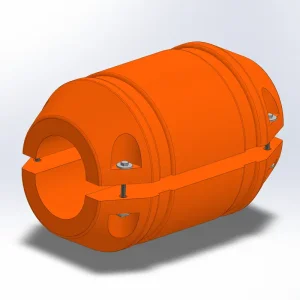
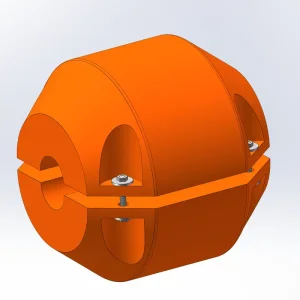
Seattle Maritime Industrial Landscape: Demands on Flotation Engineering
Seattle’s saltwater and freshwater gateways present one of North America's most intricate operational environments, balancing deepwater container terminals, critical salmon migratory corridors, and strict environmental dredging standards.
Port of Seattle & The Northwest Seaport Alliance (NWSA)
As the fourth-largest container gateway in North America, the Port of Seattle and NWSA mandate zero-downtime maintenance and capital deepening dredging along deep-draft berths such as Terminal 5 and Terminal 18. Floating pipelines must withstand substantial hydro-dynamic forces generated by high-tonnage container vessels and tug wash without shifting or separating.
Berth Deepening StabilityDuwamish River Superfund Remediation Projects
Remedial dredging within the Lower Duwamish Waterway requires hermetically sealed buoyancy systems. To prevent cross-contamination, pipeline floats must feature chemically unreactive polyethylene shells that resist toxic PCBs, PAHs, dioxins, and industrial petroleum distillates, ensuring that sediment discharge slurries reach upland dewatering facilities without leakage.
EPA Superfund ComplianceLake Washington Ship Canal & Hiram M. Chittenden Locks
Navigating the hydrological gradient between Puget Sound’s cold, saline water and Lake Washington's fresh water imposes differential buoyancy loads. Pipe floats must maintain precise trim and high-visibility coloration to alert commercial fishing fleets, tugs, and recreational vessels passing continuously through Salmon Bay and Ballard Locks.
Dual-Salinity EngineeringGlobal Procurement Criteria: What EPC Contractors Require
International dredging corporations and maritime engineering firms enforce stringent procurement standards for rotational molding integrity, mechanical shear resistance, and supply-chain transparency.
Uniform Rotational Wall Thickness
Variable-frequency speed control and automated electronic thermal logging inside multi-axis ovens eliminate thin corners and residual internal stresses. Standardized molding ensures exact outer circumference clamping around standard steel or HDPE dredge lines, guaranteeing that replacement halves provide 100% interchangeable tolerance on active Seattle projects.
Zero Wall DeviationClosed-Cell Polyurethane Foam Infilling
Shell perforation caused by sharp debris or collision with marine workboats must not lead to sinking. Our modules are filled with high-density, closed-cell polyurethane foam (≥35 kg/m³) that maintains less than 1% water absorption after long immersion tests, ensuring continuous operations in heavy Pacific swells.
Non-Sinkable Safety CoreMarine-Grade Fasteners & Hardware
Clamping sets are subjected to 1,000-hour ASTM B117 salt-spray tests. We equip our pipe float assemblies with heavy-duty galvanized Grade 8.8 bolts or optional AISI 316 stainless steel hardware, nylon-locking vibration nuts, and heavy-duty load-spreading washers to eliminate galvanic corrosion.
316 Marine Hardware| Nominal Pipe Size (OD) | Float Outer Diameter | Overall Length | Net Buoyancy Rating (Pair) | Wall Thickness Range | Primary Pacific NW Application |
|---|---|---|---|---|---|
| 160 mm / 6" | 500 mm | 800 mm | 110 kg | 6 - 8 mm | Aquaculture, Lake Washington aerators |
| 250 mm / 10" | 700 mm | 1,000 mm | 290 kg | 7 - 9 mm | Duwamish remediation, environmental bypass |
| 400 mm / 16" | 1,100 mm | 1,200 mm | 860 kg | 9 - 11 mm | Port of Tacoma terminal berth maintenance |
| 630 mm / 24" | 1,400 mm | 1,800 mm | 2,150 kg | 12 - 15 mm | NWSA heavy sediment capital dredging |
| 800 mm / 32" | 1,800 mm | 2,200 mm | 4,300 kg | 14 - 18 mm | Offshore land reclamation, deepwater mining |
Integrated Hydraulic & Offshore Flotation Architecture
From mining tailings in South America to deepwater navigation channels in Western Washington, specialized pipeline floats address complex hydraulic transport physics.
Dynamic Slurry Density Compensation
Slurry mixtures rarely remain constant. In heavy gravel dredging or mine dewatering, internal densities can spike rapidly from 1.05 t/m³ to upwards of 1.65 t/m³. Calculating buoyancy based solely on empty pipe metrics causes catastrophic submergence. We employ conservative sizing algorithms incorporating a minimum 25% to 30% positive reserve buoyancy factor under full solid-load transit.
Dynamic Hydraulic ProfilingFlexural Fatigue Mitigation & Snaking Dampening
Tidal reversals in Puget Sound subject floating strings to severe torsional and bending stress. Traditional rigid floaters can concentrate stress at pipe joins, risking flange failure. Our streamlined, tapered-entry designs minimize wave drag and reduce lateral whip, keeping long discharge lines straight and manageable.
Torsional Stress ReductionSubsea Tie-In & Controlled Descent Mechanics
For outfall lines and offshore municipal pipelines, our tie-in flotation products provide controlled stages of negative and neutral buoyancy. This engineered descent allows dive support vessels and ROVs in Elliott Bay to maneuver heavy pipeline spools gently onto seabed beds without causing destructive ground impacts.
Subsea Spatial PositioningTechnical Roadmap: The Future of Maritime Pipeline Flotation
Integrating advanced material science, low-carbon circular manufacturing, and IoT telemetry into high-performance marine infrastructure.
Cross-Linked Molecular Polymers
Next-generation rotational grade metallocene LLDPE delivering exceptional Environmental Stress Crack Resistance (ESCR >1000 hrs) and superior low-temperature impact strength for freezing maritime waters.
Embedded IoT Telemetry
Solar-powered sensor pods integrated directly into float bodies. Real-time monitoring of freeboard draft, tilt angle, vibration frequencies, and location tracking via LoRaWAN and 4G/5G marine networks.
Biomimetic Hydrodynamic Shells
Textured, non-fouling outer hull patterns inspired by marine skins that reduce tidal drag coefficients by up to 18%, decreasing anchor load demands in high-velocity estuary currents.
Circular Polyurethane Foam
Bio-based polyols and fully depolymerizable core infill materials designed to meet the strictest environmental and circular-economy mandates set by Washington State and global agencies.
Localized Compliance & Rapid Supply to Puget Sound
Navigating regional environmental oversight with rigorous documentation, certified material origins, and strategic logistics.
USACE Seattle District & NWP Permitting
Projects governed by the US Army Corps of Engineers (USACE) Seattle District Nationwide Permits (e.g., NWP 35 for Maintenance Dredging) require zero-leach, chemically inert structures. Our virgin polyethylene shells are certified to ensure no heavy metals, plasticizers, or toxic stabilizers leach into sensitive aquatic habitats.
Clean Water Act CertifiedESA & Salmonid Protection Standards
Puget Sound marine operations fall under strict Endangered Species Act (ESA) scrutiny regarding Chinook salmon and Southern Resident orcas. Our abrasion-resistant pipeline floats prevent direct pipeline-to-seabed contact, safeguarding eelgrass meadows and critical benthic spawning beds during nearshore operations.
Benthic Protection ApprovedExpedited Port Delivery & Marshalling
Leveraging direct trans-Pacific shipping routes and efficient customs clearance, we organize containerized shipping direct to the Port of Seattle and Port of Tacoma terminals, backed by local freight staging to meet tight maritime operational windows.
Rapid Logistics DeliveryEngineering & Procurement FAQ for the Seattle Market
Common technical questions asked by marine civil engineers, project directors, and logistics buyers.
How do you calculate buoyancy margins for Puget Sound conditions?
Calculations account for the dry weight of pipe segments, connecting flanges, and fittings, combined with the target slurry density (typically 1.25 to 1.55 t/m³ in Seattle harbor deepening projects). To maintain 25% of pipe diameter above the waterline in tidal currents, we apply an engineering safety factor of 1.25x to 1.30x above the total submerged mass.
Will UV exposure and saltwater degrade the rotomolded polyethylene shell?
No. Our raw polymer formulations incorporate high-grade carbon black or hindered amine light stabilizers (HALS UV-8 or UV-12) compounded at molecular level. This prevents brittle failure and color fading over 15+ years of exposure to saltwater and UV radiation across Pacific Northwest waterways.
What prevents pipe floats from sliding during high-flow tidal surges?
Each pair of pipe floats features internal molded anti-slip ribs and precision internal diameters sized exactly to your HDPE or steel pipe OD. For extreme wave action or continuous surging, high-grip elastomeric liners or external mechanical stop-collars can be integrated to ensure axial stability.
What is the typical quotation and manufacturing lead time for Seattle delivery?
Custom engineering drawings and formal project quotations are delivered within 24 hours. Standard diameter molds (e.g., 200mm to 800mm) are ready for immediate production, with full 40ft container lots shipping in 10 to 18 days, followed by trans-Pacific transit directly to Puget Sound container terminals.
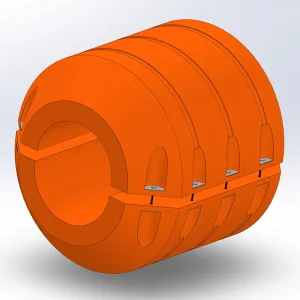
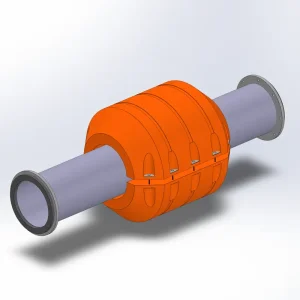
Heavy-Duty Marine Pipeline Floats & Systems Catalog
Explore our complete range of ODM/OEM flotation solutions designed for dredging, industrial outfalls, and offshore pipeline stabilization across the Seattle market.
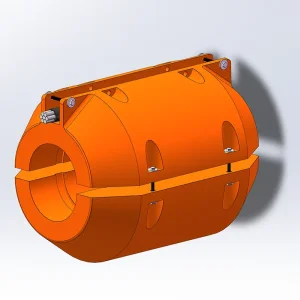
Get Your Seattle Project Float Calculation & Fast Quote
Share your pipe outer diameter, wall thickness, slurry density, and site environmental parameters. Our technical engineering division will return a formal buoyancy sizing profile, CAD dimensional layouts, and CIF Seattle quotation within 24 hours.