
Primary Engineered Marine Buoyancy Modules for Israel Coastal Ops
Pre-sized pipeline buoyancy systems ready for deployment along Ashdod, Haifa port maintenance runs, and coastal brackish water discharges.

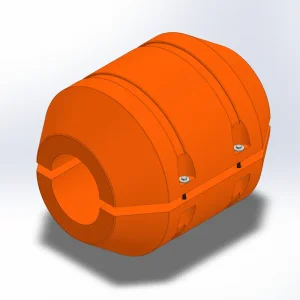
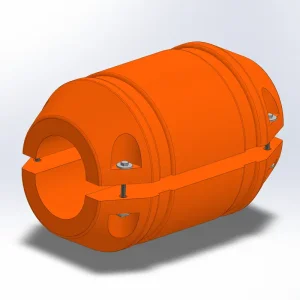
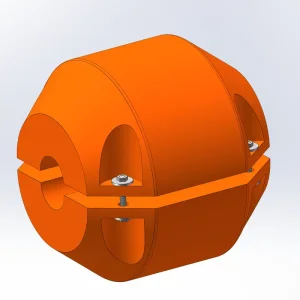
Israel Flotation Demands: Industrial Landscapes & Harsh Marine Realities
Designing buoyancy elements for the Israeli marine and extraction sectors requires engineering tolerances beyond standard global dredging protocols.
Extreme Hyper-Saline Mineral Extraction (Dead Sea Works)
The Dead Sea basin hosts one of the world's most aggressive commercial extraction setups for potash, bromine, and magnesium. With water densities exceeding 1.24 kg/L and saturated chemical crystallization tendencies, typical rotomolded hulls can experience rapid wear and altered waterline dynamics.
- Hydraulic Upthrust Re-calculation: The elevated specific gravity drastically increases standard buoyant uplift while intensifying external stress on pipeline tie-downs.
- Salt Encrustation Load: Salt precipitates rapidly around clamp bands; our exterior rib designs actively discourage crystallite mechanical adhesion.
- Corrosion Defiance: 100% virgin LLDPE combined with 316Ti stainless steel or hot-dip galvanized fastening setups impervious to magnesium-chloride brines.
Seawater Reverse Osmosis (SWRO) & Port Infrastructure
Israel is a global leader in seawater desalination, running monumental SWRO plants along Hadera, Ashkelon, Sorek, and Palmachim. Discharge diffuser pipelines and raw intake systems demand long-term structural flotation support in choppy coastal waters.
- Deep-Sea Intake Placement: Engineered floats support temporary pull-to-sea laying procedures before pipes are settled and ballasted into seabed trenches.
- Heavy Port Maintenance Dredging: The ports of Haifa and Ashdod require rapid turnaround channel clearing without disrupting commercial Mediterranean traffic lanes.
- High UV Index Mitigation: Intense Levantine solar irradiance requires UV20+ molecular stabilizers compounded directly into the resin matrix.
Localized Application Scenarios Across the Israeli Geography
From the Mediterranean shelf to the southern waters of Eilat, tailor-made pipeline flotation ensures safe operations across three distinct aquatic zones.
Mediterranean Coast Desalination
Supporting offshore dredging lines and temporary flotation for the installation of heavy concrete-coated steel and HDPE outfall diffusers at the Sorek I & II facilities.
Sodom & Dead Sea Industrial Pans
Flotation collars deployed to sustain dredging pontoons, tailings transfer slurries, and salt harvest pipelines under temperatures often surpassing 45°C and intense mineralization.
Gulf of Eilat Marinas & Research
Sensitive coral preservation requirements necessitate non-leaching, pristine food-grade polymers for protective barrier lines and water transfer conduits that cause zero ecological toxicity.
Chinese Factory Supply Chain Resilience & Direct Engineering Synergy
Why EPC buyers, dredging contractors, and industrial procurement managers in Israel rely on Shandong Binzhou Juhua for rapid-response buoyancy manufacturing.
Advanced CNC Rotational Molding Technology
Operating custom large-format carousel rock-and-roll machines in Shandong, Juhua leverages continuous electronic temperature feedback to eradicate hot-spot wall thinning. Every float half-shell possesses identical dimensions, guaranteeing complete physical interchangeability on your pipeline assemblies.
Polyurethane (PU) closed-cell foam injection is executed under strict micro-cellular pressure control, achieving 35–45 kg/m³ density without structural voids, ensuring that even in the unlikely event of shell punctures from vessel impact, water ingress remains zero.
Cost Efficiency, Shipping Routes & Port Access
Our strategic manufacturing base in Binzhou, near Qingdao and Tianjin shipping hubs, offers direct maritime links to the ports of Haifa and Ashdod. We optimize the nesting footprint inside 40ft High Cube containers, substantially minimizing volumetric freight expenses.
Direct sourcing from the actual production line cuts out intermediary brokerage markups, passing up to 30% capital expense savings straight to Israel's marine infrastructure and mining development budgets.
Technical Roadmap: Next-Generation Pipeline Buoyancy Solutions
Continuous R&D geared toward autonomous monitoring, sustainable resins, and enhanced offshore operational lifespans.
IoT-Enabled Smart Floats
Embedding ultrasonic draft sensors and GPS beacons directly inside the rotomolded body to provide automated waterline alerts and drag-induced fatigue warnings to project control centers.
Bio-Based Polyethylene
Formulating renewable sugarcane-derived feedstocks into high-density rotomolding compounds to slash the carbon footprint of Mediterranean ecological outfall projects.
Anti-Fouling Nanotextures
Refining exterior surface topologies to mechanically inhibit the anchoring of Mediterranean barnacles and Dead Sea salt incrustation without using toxic biocides.
High-Depth Hydrostatic Cores
Developing syntactic hollow glass microsphere foam configurations for subsea outfall diffusers and marine installations operating at depths beyond 50 meters.
Compliance, Quality Audits & Engineering Assurance
Stringent compliance alignments to verify compatibility with Israeli Standards Institute requirements and international maritime guidelines.
ASTM / ISO Validated Testing
Every batch undergoes ASTM D1693 environmental stress-crack resistance (ESCR) benchmarking and ISO 179 Charpy impact evaluation down to -20°C to ensure crack resistance during offshore handling.
Marine Environmental Safety
Zero toxic additives, plasticizers, or heavy-metal pigments. RoHS and REACH certified raw materials that safeguard Mediterranean fisheries and nature preserves around the Gulf of Aqaba.
Full Dossier Traceability
Furnishing complete material test certificates (MTC 3.1), hydro-buoyancy test protocols, PU foam void scan documents, and container stowage plans tailored for Israeli customs clearance.
Technical & Procurement FAQ for Israeli Clients
Specific answers regarding buoyancy calculation rules, customs handling, and chemical resistance.
How do you calculate pipe float buoyancy for Dead Sea operations?
Because Dead Sea brine has a specific gravity of ~1.24 kg/L (often exceeding 1.35 kg/L when saturated with salt slurry during mineral harvesting), the pipeline displaces a denser medium. While this increases overall buoyant force, the heavy solids inside the pipeline add significant downward weight. We design our calculations using: Buoyancy = (Pipe Deadweight + High-Density Slurry + Fasteners) × 1.35 Margin, ensuring stable draft under continuous pumping.
Are Juhua pipe floats resistant to long-term high UV exposure in southern Israel?
Yes. The Negev desert and the Dead Sea corridor record some of the highest solar UV radiation levels globally. We incorporate premium UV20+ stabilizers into the virgin polyethylene dry blend prior to rotational molding, preventing molecular chain scission, brittleness, and micro-cracking for an operating life exceeding 10 years.
What fasteners are supplied for marine and corrosive industrial environments?
For standard Mediterranean open-sea dredging, we furnish Grade 8.8 hot-dip galvanized or AISI 304/316 bolt hardware. For Dead Sea potash works or chemical outfall lines, we exclusively recommend and provide marine-grade AISI 316Ti or Duplex stainless steel hardware to prevent pitting and stress corrosion cracking.
What is the typical shipping lead time to Ashdod or Haifa Ports?
Production cycles at our Binzhou plant typically span 10 to 18 working days depending on quantity and custom tooling needs. Transit times from Qingdao Port to Haifa or Ashdod are approximately 25 to 35 days under current commercial maritime schedules, with expedited breakbulk arrangements available for emergency replacements.
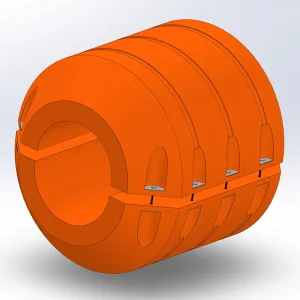
Complete Marine Float Range & Heavy Buoyancy Systems for Project Engineers
Explore our full roster of industrial floating pipeline solutions, heavy-duty mooring units, and offshore dredging assemblies.
Request Your Tailored Technical Proposal & Factory Quote
Send your pipe outer diameter (OD), conveyed material density, working conditions, and destination port (Haifa, Ashdod, or Eilat) to connect directly with our chief marine buoyancy engineer.