
Integrated Buoyancy & Cable Management Architecture
Engineered to prevent cable fatigue, signal interference, and mechanical chafing across maritime dredge-and-power interfaces along the North Sea, Baltic coast, and German canal inland waterways.
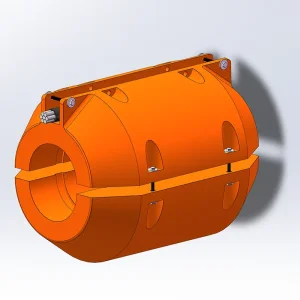
German Marine Infrastructure Cable-Supporting Floats
View Product & Request Quote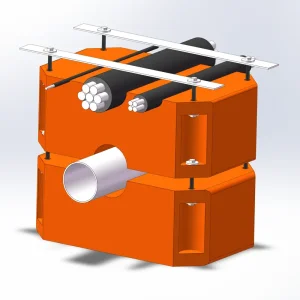
Modular Pipe Floats with Dual Cable Channels for German Ports
View Product & Request Quote
Rhine Corridor Dredge & Cable Trough Flotation Units
View Product & Request Quote
Offshore Energy Subsea Cable Protective Pipe Floats
View Product & Request QuoteOperating Context: Pipe Floats With Cable Troughs in Germany
Analyzing water management, maritime traffic corridors, and subsea electrification projects driving specialized flotation procurement in Central Europe.
Elbe, Rhine & Weser Fairway Adaptation
The Wasserstraßen- und Schifffahrtsverwaltung des Bundes (WSV) oversees deep navigation lanes demanding constant desilting. As electric dredgers and telemetry networks deploy, floats carrying both slurry discharge hoses and high-voltage supply umbilical lines are essential to eliminate tangled floating lines.
North Sea & Baltic Offshore Subsea Interlinks
German offshore wind farms (such as those in the German Bight) require dynamic trenching and backfilling operations. Cable trough pipe floats protect fiber-optic diagnostics and hydraulic conduits from heavy axial torsional stress caused by tidal North Sea swell.
Wasserhaushaltsgesetz (WHG) Environmental Compliance
Water protection laws strictly prohibit non-inert floating equipment. Our food-grade linear low-density and high-density polyethylene shells contain zero heavy metals or plasticizers, completely resistant to leachables in German drinking water reservoir maintenance.
📊 Critical Technical Specifications for German Civil Contractors
In dredging and pipeline engineering, hydraulic drag, bending radius of accompanying cables, and wave impact resilience are primary failure modes. Our engineered cable trough architecture isolates the cable path into a recessed longitudinal conduit molded directly into the buoyant shell, sealed with high-torque non-abrasive EPDM rubber retaining clamps.
| Target Pipe Outer Diameter (OD) | Cable Trough Width x Depth | Available Buoyancy (kg/pair) | Wall Thickness (HDPE Shell) | Core Filling (Polyurethane) |
|---|---|---|---|---|
| 160 mm – 250 mm | 80 mm x 60 mm (Single/Dual) | 120 – 380 kg | 8 mm – 11 mm | ≥ 35 kg/m³ Closed-Cell Foam |
| 280 mm – 450 mm | 120 mm x 90 mm (Dual Channel) | 420 – 1,150 kg | 10 mm – 14 mm | ≥ 38 kg/m³ Hydrophobic Polyurethane |
| 500 mm – 710 mm | 160 mm x 120 mm (Multi-Conduit) | 1,200 – 3,400 kg | 12 mm – 18 mm | ≥ 40 kg/m³ Structural Density Core |
| 800 mm – 1200 mm | Custom Engineered to Specs | 3,800 – 8,200 kg | 16 mm – 22 mm | ≥ 45 kg/m³ High-Pressure Resistant Core |
Engineering Evolution: Next-Gen Dual-Service Flotation
Transitioning from basic buoyancy shells to intelligent, electrified, and digitized marine pipeline infrastructure.
Integrated IoT Sensor Wells
Next-generation pipe floats incorporate recessed dry wells for LoRaWAN or NB-IoT tilt, load, and internal moisture sensors, giving operators live telemetry on pipeline bending moments along volatile tidal zones without separate external buoys.
Anti-EMI Cable Compartments
For operations combining ultra-high-voltage AC/DC subsea umbilical cords with sensitive industrial fieldbus telemetry, modular conductive elastomer linings suppress cross-talk and electromagnetic interference across high-frequency dredging arrays.
Circular Economy Circularity Matrix
Developing 100% mechanically sortable virgin polyethylene bodies using cross-linkable, non-pigmented inner cores. Compliant with European circular plastics initiatives, ensuring total end-of-life re-granulation without hazardous polymer degradation.
Precision Rotomolding Manufacturing & Global Resilience
Combining automated temperature-controlled cycle molding with optimized raw material processing for high dimensional interchangeability.
Automated Variable-Frequency Thermal Management
Every float shell is created via CNC multi-axis rotational molding arms equipped with infrared pyrometer arrays. This eliminates uneven wall shrinkage across the critical inner saddles and outer cable trough edges, preventing internal residual stresses that cause crack propagation in sub-zero North Sea winter operations.
Our computer-controlled polyurethane foaming chamber meters dual-component ISO/polyol mixtures under high pressure, curing with zero void voids and eliminating water ingress even if the outer HDPE skin sustains direct collision damage.
- Zero pinhole defects via vacuum leak testing and ultrasonic wall thickness validation.
- Custom galvanic-isolated 316L stainless steel or hot-dip galvanized fastening hardware.
- Strict weight-to-displacement balance audits yielding consistent ±2% buoyancy variance.
Bespoke Engineering Calculation Services
German contractors benefit from our specialized buoyancy engineering calculations. Rather than guessing float intervals, our naval architects calculate precise spacing ratios:
We design for standard working freeboards of 25% to 35%, ensuring optimum wave dampening without exposing high-center-of-gravity umbilicals to excessive windage.
Comprehensive Marine Flotation & Dredge System Range
Complete project-matched marine solutions including floating pipelines, heavy mooring buoys, boat pontoons, and specialty cable conduits serving German and European water contracts.
German Baltic Marine Cable-Integrated Pipe Floats
View Product & Request Quote
Submerged Infrastructure Dual Conduits Floats
View Product & Request Quote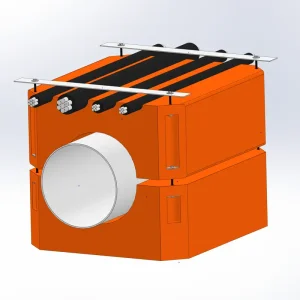
Custom Sized Floating Supports with Cable Troughs
View Product & Request Quote
Industrial Dredge & Marine Pipeline Floating Units
View Product & Request Quote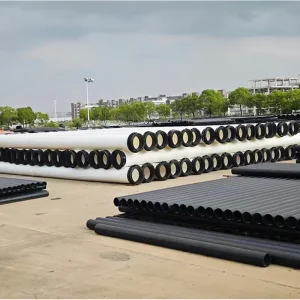
Heavy-Duty Dredge Slurry & Water Pipeline
View Product & Request Quote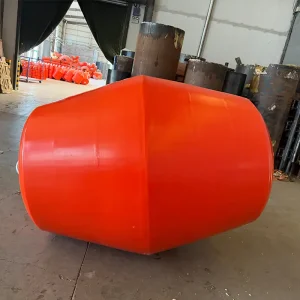
Reinforced Marine Mooring Buoy Assemblies
View Product & Request Quote
Anchorage & Vessel Mooring Buoys for Deep Water
View Product & Request Quote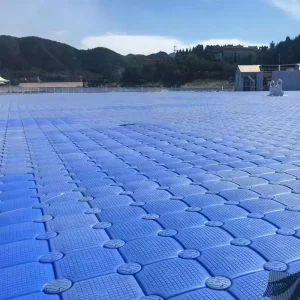
High-Performance Modular Water Pontoons
View Product & Request QuoteFrequently Asked Questions: Sourcing for Germany
Expert clarifications on international logistics, testing protocols, custom mould production, and technical warranties.
? How do integrated cable troughs prevent electrical umbilical line degradation?
Cables clamped directly to external slurry pipes experience severe chafe wear from flexural movement and contact friction. Our integrated troughs isolate cables in an internal radius channel, protecting them against direct wave slam, sunlight degradation, and crushing loads during pipeline maneuvering.
? What are the shipping lead times and DAP logistics options to Hamburg or Bremen?
Standard model production runs complete in 10 to 18 working days. Ocean freight from Qingdao to Port of Hamburg/Bremerhaven typically requires 28 to 35 days. We provide complete CIF or DAP documentation, customs declarations, and tailored containerization racking to maximize 40HC cube utilization.
? Can the cable trough dimensions be customized for multiple fiber and power bundles?
Yes. In addition to our standardized CNC mould library, our tooling center produces modified aluminum inserts allowing asymmetric or dual-trough configurations (e.g., separating high-voltage 10kV feeds from sensitive multi-mode optical telemetry networks).
? How do these floats withstand winter freeze cycles on German inland canals?
Our raw material formulation utilizes cross-linked virgin HDPE polymers with brittle impact transition points below -40°C. The closed-cell PU foam core prevents internal freeze-thaw bursting even if outer shells encounter drifting surface ice sheets.