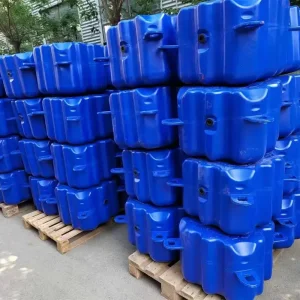
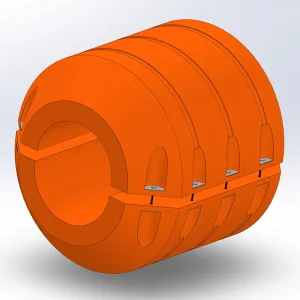
Pipe Floats With Cable Troughs Suppliers & Factories for the Toronto Market

Engineered rotomolded modular buoyancy systems integrated with ruggedized umbilical and subsea power cable troughs. Designed to withstand Lake Ontario freeze-thaw cycles, sub-zero freshwater currents, and rigorous Canadian marine standards.

Featured Modular Systems

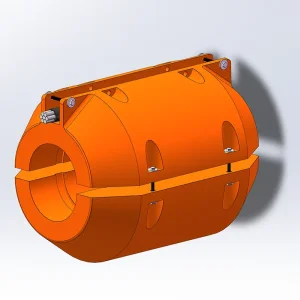
Specialized Buoyancy with Integrated Conduits

Precision-engineered for dredging, industrial slurry pumping, and underwater utilities in the Greater Toronto Area (GTA) and Great Lakes waterways.

Send Inquiry Now for Toronto Delivery
Industrial Overview & Market Analysis

Toronto & Great Lakes Marine Infrastructure Demands

The port infrastructure, lake reclamation initiatives, and municipal utility modernization in Toronto require high-integrity pipeline flotation combined with synchronized power delivery.

Toronto Port & Waterfront Revitalization

The continuous redevelopment of Toronto's Port Lands, including the Don River mouth naturalization project, requires extensive sediment pumping, sediment bypass pipelines, and telemetry-monitored dredging lines that prevent contamination while powering field pumps and sensors.

Combined Power & Hydro-Transport

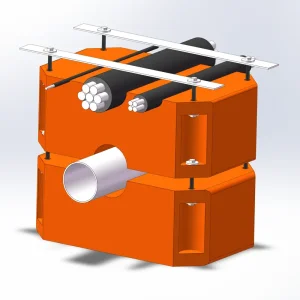
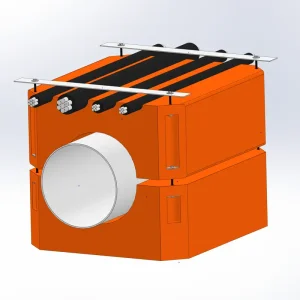
Modern offshore operations cannot rely on separate floating cables prone to propeller strike, ice snags, or thermal insulation failure. Our integrated cable troughs secure high-voltage power umbilicals directly along the float crown, preventing twisting and hydrodynamic drag.

Ontario Environmental Protection Act

Adhering to strict standards governed by the Ontario Ministry of the Environment, Conservation and Parks (MECP), our food-grade virgin LLDPE shells eliminate toxic leaching and microplastic shredding even under mechanical abrasion in heavy surf.

-40°C
Cold-Impact Resistance Rating
100%
Closed-Cell Polyurethane Fill
35 kN
Trough Fastener Tensile Yield
UV20+
Great Lakes Photolytic Stability
Applied Engineering Solutions

Addressing Ontario’s Specific Aquatic Challenges

Engineered specifications designed to counter Lake Ontario's harsh operating reality: winter sheet ice, high wave-energy seiches, and stringent municipal discharge laws.

Thermal Expansion & Freeze-Thaw Integrity

Toronto experiences rapid temperature shifts between November and April. Standard rigid floats crack due to water trapped in crevices freezing. Our float halves incorporate tapered stress-relief ribs and elastomeric rubber grommets that absorb freeze expansion forces safely.

Electromagnetic Shielding & Segregation

Submersible cables carrying 480V to 4.16kV power to electric cutter suction dredgers create EMF interference with fiber optic control links. Our modular troughs offer integrated dielectric partition walls, maintaining complete galvanic separation and telemetry signal integrity.

Quick-Lock Cable Clamping System

Offshore installation in cold climates requires speed. Our cable channels feature tool-free or single-bolt stainless steel 316 locking hoods. Crews can seat, secure, or retrieve umbilicals in sub-zero winds without complex assembly steps.

Technology Roadmap & Standards

Compliance Framework & Future-Proof Buoyancy

Meeting Canadian Coast Guard, Transport Canada, and CSA aquatic structural standards while advancing toward intelligent remote telemetry monitoring.

Phase 1: Material Grade

CSA & ASTM Verification

Certified rotational molding utilizing high-density virgin polyethylene tested per ASTM D1693 for Environmental Stress Crack Resistance (ESCR) surpassing 1,000 hours.

Phase 2: Cable Management

Hydrodynamic Recessed Channels

Streamlined low-drag cross profiles minimizing lateral displacement from Lake Ontario’s swift subsurface undertows and storm surges along Toronto Harbor's Western Gap.

Phase 3: Sensor Integration

IoT Buoyancy Telemetry

Integration of solar-assisted load cells, GPS geofencing, and submergence sensors into the trough lid, transmitting structural health metrics via LTE-M to project managers.

Phase 4: Circular Design

100% Recyclable Lifecycle

Full circular manufacturing protocol allowing decommissioned floats in Ontario to be re-ground, decontaminated, and remolded into secondary utility barriers and marine markers.

Ready to Source Marine Floats for Your Toronto Operations?

Consult with our structural flotation engineers today. Get exact buoyancy calculations, project schematics, and container shipping schedules directly to Ontario ports.

Send Inquiry Now
Comprehensive Flotation Catalog

Engineered Pipeline, Cable, and Marine Assets

Precision manufacturing across the entire marine flotation ecosystem, serving international contractors and Canadian infrastructure developers.

Technical Knowledge Base

Frequently Asked Questions for Toronto & Canadian Operators

Key technical, structural, and logistics insights for engineering contractors evaluating cable-trough buoyancy hardware.

Our design counterbalances the cable trough weight by adjusting the internal distribution of polyurethane foam within the rotomolded body. The cable channels are situated along the upper centerline or paired symmetrically on both flanks, ensuring the combined center of gravity keeps the pipeline perfectly upright without angular twisting during pumping operations.
Yes. The float shells are manufactured from high-grade virgin Linear Low-Density Polyethylene (LLDPE) formulated with cold-impact modifiers, certified to remain ductile down to -40°C. The closed-cell PU core (density 35–45 kg/m³) prevents water ingress, so freeze expansion cannot rupture the float even if partially encased in sheet ice.
For slurry dredging or mine tailings operations around Ontario, total buoyancy must be calculated using the working specific gravity of the pumped mixture (typically 1.3 to 1.6 t/m³) rather than clean water. We recommend an engineering reserve buoyancy of 25% to 35% above the combined weight of the pipe, contents, hardware, and secured power cables.
Our cable troughs feature fully radiused transitions, smooth-molded internal guide tracks, and optional neoprene lining pads. Clamping brackets use rounded nylon or stainless steel 316 retainers that clamp without pinching the cable outer jacket, preventing abrasion damage caused by pipeline wave flexing.
Factory production runs typically require 10 to 18 days depending on mold configurations. Sea freight transit from our facility to the East Coast Canadian gateways (Port of Montreal or Halifax) averages 24 to 32 days, followed by rapid intermodal rail or direct flatbed trucking to job sites in Toronto, Hamilton, or Oshawa.
Connect with Our Engineering Team Now