
Primary Rotomolded Systems for Kuwait Field Deployment
Engineered to meet the procurement demands of Kuwait National Petroleum Company (KNPC), Ministry of Electricity & Water (MEW), and port infrastructure developments across Shuwaikh, Shuaiba, and Boubyan Island.
-
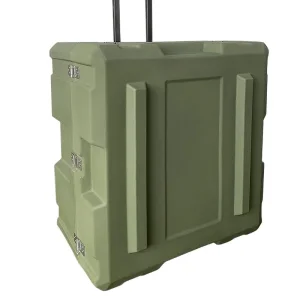
ODM Heavy-Duty Rotomolded Military Airdrop Storage Container (Kuwait Spec)
• UV-Stabilized LLDPE polymer matrix • MIL-STD-810H air-drop and shock rated • Hermetic seal against desert sandstormsKuwait Defense & Logistics Quote -
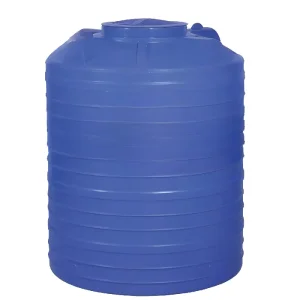
Custom Polyethylene Rotomolded Water Storage Tank – Kuwait High-Heat Potable Tank
• Multi-layer food-grade anti-algae core • Thermal stability up to 75°C surface heat • Seamless anti-crack rotomolded bodyRequest Tank Specifications -
ODM Rotomolded Surfboard & Marine Recreation Solution for Kuwait Waterfronts
• High-buoyancy EPS/PU internal foam core • Impact-resistant outer polymer shell • Zero maintenance in high salinity Gulf waterCommercial Leisure Pricing -

Heavy-Duty Pipeline Float System for Kuwait Offshore & Desalination Tie-Ins
• Reinforced bolt-clamp connection collars • Formulated for 40,000+ ppm seawater salinity • High net buoyancy per modular pairOffshore Marine Spec Sheet
The Strategic Imperative for Rotomolded Polymers in Kuwait's Industrial Ecosystem
Kuwait presents one of the most mechanically and environmentally taxing environments in the world for industrial products. The combination of intense ultraviolet irradiation (annual UV index frequently exceeding 11+), severe thermal cycling between 5°C winter nights and 54°C ambient summer days (with substrate surface temperatures reaching 75°C), high-salinity marine environments in the Persian Gulf (salinity levels up to 42‰), and continuous exposure to abrasive desert sandstorms demands polymer hardware far beyond standard commercial grade.
Under the ambitious framework of Kuwait Vision 2035 ("New Kuwait"), mega-infrastructure projects are progressing at a rapid rate. Initiatives such as the expansion of Mubarak Al-Kabeer Port on Boubyan Island, the extensive modernizations at Shuwaikh and Shuaiba Commercial Harbors, continuous land reclamation projects, and coastal cooling outfalls for thermal power and desalination plants (notably the Az-Zour and Subiya complexes operated by the Ministry of Electricity & Water - MEW) necessitate massive procurement of rotomolded pipeline floats, marine aids to navigation (AtoN), environmental containment barriers, and heavy-duty storage infrastructure.
Traditional steel vessels and fabricated pontoons suffer catastrophic corrosion and coating breakdown in the Gulf within 24 to 36 months, requiring expensive dry-docking and cathodic protection replacement. Conversely, high-performance rotational molding (Rotomolding)—utilizing metallocene-catalyzed, cross-linkable, and hexene/octene-copolymer linear low-density polyethylene (LLDPE)—provides zero-corrosion, seamless stress-free articles capable of delivering maintenance-free service lives exceeding 15 to 25 years in Arabian Gulf field applications.
Macro-Engineering Solutions Across Kuwait's Core Economic Verticals
From upstream petrochemical processing under Kuwait Oil Company (KOC) parameters to offshore dredging reclamation, our rotomolded systems fulfill strict mechanical criteria.
Petrochemical & Offshore Oil Terminals
Kuwait's offshore loading terminals at Mina Al Ahmadi and Mina Abdullah handle millions of crude barrels daily. Our rotomolded containment boom floats, heavy marine mooring buoys, and chemical dosing tanks resist aromatic hydrocarbons, sour gas (H2S), and intense sea chop without environmental stress cracking (ASTM D1693 tested for >1,000 hours).
Desalination & Power Plant Outfalls
Thermal desalination plants along the Kuwait Bay rely on massive intake screening systems. We supply modular pipe floats and floating security barriers engineered to carry submerged slurry pipelines, brine discharge systems, and intake chlorination lines with high continuous hydrodynamic stability and customized subsea ballast integration.
Defense, Border Security & Logistics
Kuwait's armed forces and logistical entities demand rugged, airtight transit containers conforming to MIL-STD-810H. Our rotationally molded airdrop cases and secure armament shipping containers feature integrated elastomeric gaskets, automatic pressure relief valves, and reinforced interlocking stack ribs for high-heat storage.
Aids to Navigation (AtoN) & Maritime Channels
In adherence to IALA (International Association of Marine Aids to Navigation and Lighthouse Authorities) Region A recommendations, we engineer marine navigation buoys with internal stainless steel central tension members, self-contained solar-LED systems, and high-visibility UV-stabilized pigments that resist color fading under desert sun.
Dredging & Coastal Silt Mitigation
Capital dredging projects across Kuwait's navigation arteries encounter heavy calcarenite silt and abrasive coral sediments. Our paired pipe floats clamp securely over steel, HDPE, and flexible discharge pipes, maintaining continuous positive freeboard and dampening lateral hydrodynamic shock induced by wave action.
Municipal Water Security Infrastructure
Kuwait's emergency potable water network requires large-capacity, multi-layer liquid storage tanks certified non-toxic and bacteriologically inert. We produce rotational molded tanks up to 50,000-liter capacities featuring virgin inner food-contact layers, expanded insulation middle cores, and UV-reflective outer jackets.
Engineering Polymers for Extreme Kuwait Climatology
Standard commercial rotational molding cannot endure the hyper-arid, photochemically aggressive GCC environment. Our engineering team implements an uncompromising polymer formulation protocol backed by advanced metallocene catalysis and Hindered Amine Light Stabilizers (HALS).
| Performance Parameter | Test Standard | Standard Commercial Grade | Juhua Kuwait Industrial Specification |
|---|---|---|---|
| UV Photostability Rating | ASTM G155 / ISO 4892-2 | UV-8 (approx. 8,000 hours) | UV-24+ (24,000+ Xenon Arc Hours) |
| Environmental Stress Cracking (ESCR) | ASTM D1693 (Condition B, 10% Igepal) | F50 > 250 Hours | F50 > 1,500 Hours (Zero Micro-Fissures) |
| Dart Impact at Sub-Zero (-40°C) | ARM-Low Temp Impact Standard | < 90 J | > 165 J (Ductile Failure Mode) |
| Internal Core Filling | Closed-Cell Polyurethane Foam | 28–32 kg/m³ Variable | 38–45 kg/m³ Hydrophobic Injected EPS/PU |
| Thermal Distortion Point (HDT) | ASTM D648 @ 0.455 MPa | 58°C | 74°C Operating Continuous Load |
Our proprietary multi-layer wall architecture combines an external sacrificial UV-blocking layer, an ultra-dense structural LLDPE core, and a chemically inert internal boundary layer. For hollow buoyancy systems, internal closed-cell polyurethane foam is machine-injected under computer-controlled mass metering, guaranteeing that even if the outer polyethylene skin suffers mechanical breach from ship collision or heavy aggregate impact, water ingress is strictly limited to <1.5% of total module volume, preventing pipeline sinkage.
Chinese Smart Manufacturing: Scale, Speed & Quality Assurance
As a specialized manufacturer based in Shandong, China, Shandong Binzhou Juhua Rubber & Plastic Co., Ltd. combines more than 20 years of technical expertise with automated, digitally controlled rotational molding systems. This technological edge provides Kuwait EPC contractors and municipal agencies with dependable supply security, rapid prototype-to-volume scaling, and competitive procurement economics.
Multi-Axis Computerized Oven Control
Our facility operates heavy-duty bi-axial shuttle and carousel rotational molding machines fitted with electronic internal mold temperature monitoring (RotoLog system). This prevents hot-spot thermal degradation and guarantees uniform wall thickness along complex corners and flange tie-ins.
Precision CNC Tooling & Cast Aluminum Molds
We deploy high-integrity CNC-machined steel and cast aluminum molds to manufacture interchangeable float shells. Replacement floats ordered years later seat precisely onto existing pipeline outer diameters (OD) without clamping eccentricity or point-loading stress.
Strict Non-Destructive Quality Verification
Every Kuwait project batch undergoes rigorous multi-point ultrasonic wall thickness verification, -40°C drop-dart impact tests per ARM standards, hydrostatic pressure testing for buoyancy verification, and raw resin Melt Flow Rate (MFR) / density testing in our certified testing laboratory.
Localized Compliance, Approvals & Direct GCC Logistics
Navigating public sector and petrochemical procurement in Kuwait demands rigorous adherence to regional quality mandates and documentation protocols. Our export engineering team ensures complete compatibility with tender specifications across major state agencies.
KOC, KNPC & MEW Alignment
We supply full material traceability documentation, raw polymer mill test certificates (MTCs), UV aging chamber reports, and full buoyancy calculations calibrated to specific fluid densities (from clean water 1.0 t/m³ to heavy tailings/sand slurries 1.6–1.8 t/m³) required by Kuwait operating contractors.
Third-Party Inspection Directives
All production runs can be pre-inspected by internationally accredited third-party verification agencies—including SGS, Bureau Veritas, DNV, and Intertek—with factory access, visual inspections, hydrostatic tests, and loading supervision prior to container sealing.
Streamlined Logistics: Shuwaikh & Shuaiba Ports
Through robust partnerships with global ocean carriers, we manage scheduled 40ft High Cube (HC) and flat-rack shipping directly from Qingdao/Tianjin to Kuwait (Shuwaikh and Shuaiba Ports). We provide nested, high-density stacking designs that optimize container cube utilization, dramatically reducing landed freight cost per unit.
Frequently Asked Questions for Kuwait Procurement Teams
Clear, technical responses addressing the real challenges of deploying rotomolded polymer systems in the Arabian Gulf.
How do your rotomolded products resist Kuwait's extreme 50°C+ summer heat?
We use virgin high-density and linear low-density polyethylene (HDPE/LLDPE) copolymers formulated with specialized heat stabilizers and a melt flow index designed to prevent softening or creep. The material retains full tensile strength up to 75°C surface temperatures, maintaining critical dimensional tolerances under heavy clamp or liquid load.
What calculation method sizes pipeline floats for Kuwait dredging lines?
We calculate total submerged buoyancy using the formula: Total Buoyancy ≥ (Weight of Dry Pipe + Weight of Slurry Medium + Weight of Hardware) × 1.25 to 1.30. In Kuwait dredging, sand/silt slurry density typically ranges between 1.3 to 1.6 t/m³. A 25–30% net buoyancy reserve ensures the pipeline maintains an optimal 25% freeboard above Gulf waves.
Are your polyethylene floats resistant to high-salinity Persian Gulf water?
Yes. Polyethylene is chemically non-reactive and 100% rustproof. It exhibits complete immunity to electrochemical pitting, marine fouling acids, and hypersaline water conditions (up to 42‰ salinity) found around Kuwait Bay, completely eliminating the corrosion maintenance typical of steel pontoons.
What fastening hardware is supplied for marine installations?
For standard applications, hot-dip galvanized (HDG) grade 8.8 bolts are supplied. For offshore, petrochemical, or critical seawater installations in Kuwait, we provide marine-grade AISI 316 / 316L stainless steel hardware with nylon locknuts and oversized EPDM backing washers to prevent galvanic corrosion and loosening under continuous surf vibration.
Can Juhua manufacture custom rotomolded articles according to client drawings?
Yes. We provide complete OEM/ODM engineering services—from 3D CAD modeling and finite element stress analysis (FEA) to CNC aluminum or sheet-steel tooling fabrication. Custom projects can transition from approved drawings to first-article samples in 25 to 35 calendar days.
What warranty and quality assurance is offered for Gulf deliveries?
We provide a standard commercial warranty lasting 18 months from the date of port delivery or 12 months from on-site commissioning, whichever occurs first. Material certificates (EN 10204 3.1) and raw polymer compound documentation accompany all export shipments.
Industrial Grade Rotomolded Buoyancy, Piping & Transport Systems
Complete enterprise solutions available for direct export supply to Kuwait industrial contractors, port authorities, and offshore engineering operations.
-
ODM Heavy-Duty Rotomolded Military Airdrop Storage Container Supplier, Factory
• Impact-resistant rib architecture • Sand-proof IP67 silicone gasket • Standard desert sand / olive drabInquire Product Details -
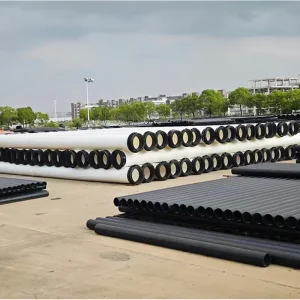
OEM Industrial-Grade Pipeline for Reliable Fluid Transport Companies, Factory
• PE100 high-density formulation • High pressure & surge dampening • Smooth interior minimizing pumping headRequest Pipeline Pricing -
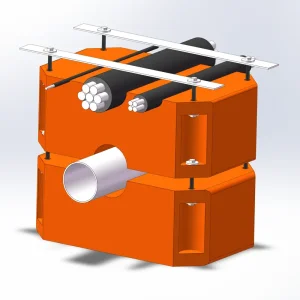
ODM Durable Cable-Integrated Pipe Floats for Submerged Infrastructure Supplier
• Dual conduit channel for subsea cables • Stabilized clamp assembly against rotation • High visibility safety pigmentView Technical Specs -
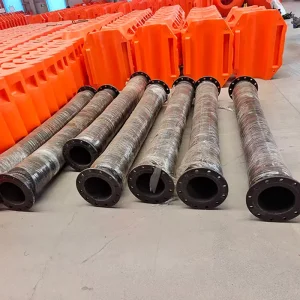
Custom Flexible Rubber Hoses for Advanced Fluid and Sediment Transport, Quotes
• Highly abrasion-resistant inner sleeve • Steel ring reinforcement for vacuum safety • Flexible bend radius in port dredgingGet Rubber Hose Quote -
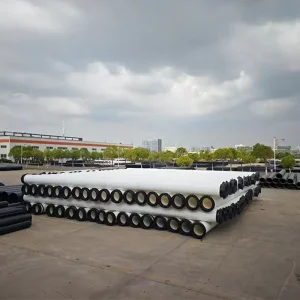
ODM High-Density Pipeline for Efficient Liquid and Gas Transport Manufacturers
• Extruded from virgin polyethylene resin • Butt-fusion compatible joints • Chemical resistance to hydrocarbonsRequest Pipeline Specs -
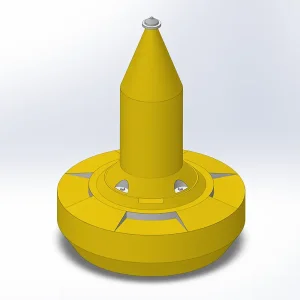
High-Quality Reliable Marine Navigation Buoy for Safe Waterways Manufacturer
• Rotomolded self-righting ballasted hull • Complies with IALA Maritime Guidelines • Radar reflector and solar mount readyView Marine Buoy Model -
Custom High-Performance Marine Buoys for Safe and Efficient Waterways
• Internal hot-dip galvanized steel chassis • Closed-cell hydrophobic foam fill • Long maintenance interval in hyper-salinityRequest Buoy Catalog -
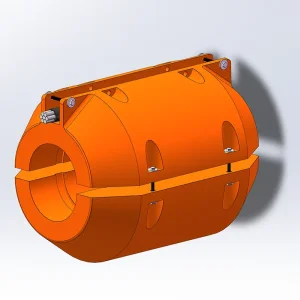
Custom Reliable Pipeline Floats for Marine and Engineering Projects Company
• Clamping diameters from 110mm to 1200mm • Symmetrical halves for rapid replacement • Anti-slip inner rib design prevents slidingDownload Engineering Spec