
Direct Sourcing Catalog
Featured Hamburg Heavy-Duty Slurry & Marine Line
Standard and custom elastomeric conduit lines calibrated specifically for hydraulic dredge circuits, high-abrasion sediment discharge, and brackish estuarine conditions.
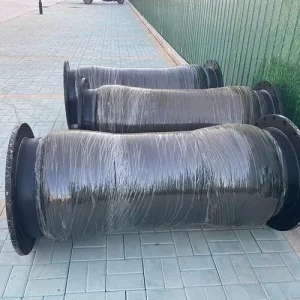
Custom Flexible Rubber Hoses for Advanced Fluid and Sediment Transport - Port of Hamburg Edition
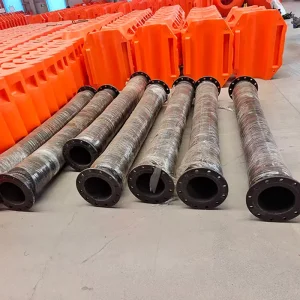
Custom Heavy-Duty Rubber Hose for Hamburg Marine and Tidal Water Management Projects
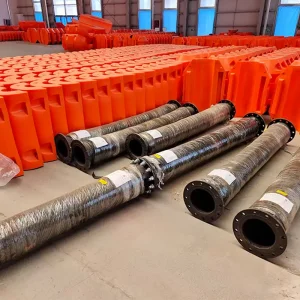
High-Quality Heavy-Duty Rubber Hose for Elbe Dredging & Marine Reclamation Suppliers
120M+
Tons Annual Throughput at Port of Hamburg
40 Bar
Maximum Working Pressure Capability
DIN EN 1765
Full Petrochemical & Maritime Compliance
-40°C to +100°C
Extreme Environmental Thermal Resistance
Strategic Territory Profile
Industrial Demands & Marine Operations in the Port of Hamburg
The Port of Hamburg (Hafen Hamburg), situated strategically along the Elbe River, stands as Germany’s universal gateway to world trade and the third-largest container hub in Europe. The unique hydrodynamic characteristics of the Elbe estuary require continuous maintenance dredging to counter tidal silt sedimentation, ensuring navigability for ultra-large container vessels (ULCVs) drawing drafts up to 14.5 meters.
Consequently, marine contractors, municipal waterway managers (HPA - Hamburg Port Authority), and engineering procurement contractors (EPCs) demand heavy-duty rubber hoses that withstand severe cyclical fatigue, intense hydro-abrasive slurry friction, and saline brackish water conditions.
- Elbe Estuary Desiltation: Specialized suction and discharge lines resisting silica sand gouging.
- Bunkering & Bulk Terminals: High-integrity bunkering conduit for fuel, chemicals, and industrial feedstocks.
- Offshore Wind Maintenance: Heavy-duty dockside ballast and flexible seawater transfer systems servicing German Bight wind farms.
- Altenwerder & Eurogate Upgrades: Modernized port expansion requiring structural vibration-damping elastomeric pipelines.
Total Cost of Ownership (TCO) Optimization
In high-throughput Northern European maritime zones, unplanned conduit failure translates immediately to port channel congestion, demurrage penalties, and costly environmental mitigation protocols.
Juhua's direct-from-factory manufacturing infrastructure combines computational fluid-flow modeling with dual-vulcanization processes. We deliver rubber hoses with ultra-dense NR/BR elastomer matrices that demonstrate up to 3.8× extended service life over generic SBR liners when handling sharp abrasive Elbe sand sediments.
Elastomer Engineering Whitepaper
Technical Architecture: High-Integrity Dredge & Industrial Hoses
Examine the core cross-sectional metallurgy and polymer compositions that ensure Juhua elastomeric conduits excel under acute hydro-mechanical stresses.
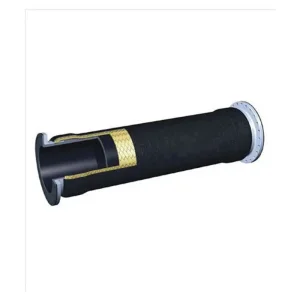
Abrasion-Resistant Inner Lining
Compounded using premium-grade Natural Rubber (NR) paired with high-cis Polybutadiene (BR). Certified under ISO 4649 (Method A) demonstrating volume abrasion loss of less than 45 mm³, providing superior resistance against gravel, crushed shell debris, and dense mineral slurries.
Multi-Ply Tensile Reinforcement
Features alternating layers of high-tenacity synthetic polyester or aromatic polyamide cord cords intertwined with high-tensile spring steel wire helixes. Eliminates kinking, maintains full circular flow geometry under 0.9 bar vacuum, and withstands hydraulic pressure surges up to 40 bar.
Weather & Hydrocarbon Outer Shell
Formulated with Chloroprene (Neoprene) or modified EPDM compounds engineered for North Sea maritime weather conditions. Delivers complete resistance to UV radiation, atmospheric ozone cracking, oily water runoff, and marine micro-organism growth.
Integral Built-In Flange Couplings
Fully vulcanized carbon steel (Q235/SS316) flanges embedded directly into the hose carcass. Eliminates cold clamping failure risks, creates smooth internal transitions to minimize boundary layer turbulence, and guarantees leak-free operation up to ASME Class 150/300 and DIN 2501 standards.
Pricelist Transparency & Factory Economics
Our integrated manufacturing facilities eliminate intermediary distributor margins. We deliver tier-one industrial rubber hoses with detailed, itemized volume pricing models based directly on raw elastomeric weight, reinforcement plies, and end fitting configurations.
Stringent Proof & Burst Testing
Every single length produced for maritime or dredging applications is subjected to hydraulic proof testing at 1.5× to 2.0× designated working pressure (WP) prior to dispatch. Burst pressure ratios strictly respect a 3:1 to 4:1 safety factor margin in compliance with EN ISO 1402.
| Nominal Bore (DN/ID) | Wall Thickness | Working Pressure (WP) | Burst Pressure (BP) | Min. Bending Radius | Target Hamburg Application |
|---|---|---|---|---|---|
| DN 150 (6") | 16 - 22 mm | 15 - 25 bar | ≥ 60 bar | 900 mm | Bunkering, Terminal Fuel & Dewatering |
| DN 300 (12") | 24 - 32 mm | 12 - 20 bar | ≥ 48 bar | 1,800 mm | Trailing Suction Hopper Dredging (TSHD) Discharge |
| DN 500 (20") | 35 - 45 mm | 10 - 16 bar | ≥ 36 bar | 3,000 mm | Elbe River Desilting & Land Reclamation |
| DN 800 (32") | 45 - 60 mm | 10 - 15 bar | ≥ 30 bar | 4,800 mm | Harbor Deepening Main Line & Cutterhead Links |
| DN 1000 (40") | 55 - 75 mm | 8 - 12 bar | ≥ 24 bar | 6,000 mm | Offshore Ballast Transfer & Heavy Silt Discharge |
European Quality Assurance
Localized Compliance for German Maritime & Civil Norms
Supplying industrial fluid infrastructure into Hamburg requires uncompromising adherence to German environmental and engineering standards. Juhua maintains exhaustive manufacturing oversight to ensure streamlined approval processes.
Our production facilities maintain complete material traceability from virgin elastomer blending to vulcanization curing ovens. For European partners, we provide comprehensive documentation packs designed to satisfy the strict oversight of German notified bodies including TÜV NORD and DNV GL.
- DIN EN 1765 & ISO 10380: Certifications for rubber hose assemblies used in petrochemical, oil transfer, and coastal bunkering.
- Pressure Equipment Directive (PED 2014/68/EU): Full Module H compliance for pressure-retaining assemblies operating above atmospheric limits.
- German Water Resources Act (WHG): Leak-tight engineering safeguarding the sensitive Elbe River ecosystem against chemical and petroleum spills.
- Direct Port Delivery: Optimized containerized or breakbulk shipping directly routed to Hamburg Port terminals, clearing customs via Hamburg customs offices (Hauptzollamt Hamburg).
The Engineer's Hamburg Sizing Guide
When ordering rubber hoses for dredging and marine civil works in Hamburg, specifying accurate operational parameters is critical. To avoid premature fatigue or coupling pull-out, our technical team requests:
- Specific gravity (SG) and particle grain size distribution (d50) of the conveyed silt/sand slurry.
- Dynamic wave action and expected tidal range along the Elbe berth.
- Continuous system operating pressure versus instantaneous shut-off water hammer peaks.
- Specific end connection standards (DIN, ANSI, JIS, or quick-release cardan joints).
R&D Roadmap 2026-2030
Next-Generation Fluid Conveyance Technologies
How Juhua is integrating sensory monitoring, bio-based polymers, and composite reinforcement to power future-proof port installations.
IoT-Enabled Wear Sensing Layers
Embedding conductive wire grids directly into the inner wear indicator lining. When abrasive Elbe gravel reaches critical wear thresholds, sensory circuits trigger telemetry warnings, preventing catastrophic blowouts.
Self-Floating Hose Formulations
Direct integration of low-density closed-cell polyethylene foam jackets vulcanized seamlessly around the rubber carcass, removing the need for external clamp-on floats in restricted port basin corridors.
Circular Economy & Recycled Polymers
Pioneering devulcanization processes allowing up to 35% reclaimed technical rubber recovery without degrading tensile strength or burst thresholds, supporting EU Green Deal and Hamburg ESG mandates.
Complete Hamburg Marine & Pipeline Inventory
Full Extended Equipment Portfolio for Hamburg
Review our heavy-duty marine pipelines, dredge conduit, floating systems, and safety solutions engineered for high-demand maritime applications.
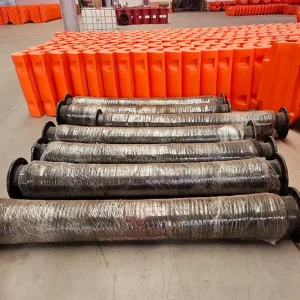
Custom Heavy-Duty Rubber Pipelines for Efficient Water and Slurry Transport - Hamburg Port Supplier
High-Quality High-Performance Rubber Hoses for Elbe Water and Slurry Transport
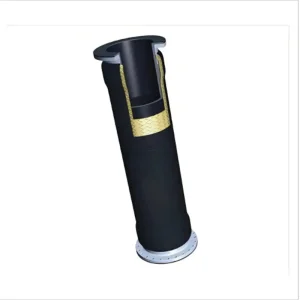
Custom Premium Rubber Hoses for Reliable Water and Slurry Transport - Hamburg Edition
Best Reliable Pipelines for Sediment and Slurry Transport - Complete Hamburg Pricelist
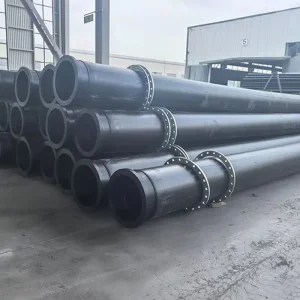
Best Heavy-Duty Pipeline for Safe and Efficient Fluid Transport - Hamburg Infrastructure

Best Heavy-Duty Pipeline Float System for Hamburg Estuary & Subsea Installations
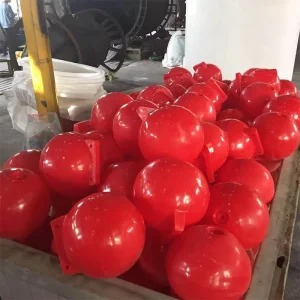
Best PE Float Ball – Durable Buoyancy Solution for Port of Hamburg Water Projects
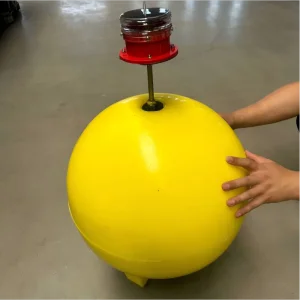
High-Quality LED-Equipped Floating Ball for Safe Elbe Navigation & Channel Marking
Technical Knowledge Base
Frequently Asked Technical Questions: Hamburg Procurement
Crucial engineering, delivery, and testing clarifications for terminal superintendents, dredging contractors, and industrial procurement teams.
Dredging operations along the Elbe River confront high-velocity slurry composed of fine, highly abrasive silica sands and cohesive tidal muds. Our rubber dredge hoses incorporate thick internal linings manufactured from natural rubber and polybutadiene (NR/BR) blends displaying exceptional resilience and tear resistance. This polymer architecture deflects sharp sand particles elastically rather than eroding via brittle micro-fractures, multiplying operating lifespans compared to standard synthetic tubing.
Tidal amplitudes in the Port of Hamburg can fluctuate by over 3.6 meters daily, subjecting pipeline connections between quays, pontoons, and dredgers to continuous cyclic flexure and torsional loads. Our heavy-duty marine hoses are built with multi-layered high-tensile textile cord reinforcement and heavy-gauge spiral steel wire helixes. This configuration provides high bending elasticity without reducing internal cross-sectional diameter or causing carcass delamination.
Standard manufacturing times range from 15 to 25 days depending on nominal bore size and reinforcement plies. Ocean freight routing directly to Hamburg Port (CTA or Eurogate terminals) takes approximately 28 to 35 days. We provide comprehensive export documentation—including EUR.1 certificates of origin, mill test certificates (EN 10204 3.1), and complete packing lists—to ensure seamless clearance through Hamburg customs authorities.
Yes. Our factory produces built-in vulcanized flanges tailored to any international or European standard, including DIN EN 1092-1 (PN6, PN10, PN16, PN25), ANSI/ASME B16.5 Class 150/300, or proprietary dredging bolt circles. Flanges can be supplied in hot-dip galvanized carbon steel (Q235), epoxy-coated steel, or 316L stainless steel for maximum corrosion resistance in brackish North Sea waters.
Every single production batch undergoes stringent QA protocols: raw elastomer rheometer curve verification, tensile cord pull-out testing, electrical conductivity continuity testing, and hydrostatic pressure testing at 1.5× designated working pressure for a sustained hold period. Full hydrostatic test charts, third-party inspection reports (SGS/Bureau Veritas upon request), and material conformity certs are delivered with the shipping dossier.
Accelerate Your Hamburg Hydraulic & Marine Operations
Connect with our senior technical elastomer engineers to receive a customized buoyancy and hose stress analysis, CAD drawings, and our competitive direct-from-factory pricelist.
Send Inquiry Now — Request Hamburg Pricelist