
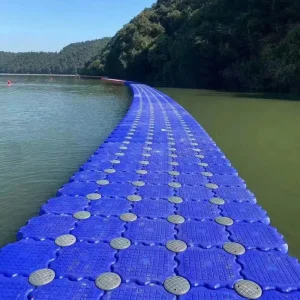
OEM Advanced Floating Boat Pontoon for Manila Water Platforms
Explore Specifications
Pre-engineered pontoon components optimized for tropical marine environments, high UV exposure, and variable coastal hydrodynamics across Luzon waterways.
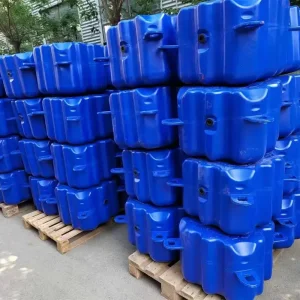
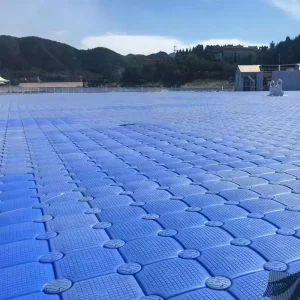

The industrial and commercial landscape across the National Capital Region (NCR) of the Philippines—specifically surrounding the Port of Manila, Manila Bay, Laguna de Bay, and the Pasig River basin—is undergoing a profound infrastructural transformation. Rapid urban expansion, combined with aggressive initiatives under national infrastructure programs, has catalyzed massive demand for modular, robust, and anti-corrosive aquatic platforms. Traditional marine timber and mild steel flotation frameworks deteriorate rapidly when exposed to Manila Bay's combination of high salinity, industrial runoff, tropical biofouling, and severe seasonal typhoon surges. As a consequence, high-density polyethylene (HDPE) rotomolded pontoon systems have transitioned from an alternative product to the indispensable technical standard for floating civil construction, ferry terminals, workboat berthing, and dynamic commercial installations.
Navigating procurement in this sector requires an exhaustive understanding of dynamic hydrodynamic variables, material formulations capable of withstanding extreme UV radiation (class UV8 through UV15), and localized installation compliance. This whitepaper sets out comprehensive pricing parameters, technical engineering considerations, and lifecycle metrics for engineering, procurement, and construction (EPC) contractors and marine operators acquiring boat pontoon flotation assets for projects deployed in Manila and throughout the Philippine archipelago.
Navigating the operational realities of typhoon belts, shallow draft littoral waters, and complex municipal regulatory structures across Metro Manila.
The rehabilitation and expansion of the Pasig River Ferry Service creates an immediate imperative for reliable, passenger-safe landing platforms. Fluctuating river discharge volumes, significant debris interaction, and periodic municipal dredging demand modular pontoon platforms that adjust dynamically to water level shifts while maintaining rigid gangway alignment and zero maintenance downtime.
With massive land reclamation initiatives proceeding along the Manila Bay coastal corridor, contractors require heavy-load modular floating jetties to service crew transfers, fuel shuttles, pipeline inspections, and temporary equipment storage. Steel pontoons suffer critical wall thinning within 36 months under these conditions due to aggressive galvanic reactions; seamless HDPE pontoons eliminate this liability.
Southeast Asia’s largest inland lake, directly adjacent to Metro Manila, is modernizing its fishing platforms and aggressively piloting floating solar photovoltaics (FPV). Rotomolded pontoons supply the foundational platform for these hybrid installations, engineered to resist hypereutrophic freshwater environments and seasonal microcystis algal accumulations.
Indicative pricing matrix, core structural metrics, and physical parameters governing floating pontoon acquisitions delivered to Manila ports (FOB / CIF Manila Port).
| System Type | Dimensions (L × W × H mm) | Material Formulation | Effective Buoyancy | Indicative Price (USD/Unit) | Optimal Deployment |
|---|---|---|---|---|---|
| Standard Single Cube Pontoon | 500 × 500 × 400 | Virgin High-Density PE + UV8 Stabilizer | 350 kg/m² | $22.00 – $34.00 | Marinas, Leisure Watercraft, Jet Ski Docks |
| Reinforced Double Pontoon Unit | 1000 × 500 × 400 | High Molecular PE (Rotomolded) | 360 kg/m² | $45.00 – $68.00 | Ferry Landings, Workboat Moorings, Walkways |
| Heavy-Duty Commercial Pontoon | 1000 × 1000 × 400 | Impact-Modified PE with EPS Core | 420 kg/m² | $95.00 – $145.00 | Industrial Work Platforms, Construction Berths |
| Dredging & Pipeline Saddle Float | Custom Calibrated to OD | Stress-Crack Resistant PE Shell + PU Foam | Variable Sizing (120–130% Reserve) | $110.00 – $480.00 | Manila Bay Sand Reclamation & Discharge Pipelines |
Deploying marine platforms across the Philippine archipelago introduces engineering challenges uncommon in temperate waters. Metro Manila experiences average annual ambient temperatures exceeding 32°C, combined with high UV-index exposure throughout the dry season and violent mechanical stresses during the southwest monsoon (Habagat) and Pacific typhoon seasons. Low-grade recycled polymers or thin-walled blow-molded floats suffer rapid photo-oxidation, localized embrittlement, and shear failure at inter-lug pin connections.
Our pontoon modules are produced via state-of-the-art rotational molding using high-impact, virgin polymers with a melt flow index strictly engineered for environmental stress crack resistance (ESCR). All raw polymers are pre-compounded with carbon black or advanced hindered amine light stabilizers (HALS) ensuring resistance to UV degradation rated up to UV15 standards. Even under severe structural impact from maneuvering support vessels or floating river debris, the ductile matrix prevents catastrophic rupture, guaranteeing total system integrity and personnel safety.
International infrastructure consortia operating in Southeast Asia face a regular divergence between standardized international structural design codes (such as PIANC guidelines or BS 6349 for maritime structures) and the empirical field conditions of Philippine waters. Procurement managers must reconcile these domains effectively:
Deploying commercial water pontoon platforms in the Manila jurisdiction requires meticulous compliance verification across multiple governing agencies:
Forward-looking engineering strategies driving structural durability, intelligent monitoring, and sustainability in archipelagic maritime environments.
Next-generation pontoon assemblies destined for mission-critical marine operations incorporate embedded load cells and multi-axis accelerometers within core connecting pins. These sensors stream real-time telemetry on wave slap resonance, hawser line tension, and hinge fatigue, alerting maintenance supervisors via cloud dashboards before mechanical failure can manifest during typhoon events.
While traditional hollow floats offer standard economic viability, high-risk industrial docks in congested ports are shifting toward internal solid closed-cell expanded polystyrene (EPS) or hydrophobic polyurethane filling. Even if the heavy-duty outer PE skin is perforated by direct collision with steel vessel bows or sharp submerged hazards, the pontoon maintains 100% of its native buoyancy without water ingress.
With infrastructure project scoring placing increasing weight on corporate Environmental, Social, and Governance (ESG) frameworks, research and manufacturing paradigms are embracing certified ocean-bound recycled polymer integration and bio-circular LLDPE. These materials deliver rigorous ASTM-certified tensile and impact thresholds while significantly lowering the embedded carbon footprint of marine civil works.
Actionable answers to standard engineering, logistical, and commercial inquiries submitted by marine project engineers and sourcing professionals.
Engineered modular pontoon floats constructed from prime virgin polyethylene with advanced UV8-UV15 stabilization compounds feature a nominal design lifespan of 15 to 20 years in tropical marine environments. Unlike steel pontoons that necessitate dry-docking and re-coating every 24 to 36 months to arrest corrosion, HDPE is totally inert to electrochemical oxidation, salt crystallization, and biofouling colonization.
Typhoon mitigation relies on dynamic anchoring design rather than rigid fixation. System engineering specifies self-adjusting internal pile guides mounted to driven steel pipes, or deadweight block anchors integrated with heavy shock-absorbing marine elastomeric snubbers. This allows the entire pontoon assembly to elevate safely with storm surges up to several meters while absorbing severe wave pounding forces without shearing connect lugs.
Standard volume orders (1 to 5 forty-foot high-cube containers) typically require 10 to 18 days for production and factory QA staging. Ocean transit to Manila South or North Harbor from our manufacturing facilities averages 7 to 12 days. Contractors should budget an end-to-end timeline of approximately 25 to 35 calendar days from order finalization to port discharge, accounting for standard customs clearances.
Polyethylene displays high energy absorption characteristics and low flexural modulus. Under docking impacts, the pontoon body undergoes minor elastic deflection to dissipate impact kinetic energy before recovering its original geometry, functioning as an integrated fender. For heavy commercial workboats or passenger ferries, sacrificial EPDM or rotomolded dock edge bumpers are easily fastened directly to perimeter lugs.
Yes. The modular design logic allows platforms to be decoupled, reconfigured, expanded, or completely relocated using basic manual tools. A modular jetty servicing a seasonal dredging or reclamation phase in Manila Bay can be rapidly disassembled and redeployed as an eco-tourism pier, floating swimming barrier, or aquaculture work platform in an entirely different Philippine province.
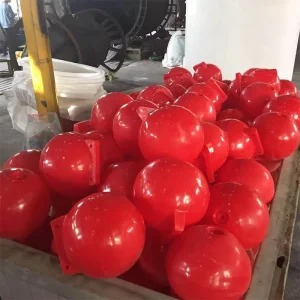
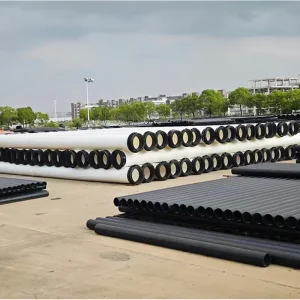
Complete selection of heavy-duty floating platforms, storage vessels, pipelines, and buoyancy modules engineered for immediate export to Manila and international markets.
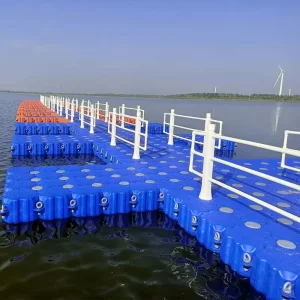
Connect with our technical flotation engineering group for bespoke hydrodynamic load evaluations, complete anchoring diagrams, and factory-direct CIF Manila pricing.
Send Inquiry Now