
High-Integrity Pipe Floats & Subsea Buoyancy Systems
Direct OEM/ODM industrial-grade rotational molding fabrications engineered for subsea pipeline stability, continuous slurry dredge transport, and multi-point offshore anchor spreads.

High-Quality Pipe Floats for Industrial Water Lines and Floating Pipeline Support Manufacturers, Companies
View Specifications
ODM Deepwater Pipeline Support Floats – Reliable Subsea Buoyancy Solutions Manufacturer, Companies
View Specifications
Custom Deepwater Pipeline Support Float – Modular and Reliable Supplier, Manufacturers
View Specifications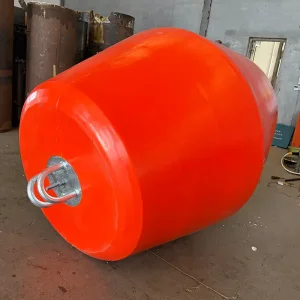
Best Offshore Mooring Buoy for Secure Vessel Anchoring and Marine Floating Systems Manufacturer, Companies
View Specifications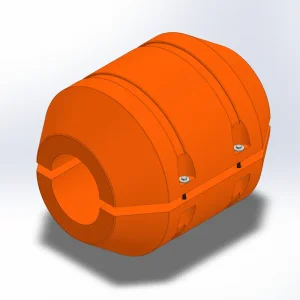
High-Quality Durable Floats for Safe and Efficient Pipeline Support Manufacturers, Products
View Specifications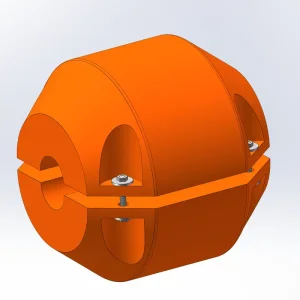
High-Quality Durable Pipe Floats for Safe Operations Products, Company
View Specifications
Custom Custom Mooring Buoy for Marina Berths and Offshore Supplier, Manufacturer
View Specifications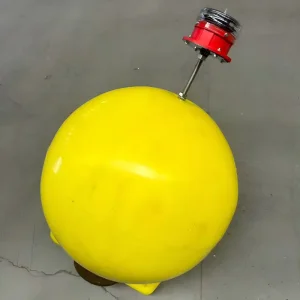
ODM High-Visibility Floating LED Ball for Marine and Freshwater Safety Manufacturers, Pricelist
View Specifications24 Inch Mooring Buoy Manufacturing: Engineering Evolution & Market Dynamics
Addressing the shifting paradigm from corroding welded-steel hulls to monocoque rotomolded virgin polyethylene (LLDPE) polymers across coastal and industrial marine sectors.
Total Lifecycle Cost Decoupling
Traditional carbon steel mooring buoys demand sandblasting, recoating, and sacrificial zinc anode replacement every 24 to 36 months to prevent saltwater pitting. A professional 24-inch mooring buoy factory implements rotational molding utilizing UV20+ stabilized LLDPE. The monocoque polymeric shell eliminates galvanic corrosion entirely, delivering zero maintenance requirements over a 15-year operational window and reducing total cost of ownership (TCO) by over 62% in aggressive marine splash zones.
Optimized Hydrodynamic Sizing
The 24-inch (approx. 600mm to 610mm) spherical and truncated-conical profile represents the international "sweet spot" for small-to-medium commercial vessels, pilot craft, auxiliary workboats, and aquaculture containment lines. Providing between 220 kg and 360 kg of total displacement buoyancy, the 24" geometry maintains optimal freeboard above the waterline while preventing excessive surface drag under multi-directional tidal cross-currents.
24-Inch Mooring Buoy Engineering & Hardware Matrices
A deep engineering dive into tension distribution, through-rod galvanization classes, and calculated reserve buoyancy.
Critical Marine Engineering Rule of Thumb
Working Mooring Buoy Sizing: Working Reserve Buoyancy must never be calculated based on calm deadweight alone. A commercial 24" mooring buoy must factor dynamic surge loads, catenary chain weight suspended in the water column, biofouling accretion (up to 15 kg/m² annually), and safety margins of at least 2.5x the maximum downward static load.
| Engineering Parameter | Standard Specification (24" / 610mm) | Heavy-Duty Commercial Grade | Compliance / Verification |
|---|---|---|---|
| Outer Shell Polymer | Virgin High-Density / LLDPE (Linear Low-Density PE) | Cross-linked UV26 Class LLDPE Polymer | ASTM D1238 / D1505 |
| Nominal Wall Thickness | 8.0 mm - 9.5 mm (Uniform) | 11.0 mm - 14.0 mm with stress ribs | Ultrasonic Non-Destructive |
| Internal Core Filling | Closed-Cell EPS (Density: 16–18 kg/m³) | Structural Hydrophobic Polyurethane (35 kg/m³) | DIN 53428 Water Absorption <1% |
| Central Mooring Hardware | Through-Pipe / Hot-Dip Galvanized Central Rod (Q235) | Forged Carbon Steel / 316L Stainless Steel Rod | ISO 1461 Hot-Dip Coating |
| Tensile Breaking Load (MBL) | 150 kN (~15 Metric Tons) | 280 kN (~28.5 Metric Tons) | Full-Scale Pull Testing |
| Net Reserve Buoyancy | 115 kg – 135 kg at 50% submergence | 180 kg – 210 kg (High-Freeboard config) | Archimedes Hydrostatic Sim |
| Environmental Rating | -35°C to +65°C Water/Ambient Temp | Arctic Grade / Hypersaline Offshore | UV8 to UV20 Accelerated Ageing |
Through-Chain (Pass-Through) Design
Pass-Through mooring buoys incorporate a heavy-gauge internal pipe through which the primary mooring ground chain passes directly from the seabed anchor to the topside mooring swivel. This transfers 100% of the horizontal and vertical vessel load onto the certified chain system, utilizing the 24-inch buoy solely for flotation support and completely eliminating point-load shear stresses on the plastic body.
Solid Central Tension Bar (T-Bar)
For applications where rapid mooring hookup is critical, such as harbor pilot berths and tourist marinas, our factory fabricates buoys with a drop-forged steel central through-rod fitted with an oversized lower bridle eye and an upper mooring shackle. The tension bar is mechanically locked with heavy-duty backing plates and anti-loosening lock nuts, sealed with marine polyurethanes to prevent water ingress into the core.
Global Maritime Standards & Localized Statutory Assurance
Ensuring municipal harbor, offshore dredging, and industrial maritime compliance across North America, Europe, the Middle East, and Asia-Pacific.
IALA Guideline Alignment
Formulated to comply with IALA (International Association of Marine Aids to Navigation and Lighthouse Authorities) Recommendation O-139 and Guideline G1099. Pigmented with high-chroma UV masterbatches (Standard Marine White, Safety Orange, High-Vis Yellow) maintaining optical contrast after 5,000+ hours of QUV exposure.
Hot-Dip Galvanizing ISO 1461
All central tension rods, pad eyes, swivel joints, and top mooring rings undergo acid pickling followed by hot-dip zinc coating delivering over 85 µm (microns) coating thickness. Resists pitting in tropical, hyper-saline estuaries such as the Persian Gulf and Red Sea.
Batch Material Traceability
Every factory production run receives a full raw material Melt Flow Index (MFI) and density verification batch test. Mill Test Certificates (MTC) according to EN 10204 Type 3.1 accompany all metal core hardware, certifying yield strength and dynamic breaking load limits.
Localized Applications for 24-Inch Mooring Flotation
Engineered flexibility across coastal engineering, offshore energy, civil dredging, and commercial aquaculture sectors.
Commercial Marinas & Harbor Berths
In high-density yacht basins and municipal small-craft harbors, 24" spherical mooring buoys provide the required buoyancy to hold heavy anchor chain bridles suspended while preventing gelcoat scuffing and hull abrasions. The compliant polyethylene outer skin acts as a resilient buffer, eliminating the costly fiberglass damage common with conventional steel or hard-shell buoys during tight slip maneuvers.
Dredging Pipeline Anchor Line Marking
Capital dredging and beach replenishment pipelines require secure anchor stabilization every 50 to 100 meters. A 24-inch mooring buoy attached to the lateral spread anchors provides instant visual position marking for survey craft and dredgers, while preventing the anchor pennant wire from snagging along the seafloor bed or getting entangled in rotating cutter suction heads.
Technical Roadmap: Smart Mooring & Circular Polymers
The convergence of industrial IoT telemetry, eco-friendly resin matrices, and smart port digital twins.
Telemetry & Embedded IoT Load Cells
The next generation of 24-inch mooring buoys integrates embedded strain-gauge load cells directly inside the central through-rod. Powered by integrated low-profile solar caps and long-life LiFePO4 batteries, the smart buoy streams tension metrics, wave period impact counts, and GPS drift alerts via NB-IoT or LoRaWAN networks to harbor master control interfaces, preventing mooring breakaway disasters before they occur.
Bio-Based & Recycled Ocean Polyethylene
Addressing Scope 3 decarbonization demands from major port authorities, research is focused on integrating up to 35% chemically recycled ocean plastics into intermediate rotomolding layers without diminishing mechanical tensile or Izod impact properties. Coupled with non-fluorinated internal mold-release chemistries, our plant aims for closed-loop lifecycle remanufacturing by 2028.
Frequently Asked Questions on 24" Mooring Buoy Manufacturing
In-depth technical answers addressing sizing, load testing, foam density, mooring installation, and maintenance.
A spherical 24-inch (approx. 610mm) buoy has a geometric volume of approximately 0.119 m³ (119 liters), which displaces approximately 122 kg of seawater at full submergence. For truncated-conical or oversized 24" designs with taller cylindrical midsections (e.g., 600mm diameter × 900mm height), the total displacement volume expands up to 250 to 320 liters, yielding a total gross buoyancy of 255 kg to 328 kg in standard seawater (density = 1,025 kg/m³).
Net Reserve Buoyancy: This is calculated by subtracting the tare weight of the buoy (shell, foam, and heavy internal steel through-rod, typically 25 to 45 kg) and suspended chain weight from the gross buoyancy. At an engineered 50% freeboard waterline, a heavy-duty 24" buoy safely supports a static vertical chain/hardware load of 110 kg to 140 kg while retaining half its volume above water for wave dynamics and visibility.
Rotational molding (rotomolding) provides several decisive structural advantages:
- Zero Residual Stress: Unlike blow molding or injection molding, rotomolding is a low-pressure thermal process. The polymer melts and coats the tool walls without orientation stress, yielding superior environmental stress crack resistance (ESCR).
- Uniform Wall Thickness: Our electronically regulated ovens ensure consistent wall thickness (8-14mm) even at curved radiuses, eliminating weak corners.
- Seamless Monocoque Body: Welded steel buoys suffer from galvanic fatigue and weld-seam oxidation under saltwater conditions. Rotomolded PE shells have zero seams, never rust, and absorb vessel impacts elastically without permanent deformation.
Our manufacturing facility utilizes high-density, closed-cell Expanded Polystyrene (EPS) or two-component polyurethane (PU) formulations injected under strict pressure control. The closed-cell content exceeds 95%, meaning each tiny cell is hermetically sealed against its neighbor. Even in the event of a severe hull breach caused by a vessel propeller or heavy impact, water absorption is limited to less than 1% by volume according to DIN 53428 standards, preserving full operational buoyancy indefinitely.
Pass-Through Chain Design: The buoy features a heavy-walled internal central tube. The primary mooring anchor chain passes directly up through the center of the buoy and attaches to a top deck collar or swivel. All mooring strain is carried by the ground chain; the buoy merely provides vertical buoyancy to support the chain weight. This is preferred in heavy-load commercial mooring spreads.
Through-Rod Design: The buoy includes a permanent factory-assembled hot-dip galvanized steel tension rod passing from the bottom eye to the top eye. The vessel tethers to the top eye, while the ground tackle shackled to the bottom eye. All mooring strain travels directly through the heavy-gauge forged steel shaft without transferring stress to the polymer shell.
To ensure our marine engineers recommend the correct model and hardware package, please provide:
- Application Type: Commercial marina, offshore dredging pipeline anchor marker, aquaculture cage grid, or private craft mooring.
- Vessel / Load Specifications: Maximum vessel displacement (tons), length overall (LOA), and local environmental parameters (max wind speed, wave height, tidal range).
- Mooring Configuration: Ground chain size, water depth, and preferred connection type (through-chain vs. forged tension rod).
- Color & Visual Markings: IALA compliant colors (Yellow, Orange, White, Green, Red) and any required retro-reflective vinyl banding or numbering.
- Quantity & Destination Port: Required units and incoterm (FOB Qingdao, CIF destination port) for container packing optimization.
Specialized Marine Flotation, Dredging & Mooring Catalog
Comprehensive marine barriers, pipeline floats, and mooring components produced with our precision rotational molding machinery.
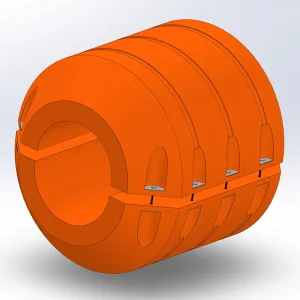
OEM Reliable Marine Pipe Floats for Pipeline Efficiency Manufacturer, Products
View Specifications
ODM Polyethylene Mooring Buoy for Harbors and Floating Facilities Manufacturers, Pricelist
View Specifications
High-Quality Reliable Floating Barriers for Water Safety and Pollution Control Factory, Factories
View Specifications
Best Pipe Floats for Stable Water Transfer and Marine Pipeline Support Supplier, Pricelist
View Specifications
Custom Custom Pipe Floats for Floating Water Pipeline and Marine Support Projects Suppliers, Manufacturers
View Specifications
ODM Mooring Buoy for Secure Vessel Anchoring and Stable Marine Mooring Systems Manufacturers, Manufacturer
View Specifications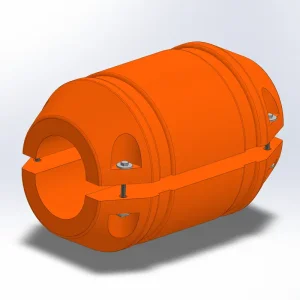
ODM Reliable Pipe Floats for Marine Projects Supplier, Manufacturer
View Specifications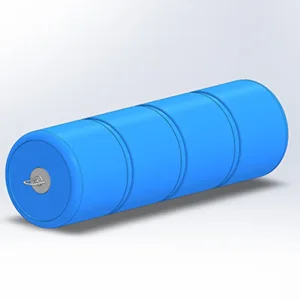
OEM Reliable Floating Barriers for Pollution Control and Water Safety Supplier, Manufacturers
View Specifications