Featured Marine Pipeline Buoyancy Modules
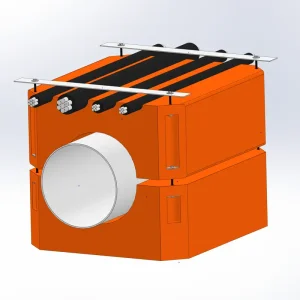
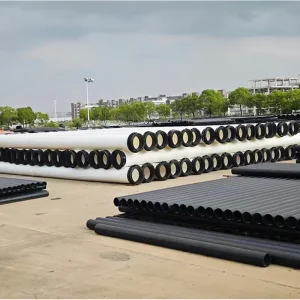
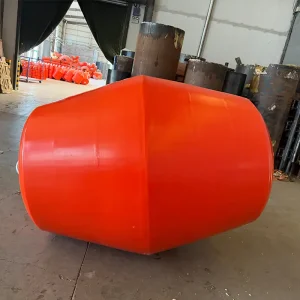
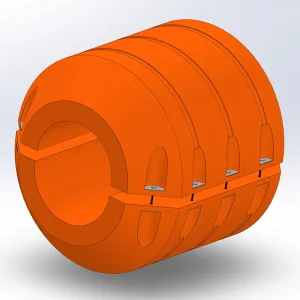
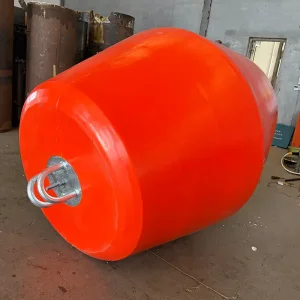
Engineered with virgin LLDPE/HDPE shells and closed-cell polyurethane foam cores for maximum buoyancy reliability in harsh maritime conditions.



Global Buoyant Pipe Industry: Macro Outlook & Engineering Demand
High-capacity marine flotation technology is evolving from passive buoyancy into structurally engineered, hydrodynamic containment systems serving mega-dredging, deepwater mining, and municipal desilting operations.
Maritime Capital Dredging
Global port expansions and navigational channel deep-water deepening require continuous slurry discharge pipelines exceeding 1,200 mm OD. Conventional steel pontoons are being superseded by rotational-molded polyethylene units due to their catastrophic-puncture resistance and complete elimination of cathode protection upkeep.
Mine Tailings & Mineral Slurry
Tailings slurry transfer lines operate under high density variations (1.3 to 1.8 t/m³). Buoyancy module sizing requires precision engineering to prevent pipeline submersion, bend fatigue, or premature buckling during operational surge pressures and dynamic wave loading across settling ponds.
Subsea Tie-In & Tension Alleviation
Offshore oil, gas, and green hydrogen umbilical lines require distributed modular buoyancy systems. Staged buoyancy prevents excessive vertical sag, preserves pipeline bending radiuses within allowable stress thresholds, and ensures positional stability during subsea manifold tie-ins.
Localized Application Engineering Matrix
Environmental hydrodynamic loading varies drastically by geographical location. Our buoyant pipe shells and filling polymers are custom-formulated to match environmental parameters across specialized maritime zones.
Middle East & Tropical High-UV Waters
Deployments in the Persian Gulf and Red Sea face water surface temperatures exceeding 42°C and continuous UV radiation indices of 11+. Floats are compounded with class-8 UV stabilizers and carbon black pigments, eliminating thermal cracking and photochemical chain scission over a 15-year design lifespan.
High-Current Estuarine & Tidal Riverways
Discharge operations in dynamic estuaries experience reversing tidal vectors and cross-currents. Our streamlined hydrodynamic profiles reduce water resistance by up to 22%, decreasing tension on anchoring bridles and avoiding excessive snaking of the discharge pipeline line assembly.
Sub-Zero & Arctic Tailings Management
For Siberian and Northern Canadian mining tailings facilities, specialized cross-linked polyethylene blends preserve Charpy impact strength down to -40°C, absorbing mechanical shocks from surface ice sheets without brittle wall fractures.
Engineering Calculation Methodology & Technical Roadmap
Accurate buoyancy design protects long-distance discharge setups against pipeline fatigue, sinking, and bolt shearing. Adhere to the rigorous empirical formulation below.
Standard Buoyancy Reserve Verification Formula
The total net buoyancy of deployed modules ($F_{buoyant}$) must safely counter the integrated dry mass of the pipeline ($W_{pipe}$), internal fluid/slurry load ($W_{slurry}$), and peripheral joint hardware ($W_{acc}$), configured with a safety coefficient factor ($K_s \ge 1.25$ to $1.30$):
Target operational waterline position: approximately 25% to 30% of the pipe outer diameter must remain elevated above the water line in full production state to absorb hydrodynamic impacts from localized swell waves.
| Pipe Outer Dia (OD) | Float Inner Dia (ID) | Shell Thickness | Displacement Capacity | Standard Pricing Tier (FOB China) | Typical Applications |
|---|---|---|---|---|---|
| 200 mm - 250 mm | 220 mm - 275 mm | 7 - 9 mm | 260 kg - 450 kg | $65 - $115 / pair | Reservoir bypass, mini lake de-silting, fish farming |
| 315 mm - 400 mm | 335 mm - 425 mm | 9 - 12 mm | 580 kg - 950 kg | $140 - $260 / pair | River maintenance, aggregate dredging, mine water return |
| 500 mm - 630 mm | 525 mm - 660 mm | 12 - 15 mm | 1,300 kg - 2,200 kg | $350 - $680 / pair | Harbor navigation clearing, industrial chemical runoff |
| 710 mm - 900 mm | 740 mm - 935 mm | 15 - 18 mm | 2,800 kg - 4,600 kg | $850 - $1,450 / pair | Capital reclamation, deep-sea sand transport lines |
| 1000 mm - 1200 mm | 1040 mm - 1250 mm | 18 - 22 mm | 5,500 kg - 8,200 kg | $1,800 - $3,200 / pair | Mega offshore dredging ships, deepwater umbilical floats |
China Factory Supply Chain Resilience & Technical Edge
Binzhou Juhua leverages an integrated industrial cluster in Shandong, uniting direct petrochemical raw materials, specialized rotomolding toolmaking, and port logistics to lower costs while shortening lead times.
Precision Rotomolding Line Control
Equipped with computerized multi-zone temperature monitors and variable-frequency rotational control, our ovens eliminate material hotspots. Every polyethylene shell achieves uniform, stress-relieved wall thickness with no hidden micro-voids.
Standardized Modular Interchangeability
CNC-machined aluminum casting molds deliver strict tolerances across production runs. Replacement halves match seamlessly with operational lines installed years earlier, cutting replacement inventory requirements for dredge operators.
High-Pressure Injected Closed-Cell Foam
Every buoyancy unit is filled with high-density polyurethane foam (≥ 35-40 kg/m³). In the event of extreme mechanical punctures from external impacts, our non-interconnected cell matrix limits water intrusion to under 2% by volume.
International Quality Compliance & Lifecycle Support
From initial design review to deployment, Juhua follows standardized manufacturing frameworks certified to international engineering protocols.
Certified Raw Material Traceability
Every polymer lot is checked for Melt Flow Index (MFI), Environmental Stress Crack Resistance (ESCR - ASTM D1693), and tensile yield stress. Material test certificates (MTC 3.1) are supplied with all project dispatches.
Corrosion-Proof Fastener Packages
Our pipe floats feature customized galvanized or marine-grade (SS304 / SS316) through-bolt sets paired with nylon lock-nuts and load-spreading washers, preventing localized point-loading and stress cracking across the flange ears.
Comprehensive Factory Warranty Terms
Juhua backs all pipeline buoyancy shells and marine buoys with a comprehensive performance warranty: 18 months from delivery or 12 months from on-water commissioning, supported by immediate replacement guarantees for documented defects.
Frequently Asked Questions (FAQ)
In-depth technical answers addressing common design, procurement, and deployment questions for marine floating pipeline installations.
Additional Marine Buoyancy & Pipeline Systems
Explore our extended catalog of utility floats, navigation buoys, reservoir bypass platforms, and industrial fluid transfer lines.