
Essential Marine Flotation & Flexible Pipeline Assemblies
Direct factory supply of heavy-duty dredge discharge lines, mooring arrays, and subsea buoyancy accessories engineered under ISO 28017:2018 standards.
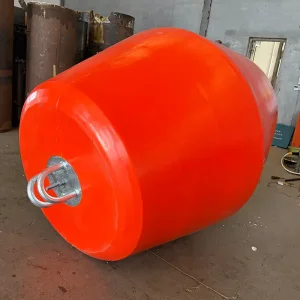
High-Quality Mooring Buoy For Aquaculture Grids And Floating Marine Platforms
View Specification
ODM Deepwater Pipeline Support Floats – Subsea Buoyancy Solutions
View Specification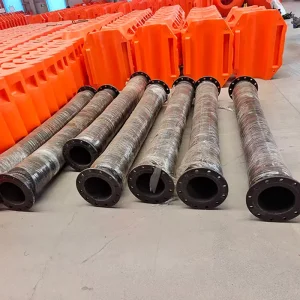
High-Performance Rubber Hoses for High-Velocity Water and Slurry Transport
View Specification
Reliable Pipe Floats with Integrated Cable Troughs for Power Dredgers
View Specification
ODM Ocean-Grade Navigation Buoys for Safe Offshore Channel Marking
View Specification
Advanced Modular Pipeline Float System for Rigid Steel & HDPE Dredge Lines
View Specification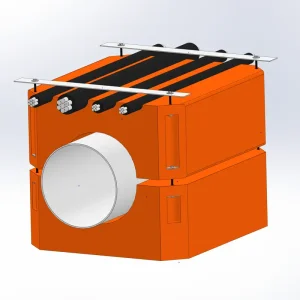
Custom Customizable Floating Pipe Supports with Dedicated Utility Troughs
View Specification
Heavy-Duty Mooring Buoy for Offshore Dredging Spread Mooring Anchors
View SpecificationThe Global Industrial Landscape of Marine Dredging Rubber Hoses
An exhaustive analysis of hydrodynamic fatigue, abrasive tribology, and elastomeric compounding in modern coastal defense, mineral extraction, and port construction.
Market Pressures & Expansion
Global maritime trade expansion demands regular maintenance of ultra-deepwater approach channels. Accommodating 24,000+ TEU ultra-large container vessels requires continuous dredging to depths exceeding 16 to 22 meters. Consequently, dredge lines face unprecedented volumetric throughput, demanding rubber hoses capable of withstanding uninterrupted flow velocities greater than 8.5 m/s without liner delamination.
Extreme Slurry Tribology
Hydraulic conveyance involves jagged siliceous sand, coral debris, iron ore tailings, and crushed basalt gravel. Ordinary synthetic elastomers experience immediate catastrophic abrasive tear-out under high-pressure laminar shearing. Leading manufacturers now formulate compounded carbon-black reinforced NR/BR alloys demonstrating DIN 53516 abrasion volume loss under 40 mm³.
Offshore Sea State Fatigue
Trailing Suction Hopper Dredgers operating in unsheltered open water transmit severe 6-degree-of-freedom hydrodynamic wave oscillations to their drag arms and floating lines. Hose designs must balance high hoop-tensile carcass strength with dynamic cyclical flexibility, preventing kinking, localized hoop buckling, and structural fatigue at built-in nipple terminations.
The Chinese Manufacturing Advantage in Marine Hose Production
How clustered industrial hubs, cutting-edge automated vulcanization autoclaves, and localized chemical synthesis provide unmatched delivery speed and total cost of ownership (TCO).
Autoclave Vulcanization Scale
Our Shandong production facility houses large-diameter computer-controlled autoclaves up to 35 meters in continuous length and 2.5 meters in diameter. Electronic thermocouple arrays cross-verify internal chamber steam saturation every 2.5 seconds, ensuring uniform cross-linking across both inner rubber layers and exterior polyurethane buoyancy mantles without thermal bridging defects.
Deep Supply Chain Integration
Located within direct trucking corridors to Asia's leading synthetic rubber compounders, specialized carbon black refineries, and forged flange foundries, Chinese manufacturing bypasses transnational logistics bottlenecks. Steel ring reinforcement cords and Q235B/Q345B carbon steel connection flanges are machined directly on precision CNC turntables within 48 hours of design approval.
Rapid Prototyping & Custom R&D
Need specialized tapered suction hoses, gimbal-mounted swivel adapters, or variable-stiffness self-floating hoses for shallow estuary navigation? Our in-house finite element analysis (FEA) engineers simulate bend radii under working pressures from 10 to 30 Bar in hours, translating simulated kinematics into completed mandrels in one-third the lead time of legacy European mills.
Engineering Architecture & Specification Parameters
Comparative design guidelines for dredge suction, discharge, armored, and integrated self-floating elastomeric pipelines.
| Hose Category | Nominal ID Range | Working Pressure (WP) | Vacuum Resistance | Reinforcement Architecture | Primary Industrial Application |
|---|---|---|---|---|---|
| Discharge Rubber Hose | DN150 – DN1200 | 10 Bar – 30 Bar | -0.05 MPa | High-tensile tire cord & embedded spiral helix | Long-distance shore reclamation |
| Suction Rubber Hose | DN200 – DN1100 | 5 Bar – 15 Bar | -0.09 MPa (Full Vacuum) | Heavy dual-spring steel rings & polyester cord | Cutter head & drag head suction |
| Armored Ceramic / Steel Hose | DN200 – DN1000 | 15 Bar – 25 Bar | -0.08 MPa | Al2O3 Ceramic tiles or high-Mn steel rings embedded in liner | Sharply abrasive basalt, quartz & iron tailings |
| Self-Floating Rubber Hose | DN200 – DN900 | 12 Bar – 25 Bar | -0.06 MPa | Spiral cord with closed-cell polyurethane foam reserve | Offshore wave-tossed flexible discharge lines |
| Gimbal / Short Bend Joint Hose | DN300 – DN1200 | 15 Bar – 35 Bar | -0.09 MPa | High-modulus aramid cords + heavy structural steel rings | CSD trunnion and ladder flexible articulations |
Hydrodynamic Buoyancy Calculation Rule for Self-Floating Dredge Hoses:
To guarantee operational pipeline safety in offshore sea states without subsea dragging, the integrated closed-cell cellular polyurethane buoyancy jacket must yield reserve buoyancy calculated via:
Total Upward Buoyancy Force (F_buoyancy) ≥ [M_hose_dry + (V_internal × ρ_slurry_max) + M_flange_assembly] × 1.25 to 1.40
Where ρ_slurry_max represents maximum slurry density (typically 1.30 to 1.65 t/m³ in heavy mineral transport). A reserve safety factor below 25% invites sinkage during emergency pump shutdowns when settling solids deposit on the hose invert.
Worldwide Engineering Use Cases & Installation Scenarios
Adapting elastomeric flexibility, temperature endurance, and chemical inertness to the planet's harshest marine environments.
Persian Gulf & Red Sea Port Megaprojects
Extreme UV radiation and sea surface temperatures exceeding 42°C accelerate the aging of standard chloroprene or EPDM compounds. Our hot-climate outer cover compounds incorporate specialty hindered amine light stabilizers (HALS) and antioxidant chemistries, maintaining tensile modulus and preventing ozone cracking despite perpetual hypersaline solar exposure.
South American Copper Tailings Discharge
Conveying highly acidic mineral leach tail slurries (pH 2.5 to 4.5) through the Andes to coastal tailings impoundments necessitates impermeable liners. Vulcanized synthetic fluoroelastomer/chlorobutyl blends resist acid permeation while preventing delamination from internal braided carbon-steel reinforcement bands.
North Sea Coastal Flood Defense Lines
Braving sub-zero Arctic swells, dredging pipelines must avoid brittle transition failure down to -30°C. Natural rubber/polybutadiene blends maintain cold-flex elongation exceeding 450%, granting unyielding resistance to rip and tear during rough winter beach nourishment projects across Western Europe.
Technological Evolution & Global Procurement Protocols
Transitioning from reactive maintenance to sensor-embedded smart dredge hoses and lean total life-cycle procurement.
Smart Hose Telemetry & RFID Wear Monitoring
Unplanned dredge downtime costs anywhere from $25,000 to $120,000 daily depending on vessel charter tier. Modern dredgers are actively migrating toward smart rubber hoses equipped with conductive carbon tracks or embedded sacrificial passive RFID sensors layered through the wear liner thickness.
As high-velocity slurry scours away the inner compound, successive circuit loops trip, transmitting digital telemetry to the bridge console. Operators forecast hose change-outs during scheduled maintenance pauses rather than facing catastrophic mid-pumping pipe blowouts in rough surf.
EPC Procurement Quality Verification Standards
Tier-1 international maritime contractors (DEME, Jan De Nul, Van Oord, Boskalis) mandate strict compliance with ISO 28017 (Rubber hoses and hose assemblies, wire or textile reinforced, for dredging applications) and PIANC guidelines. Factory audits demand:
- 100% full-barrel hydrostatic burst testing at 2.0x to 3.0x rated WP.
- Full vacuum hold-down test (-0.09 MPa for 15 minutes) without liner collapse.
- Destructive adhesion peel tests exceeding 10 N/mm between rubber plies.
- Magnetic particle inspection (MPI) and ultrasonic testing (UT) on built-in welded steel nipples.
Juhua 5-Tier Factory Verification Process
Rheometer cure curve and Mooney viscosity verification per raw elastomer batch.
CNC radial tension-controlled helical wire winding and carcass bias cord wrapping.
Dual-sensor temperature programmed autoclave steam cure with pressure stabilization.
Proof test at 1.5x WP followed by sub-atmospheric negative pressure test.
Custom steel crating, flange blind protection, and marine container stowing.
Frequently Asked Questions for Dredging Engineers
Definitive technical solutions regarding dredge hose sizing, wear factors, and flange configurations.
What is the typical operational lifespan of a dredge rubber hose?
Hose lifespan correlates with flow velocity, slurry grain geometry (angularity factor), quartz percentage, operating pressure, and pipeline bending angles. When handling fine alluvial silt and river sand, heavy-duty natural rubber lined hoses frequently surpass 8,000,000 to 12,000,000 cubic meters of throughput. In sharp crushed rock, gravel, or coral reefs, life expectancy ranges from 1,500,000 to 3,500,000 m³ unless protected by integrated Al2O3 ceramic armored tile matrices.
How do self-floating rubber hoses eliminate steel pipe float collars?
Self-floating hoses feature an integrated concentric jacket of closed-cell, non-water-absorbing expanded cellular polyethylene/polyurethane foam vulcanized around the core carcass. This continuous float mantle eliminates the point-loading stress, galvanic collar corrosion, and sliding risks inherent with bolted PE float pairs, providing consistent freeboard along the entire discharge line even in 3-meter ocean swell waves.
What end flange terminations provide the highest pull-out security?
Fixed, vulcanized built-in steel nipples offer the greatest axial pull-out resistance. The steel nipple features welded barbed annular anchoring ribs that intertwine with the inner high-tensile wire and fabric carcass plies. As pressure rises, the vulcanized rubber compresses tightly against the steel stem, ensuring axial pullout resistance exceeding 120 metric tons on DN800 hoses without risk of flange detachment.
When should an engineer specify an armored dredging hose over a flexible rubber hose?
Armored dredge hoses must be specified when transporting slurries with particle sizes exceeding 50 mm (such as fragmented granite, sandstone, or blast rock) or high-velocity quartz sand where standard pure rubber wears through within weeks. Hexagonal alumina ceramic blocks or hardened alloy wear rings vulcanized into the internal rubber liner absorb extreme kinetic impacts while retaining full bend flexibility.
Can you customize hose dimensions to non-standard dredger dredge pumps?
Yes. While ISO 28017 standardizes nominal diameters like DN500, DN600, DN700, DN800, DN900, and DN1000, our factory constructs custom steel tooling mandrels for legacy, proprietary, or custom American/European dredging pumps (e.g., 22-inch, 27-inch, 34-inch inner diameters). We also custom-drill flanges to ASME B16.5, EN 1092-1, JIS, or proprietary shipyard bolt patterns.
What is the difference between working pressure, proof test pressure, and burst pressure?
Working Pressure (WP) is the maximum sustained hydraulic pressure permitted during continuous daily pumping (typically 10 to 25 Bar). Proof Test Pressure is non-destructive factory hydrostatic testing conducted on 100% of finished assemblies at 1.5x WP. Burst Pressure is the ultimate destructive threshold designed with a minimum safety factor of 3.0x to 4.0x WP, guarding against pump-trip water hammer shockwaves.
Specialized Dredging Buoyancy & Containment Assets
Complete your pipeline installation with factory-certified HDPE floating pipes, silt barriers, and heavy-duty pontoon platforms.
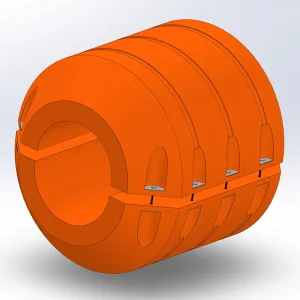
OEM Reliable Marine Pipe Floats for Pipeline Transport Efficiency
View Specification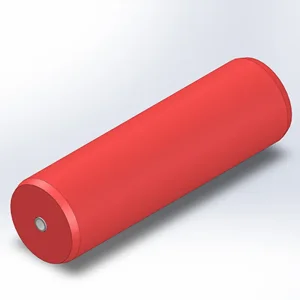
Custom Floating Barrier Systems for Effective Water Safety & Turbidity Control
View Specification
ODM Floating Barrier Systems for Silt Curtain Support & Environmental Safety
View Specification
ODM Subsea Tie-In Pipeline Float – Reliable Buoyancy for Underwater Pipelines
View Specification
Reliable Floating Barriers for Debris Interception & Marine Spill Control
View Specification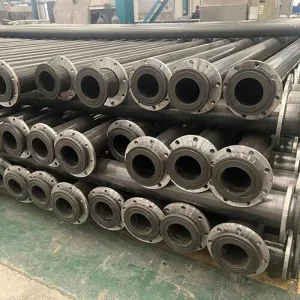
Durable High-Density Polyethylene (HDPE) Discharge Pipelines
View Specification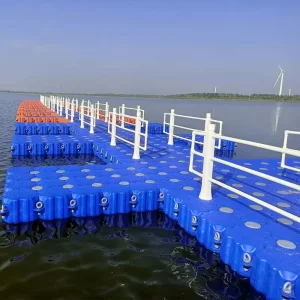
Custom Premium Floating Boat Pontoon for Heavy Dredger Crew Work Platforms
View Specification
ODM Rotomolded High-Impact Polyethylene Marine Utility Craft
View SpecificationNeed a Detailed Slurry Dynamics & Flotation Sizing Review?
Skip commercial middlemen. Connect directly with our chief marine elastomeric composite engineer in Huimin, Binzhou for detailed CAD layouts, buoyancy reserve calculations, and direct factory pricing.