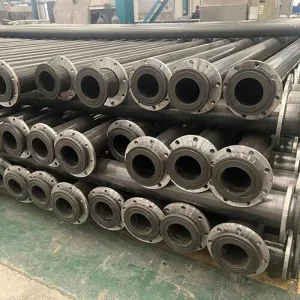
Featured Marine Buoyancy & Pipe Support Solutions
Engineered with high environmental stress crack resistance (ESCR) virgin polyethylene, UV-stabilized matrices, and polyurethane core fills for dredging and critical offshore operations.





Engineering Capacity & Global Operational Footprint
Shandong Binzhou Juhua Rubber & Plastic Co., Ltd. integrates modern rotational moulding architectures with computerized temperature control, supplying marine works worldwide.
Industrial White Paper Overview: As an industry-defining PE Pontoon Supplier and Manufacturer, Juhua utilizes variable-frequency speed regulation and electronic infrared heating telemetry. This guarantees uniform wall thickness along corners, deep wells, and mechanical mounting channels. In stark contrast to traditional fabricated steel or concrete pontoon assemblies, our UV8/UV20 stabilized polyethylene hulls resist high salinity, hydrogen sulfide, acidic tailings, and persistent biofouling without requiring surface recoating.
Global PE Pontoon Market: Structural Shift to Polyethylene
Analyzing the technological migration from steel pontoon barges and timber docks to rotational moulded virgin polyethylene modular floats.
Corrosion & Lifecycle Economics
Steel pontoons in marine splash zones suffer corrosion rates between 0.1 to 0.35 mm/year, requiring continuous cathodic protection and recoating cycles. Virgin HDPE pontoons eliminate galvanic decay completely, slashing 25-year total lifecycle OPEX by upwards of 42%.
Impact Resilience & Elastic Recovery
Rotational-molded PE features a modulus of elasticity engineered to deform elastically during vessel berths or wave surging. It absorbs collision kinetic energy without structural puncture or cracking, protecting internal closed-cell polyurethane cores.
Modular Reconfigurability
Modular PE pontoon layouts support interlocking pin and flange connections. Water engineering crews can reconfigure working platforms, dredge pipeline routes, floating solar arrays, and debris containment screens with standard tools in rapid turnaround times.
Rotomolded PE Pontoon vs Traditional Float Systems
A direct technical evaluation across key marine engineering benchmarks.
| Performance Indicator | Juhua Rotomolded PE Pontoons | Welded Carbon Steel Pontoons | Expanded Polystyrene / Concrete Floats |
|---|---|---|---|
| Corrosion & Chemical Resistance | Impervious to salt, H2SO4, oils, UV; Zero corrosion | Rapid rusting; Requires frequent sandblasting/painting | Susceptible to seawater leaching & chemical erosion |
| Weight-to-Displacement Efficiency | Ultra-high displacement ratio; Easy crane/manual handling | Heavy tare weight; Requires high-capacity mobile cranes | Extremely heavy; High logistics and shipping costs |
| Rupture & Sink Risk | Dual-layer security: PE shell + solid closed-cell PU foam | Single skin failure causes progressive chamber flood/sink | Cracks under flexural stress; Core absorbs water over time |
| Expected Service Life | 25+ Years in harsh marine/tailings environments | 8 - 12 Years (heavy maintenance dependent) | 10 - 15 Years (micro-crack degradation) |
| Environmental Safety | Food-contact grade raw material; 100% recyclable, inert | Leaches paint toxins and rust flake pollutants into water | Exposed EPS fragments break down into marine microplastics |
Industrial Macro-Solutions & Global Deployment
Custom-tailored flotation architectures engineered to sustain hydrodynamic stresses, wave action, and extreme industrial loads.
1. Capital Port & Harbor Dredging
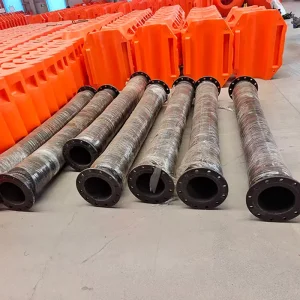
During continuous navigation channel deepening, dredging discharge lines face dynamic cross-currents and slurry abrasive forces. Juhua clamp-on PE floats support steel and HDPE discharge pipes, maintaining stable buoyancy and clear navigation boundaries for cargo vessels.
2. Mining Tailings & Slurry Transport
Mining process waters carry abrasive slurries with specific gravities exceeding 1.4 t/m³. Our heavy-duty pipe floats and specialized tie-in buoyancy blocks are customized to support these high-density loads across tailings dams and reclamation holding ponds.
3. Floating Solar & Renewable Offshore
With the expansion of Floating Photovoltaics (FPV), modular PE pontoons serve as the structural anchor foundation. UV20 stabilization resists photo-degradation, providing stable mechanical mounting platforms over reservoirs and offshore holding ponds.
4. Riverine Trash Booms & Silt Curtains
Protecting hydroelectric turbine intakes and critical municipal water pumping stations requires resilient floating barriers. Our interconnected pontoons support heavy underwater screens, deflecting trash, floating debris, and heavy water hyacinth blooms.
5. Commercial Marinas & Workboat Berths
Modular boat pontoons and heavy offshore mooring buoys provide safe, non-slip mooring stations for crew transfer vessels, workboats, and watercraft. Shock-absorbing structural properties shield vessels from harsh impact shock loading.
6. Tailored Military & Harsh Deployment
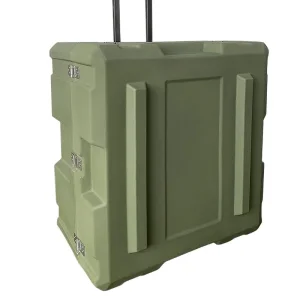
Producing custom rotational molded articles, including heavy-duty military airdrop containers, subsea tie-in buoyancy structures, and pontoon-supported mobile pump platforms customized to client blueprints.
Five-Stage Technical Quality & Delivery Workflow
How Juhua engineers every project from initial buoyancy calculation through ISO-compliant rotational molding and global sea-freight dispatch.
Hydraulic Profiling
Analyzing pipe outer diameter (OD), slurry bulk density, flow rate, wind/wave parameters, and required freeboard elevation to formulate baseline requirements.
Precision Tooling
Utilizing high-grade CNC-milled aluminum or heavy steel molds equipped with computerized internal thermistor probes to maintain wall uniformity.
PU In-Situ Grouting
High-pressure injection of water-resistant, closed-cell polyurethane foam (35–45 kg/m³) to guarantee permanent flotation even if outer shell suffers puncture.
Stress & Hydro Testing
Batch destructive drop tests, tensile yield analysis, and hydrostatic displacement validation in line with international maritime standards.
Buoyancy Sizing Rule of Thumb
The most common sizing error is engineering for an empty pipe. Sizing must account for extreme operating slurry densities plus dynamic environmental wave shock.
- Aim for 25% to 30% pipe diameter freeboard reserve
- Calculate against slurry density (e.g., 1.35 t/m³ for gravel)
- Re-verify waterline during initial slurry pump run
Engineering & Procurement FAQ
Direct answers to the most common questions raised by dredging superintendents, marine civil contractors, and port engineers.
Pipeline floats (also termed dredge floats or buoyancy modules) are clamp-on rotationally moulded polyethylene bodies fitted securely around steel or HDPE discharge pipelines. They maintain positive buoyancy, maintain proper pipeline alignment, and maximize visibility on open waterways.
Total float displacement must exceed the combined weight of the pipe, flanges, couplings, accessories, and the fully saturated pumped medium (slurry/sediment). Floats should supply 20% to 30% surplus buoyancy reserve, ensuring 25% of the pipe diameter sits safely above the waterline.
Yes. Virgin high-density polyethylene is chemically inert and completely impervious to seawater corrosion, salt spray, marine organisms, and chemical run-off. Unlike steel pontoons, PE hulls never rust, shed coatings, or require sacrificial anode replacements.
The warranty begins on the date the client hands over the installation to the project investor and concludes 18 months from that handover milestone, or 12 months following initial installation date, whichever occurs first.
Please provide: Outer diameter (OD) and material of the pipe, wall thickness, density of the transported medium (slurry kg/m³), pipeline overall length, environmental exposure (river, protected harbor, open sea), required freeboard, and destination discharge port.
Yes. Shell IDs are matched precisely to your pipe's external diameter. We customize shell thickness, foam density, hull colour, reflective identification marks, and internal through-cable troughs. Custom OEM rotomolded parts can also be fabricated directly to custom CAD/STEP files.
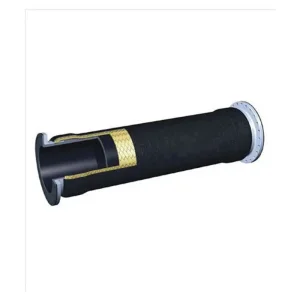
Industrial Pipelines, Marine Hoses & Heavy-Duty Pontoons
Integrated marine pipeline solutions manufactured from certified raw polymers to provide seamless interoperability with Juhua buoyancy modules.