

20+
Years Industry Authority
1,000 m²
Smart Rotomolding Plant
80+
Export Destinations
100+
Engineers & Technicians
Primary Solutions Matrix
Engineered Flotation Assemblies (Part I)
Rigid verification testing, ultraviolet resistance, and mechanical resilience customized for dredging, subsea positioning, and industrial discharge lines.
OEM Innovative Pipeline Float System for Reliable Deepwater Support
Request System Quote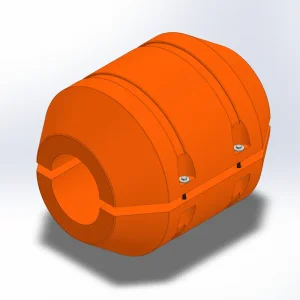
Custom Pipeline Float For Subsea Tie-In And Controlled Positioning
Download Datasheet
OEM Pipeline Float for Floating Pipeline Systems and Water Transfer Projects
Review Dimensions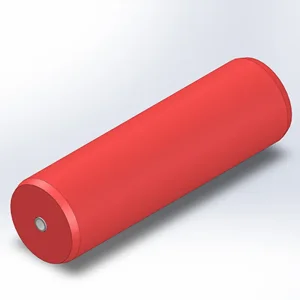
Custom Floating Barrier Systems for Water Safety and Pollution Control
Inspect Barrier System
High-Quality Advanced Pipeline Float System for Secure Subsea Installations
Analyze Structural Load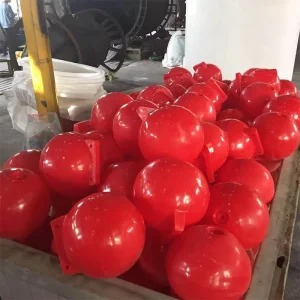
Best PE Float Ball for Safe and Efficient Water Operations
View Buoyancy Capacity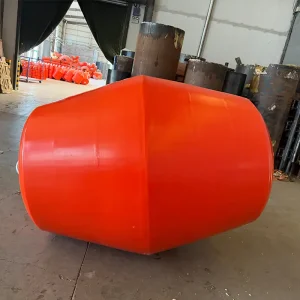
Best Foam-Filled Polyethylene Mooring Buoy for Marine Anchoring
Check Marine Standards
Engineering Authority
Hydrodynamic Mechanics & Buoyancy Calculation Methodology
Why generic off-the-shelf pipe floats fail in complex offshore environments: A rigorous thermodynamic and hydrostatic approach to dredging pipelines.
The Engineering Hydrostatic Equilibrium Equation
A frequent mistake in floating pipeline engineering is calculating buoyant capacity based purely on clear water conditions and an unladen pipe diameter. When working with marine slurry, tailings, or abrasive sand delivery, the net required buoyancy must calculate dynamic slurry density, coupling drag, biological fouling factor, and significant wave action.
Bnet = [Σ(Wpipe + Wlining + (π/4 × Di2 × ρslurry) + Whardware) × (1 + Sf)] / (ρwater × Cdisp)
- • ρslurry: Dynamic density of media (up to 1.85 t/m³ in heavy iron ore dredging).
- • Sf (Safety Reserve Margin): 20% to 30% surplus capacity for ocean chop and tidal variation.
- • Freeboard Threshold: Ensuring exactly 25% of pipe diameter remains safely above waterline.
- • Thermal Resistance: Wall-thickness calculated to mitigate UV thermal degradation up to 60°C.
Hydrostatic Integrity
Utilizing high-grade rotational molding with low-density expanded closed-cell polyurethane foam interior (≥ 35 kg/m³), our floats guarantee zero water ingestion even if external PE shells sustain violent collisions with marine rocks or dredger buckets.
UV-8 Stabilized Resins
Molded with pure virgin linear low-density polyethylene (LLDPE) reinforced with UV stabilizers and anti-aging agents. Tested under simulated offshore conditions exceeding 15,000 accelerated UV hours without micro-cracking or polymer matrix brittleness.
Interchangeability & Tolerance
Advanced CNC aluminum casting molds ensure precision radial curvature. Each half shell matches standard steel pipes, HDPE dredging conduits, and flexible rubber hoses with zero-clearance slippage when secured via grade 8.8 galvanized or 316 stainless bolts.
Manufacturing Supercluster
China Factory 4.0: Supply Chain Resilience & Production Scale
How our Binzhou, Shandong intelligent manufacturing base resolves international supply chain bottlenecks, raw material volatility, and heavy lead times.
Digital Closed-Loop Heating
Integrated variable-frequency speed controls, infrared pyrometers, and multi-zone heating ensure uniform plasticization across massive float matrices (diameters up to 2200mm), eliminating structural weak spots and uneven shell walls.
Upstream Petrochemical Synergy
Situated within Shandong's premier industrial corridor provides instant direct access to top-tier polymerization chemical suppliers. This raw supply integration insulates international clients against ocean-freight price shocks and polymer resin shortages.
Container Packing Optimization
Modular interlocking nesting geometries are engineered specifically for standard 40ft High Cube ocean containers. Our proprietary stacking protocols achieve up to 35% greater volume efficiency per container, lowering per-unit freight charges.
Macro Sector Architecture
Comprehensive Engineering Sector Solutions
Customized configurations developed to withstand corrosive chemicals, massive mechanical stress, and aggressive hydrological currents.
Port & Harbor Deepening
Stabilizes long sand-discharge conduits during berth construction, channel desilting, and mega-vessel docking expansion, keeping navigation routes visibly demarcated.
Mine Tailings & Slurry Transport
Reinforced float matrices with high-density polyurethane filling engineered to sustain ultra-heavy mineral slurry weights without risk of sinkage or wall deflection.
Subsea Pipeline Tie-Ins
Precision-calculated buoyant lift forces for subsea pipeline alignment, spools installation, underwater jumper configurations, and controlled seabed positioning.
Ecological Debris & Silt Curtains
Modular floating barriers and containment booms preventing industrial effluent spread, reservoir plastic accumulation, and silt intrusion around water intakes.
Compliance & Procurement
Global Procurement Specifications & Quality Compliance
Aligning international standards (ASTM, ISO, PIANC) with tailored contract mechanisms for cross-border engineering projects.
Material Testing Traceability
Every shipment is supported by Mill Test Certificates (MTC), raw resin melt-flow index validation, tensile yield strength reports (ASTM D638), and Shore D hardness logs.
Third-Party Inspection Protocols
Full support for independent third-party staging verifications (SGS, Bureau Veritas, Lloyd's Register) encompassing drop-impact testing, hydrostatic immersion, and dimensional tolerances.
Strict Handover Warranty Term
Warranty commences precisely upon handover to the project investor and safeguards contractors for 18 months post-handover or 12 months after installation, whichever transpires first.
Future Outlook
Technology Roadmap: Next-Generation Smart Marine Flotation
Moving beyond passive hollow shells: Integrating structural health monitoring, bio-based polyethylenes, and subsea digital twin diagnostics.
IoT-Enabled Dynamic Telemetry
Researching embedded low-power LPWAN sensors providing real-time telemetry on pipeline deflection angles, interior compartment water ingress alerts, and continuous GPS geolocation.
Bio-Polymer Closed Cycles
Collaborating with green polymer scientists to develop ocean-degradable matrices and high-percentage PCR (post-consumer recycled) blends that maintain zero marine environmental microplastic footprint.
Ultra-Deep Subsea Syntactic Foams
Expanding the depth envelope with novel syntactic phenolic hollow microspheres embedded in rigid polymer composites, allowing pipeline supports to exceed hydrostatic pressures at 3,000 meters.
Secondary Solutions Matrix
Engineered Flotation Assemblies (Part II)
Comprehensive marine hardware, pontoons, specialized rubber dredging conduits, and offshore mooring buoys engineered for continuous deployment.
ODM Deepwater Pipeline Support Floats – Subsea Buoyancy Solutions
View Deepwater Specs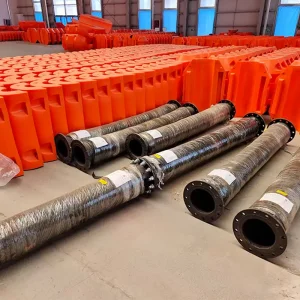
Custom Heavy-Duty Rubber Hose for Marine and Water Management
Inspect Hose Rating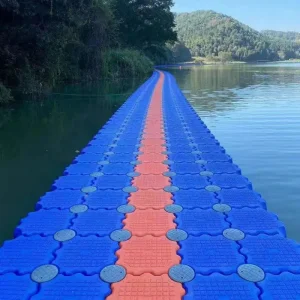
High-Quality Versatile Floating Boat Pontoon for Water Projects
Review Pontoon Design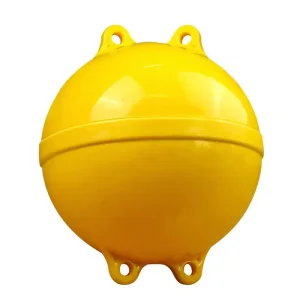
ODM ABS Float Ball for Reliable Marine and Freshwater Buoyancy
Examine ABS Properties
Custom Custom Pipe Floats for Floating Pipeline Buoyancy and Transfer
Download Load Calculation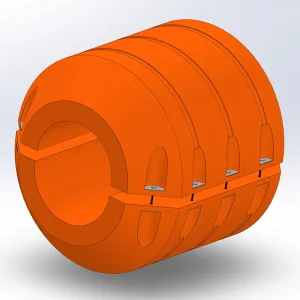
ODM High-Buoyancy Floats for Demanding Offshore Marine Projects
View Heavy Slurry Specs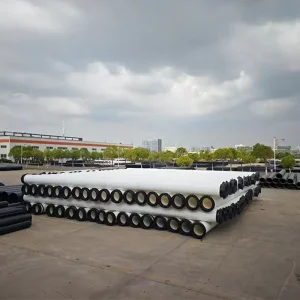
ODM High-Density Pipeline for Liquid and Industrial Gas Transport
Verify Pipeline Rating
ODM Foam-Filled Mooring Buoy for Marinas and Offshore Anchorages
Inspect Mooring Eyes
Technical Clarifications
Frequently Asked Questions on Buoyancy & Marine Operations
Direct engineering insights regarding float dimensioning, installation safety parameters, seawater durability, and commercial warranties.
Pipeline floats (also commonly called dredge floats or buoyancy modules) are specialized clamp-on bodies manufactured from rotomolded high-density polyethylene (HDPE/LLDPE) filled with rigid polyurethane closed-cell foam. They fit tightly around industrial discharge pipes to keep marine dredging, mine tailings, or water-transfer pipelines safely afloat, straightly aligned, and clearly visible on turbulent sea or river surfaces.
Total buoyancy must substantially exceed the total static and dynamic weight of the system. Calculate the aggregate weight of the bare pipe, internal conveyed slurry (using true density, not plain water), flanges, and joint hardware. The installed floats should provide at least 20% to 30% surplus buoyancy over this total mass to ensure roughly one-quarter of the pipe diameter stays safely above the water surface under full load.
Yes. Virgin polyethylene is chemically inert and completely resistant to saltwater corrosion, marine bio-fouling acids, ultraviolet degradation, and chemical abrasion. Unlike conventional steel floats, rotomolded PE shells will never rust, peel paint, or suffer galvanic pinhole leaks in oceanic waters.
Our official engineering warranty starts on the exact date the buyer hands over the equipment to the project investor and concludes 18 months after that handover date, or 12 months after the field installation date—whichever threshold transpires first.
To produce an exact hydraulic and buoyancy specification, please furnish: outer diameter of the conduit (OD), pipe wall thickness and raw material, density and nature of conveyed slurry, total floating length, operational site environment (sheltered river, dam reservoir, open ocean harbor), targeted freeboard height, hardware preference (Galvanized vs. Stainless 316), and intended destination port.
Absolutely. Float bodies are custom-cast to matched pipe diameters, including integrated cable troughs for electric suction dredgers. Colors, identification markings, retroreflective bands, and mooring fixtures are easily tailored. Our in-house mold tooling department can manufacture bespoke rotational molds directly from CAD/STEP files within 20 working days.