
High-Performance Marine Flotation Product Portfolio (Part I)
Verified rotomolded polymer modules, mooring assemblies, and high-impact pipe floats designed for heavy coastal, harbour, and municipal water applications.

ODM Custom Mooring Buoy for Vessel Berthing, Marina Use and Offshore Anchorage Companies
Check Specifications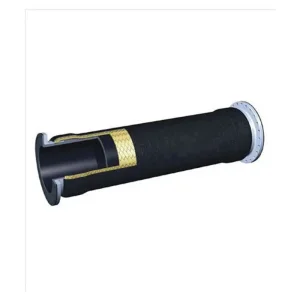
High-Quality Heavy-Duty Rubber Hose for Water and Marine Projects Supplier, Factories
Check Specifications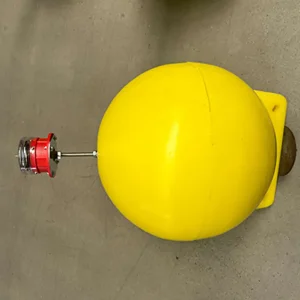
ODM Floating Ball with LED Light – Reliable Marine Navigation and Safety Manufacturer
Check Specifications
ODM Durable Cable-Integrated Pipe Floats for Submerged Infrastructure Supplier
Check Specifications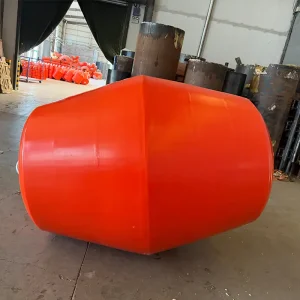
Best Foam-Filled Polyethylene Mooring Buoy for Reliable Marine Anchoring
Check Specifications
Best Pipe Floats for Stable Water Transfer and Marine Pipeline Support Supplier
Check Specifications
ODM Pipe Floats With Cable Troughs - Reliable Buoyancy & Cable Protection
Check Specifications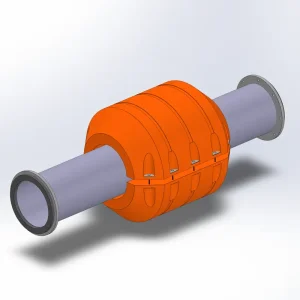
ODM High-Performance Floats for Efficient Pipeline Operations
Check SpecificationsThe Global Shift from Timber and Steel to Polymer Flotation Systems
Rapid expansions in coastal tourism, offshore energy exploration, port maintenance dredging, and inland water conservancy are dramatically reshaping marine structural engineering.
Commercial Status of Modular PVC & Polyethylene Floating Docks
Across global maritime and municipal sectors, the historical reliance on creosote-treated timber docks, corroding steel pontoons, and brittle concrete floating systems has witnessed an accelerating contraction. Timber decks leach hazardous chemical preservatives into aquatic ecosystems, suffer rapid rot in sub-tropical waters, and invite devastating marine borer infestations. Steel floating barges demand aggressive cyclic maintenance—including catastrophic galvanic corrosion mitigation, cathodic protection anode replacement, and recurring dry-dock repainting regimens that inflate the 15-year total cost of ownership (TCO) by more than 280%.
In response, engineering procurement has migrated toward ultra-high molecular weight rotational molded polyethylene (LLDPE) and reinforced PVC floating dock platforms. Manufactured with integrated UV-20+ stabilizer packages, these high-density monolithic polymer shells deliver an impermeable barrier against hyper-saline oceanic environments, volatile petroleum residues, industrial acids, and severe freeze-thaw cycles. Leading maritime operators recognize that modern polymer floating docks do not simply reduce maintenance budgets—they eliminate dock downtime completely while providing modular scalability that fixed pilings can never achieve.
Market Trends: Smart Marina Infrastructure & Resilience Demands
Three macroeconomic dynamics are dictating the specification criteria in international tenders today:
1. Storm Surge & Tidal Flexibility
With unpredictable extreme meteorological events elevating coastal high-water marks, rigid docks risk total submerged catastrophic structural collapse. Articulated floating pontoons glide along heavy pile guides, dampening wave kinetic energy and rising dynamically with storm surges without anchor shear failure.
2. Integrated Utility Corridors
Modern commercial berths require integrated conduits for high-voltage shore power (480V/100A), potable freshwater lines, fire suppression loops, and fibre-optic telemetry. Advanced PVC floats feature internal cable troughs and recessed raceways that preserve structural rigidity while shielding sensitive lines.
3. Eco-System Neutrality & ESG Compliance
Port authorities operating within EU Marine Strategy Framework Directive (MSFD) and US EPA coastal waters require complete absence of microplastic degradation, zero heavy-metal leeching, and full end-of-life polymer recyclability, making 100% recyclable virgin LLDPE/PVC pontoons the gold standard.
Commercial PVC & Polyethylene Floating Dock Engineering Pricelist
Comprehensive price breakdown based on dimension, displacement volume, foam-fill density, and operational payload ratings. Verified factory direct figures for EPC planning.
| Modular Class / Component Type | Dimensions (L × W × H mm) | Shell Wall / Core Matrix | Static Buoyancy | Rated Payload | Est. Factory Price (USD) | Lead Time |
|---|---|---|---|---|---|---|
| Standard Single Cube Pontoon | 500 × 500 × 400 mm | 7.5mm Virgin LLDPE / Air Filled | 87.5 kg / unit | 350 kg / m² | $24.00 – $32.00 | 7–10 Days |
| Heavy-Duty Double Cube Float | 1000 × 500 × 400 mm | 8.5mm UV-PE / Closed-Cell EPS | 180 kg / unit | 380 kg / m² | $48.00 – $65.00 | 10–14 Days |
| Industrial Sectional Dock Pontoons | 2000 × 1000 × 600 mm | 10–12mm LLDPE / 18kg/m³ EPS Core | 1,150 kg / unit | 520 kg / m² | $210.00 – $285.00 | 14–20 Days |
| Drive-On Jet Ski / Boat Dry Lift | 3000 × 1500 × 400 mm | Multi-rib reinforced LLDPE | 1,800 kg total | 1,200 kg dry craft | $680.00 – $890.00 | 10–15 Days |
| Dredging Pipeline Clamp Float (Half Pair) | ID: 250mm × OD: 700mm × L: 1000mm | Rotomolded PE / Marine Polyurethane | 280 kg / pair | High slurry density | $95.00 – $135.00 / pr | 7–12 Days |
| Deepwater Mooring Buoy (Cylindrical) | Dia: 1200mm × H: 1600mm | 12mm Shell / Internal Steel Tie-rod | 1,500 kg net | 50 kN tension load | $420.00 – $580.00 | 14–21 Days |
| Utility-Integrated Float (Cable Trough) | 1000 × 600 × 450 mm | Dual-chamber PE with dual channel | 260 kg / unit | 420 kg / m² | $75.00 – $105.00 | 12–18 Days |
| Perimeter Heavy Duty Floating Barrier | Dia: 400mm × L: 1000mm (Linked) | Thick wall LLDPE / Sealed Foam | 110 kg / unit | Debris & boat deflection | $55.00 – $78.00 / m | 7–10 Days |
Total Project Investment = [Float Surface Area (m²) × Unit Cost ($/m²)] + [Piling / Mooring Anchor Hardware (25-35%)] + [Gangways & Decking Cleats (15%)] + [Freight & Assembly (12-18%)]
Engineering Blueprint: Polymer Compounding & Rotational Molding
Why Juhua's precision-controlled heat cycles and high-purity resin matrices achieve superior impact resilience in sub-zero and tropical offshore zones.
Electronic Automated Temperature Measuring
During the biaxial rotational molding cycle, micro-fluctuations in thermal gradients yield weak wall seams. Our computer-monitored variable frequency cycle guarantees uniform polymer crystallization and isotropic wall thickness across every float corner.
UV-20 Class Hindered Amine Stabilizers
High solar ultraviolet irradiance accelerates embrittlement and cracking in commodity plastics. We compound custom HALS (Hindered Amine Light Stabilizers) and carbon black dispersions directly into the virgin resin, maintaining over 85% tensile elongation after 20,000 hours of accelerated weathering.
Non-Water Absorbent EPS / PU Foam Core
For critical offshore anchorage and dredging lines, hollow shells represent single-point puncture vulnerabilities. Our automated pressure-fill line injects closed-cell expanded polystyrene (EPS) or high-density polyurethane (PU), ensuring zero water intake even if the outer skin suffers catastrophic collision breach.
Localized Engineering Application Scenarios
Engineered to adapt to distinct hydrological forces, sediment burdens, and environmental regulatory regimes across global waters.
1. Capital Dredging & Slurry Transport
Discharging high-density abrasive sand, silt, and tailings across several kilometres requires buoyant collar sets capable of sustaining immense slurry weight without submerged drag. Sized with 30% buoyancy reserve margins to keep pipe joints visible and prevent dredging line inversion.
2. Commercial Marinas & Yacht Harbours
Providing pristine aesthetic appeal alongside superior berthing stability. Modular interlocking pins permit easy dynamic reconfiguration for 30ft to 120ft slips, complete with integrated non-skid checkered decking, rub-rails, and recessed power pedestal tie-ins.
3. Hydroelectric Dams & Trash Booms
Positioned upstream of turbine intakes to divert floating logs, urban flotsam, and toxic algae slicks. High-visibility orange and yellow rotomolded floats paired with submerged curtain skirts intercept surface debris, preventing catastrophic turbine shutdowns.
4. Floating Solar PV (FPV) Platforms
Supporting high-efficiency photovoltaic arrays on reservoirs and mining tailing ponds. Our UV-stabilized pontoon matrices provide continuous buoyant support, heat dissipation via water proximity, and non-reactive platforms that safeguard water quality.
Scientific Hydrodynamic Buoyancy Calculation Methodology
Avoid catastrophic line sinkage and structural over-stressing. The universal buoyancy calculation formula validated across 80+ export markets.
The 1.30 Safety Reserve Formula for Working Slurry Pipelines
A ubiquitous mistake made by general procurement personnel is calculating float buoyancy based on empty pipe dry weight or pure water transport. In dredging and mining environments, high-viscosity mineral slurry can possess specific gravity values ranging from 1.3 to 1.8 kg/L. If buoyancy sizing fails to incorporate medium density, wave-action impact, and hardware deadweights, the floating line will lose required freeboard, sink below the water surface, and suffer bending fractures.
Required Gross Float Buoyancy (F_total) ≥ (W_pipe + W_medium + W_accessories) × K_safety• W_pipe: Total dry weight of the steel or HDPE pipe per linear meter.
• W_medium: Volume of pipe internal cavity × Slurry Density (ρ_slurry = π × r² × L × ρ).
• W_accessories: Deadweight of flanges, bolts, rubber connection sleeves, and cables.
• K_safety: Engineering Safety Coefficient = 1.25 to 1.35 (target: 25% to 30% pipe diameter held securely above the water surface for visual navigation clearance).
By standardizing mould geometry and utilizing high-precision computer-monitored rotomolding, Juhua guarantees that replacement pontoons match previous production runs to within millimeter tolerances. This eliminates field realignment delays and maintains uniform pipeline buoyancy across multi-year infrastructure phases.
High-Performance Marine Flotation Product Portfolio (Part II)
Heavy-duty floating discharge pipelines, ocean-rated navigation buoys, high-pressure dredging rubber hoses, and engineered fluid conveyance assets.
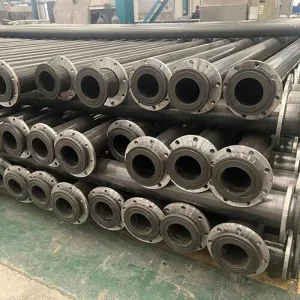
High-Quality Robust Pipeline for Reliable Fluid and Material Transport
Check Specifications
Custom High-Performance Marine Buoys for Safe and Efficient Waterways
Check Specifications
OEM Pipeline Float for Floating Pipeline Systems and Water Transfer Projects
Check Specifications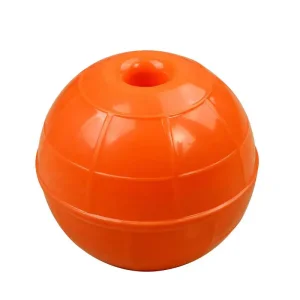
ODM Heavy-Duty ABS Float Ball for Water Engineering Projects
Check Specifications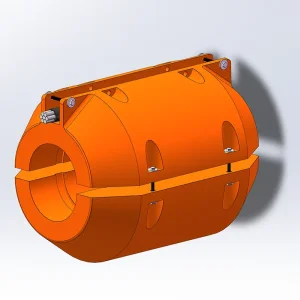
Custom Reliable Pipeline Floats for Marine & Engineering Projects
Check Specifications
Custom Pipe Floats for Long-Distance Floating Pipelines and Water Systems
Check Specifications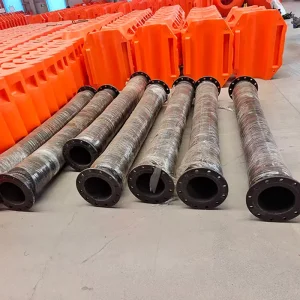
High-Quality High-Performance Rubber Hoses for Water and Slurry Transport
Check Specifications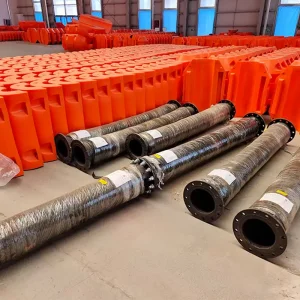
Custom Heavy-Duty Rubber Hose for Marine and Water Management Projects
Check SpecificationsFrequently Asked Engineering Questions (FAQ)
Expert answers addressing the core concerns of marine civil engineers, harbour authorities, and dredging project directors.
What is the structural difference between PVC and LLDPE floating docks?
While industry shorthand often uses "PVC floating dock" as an umbrella phrase, heavy-duty modular pontoons are primarily manufactured from virgin Linear Low-Density Polyethylene (LLDPE) using rotational molding. LLDPE offers superior high-impact flexibility, zero brittleness down to -40°C, and 100% resistance to stress cracking. Flexible or rigid PVC is more commonly utilized for structural deck cladding, floating bumpers, rub-rails, and inflatable flotation bladders. Both polymers provide complete immunity to marine corrosion and bio-fouling.
How do you calculate required buoyancy for heavy dredging slurries?
Buoyancy must account for the total dry weight of the pipeline, joint couplings, flanges, and the specific density of the pumped slurry (often 1.3 to 1.6 kg/L). Engineering protocol dictates that total float displacement must provide at least 125% to 130% of this combined wet weight. This safety factor guarantees that roughly one-quarter of the pipe diameter remains visible above the water surface, preventing submerged dragging and providing visual navigation clearance.
How do modular polymer docks withstand extreme typhoons or freezing ice?
Our pontoons are molded from UV-20+ stabilized LLDPE with high tensile elasticity. During freezing conditions, the tapered hull design forces encroaching ice sheets to ride downward under the pontoon rather than crushing the side walls. In tropical hurricane regions, the articulated modular interlocking pin design allows the dock system to flex wave by wave, dissipating kinetic wave energy that would shear rigid timber or steel pile anchors.
What is the official factory warranty coverage period?
The standard Juhua factory engineering warranty commences on the date the client hands over the completed infrastructure to the end-investor, terminating 18 months after that handover milestone, or 12 months after the initial date of water commissioning—whichever occurs first. Full replacement modules are guaranteed in the event of manufacturing defects, wall thickness variances, or weld failures.
What precise technical parameters are needed for an accurate quotation?
To provide an accurate technical recommendation and pricelist breakdown, please provide: 1) Pipe outer diameter (OD) and material (HDPE or steel); 2) Slurry or transferred fluid density (kg/m³); 3) Environmental site condition (sheltered river, tidal port, offshore anchorage); 4) Desired freeboard height; 5) Internal cable or hose channel requirements; and 6) Target delivery destination port.
Can custom moulds and internal foam fillings be engineered to order?
Yes. With dedicated rotational tooling fabrication and in-house CNC mold machining, we manufacture custom floating pontoons, boat hull geometries, and floating platforms up to 3.5 meters in length. We provide automated pressurized closed-cell EPS or high-density polyurethane (PU) foaming to satisfy specific buoyancy redundancy regulations for international oil & gas terminals.
Request Custom Buoyancy Calculations & EPC Pricelist
Connect directly with Shandong Binzhou Juhua Rubber & Plastic Co., Ltd. Send your engineering drawings or pipe specifications for a formal proposal within 24 business hours.