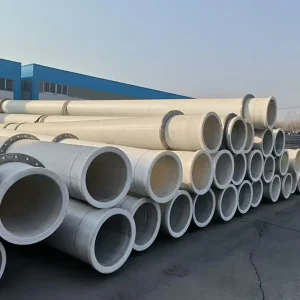
Primary Deployment Models & Infrastructure Floats
Precision-manufactured virgin polyethylene buoyancy modules, channel buoys, and fluid transfer lines engineered to meet extreme hydro-ballast requirements worldwide.
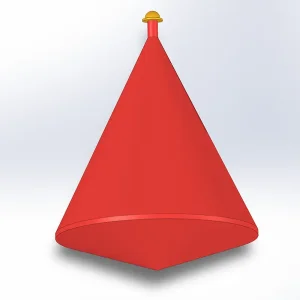
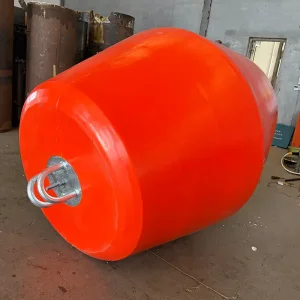
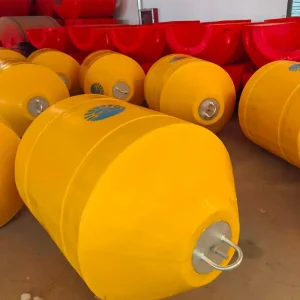
Engineering Excellence in Custom Duncan Pipe Floats
Delivering advanced hydro-dynamic stabilization, polyurethane-infused outer shells, and tailored industrial buoyancy solutions directly from our cutting-edge manufacturing facility.
Structural Integrity & Operational Hydrodynamics
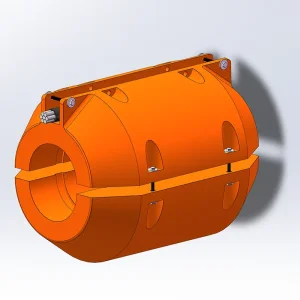
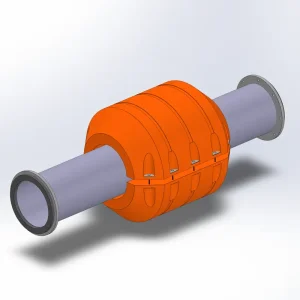
In modern industrial hydraulic dredging and marine construction, pipe floats are exposed to continuous cyclic fatigue, destructive wave impacts, abrasive sediment slurry, and chemical aggression. The custom Duncan Pipe Float architecture is purpose-designed to address these exact operational failure modes. Manufactured by Shandong Binzhou Juhua Rubber & Plastic Co., Ltd. (Juhua / Giant Rubber), these specialized modules provide superior buoyancy reserves and reliable geometric stability under harsh dynamic loadings.
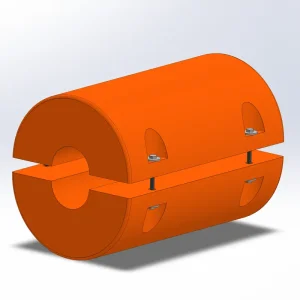
Unlike standard off-the-shelf buoyancy cylinders, our custom Duncan Pipe Floats feature reinforced ribbed outer shells molded from virgin UV8-stabilized High-Density Polyethylene (HDPE). Inside, they are pressurized with high-density, closed-cell polyurethane (PU) foam with a core density exceeding 35-45 kg/m³. This prevents water ingress even if the outer shell experiences acute mechanical puncture from maritime collisions or sharp aggregate contact.
Operating under the unwavering principle of "quality first, reputation first, service first," our factory utilizes electronic automatic temperature measurement and variable-frequency rotational speeds. This ensures uniform wall thickness across both halves, guaranteeing seamless interchangeability and rapid bolt-on installation on international project sites.
Engineering Sizing Criterion: The Precision Buoyancy Ratio
A common engineering oversight in offshore pipelines is sizing buoyancy modules against an empty conduit. In dynamic marine dredging and mineral tailings transport, buoyancy sizing must factor in high-density aggregate mixtures, fluid drag, marine growth accumulation, and tidal variations.
Design Guidelines:
- Maintain 25% to 30% of the pipe diameter above the static waterline (Freeboard Criterion).
- Incorporate slurry specific gravities ranging from 1.3 to 1.8 kg/L for mining tailings and sand slurries.
- Verify clamping tension across corrosion-resistant galvanized or 316 stainless-steel bolt sets during preliminary hydraulic runs.
China Factory 4.0: Supply Chain Resilience & Efficiency
Digitally monitored rotational molding processes ensure high dimensional fidelity, fast batch runs, and predictable port delivery schedules.
Automated Cycle Control
Variable-frequency rotational systems coupled with multi-zone infrared thermal sensors ensure complete, uniform plasticization. This eliminates internal voids and thin corners on all modular float shells.
High Interchangeability
Standardized CNC tooling matrices guarantee that replacement half-shells perfectly align with units previously deployed on site, lowering maintenance overhead and inventory costs for marine fleet operators.
Integrated Sourcing
Benefit from end-to-end supply synchronization across dredging pipelines, wear-resistant rubber slurry hoses, float tie-ins, and high-visibility maritime buoys directly from a single certified manufacturing origin.
Macro Industry Solutions & Engineered Field Deployments
Tailored buoyancy configurations optimized for severe environmental shear, chemical resistance, and maritime boundary safety.
Port & Harbor Capital Dredging
Keeps long discharge conduits visibly surfaced and hydro-dynamically aligned during berth deepening, channel expansions, and maintenance desilting around busy international navigation zones.
Mining Tailings Slurry Transport
Engineered for high-density, abrasive tailings pumped over large tailings holding ponds. The resilient polymer shell shrugs off acidic residues, corrosive salts, and acute slurry friction.
Municipal Reservoirs & Intakes
Facilitates modular floating water intake bypass lines, chemical-free raw water transport, and temporary riverbed redirection with minimal impact on local aquatic biospheres.
Cable-Integrated Floating Paths
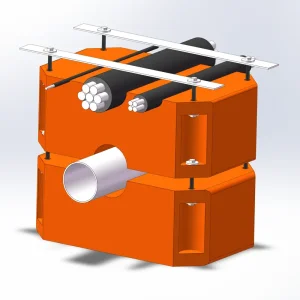
Patented channels molded directly into the float chassis secure electrical power lines and real-time telemetry cables alongside slurry pipes, protecting vital circuits from ocean surge.
Compliance Safeguards & Global Procurement Readiness
Meeting the exacting supply-chain demands of international EPC contractors, civil port authorities, and offshore oil & gas engineering bodies.
Material Traceability
Every Duncan Pipe Float is molded from traceable virgin polyethylene resin (LLDPE/HDPE). Mill test certificates (MTC) and environmental declarations accompany export manifests to ensure project compliance.
Warranties & Guarantees
Protected by comprehensive international commercial terms. The operational warranty coverage runs until 18 months from buyer handover to the client/investor, or 12 months post-installation.
Optimized Export Packaging
Precision-nested shell design maximizes container cubing efficiency (20GP/40HQ), driving down per-unit ocean freight costs while expediting custom clearances across European, African, and Middle Eastern ports.
Technical Roadmap: Smart Flotation & Ecological Responsibility
Pioneering sustainable materials, embedded telemetry, and modular enhancements to meet tomorrow's environmental demands.
Pioneering Sustainable Polymers & Embedded Telemetry
The maritime industry is undergoing an environmental transition toward lower lifecycle emissions and circular material usage. Juhua's forward engineering roadmap focuses on integrating molecularly recycled polyethylenes without compromising compressive strength or impact resilience.
Simultaneously, our R&D department is currently prototyping Smart Flotation Modules. These next-generation pipe floats incorporate low-power IoT telemetry sensors capable of tracking pipeline inclination, real-time stress strain, ambient water temperature, and geolocation coordinates. This allows dredging supervisors to detect localized slurry blockage bottlenecks, unexpected pipeline ballasting, or coupling fatigue prior to catastrophic line failure.
- Eco-Resins: Transitioning toward marine-safe UV pigments with zero halogen content, protecting fragile aquatic ecosystems from chemical leaching.
- Embedded Sensor Cavities: Factory-molded recesses designed for acoustic beacons and satellite transponders.
- Quick-Lock Coupling Architecture: Upgraded assembly hardware reducing bolt-tightening time on water platforms by over 40%.
Frequently Asked Technical & Commercial Questions
Key details for procurement leads, marine project managers, and civil piping specialists.
Specialized Modular Flotation & Marine Conduits
Explore our complementary rotomolded platforms, cable-integrated units, pontoons, and heavy industrial slurry pipelines.