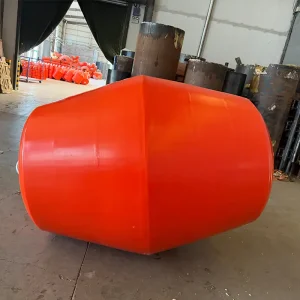
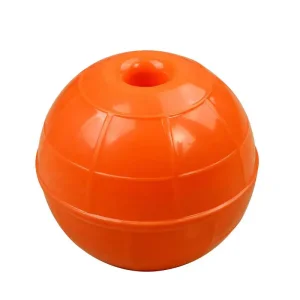
High-Performance Floating Dredge Pipeline Components
Explore our certified modular pipeline floats, subsea positioning bodies, and wear-resistant elastomeric fluid transport conduits engineered to sustain extreme hydrostatic currents and severe abrasive media.


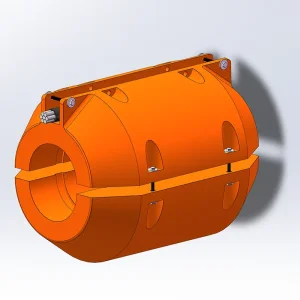
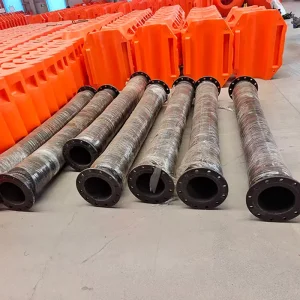


Industry Evolution: The Paradigm Shift in Slurry Flotation Systems
Over the past two decades, dredging infrastructure has undergone a radical transition driven by megaproject scales, tighter environmental scrutiny, and aggressive operational depths. Historically, maritime dredging operations relied on rigid steel piping supported by cumbersome welded steel pontoon floats or unreinforced clamp-on shells. These legacy assemblies suffered from cataclysmic rust corrosion in high-salinity waters, rigid fatigue failures under swell actions, and catastrophic sinking risks during skin punctures.
Modern coastal reclamation and marine desilting mandate next-generation custom floating dredge hoses—seamlessly integrating continuous elastomeric wear linings, spiraled high-tensile carbon reinforcement cores, and integral or modular rotomolded closed-cell cellular flotation collars. By transitioning from rigid assemblies to high-elasticity flexible pipelines, operators achieve up to 35% reductions in hydrodynamic hydrodynamic drag, superior dampening of cyclic wave slamming, and complete elimination of galvanic corrosion.
As a premier custom floating dredge hose supplier, Shandong Binzhou Juhua Rubber & Plastic Co., Ltd. leads this engineering progression. Utilizing closed-loop rotational molding systems with automated wall-thickness control and advanced vulcanized rubber technology, we provide turnkey solutions that guarantee uncompromised slurry transport throughput even in Sea State 5 conditions.
Severe Abrasion Elastomers
Compounded natural rubber (NR) and synthetic blends (SBR/BR) delivering ultra-high elongation and tensile thresholds. Formulated specifically to resist sharp coral aggregate, coarse quartz slurry, and abrasive tailings.
Zero-Sink Closed-Cell Core
Cellular expanded polyethylene and high-density polyurethane foam matrices injected within UV-stabilized rotational polyethylene shells. The structural cellular integrity prevents water ingress even under severe structural puncture.
Dynamic Stress Dispersion
Reinforced end-collar transitions and vulcanized forged steel flanges engineered to absorb severe axial bending moments caused by vessel heave, tidal surges, and high-velocity pump pressure spikes.
Global Enterprise Procurement Demands & Technical Verification
International dredging contractors, EPC concessionaires, and port authorities evaluate floating dredge hose suppliers based on rigorous lifecycle cost analytics, burst pressure redundancy, and material traceabilities. Below is our standard engineering parameter verification matrix for critical pipeline projects.
| Nominal Bore (NB / ID) | Working Pressure (WP) | Testing Pressure (1.5x) | Burst Pressure (Min. 3x) | Reserve Buoyancy Range | Slurry Velocity Limit | Primary Industrial Application |
|---|---|---|---|---|---|---|
| DN 300 (12") | 1.0 - 1.5 MPa | 1.5 - 2.25 MPa | ≥ 3.5 MPa | 160% - 200% | Up to 6.5 m/s | River Desilting, Silt Curtain By-pass, Marina Access |
| DN 500 (20") | 1.5 - 2.0 MPa | 2.25 - 3.0 MPa | ≥ 4.5 MPa | 180% - 220% | Up to 7.5 m/s | Harbor Deepening, Tailings Management, Beach Nourishment |
| DN 700 (28") | 1.5 - 2.5 MPa | 2.25 - 3.75 MPa | ≥ 5.5 MPa | 180% - 240% | Up to 8.2 m/s | Heavy Sand Reclamation, Coastal Land Reclamation Schemes |
| DN 900 (36") | 2.0 - 3.0 MPa | 3.0 - 4.5 MPa | ≥ 7.0 MPa | 200% - 250% | Up to 9.0 m/s | Trailing Suction Hopper Dredger (TSHD) Discharge, Deep Channel |
| DN 1100 (44") | 2.5 - 3.5 MPa | 3.75 - 5.25 MPa | ≥ 8.5 MPa | 220% - 280% | Up to 9.5 m/s | Offshore Megaproject Reclamation, Deep Sea Aggregates |
Slurry Specific Gravity Accounting
Standard water flotation is insufficient for dense slurries. We engineer buoyancy volumes calibrated for fluid specific gravities ranging from 1.25 t/m³ (silt-water) up to 2.1 t/m³ (heavy mineral gravel & copper tailings), preserving a minimum 25% continuous waterline clearance.
Full Dynamic Bending Analysis
Floating lines suffer severe cyclical flex fatigue from swell harmonics. Our FEA-validated helical wire cages and multi-ply cord reinforcements allow maximum bending radii down to 4x to 6x hose inner diameter without kinking, delamination, or ovality distortion.
Integrated Flange Integrity
Featuring vulcanized sandwich carbon-steel flanges with full rubber encapsulation. Eliminates contact between corrosive seawater and structural metals, resisting bolt pull-through and ensuring reliable seal integrity under violent pressure surges.
Macro-Industry Solutions & Harsh Marine Operations
Across diverse operating landscapes, fluid dynamics and mechanical stresses vary widely. Our flotation and dredging hose matrices are deployed across major industrial sectors worldwide.
Port Deepening & Harbor Access
Accommodating New Panamax and mega container vessels requires high-volume capital dredging in busy shipping channels. Our floating lines ensure ultra-low hydrodynamic resistance and high visibility marking, protecting passing vessels while maintaining uninterrupted 24/7 dredge discharge.
Coastal Land Reclamation
Pumping millions of cubic meters of sand from offshore borrow areas to land reclamation perimeters demands heavy-duty floating discharge lines. Our integrated hose solutions withstand high cyclical pressures, maintaining smooth material flow across lines exceeding several kilometers.
Mining Tailings & Slurry Transport
Mineral processing facilities often need to float abrasive tailings pipelines across containment tailings storage facilities (TSF). Our chemical-resistant inner rubber compounds and non-degrading PE floats resist harsh leachates, low pH acids, and continuous UV exposure.
Inland Riverbed & Reservoir Desilting
Shallow river channels, sensitive hydro dams, and water reservoirs require compact, highly flexible floating pipelines that track twisting waterways without grounding or creating shore-transition fatigue cracking.
Subsea Tie-In & Shore Approach
Navigating the transition zone where subsea sunken pipelines rise through the surf break to the water surface. Our staged-buoyancy modular floats and taper-walled hoses buffer high-energy breaking surf and long-period swell dynamics.
Offshore Environmental Containment
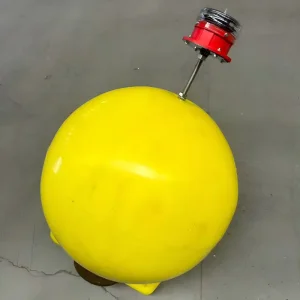
Protecting marine ecosystems during major dredging operations through coupled silt curtains, marine floating barriers, and lighted navigation buoys ensuring complete regulatory compliance with national marine preservation agencies.
Localized Support, Verification Protocols & Regulatory Compliance
Operating a floating dredge pipeline in maritime sectors demands adherence to stringent environmental regulations and safety certifications. Shandong Binzhou Juhua Rubber & Plastic Co., Ltd. operates under strict ISO 9001:2015 Quality Management, ISO 14001:2015 Environmental Systems, and ISO 45001 Health & Safety frameworks. Every production batch of dredging hoses and polyethylene floats undergoes comprehensive factory acceptance testing (FAT).
Factory Inspection Protocols include:
- Hydrostatic Proof Testing: Every individual hose length is pressurized to 1.5x working pressure for 15 minutes to guarantee flange sealing and carcass bonding.
- Hydrostatic Burst Verification: Destructive burst testing on sample production units validating a minimum 3.0x to 3.5x safety safety threshold.
- Material Elongation & Abrasion Volume Loss: DIN 53516 / ISO 4649 abrasion testing verifying carcass volume loss below 80 mm³ under severe testing abrasive matrices.
- Polyethylene Shell Impact Resistance: Falling-dart impact testing at -20°C and accelerated UV weathering tests (ASTM G154) ensuring over 15 years of structural embrittlement resistance.
- Buoyancy Verification: Water displacement submersion tanks confirming calculated net buoyancy, ensuring accurate freeboard upon pipeline commissioning.
To support global marine projects, our export operations provide certified seaworthy packaging, container optimization calculations, on-site technical supervision, and full traceability documentation backed by Class society inspections (ABS, BV, DNV, CCS) upon client request.
Engineering Buoyancy Calculation Methodology
A frequent cause of pipeline sinkage or excessive wave fatigue is undersizing buoyancy based on an empty pipe. Sizing must account for slurry specific gravity, accessory weights, and wave impact dynamics.
1. Total Mass Equation
M_total = M_pipe + (V_internal × ρ_slurry) + M_flanges + M_hardware
Where ρ_slurry represents the true mixture density (often 1.3 to 1.8 kg/L for sand, gravel, and ore minerals), not pure freshwater.
2. Required Buoyancy
B_target = M_total × (1 + R_reserve)
The safety reserve coefficient (R_reserve) should be configured between 0.20 (sheltered lakes) and 0.35 - 0.40 for exposed coastal marine swell zones.
3. Waterline Freeboard Check
Freeboard Target: ≥ 0.25 × Outer Diameter (OD)
Ensuring 25% to 30% of the pipe diameter sits above the calm water plane guarantees line visibility and reduces drag from subsurface undertow currents.
Technology Roadmap: Next-Generation Flotation Engineering
As offshore dredging expands into deeper waters and stricter ecological standards take effect, Juhua's R&D team is driving innovation across key technological frontiers.
IoT-Enabled Smart Hoses
Embedding wireless conductive sensor grids into the elastomeric carcass to measure continuous wall loss, real-time internal pressure spikes, and localized strain. Operators receive automatic warnings before inner tube breach occurs.
Eco-Circular Polymers
Formulating rotational molding shells with bio-circular high-density polyethylenes and halogen-free blowing agents to reduce production carbon footprints without sacrificing UV resistance or chemical stability.
Vortex Shedding Outer Shells
Textured hydrodynamic outer geometries and spiral strakes molded directly into float surfaces to disrupt vortex shedding, reducing lateral pipeline oscillation and current drift in open-ocean settings.
Self-Healing Lining Blends
Testing microencapsulated polymer matrices that activate upon initial abrasive micro-cracking, slowing aggregate gouging and extending hose operational life between maintenance cycles by up to 25%.
Frequently Asked Questions on Floating Dredge Hoses & Pipeline Floats
Comprehensive engineering clarifications addressing the key concerns of maritime procurement directors, dredging project managers, and marine engineering contractors.
What is the key difference between integrated self-floating dredge hoses and clamp-on PE floats?
Integrated self-floating dredge hoses feature a vulcanized internal closed-cell cellular foam layer built directly into the hose carcass. This provides uniform buoyancy, smooth bend dynamics, and eliminates localized point-load stresses. Clamp-on PE pipeline floats are modular two-piece shells bolted over steel or HDPE pipes. Clamp-on floats offer high versatility, easier field replacement, and economical retrofit capability for existing rigid pipelines.
How does salinity and temperature affect reserve buoyancy calculations?
Seawater has an average density of ~1.025 kg/L compared to freshwater (1.000 kg/L), providing approximately 2.5% more buoyant lift. However, elevated water temperatures can slightly lower water density while solar heating increases the internal pressure of closed foam cells. To ensure safety margins across seasonal and geographic shifts, we maintain an engineering safety factor of at least 20% to 30% reserve buoyancy.
What measures are taken to prevent end-collar shearing under cyclical swells?
The junction between a flexible hose body and rigid flange end represents the highest stress concentration point. Juhua utilizes computer-optimized conical carcass tapers, increased reinforcement ply density near the fittings, and vulcanized sandwich steel collars that gradually transition bend stiffness, preventing localized kinking or delamination under continuous wave action.
Can your flotation products integrate power cables or hydraulic control lines?
Yes. Juhua specializes in custom OEM/ODM pipeline floats manufactured with dedicated longitudinal cable channels and utility troughs. This allows power cables, GPS positioning lines, and hydraulic actuation hoses to run safely along the top surface of the dredging line, protected from surface impacts and line tangling.
What is the standard warranty coverage and expected operational lifespan?
Standard warranty extends 18 months from bill of lading delivery or 12 months from site commissioning. Under normal operating conditions (conveying silica slurry at recommended velocities), our high-abrasion inner liner compounds deliver typical operational lifespans between 5 to 8 years, while our rotomolded UV-stabilized PE flotation shells routinely exceed 12 to 15 years in high-salinity marine environments.
What information is required to receive an accurate buoyancy calculation and quote?
Please share: (1) Pipe outer diameter (OD) and material (steel, HDPE, or flexible hose), (2) Slurry dry-weight volume and mixture density (t/m³), (3) Operational and maximum burst pressure requirements, (4) Total pipeline length and wave exposure conditions, and (5) Destination port for shipping optimization and container nesting calculations.
Specialized Marine Flotation, Mooring & Barrier Systems
Explore our heavy-duty marine mooring buoys, subsea deepwater pipeline supports, and water pollution barrier systems engineered to complement your floating dredge pipeline array.