
High-Performance Flotation & Anchorage Hardware
Pre-engineered components tested for hydrodynamic stability, high chemical tolerance, and long-term deployment in commercial maritime environments.




The Paradigm Shift in Floating Work Dock Engineering
Addressing the migration from legacy welded steel barges and treated timber berths to modular, eco-resilient, rotationally molded polymer platforms.
In modern coastal engineering, near-shore geotechnical remediation, marine dredging, and offshore energy infrastructure, project margins are increasingly governed by the operational velocity and durability of marine staging equipment. Historically, marine contractors relied heavily on welded structural steel pontoon barges or creosote-treated timber wharves. However, the unrelenting exposure to hyper-saline splash zones, galvanic corrosion, high biofouling rates, and aggressive mechanical impact yields substantial maintenance overheads—often accounting for up to 35% of total dock lifecycle expense within seven years.
The contemporary marine engineering standard has transitioned decidedly toward custom-engineered high-density polyethylene (HDPE) floating work docks. Utilizing automated rotational molding technology paired with closed-cell expanded polystyrene (EPS) or high-density polyurethane (PU) foam filling, contemporary floating work platforms provide high structural integrity, zero corrosion vulnerability, and elastic energy absorption. When workboats or excavation machinery impact the dock edge, the flexural modulus of virgin polymers dissipates kinetic forces that would permanently deform steel bulkheads or splinter wooden timbers.
Zero Corrosion Lifecycle
Unlike steel hulls requiring cathodic sacrificial anodes and hazardous anti-fouling coatings, HDPE polymer shells are completely inert to seawater, industrial effluents, and harsh chemical slurries, delivering a maintenance-free design life exceeding 25 years.
Modular Scalability
Interlocking heavy-duty pontoon geometries allow work platforms to be reconfigured within hours. Rapid transformation from a 50-meter linear pipeline inspection walkway to a 200 m² heavy-equipment staging island enables contractors to redeploy assets across projects.
Kinetic Energy Absorption
Polymer pontoon walls possess high tensile elongation properties and elastic recovery. Dynamic contact loads from heavy supply tenders, dredging support skiffs, and shifting tidal currents are absorbed without brittle structural cracking.
Environmental Compliance
Food-grade virgin polyethylene guarantees zero leaching of toxic biocides, microplastics, or hydrocarbons into aquatic reserves, drinking water reservoirs, or sensitive marine protected sanctuaries.
Custom Floating Work Dock Pricelist & Technical Matrix
Budgetary pricing frameworks structured around load capacity, mechanical deck reinforcements, buoyancy reserves, and regional freight packing requirements.
Procuring industrial-grade floating work docks requires balancing point load requirements, dynamic freeboard height, and sub-structure anchoring tensions. Unlike consumer recreational marinas, commercial floating work docks must support concentrated static weights such as diesel generators, dewatering pumps, hydraulic power units (HPUs), and light tracked machinery.
The baseline cost formulation is governed by unit deadweight, rotomolding cycle time, polymer resin grades (e.g., UV-stabilized PE-100 equivalent), and interior coring (hollow vs. solid EPS matrix). The table below outlines standard industrial tiers engineered for EPC contractors, dredging operations, and port authority maintenance squads.
| Class / Model Tier | Static Payload (kg/m²) | Wall Thickness & Infill | Primary Industrial Use Case | Estimated Base Price (USD/m²)* |
|---|---|---|---|---|
| Tier 1: Light Commercial FWD-LC400 |
180 – 250 kg/m² | 6–8 mm HDPE / Hollow or Light Air Core | Personnel access, cable line inspection, floating pipe catwalks | $95 – $145 |
| Tier 2: Heavy-Duty Industrial FWD-HD650 |
350 – 480 kg/m² | 9–12 mm HDPE / Monolithic EPS Foam Infill | Pump stations, dredge discharge support, welding stations | $160 – $240 |
| Tier 3: Extreme Load Modular FWD-XL900 |
550 – 850 kg/m² | 12–15 mm HDPE / Marine PU Foam + Internal Frame | Excavator staging, offshore drill support, dive operations | $280 – $420 |
| Custom Engineered OEM/ODM FWD-SPEC-PROJECT |
Engineered up to 1,200+ kg/m² | Custom structural molds, integrated galvanized steel grid | Subsea tie-in platforms, heavy transformer floats, mining tailings | Direct Technical Quote |
*Disclaimer: Budgetary pricing indicates Ex-Factory / FOB terms based on volume bulk order runs (min. 100 m²). Final contract pricelist varies depending on custom connection lugs, anti-slip surface texturing, mooring spud well brackets, and sea-freight container nesting density.
Macro-Industry Solutions for Mission-Critical Waters
Custom-dimensioned floating work docks deployed across demanding global maritime infrastructure, hydro-mining, and public civil defense operations.
Port & Harbor Infrastructure Expansion
Supports continuous wharf restoration, quay wall maintenance, and pile-driving operations. Acts as an unsinkable buffer for marine painters, concrete repair teams, and underwater inspection divers operating beneath commercial vessel berths.
Tailings Dewatering & Industrial Mining Ponds
Tailings repositories in copper, gold, and lithium extraction contain aggressive acids, toxic slurries, and elevated heavy metal concentrations. Our virgin rotomolded pontoons deliver reliable chemical stability for high-volume barge slurry pumps.
Dredging Pipelines & Sediment Discharging
Acts as floating work stations at dredge line tie-in points, slurry ball-joint transitions, and valve stations. Provides work crews with secure handrails, anti-slip footing, and stable platforms for routine booster pump monitoring.
Offshore Wind, Renewables & Aquaculture
Serves as secondary floating support docks for offshore inter-array cable pulling operations, floating solar PV array inverter staging, and commercial open-ocean fish containment monitoring.
Localized Support & Rigorous Quality Control
Ensuring cross-border compliance with international maritime structures, load safety margins, and turnkey logistic coordination.
Hydrostatic Stability Simulation
Every custom dock layout undergoes FEA structural modeling and metacentric height calculation. We establish baseline freeboard projections under uneven eccentric live loads, ensuring compliance with OSHA and maritime deck safety margins.
Certified Materials & Testing
Manufactured under ISO 9001:2015 and ISO 14001 certification. Raw resins undergo melt flow index (MFI) verification and ASTM D1693 Environmental Stress Crack Resistance (ESCR) benchmarking exceeding 1,000 hours without failure.
Mooring & Anchoring Engineering
Site-specific mooring analysis accounts for localized 100-year storm wave heights, tidal variances, and river current velocities. We supply matched anchor chain assemblies, deadweight sinkers, pile guide brackets, and elastic hawsers.
Global Containerized Logistics
Pontoon modules are dimensionally engineered to optimize ISO 40-foot High Cube (40HC) container cubing. High container packing density drastically minimizes maritime shipping freight costs to Africa, the Middle East, Southeast Asia, and the Americas.
Engineering Roadmap: The Future of Floating Work Platforms
Strategic integration of smart sensor networks, circular polymers, and automated mooring mechanics.
Structural Telemetry Integration
Incorporating IoT-enabled load-cell sensors within interlocking pin junctions to monitor dynamic wave stress, deck tilt, and freeboard depth in real time, transmitting early warning signals to site project managers via satellite link.
Circular Closed-Loop Composites
Development of ultra-high molecular weight polyolefin blends incorporating up to 40% certified post-industrial maritime recyclates without sacrificing UV-8 degradation thresholds or tensile yield performance.
Autonomous Self-Positioning Pontoons
Modular work dock modules equipped with integrated electric azimuth thrusters and GPS dynamic positioning (DP0) capabilities, eliminating the requirement for complex manual anchoring in environmentally sensitive coral reef beds.
Custom Floating Work Dock Procurement Q&A
Addressing core technical questions from marine contractors, harbor masters, and EPC procurement leads.
How is safe working load (SWL) determined for heavy equipment on floating work docks?
Safe working load is calculated by deducting dock deadweight from total displaced water volume up to the designated freeboard threshold. Standard hollow industrial cubes offer approximately 350 kg/m² payload. For localized high-point weights (e.g., a 2.5-ton hydraulic pump or welding generator), we integrate monolithic internal EPS foam and an internal or surface-mounted structural load-distributing steel/aluminum sub-frame to distribute weight across contiguous modules.
What is the standard warranty and anticipated lifespan in harsh marine environments?
Our floating work dock bodies carry a standard warranty extending 18 months from delivery or 12 months from on-site deployment. When engineered with virgin high-density polyethylene treated with UV-8 stabilizers, the operational service lifespan consistently exceeds 20 to 25 years under high UV irradiance and severe saltwater conditions without wall embrittlement or loss of buoyancy.
How are floating work docks anchored in high-current tidal rivers or open bays?
Anchoring configurations are tailored to bottom soil morphology, water depth variances, and wave actions. Standard methods include: (1) Telescoping internal/external pile guides mounted to fixed steel or concrete pilings; (2) Cross-patterned marine anchor chain with deadweight concrete sinkers; and (3) Elastic mooring hawsers connected to shore deadman anchors for fluctuating river levels.
Can custom work docks be equipped with auxiliary safety and utility gear?
Yes. We supply integrated accessories engineered specifically for industrial marine works: perimeter safety handrails, non-sparking aluminum boarding gangways, integrated conduit chases for electrical cabling and compressed air lines, heavy-duty rubber D-fendering, bollards up to 5-ton pull capacity, and solar-powered marine navigation safety markers.
What documentation and technical data are required to obtain a fast commercial quotation?
To deliver an accurate specification and pricelist within 24 hours, our engineering office requires: (1) Total dock dimensions or required working footprint; (2) Peak static and dynamic payload (kg/m² or specific machine weights); (3) Operating water body type (reservoir, tidal river, open coast); (4) Maximum recorded wave height and current velocity; and (5) Project delivery port for optimized container nesting calculation.
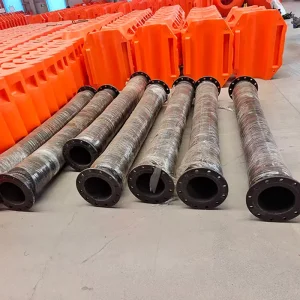
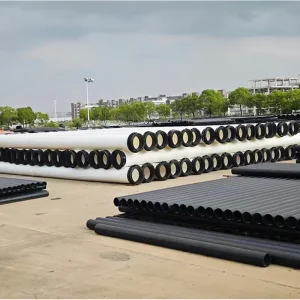
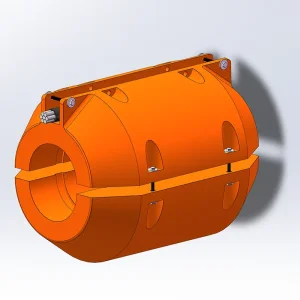
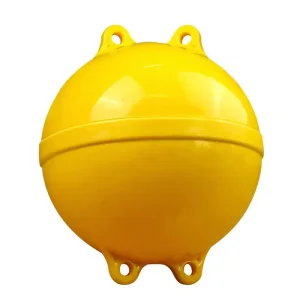
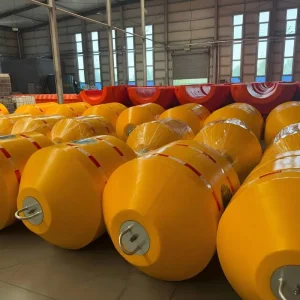
Engineered Dredge Flotation, Hoses & Heavy Buoys
Robust support modules designed for extreme hydrostatic pressures, sediment conveyance, and deepwater umbilical protection.

Request a Project-Specific Floating Dock Buoyancy Analysis
Connect directly with our senior rotational molding engineers and naval architects. Receive CAD integration files, hydrodynamic displacement calculations, and an itemized export pricelist tailored to your harbor or pipeline specifications.