Featured Heavy-Duty Buoyancy Units & Marine Hardware
Standardised factory supply for dredging contractors, port authorities, offshore engineering firms, and municipal hydro-infrastructure facilities worldwide.
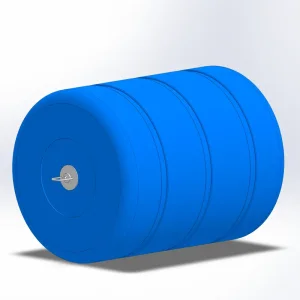

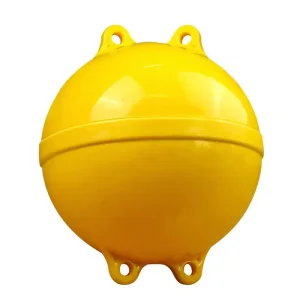

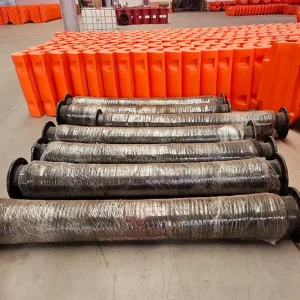

Global Macro-Industrial Dynamics & Buoyancy Engineering
An in-depth perspective on modern marine dredging, mineral tailings extraction, dynamic fluid transport mechanics, and structural thermoplastic advantages.
Polyethylene vs. Legacy Steel Shells
Traditional marine dredging operations historically relied on steel pontoon units. However, electrolytic marine corrosion, aggressive saltwater scaling, high repair frequency, and heavy self-weight make steel uneconomical. Modern high-density polyethylene (HDPE) rotationally molded structures offer zero-corrosion resilience, absolute UV-8 degradation resistance, and flexible impact recovery under dynamic wave impact.
Polyurethane Internal Solidification
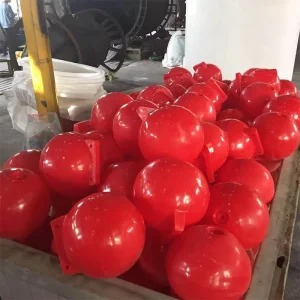
Industrial HDPE floats produced by our factory utilize an integrated closed-cell polyurethane (PU) rigid foam interior. In the event of high-impact puncture from maritime vessel collisions, dredge boulders, or sharp debris, water penetration is strictly restricted. The structural buoyancy loss is under 1.5%, guaranteeing that continuous discharge lines remain on the operational surface.
Severe Environment Resilience
Whether facing severe equatorial solar radiation in Southeast Asia, ultra-saline coastal conditions across the Middle East, or sub-zero riverbed icing throughout North American corridors, specialized linear low-density and high-density virgin resins blended with high-grade carbon black ensure thermal performance ranging from -40°C to +60°C without micro-fissuring.
Engineering Sizing Formulations & Indicative Pricelist
Floats must not be procured based on empty pipe dry-weight. Accurate engineering requires matching hydrodynamic displacement against slurry gravity, pipe friction, and accessories.
Buoyancy Calculation Rule of Thumb
Total Reserve Buoyancy Formula: F_buoyancy ≥ (W_pipe + W_slurry + W_fittings) × 1.25 to 1.30
A safety factor of 1.25 to 1.30 guarantees that roughly 25% of the float diameter projects above the waterline (freeboard). This structural reserve accommodates dynamic surge loads, fluid velocity spikes, slurry density surges up to 1.6 t/m³, and biofouling colonization over multi-year installations.
| Applicable Pipe OD | Float Dimensions (OD × Length) | Total Net Buoyancy (Pair) | Wall Thickness Range | Approx. Factory Direct FOB Price (USD) | Production Status |
|---|---|---|---|---|---|
| DN 110 - DN 160 mm | 500 mm × 800 mm | ~ 110 kg | 5.5 - 7.0 mm | $45.00 – $65.00 / pair | Standard Stock |
| DN 200 - DN 250 mm | 700 mm × 1000 mm | ~ 260 kg | 6.0 - 8.5 mm | $85.00 – $120.00 / pair | Standard Stock |
| DN 315 - DN 355 mm | 900 mm × 1200 mm | ~ 540 kg | 7.0 - 9.5 mm | $145.00 – $190.00 / pair | High Demand |
| DN 400 - DN 450 mm | 1100 mm × 1300 mm | ~ 880 kg | 8.0 - 11.0 mm | $230.00 – $310.00 / pair | Custom Run Available |
| DN 500 - DN 560 mm | 1300 mm × 1500 mm | ~ 1,450 kg | 9.5 - 13.0 mm | $380.00 – $490.00 / pair | High Demand |
| DN 630 - DN 710 mm | 1600 mm × 1800 mm | ~ 2,600 kg | 11.0 - 15.0 mm | $650.00 – $840.00 / pair | Engineered-to-Order |
| DN 800 - DN 1000 mm | 2200 mm × 2200 mm | ~ 5,800 kg | 14.0 - 18.0 mm | $1,200.00 – $1,650.00 / pair | Heavy Offshore Grade |
*Note: Pricing is indicative for volume export based on raw material resin indexes. Specific quotes depend on custom PU density (35-45 kg/m³), bolt hardware (Galvanized Steel vs. AISI 316 Stainless), custom pipeline cable troughs, and shipping logistics.
Field Engineered Application Scenarios
Validated operations in dredging corridors, hard-rock mineral extraction, nearshore reclamation, and environmental barriers.
1. Maritime Port & Navigational Channel Dredging
Harbor maintenance demands non-stop operation of Cutter Suction Dredgers (CSD) and Trailing Suction Hopper Dredgers (TSHD). Our HDPE pipe floats secure long-distance discharge lines across busy waterways. Coated in safety orange or high-visibility maritime yellow with optional retro-reflective bands, they maintain waterway visibility and prevent catastrophic ship collisions.
2. Mining Tailings & Heavy Mineral Slurry Lines
Gold, copper, phosphate, and iron ore extraction operations generate high-density tailings pipelines. Unlike pure water, heavy slurry can achieve densities of 1.4 to 1.8 kg/L. Our heavy-duty wall-thickness floats provide the calibrated surplus buoyancy needed to prevent settling, fatigue buckling, and pipeline failure over expansive tailing storage facilities (TSF).
3. Hydro-Dam Silt Screens & Environmental Booms
Water-reservoir intakes, hydroelectric power plants, and industrial water outflows require dependable debris containment. Linked cylindrical floats, customized trash booms, and integrated silt curtain floats maintain vertical physical barriers that block vegetative debris, surface oil slicks, and sediments without impeding main water turbines.
Localized Compliance, Quality Audits & Warranty Framework
Exceeding international maritime standards and contractor EPC safety criteria through rigorous laboratory and factory testing.
Raw Polymer Integrity (ISO 9001 / ASTM)
Every batch of raw thermoplastic material undergoes continuous Melt Flow Rate (MFR) verification, Environmental Stress Crack Resistance (ESCR - ASTM D1693) testing, and density audits. We use only high-grade, 100% virgin LLDPE/HDPE resins without recycled regrinds that compromise tensile strength during severe mechanical impact.
Fastener Metallurgy & Torquing Dynamics
High-vibration ocean environments shake inferior clamps loose. Our pipe float systems incorporate recessed bolt wells preventing pontoon rubbing, paired with Grade 8.8 galvanized or Marine AISI 316 stainless hardware. Fasteners include double nylon lock nuts and oversized flat backing washers to distribute clamping forces evenly across the pipe.
Contractor Warranty & Localization
We provide full manufacturer-backed technical warranties covering 18 months from the delivery date or 12 months from on-site deployment, whichever comes first. Project documentation packs include Factory Acceptance Test (FAT) certificates, buoyancy simulation charts, and container nesting blueprints to optimize ocean freight volume.
Technical Roadmap & Next-Generation Flotation Tech
Anticipating maritime automation, real-time sensory telemetry, and closed-loop material recycling architectures.
1. IoT-Enabled Smart Buoyancy Sensors (2025–2026)
Integrating localized Bluetooth and LoRaWAN load-displacement sensors within float chambers allows automated monitoring of submerged waterline levels, giving dredging operators real-time alerts on internal slurry pipe sedimentation and localized wear before pipe blockages occur.
2. Low-Carbon Thermoplastic Blends & Ocean Recyclability
Progressive testing of bio-based resins and certified post-industrial closed-loop recovery initiatives to maintain high ESCR resistance while minimizing the carbon footprint across marine construction projects.
3. Hydrodynamic Drag-Reduction Geometries
Advanced Computational Fluid Dynamics (CFD) modeling of pontoon profiles helps reduce hydrodynamic drag against fast river currents, decreasing anchoring chain fatigue and minimizing tow-boat fuel burn during marine relocation.
Technical & Commercial FAQ
Direct answers to core questions frequently raised by project procurement teams, dredging superintendents, and civil engineers.
What causes pipeline floats to slip, and how is it prevented?
Slippage usually occurs when floats designed for steel outer diameters are used on flexible HDPE pipes without accounting for thermal expansion, or from under-torqued bolts. Juhua floats incorporate molded internal ribbing that bites securely onto the pipeline exterior without damaging pipe walls. Specialized anti-slip rubber traction pads are also available for dynamic offshore slurry lines.
How do I calculate the correct spacing between consecutive floats?
Float spacing depends on pipeline flexibility and wave conditions. While continuous clamp configurations (zero gap) offer maximum buoyancy per meter for heavy discharge lines, moderate slurries typically use a 0.5m to 1.5m gap between pairs. This spacing preserves pipe flexibility across sea swells while preventing line kinking and joint stress.
Can floats be manufactured to accommodate external cables and power lines?
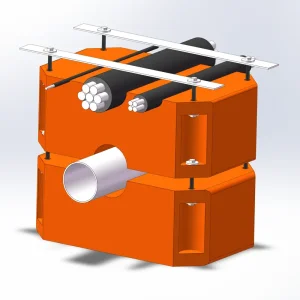
Yes. Dredging applications often require auxiliary power cables, hydraulic controls, or signal transmission lines to run out to offshore dredging platforms or discharge spreaders. We manufacture customized pipe floats with recessed top cable troughs and secure clamp covers, protecting electrical lines from water exposure and mechanical impact.
What is the typical service life under strong marine UV exposure?
Our rotomolded floats are blended with a minimum UV-8 (UV-15 available upon request) stabilization package. Even in continuous high-salinity and equatorial sun environments, the polyethylene shell retains more than 80% of its initial impact resistance after 10 years of outdoor service.
How do you optimize shipping costs for international sea freight?
Because buoyant pontoons are high-volume, lightweight items, freight rates depend heavily on packing efficiency. Our float molds are engineered with nested split-shell geometries. Half-shells can often be nested or nested around compatible inner steel hardware, drastically reducing the cubic meter requirement in 40ft HQ ocean containers.
Can custom colors and project branding be added to float shells?
Yes. Colors are integrated into the polymer compound during the rotational blending process, rather than sprayed onto the finished surface. This prevents flaking or chipping from abrasive contact with harbor structures. We can match any RAL or Pantone color code, and mold permanent identification logos, serial numbers, or reflective strips into the shell.
Industrial Flotation & Infrastructure Solutions
Browse our complete lineup of certified marine pipeline assemblies, navigation platforms, and custom rotational buoyancy equipment.