High-Visibility Marine Navigation & Infrastructure Buoys
Engineered via rotational molding with high-density UV-stabilized polyethylene (LLDPE) shells and closed-cell polyurethane cores, designed to operate in severe littoral, offshore, and inland waterway dynamics.

Macro Industrial Solutions & Commercial Realities
In modern maritime logistics, Aids to Navigation (AtoN) are undergoing an aggressive generational shift. Global authorities are retiring legacy welded-steel buoys in favor of modular, rotomolded elastomeric and polyethylene constructs designed for zero maintenance.
Corrosion Elimination & TCO Reduction
Traditional steel navigational hulls impose severe recurring maintenance costs: biofouling blast-cleaning, toxic lead-free anti-fouling coatings, cathodic protection sacrificial anode replacement, and hot-work structural repairs. Virgin grade, rotomolded polyethylene (PE) eliminates chemical oxidation, galvanic decomposition, and salt spray embrittlement entirely, dramatically reducing thirty-year Total Cost of Ownership (TCO) across complex port configurations.
Hydrodynamic Stability in High Shear Environments
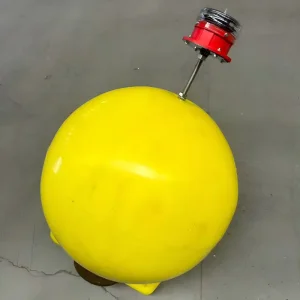
Channel depths continue to increase to handle Ultra Large Container Vessels (ULCVs) and Valemax bulk carriers. Increased draft creates severe hydrodynamic venturi forces along narrow fairways. Our buoys utilize parametric hydrodynamic hulls—including low-drag spherical, catenary-skirted, and modular spar geometries—ensuring high angular stability, keeping focal planes steady and radar cross-sections unobstructed under cross-currents exceeding 6 knots.
Kinetic Energy Absorption & Hull Memory
Navigational markers in heavy vessel traffic zones face constant service boat impact risks and barge side-swipes. The mechanical elasticity of rotomolded thick-wall polyethylene enables superior kinetic energy absorption. Unlike rigid steel structures that crush, puncture, or compromise mooring balance upon impact, PE hulls compress elastomeric forces and return to their baseline hydrodynamic geometry without skin rupture.
Advanced Structural Architecture & Rotational Molding
Manufactured using variable-frequency rotational ovens and multi-axis mechanical molding fixtures. Every component meets structural tolerances that eliminate subsurface pore formation, uneven thermal gradients, and internal stress points.
Monolithic Shell & Material Science
Constructed utilizing 100% pure virgin LLDPE (Linear Low-Density Polyethylene) enriched with UV15+ ultraviolet stabilization masterbatches and premium compounding pigments. The rotomolding process generates completely seamless, monolithic skins ranging from 9.5mm to 18mm in thickness, eradicating stress-concentration weld seams and vulnerable mechanical joint interfaces.
Closed-Cell Polyurethane Foam Core
Every internal hull chamber is pressure-injected with high-density, closed-cell expanding polyurethane (PUR) foam (38-45 kg/m³ density). This guarantees complete unsinkability: even in the catastrophic event of a vessel collision piercing the outer skin, internal water absorption remains under 3% by volume, preserving design reserve buoyancy and mooring balance indefinitely.
Internal Structural Galvanized Core
Tension forces from anchor chains are handled by a heavy-duty internal steel structural core frame (hot-dip galvanized per ISO 1461 standards). Mooring pad eyes and bridle lifting lugs integrate directly into the through-body galvanized central core, removing mechanical pull stress from the outer polyethylene skin during extreme storm sea states.
Localized Applications & Harsh Marine Environments
From frozen sub-Arctic navigational channels to high-salinity equatorial waters, customized AtoN units are designed to withstand challenging local maritime stress vectors.
Deep-Water Channel Lateral Buoys
Directing ultra-large vessel traffic within primary dredged channels. Equipped with high-gain radar reflectors, topmarks, and sync flash lantern mounts to guarantee optimal visual recognition under severe fog, rain fade, and high-wave scatter.
Offshore Wind Farm Perimeter Markers
Demarcating safety protection boundaries around offshore substation jackets and wind turbine arrays. Engineered with yellow special-mark dayboards, radar cross-sections, and integration brackets for long-range autonomous yellow LED beacons.
Dredging Fairways & Discharge Demarcation
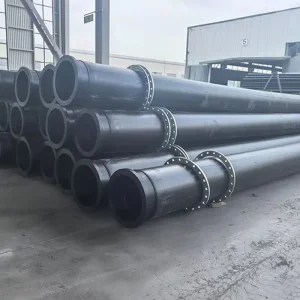
Marking continuous high-density polyethylene discharge pipelines, dredge cutterhead zones, and shallow-water reclamation perimeters to protect non-commercial river craft from sub-surface hydraulic dredging hazards.
Commercial Fishery & Sanctuary Boundaries
Providing visible, low-maintenance demarcation for deep-sea open ocean cages, mariculture leases, and environmentally sensitive marine sanctuary zones under strict environmental impact mandates.
Ice-Class Winterization Spar Buoys
Designed with low conical draft and steep-angle spar profiles that submerge cleanly under drifting ice floes during freezing seasons, popping back to nominal freeboard without structural crushing or mooring rupture.
MetOcean Sensor Buoys & Telemetry Platforms
Equipped with internal instrument wells, mast assemblies, and solar battery enclosures housing ADCPs, weather stations, water quality sensors, and satellite modems for real-time oceanographic and port security data streaming.
Standards, Certification & Technical Support
Global waterway safety requires absolute adherence to international navigation standards. Our engineering, QA workflows, and manufacturing adhere directly to IALA (International Association of Marine Aids to Navigation and Lighthouse Authorities) regulations.
IALA System A & System B Compliance
Colorimetric accuracy verified according to IALA Recommendation E-108. Whether your maritime authority operates under IALA System A (Europe, Africa, Australia, parts of Asia) or System B (Americas, Japan, Korea, Philippines), all lateral port, starboard, cardinal, and safe-water buoys feature chromaticity values that remain strictly in-tolerance under continuous UV exposure.
Catenary Mooring & Dynamic Simulation
We provide localized engineering support through dynamic catenary calculations based on bathymetric surveys, maximum wave crest heights, tidal swings, and seabed composition. Our team provides precise bridle, sinker block, and riser chain specifications to prevent buoy drag and excessive heeling.
Turnkey Ocean Freight & Site Readiness
Every export shipment is palletized with heavy-duty lifting harnesses, corrosion-resistant stainless-steel hardware, and modular component boxing that fits high-cube shipping containers. This minimizes ocean freight break-bulk surcharges and ensures immediate modular field assembly at destination ports.
Technological Roadmap & Next-Gen Smart Marine Buoys
AtoN assets are transforming from passive floating markers into connected, intelligent coastal IoT platforms that support autonomous navigation and port operations.
AtoN AIS Transceiver Integration
Integration of Type 1 and Type 3 AIS AtoN units. Broadcasting synthetic or real-time buoy positions, navigational alerts, operational status, and lateral channel positions directly onto surrounding ECDIS and radar screens.
Smart IoT Telemetry & Geo-Fencing
Ultra-low power Satellite-IoT and 4G/5G Narrowband transceivers monitoring real-time mooring tension, battery voltage, solar panel charging, water ingress, and unauthorized buoy movement outside designated watch circles.
Carbon-Neutral Kinetic Power Harvesting
Testing micro-wave motion generators and hybrid flexible photovoltaic skins molded directly into the poly body, creating redundant power sources for multi-spectral sensor arrays even during high-latitude polar winters.
Vessel-to-Infrastructure (V2X) Ports
Buoy systems designed for MASS (Maritime Autonomous Surface Ships). Serving as floating geodetic reference stations equipped with RTK base stations to enable centimeter-accurate docking and pilotless harbor navigation.
Need Project Buoyancy & Mooring Calculations?
Speak directly with our marine flotation engineers for detailed IALA designs, custom CAD drawings, and factory-direct quotation structures.
Frequently Asked Technical & Operational Questions
Addressing engineering specifications, lifecycle data, material properties, and operational parameters for maritime procurement teams.
How do rotomolded polyethylene navigation buoys compare to steel buoys in marine durability?
How do you ensure colorfastness and compliance with IALA chromaticity boundaries?
What internal mechanisms prevent the buoy from sinking upon major vessel impact?
How is mooring chain tension isolated from the rotomolded polyethylene skin?
Can the navigation buoys support smart electronics, AIS, and telemetry platforms?
What factors determine the correct buoy sizing and catenary design for a specific channel?
Commercial Marine Flotation, Pipelines & Mooring Assets
Explore our complete production line of mooring buoys, dredging pipelines, flexible delivery lines, and modular float modules built for harbor, mining, and offshore marine operations.