
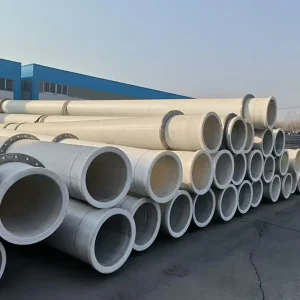
ODM Industrial-Strength Pipeline for Efficient Fluid and Material Transport Supplier, Quotes
Heavy-duty marine flotation systems designed for pipelines, deepwater subsea installations, river workboat berths, and terminal protection.
ODM Industrial-Strength Pipeline for Efficient Fluid and Material Transport Supplier, Quotes

Best Heavy-Duty Pipeline Float System for Subsea Installations Manufacturer, Products
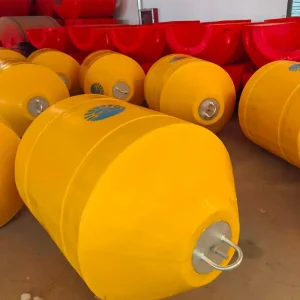
Best Foam-Filled Mooring Buoy for Marinas, Anchorages and Offshore Facilities Manufacturer, Factories
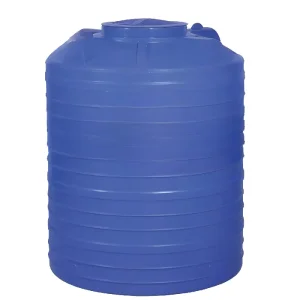
Custom Polyethylene Rotomolded Water Storage Tank – Durable and Safe Liquid Storage Solution Supplier, Factories
OEM Innovative Pipeline Float System for Reliable Deepwater Support Companies, Quotes

Custom Innovative Floating Boat Pontoon for Versatile Water Platforms Products, Pricelist
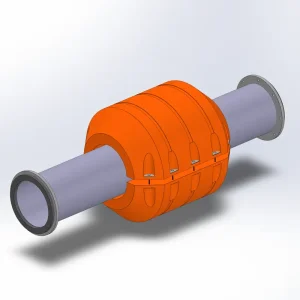
ODM High-Performance Floats for Efficient Pipeline Operations Manufacturers, Products

ODM Mooring Buoy For River Terminals And Workboat Berths Product, Quotes
Strategic analysis of mooring asset life cycles, international maritime safety mandates, and polymer substitution dynamics.
Traditional structural steel buoys require relentless sandblasting, recoating, and cathodic sacrificial anode replacement to counter galvanic corrosion. Modern maritime engineering has comprehensively shifted to rotomolded linear low-density polyethylene (LLDPE) shells that are chemically inert, rustproof, and impervious to microbiological degradation in tropical and sub-arctic marine environments alike.
The International Association of Marine Aids to Navigation and Lighthouse Authorities (IALA) defines strict chromatic coordinates for navigational visual marking. Our custom orange mooring systems leverage UV-16 and UV-20 rated masterbatch formulations that prevent solar photo-oxidation, thermal embrittlement, and surface chalking across decades of equatorial insolation exposure.
Navigational and anchorage assets are exposed to continuous mechanical impacts, from service tenders to floating debris. Our mooring hulls feature a closed-cell EPS/Polyurethane foam-filled core. Even if catastrophic puncture occurs through the outer shell from a severe impact, the buoy maintains 100% of its reserve buoyancy without waterlogging.
Rigorous manufacturing methodologies delivering high reserve buoyancy margins and structural tension distribution.
Mooring loads do not terminate on the plastic skin. The load path transitions directly into a hot-dip galvanized (HDG) central steel shaft or central padeye through-rod conforming to ASTM A123. The buoyant polyethylene shell acts as a pure flotation collar, preventing cyclically induced fatigue fractures along the shell.
Utilizing high-precision biaxial rotational molding furnaces with automated multizone temperature sensing, our production lines prevent non-uniform polymer cooling. This uniform wall thickness eliminates structural thin spots and mitigates residual molded-in stresses, maximizing yield strength under shear impacts.
Calculated center-of-gravity (CoG) and center-of-buoyancy (CoB) curves guarantee self-righting capacity even when burdened by heavy hawser tension, biofouling accretion, and catenary chain drag during peak astronomical tidal changes and offshore swell regimes.
| Mooring Class | Typical Buoyancy (kg) | Shell Material | Internal Fill Core | Hardware Load Path | Primary Industrial Application |
|---|---|---|---|---|---|
| OM-600 Shallow Basin | 180 – 350 kg | Rotomolded PE (8-10mm) | Closed-Cell EPS | HDG Central Tie-Rod | Marina anchorages, leisure craft, river telemetry |
| OM-1200 Intermediate | 650 – 1,400 kg | Rotomolded PE (12-14mm) | Rigid Marine PU Foam | Forged Steel Through-Spindle | Workboat moorings, barge fleeting, dredging anchors |
| OM-2400 Deepwater Offshore | 2,500 – 6,000 kg | Heavy-Duty LLDPE (16-20mm) | Cross-linked Polyurethane | Certified Pad-Eye Swivel Assembly | Offshore platform standby, oil terminal SPM support |
| OM-3000 Pipeline Anchor | Custom Engineered | High-Impact PE / Elastomer | Hydrophobic Closed Foam | Integrated Saddle & Dual Eye | Subsea pipeline tie-in, outfall discharge positioning |
Deploying specialized high-visibility orange mooring buoys across diverse global geotechnical conditions and extreme operational envelopes.
Busy commercial shipping channels and port infrastructure require unequivocal identification of mooring coordinates. Custom high-chrominance orange mooring buoys offer distinct contrast against both murky brown inland waters and oceanic blue swells, streamlining tug maneuvering and heavy barge fleeting without risking channel navigation collision hazards.
Dredging pipelines require intermediate anchor points that can survive violent cyclic waves, abrasive slurry splatters, and continuous relocations. Our rotomolded orange mooring solutions provide robust, high-freeboard holding power for anchor lines, winches, and slurry distribution pipes during long-distance coastal reclamation projects.
Industrial settling basins and mineral tailings retention facilities present aggressive chemical profiles including extreme pH swings, chemical reagents, and acidic compounds. Polyethylene orange mooring units remain completely impervious to chemical erosion, maintaining vital pump suction stations and containment barriers safely afloat.
Explore our extensive line of rotomolded marine products designed for safety zones, cable management, and offshore durability.
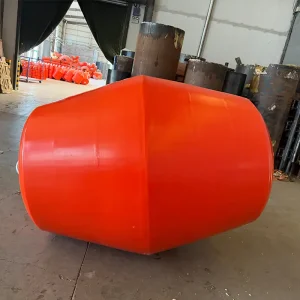
Best Foam-Filled Polyethylene Mooring Buoy for Reliable Marine Anchoring Supplier, Suppliers
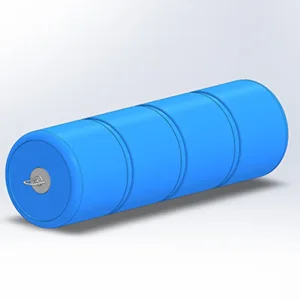
OEM Reliable Floating Barriers for Pollution Control and Water Safety Supplier, Manufacturers
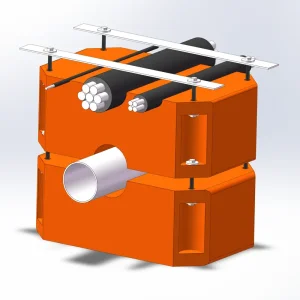
ODM Pipe Floats With Cable Troughs - Reliable Buoyancy and Cable Protection Products, Factory
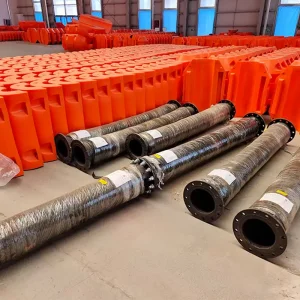
Custom Heavy-Duty Rubber Hose for Marine and Water Management Projects Suppliers, Manufacturers
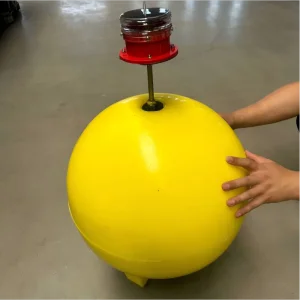
High-Quality LED-Equipped Floating Ball for Safe and Efficient Water Operations Factory, Factories

Best Reliable Floating Barrier Solutions for Water Protection and Project Control Company, Quotes

High-Quality Pipe Floats for Industrial Water Lines and Floating Pipeline Support Manufacturers, Companies
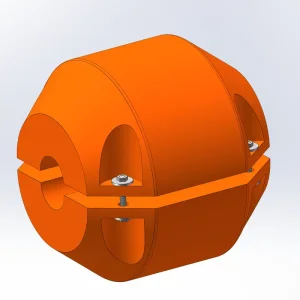
High-Quality Durable Pipe Floats for Safe Operations Products, Company
Integrating telemetry, circular polymer loops, and intelligent tension sensor networks into custom orange mooring architectures.
The future of offshore mooring lies in real-time structural health monitoring. Our R&D division is actively deploying embedded load-cell pins within the central mooring spindle. Powered by integrated micro-solar panels and marine batteries, these buoys transmit instantaneous catenary strain, wave heave, and tilt metrics directly to port management consoles via NB-IoT or LoRaWAN satellite gateways.
Navigating global Net-Zero carbon directives, our rotomolding compounds are moving toward certified post-consumer recycled marine-grade polymers blended with virgin resins to retain 100% tensile strength. By utilizing mono-material rotomolding engineering, retired buoys can be fully melted down, reground, and remolded, eliminating industrial landfill burden at end-of-life decommission.
Integrating flush-mounted, anti-shatter mono-crystalline photovoltaic arrays directly into the upper buoy crown allows custom orange mooring buoys to power high-intensity, Programmable IALA chromatic LEDs. Operating autonomously throughout polar nights and severe storm darkness, these smart buoys ensure constant radar and visual visibility for passing deep-draft container traffic.
In-depth technical answers addressing hydrodynamic sizing, warranty frameworks, materials science, and international delivery protocols.
High-chrominance orange provides the highest visual contrast against seawater across varying weather conditions, including dense fog, overcast skies, and dawn/dusk twilight. In high-traffic ports, dredging sites, and mining outfalls, orange denotes operational moorings, temporary anchor points, or dynamic pipelines, dramatically reducing navigational vessel impacts.
Total buoyancy must comprehensively exceed total suspended weight. Sizing formulas mandate calculating the dry weight of the buoy, submerged anchor chain catenary weight, mooring line hawser tension, and biofouling accumulation. A safety reserve buoyancy margin of 20% to 30% is maintained so that at least one-quarter of the buoy diameter remains comfortably elevated above the waterline during peak hydrodynamic loads.
Yes. Our virgin polyethylene shells are formulated with UV-16/UV-20 stabilization packages and high-impact modifiers, enabling functional operational integrity in water temperatures from -40°C to +60°C. Unlike steel, polyethylene is immune to pitting corrosion, stress corrosion cracking, and ice adhesion.
The standard warranty starts when the buyer hands over the equipment to the investor and extends 18 months from the handover date or 12 months after project installation, whichever occurs first. With non-destructive mooring usage and regular chain inspection, rotomolded polyethylene shells exhibit an offshore working life expectancy exceeding 20 to 30 years.
Contractors should provide: 1) Required net buoyancy capacity, 2) Mooring chain diameter and total water depth, 3) Current velocity and maximum wave heights, 4) Environmental conditions (salinity, ice, temperature), 5) Hardware requirements (pad-eye, through-rod, or hawse hole), and 6) Visual marking, reflective tape, or topmark lighting specifications.
During our molding process, the buoy shell is filled with expanded polystyrene (EPS) or closed-cell polyurethane (PU) with a density of 35-45 kg/m³. Each microscopic cell is independent and watertight. If the outer polyethylene shell experiences an extreme high-energy impact that fractures the skin, the foam core blocks water absorption, preventing structural flooding and maintaining total reserve buoyancy.