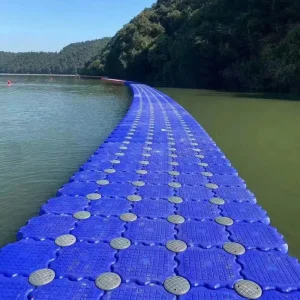
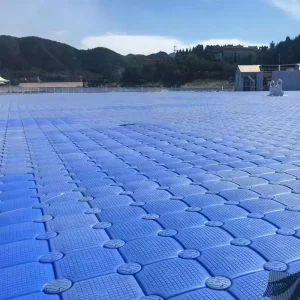
Primary Pipeline & Flotation Assemblies
Precision-extruded custom plumbing rubber hoses, heavy-duty suction sleeves, and rotationally moulded marine pipeline floats engineered for extreme hydro-mechanical stress.

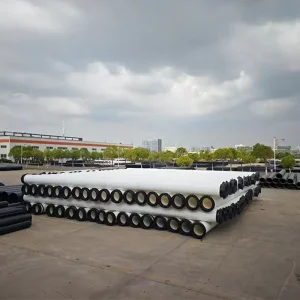
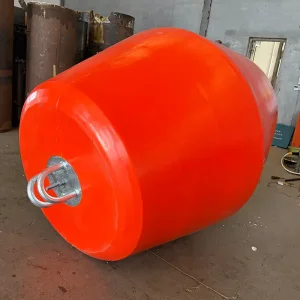
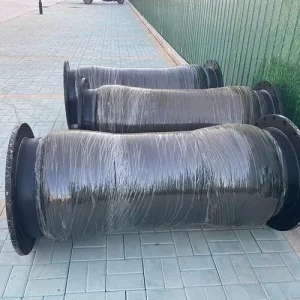
The Evolution of Plumbing Rubber Hoses in Heavy Fluid Conveyance
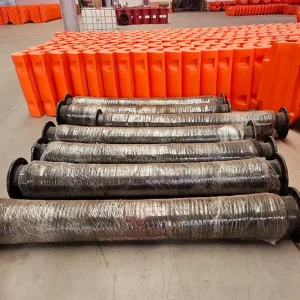
In modern municipal, marine, and industrial engineering, "plumbing rubber hose" has evolved far beyond conventional building tap connections. It now denotes complex, multi-layered elastomeric conduits engineered for high-velocity transfer of municipal water, industrial chemical effluents, corrosive dredging slurry, and high-pressure suction-discharge circuits.
Historic reliance on rigid carbon steel or unreinforced PVC piping frequently resulted in premature structural failure due to ground settling, dynamic wave oscillations in marine environments, seismic shifts, and severe abrasive wear from suspended solids. Shandong Binzhou Juhua Rubber & Plastic Co., Ltd. pioneers the transition to flexible, reinforced elastomer pipelines that synthesize ultra-high-molecular-weight inner lining compounds with multi-ply helical steel wire structures.
Engineering Rule of Thumb: Modern EPDM/NR-blended plumbing rubber hoses provide up to 8x the acoustic and vibrational dampening of cast iron piping, while absorbing up to 45° of angular deflection without cross-sectional throttling or pressure dropping.
Anatomy of an Advanced Rubber Plumbing Hose
- Inner Tube (Core Liner): Specially compounded synthetic elastomers (NR, SBR, NBR, or EPDM) offering pristine hydrolytic resistance, ultra-low hydraulic friction coefficients (C=150 Hazen-Williams), and extreme resistance to pH fluctuations (pH 2 to pH 12).
- Reinforcement Matrix: Multi-layered high-tensile polyester/aramid cord braiding interleaved with high-modulus dual helical spring-steel wires to eliminate internal collapse under full vacuum suction (-0.09 MPa).
- Outer Protective Sheath: UV-stabilized, ozone-resistant, and flame-retardant chloroprene/EPDM formulation engineered to resist harsh saline ocean exposure, marine growth abrasion, and ambient atmospheric degradation.
- Integral Vulcanized Flanged Terminations: Carbon steel or stainless-steel backing rings completely encapsulated in vulcanized rubber, preventing fluid contact with bare metal and terminating electrochemical galvanic corrosion.
Custom Plumbing Rubber Hose Pricelist & Parameter Matrix
Understanding the cost structures of industrial-scale custom plumbing rubber hoses is fundamental for EPC contractors and municipal procurement teams. Pricing is dictated by inner diameter (ID), operating pressure rating (PN), tensile reinforcement density, and end fitting metallurgy.
| Hose Nominal Bore (ID) | Wall Thickness & Ply Count | Working / Burst Pressure | Standard Compound Type | Min. Bend Radius | Factory Benchmark Price Range |
|---|---|---|---|---|---|
| DN50 (2" / 51mm) | 8.5mm / 4-Ply Textile + Helix | 1.6 MPa (16 Bar) / 4.8 MPa | EPDM / Industrial Municipal | 350 mm | $18.50 - $26.00 / meter |
| DN100 (4" / 102mm) | 10.0mm / 4-Ply + Steel Wire | 1.6 MPa (16 Bar) / 4.8 MPa | Natural Rubber / Water Transfer | 600 mm | $34.00 - $48.50 / meter |
| DN150 (6" / 152mm) | 12.5mm / 6-Ply + Dual Helix | 1.2 MPa (12 Bar) / 3.6 MPa | EPDM High-Temp Water | 900 mm | $58.00 - $79.00 / meter |
| DN200 (8" / 203mm) | 15.0mm / 6-Ply + Spiral Wire | 1.0 MPa (10 Bar) / 3.0 MPa | SBR / Mud & Slurry Plumbing | 1,250 mm | $92.00 - $125.00 / meter |
| DN300 (12" / 305mm) | 18.0mm / 8-Ply Heavy Armor | 1.0 MPa (10 Bar) / 3.0 MPa | Abrasion Resistant NR Liner | 1,800 mm | $165.00 - $215.00 / meter |
| DN400 (16" / 406mm) | 22.0mm / 10-Ply Marine Spec | 0.8 MPa (8 Bar) / 2.4 MPa | Ultra-Dense Slurry & Dredge | 2,400 mm | $280.00 - $375.00 / meter |
| DN500 (20" / 508mm) | 26.0mm / Multi-Ply + Float Collar | 0.8 MPa (8 Bar) / 2.4 MPa | Reinforced Marine Conduit | 3,100 mm | $420.00 - $560.00 / meter |
Polymer Formulation Purity
Reclaimed rubber dilutes initial costs by up to 25% but causes micro-cracking and loss of elasticity within 14 months. Juhua utilizes 100% virgin RSS1 grade natural rubber and premium Mitsui/Lanxess EPDM, ensuring 10–15 years of uninterrupted service life under full UV exposure.
Burst-to-Working Safety Factors
Standard residential hoses utilize a 2:1 safety ratio. Our heavy industrial and municipal plumbing hoses enforce a strict 3:1 to 4:1 safety ratio against transient water hammer spikes, high-pressure surging, and pump kickback cycles.
Coupling Integration Mechanics
End terminations comprise either integrated vulcanized full-face rubber flanges, swaged ANSI B16.5 / EN1092-1 forged carbon steel fittings, or rapid Camlock interfaces. Continuous rubber-lined flanges prevent acidic leachate from attacking joint metallurgy.
China Factory 4.0: Juhua's Supply Chain Resilience & Precision
Located in Huimin County, Binzhou, Shandong—a premier Chinese chemical and polymer manufacturing epicenter—Shandong Binzhou Juhua Rubber & Plastic Co., Ltd. marries digital automation with deep material science to achieve unprecedented batch-to-batch consistency.
Automated Temperature Vulcanization
Equipped with digital variable-frequency speed controls and electronic automated thermal feedback loops. This guarantees homogeneous cross-linking throughout the rubber matrix, eradicating localized weak spots or incomplete curing.
100% Hydrostatic Proof Testing
Every single rubber hose spool is mounted to our multi-axis digital test bench and held at 1.5x working pressure for 15 minutes to measure diametrical expansion and end-fitting retention before international packing.
Shandong Upstream Synergies
Direct proximity to global synthetic rubber producers and domestic steel cable manufacturing giants allows us to insulate buyers from international commodity volatility, preserving reliable lead times and price stability.
Rapid Port Logistics Corridor
Strategically positioned mere hours from Qingdao Port and Tianjin Port. We provide seamless break-bulk and containerized container stowage, reducing standard maritime transit times to international destinations.
Commercial Macroeconomics: Total Cost of Ownership (TCO)
Escalating global urbanization and increasing frequency of severe weather events have triggered major capital investments across stormwater bypass systems, coastal reclamation projects, and industrial waste treatment infrastructure. Procurement teams traditionally constrained by capital expense (CapEx) metrics are increasingly adopting Total Cost of Ownership (TCO) governance.
Rigid steel piping, while initially appearing cost-competitive on raw steel weight, imposes immense installation and operational burdens: crane mobilization for rigid alignment, labor-intensive on-site welding, recurrent repainting against rust, and devastating downtime during ground heave or seismic events. A flexible custom plumbing rubber hose absorbs structural misalignment effortlessly, installs in minutes via bolted flanges, and eliminates corrosion mitigation expenses entirely.
Lifecycle Financial Benchmark: Over a 10-year operational timeframe in saltwater or abrasive slurries, heavy-duty vulcanized rubber piping assemblies reduce total maintenance labor and replacement costs by approximately 42% compared to schedule 40 carbon steel.
Rigid Steel vs. Custom Flexible Rubber Hose
- Steel Vibration Transmission: Rigid pipe transmits high-frequency pump vibrations directly to mechanical seals, causing motor bearing burnout and joint leakage.
- Rubber Vibration Isolation: Flexible hose dampens pump vibration at source, protecting municipal pump stations and mechanical flow meters.
- Steel Corrosion & Scaling: Internal scaling rapidly decreases effective ID by up to 20%, drastically multiplying pump kilowatt power consumption.
- Smooth Elastomeric Bore: Mirror-smooth synthetic polymer liner resists mineral deposition and preserves pristine flow efficiency permanently.
Localized Heavy-Duty Application Scenarios
Our custom-engineered plumbing rubber hoses and integrated flotation systems are deployed daily across punishing industrial environments worldwide.
Municipal Stormwater & Deep-Well Dewatering
In urban utility networks and heavy construction excavation, sudden flood occurrences demand rapid pump deployment. Our steel-helix reinforced plumbing hoses provide non-collapsible suction from deep collection pits, flexing across uneven road surfaces without impeding vehicular detours or suffering kinking under high vacuum.
Dredging Discharge & Marine Land Reclamation
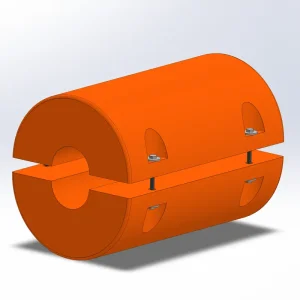
Connecting offshore cutter suction dredgers to onshore containment basins requires exceptional flexibility. Operating in conjunction with Juhua PE Pipe Floaters, our large-diameter rubber hoses absorb constant ocean swell, wave pitch, and tidal roll, channeling abrasive coral sand slurries at velocities exceeding 6 m/s.
Mining Tailings & Acid Leach Transfer
Hydrometallurgical facilities handling gold, copper, and iron ore extraction generate tailings laden with heavy rock abrasives and sulfuric acid residuals. Our customized plumbing hoses utilize thickened (up to 25mm) natural rubber liners to withstand severe impingement wear, lasting multiple times longer than HDPE in turbulent elbows.
Engineering Q&A: Custom Plumbing Rubber Hoses
Authoritative insights from Juhua's senior elastomer and hydrodynamic engineering team to guide procurement calculations.
For clear water conveyance, fluid velocities up to 6–8 m/s produce negligible abrasive wear. However, when conveying slurries or suspended particulates, abrasive scour follows a power law proportional to velocity cubed (V³). Maintaining velocity within 2.5–3.5 m/s while choosing an ultra-elastic pure gum natural rubber liner provides optimal slurry transport without premature liner erosion.
Discharge-only hoses rely primarily on high-tensile fabric/cord plies to resist internal outward hoop expansion. Suction (or suction-discharge) plumbing hoses must withstand atmospheric external collapse under full internal vacuum; they incorporate high-carbon helical steel wire cages embedded firmly between polymer layers to maintain structural circularity under negative pressures (-0.09 MPa).
As a strict engineering guideline, flexible rubber plumbing hoses have a minimum bend radius (MBR) approximately 6 to 8 times the internal diameter (ID) for standard fabric hoses, and 8 to 12 times ID for heavy wire-reinforced hoses. Forcing a tighter bend radius strains the tensile reinforcement, causes ovalization, and can lead to localized ply separation or kinking at operating pressures.
When designing floating discharge pipelines, pipe floats must provide reserve buoyancy exceeding the combined weight of the pipe, full slurry contents, and marine fittings by 20% to 30%. Because flexible rubber hoses flex dynamically with waves, float placement must be spaced to ensure adequate waterline freeboard without pinching the hose during maximum tidal swell bending.
Reputable factories must furnish Material Test Reports (MTR) demonstrating elastomer tensile strength, elongation at break, and Shore A hardness (typically 60±5). Crucially, batch inspection certificates must document hydrostatic proof pressure testing (1.5x WP), burst pressure certification, and electrical continuity tests where static dissipation is required.
Yes. Unlike rigid metal conduits which require expensive omega loops or mechanical packing gland expansion joints, elastomeric EPDM-lined rubber hoses absorb axial thermal contraction and expansion natively within their flexible wall matrix, functioning safely in liquid temperature ranges from -40°C up to +120°C continuously.
Complementary Flotation, Marine & Fluid Handling Assets
Complete your engineering installations with matching rotomolded floating barriers, heavy-duty buoys, modular pontoons, and specialty subsea pipeline modules.