
Precision Buoyancy Portfolio
High-Buoyancy Marine & Industrial Floats
Explore custom-calibrated dredging pipe floaters, subsea pipeline modules, and offshore mooring buoys engineered with closed-cell polyurethane cores.

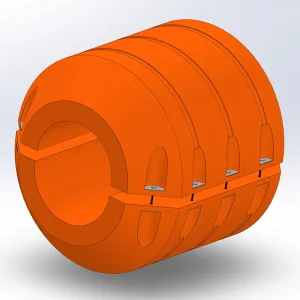
Custom Pipeline Float For Subsea Tie-In And Controlled Positioning Products, Quotes
Explore Product
High-Quality Advanced Pipeline Float System for Secure Subsea Installations Supplier, Factories
Explore Product
High-Quality Pipe Floats for Floating Pipeline Support and Water Transfer Product, Company
Explore Product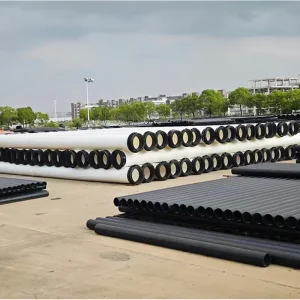
OEM Industrial-Grade Pipeline for Reliable Fluid Transport Companies, Factory
Explore Product
ODM Mooring Buoy for Secure Vessel Anchoring and Stable Marine Mooring Systems Manufacturers, Manufacturer
Explore Product
ODM Reliable Pipe Floats for Marine Projects Supplier, Manufacturer
Explore Product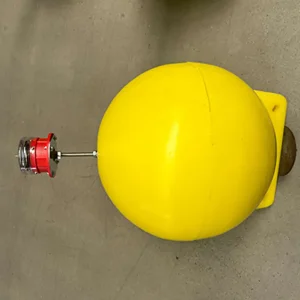
ODM Floating Ball with LED Light – Reliable Marine Navigation and Safety Manufacturer, Pricelist
Explore Product
Strategic Manufacturing Advantages
China Direct: The World's Hub for Heavy-Duty Polyethylene Floats
Operating from Huimin County, Binzhou City, Shandong Province, Shandong Binzhou Juhua Rubber & Plastic Co., Ltd. fuses polymer science with advanced automation to eliminate common offshore float failures.
Electronic Thermal Molding Control
Our bi-axial rotational ovens employ variable-frequency thermal profiling and continuous infrared temperature tracking. This eliminates structural voids, cold spots, and uneven wall distribution, providing maximum tensile strength across stress concentration fillets.
UV-Class 8 Virgin Polyethylene
We reject recycled scrap in outer shells. Standard manufacturing uses prime medium/high-density virgin LLDPE compounded with carbon black and light-stabilizing hindrances (UV-8 up to UV-20), maintaining impact ductility after decades of continuous high-salinity UV exposure.
Strict Batch Interchangeability
CNC-machined aluminum casting molds assure absolute external dimensional replication. Symmetrical two-half float pairs interlock seamlessly with standard galvanized or 316 stainless-steel fastener assemblies, making spares integration instant on remote sites.
Industry Whitepaper Insights
Global Shifts: Why Marine Engineers Are Retiring Steel Pontoon Floats
In offshore civil engineering and heavy mineral tailings transport, polyurethane-filled polyethylene floats have replaced corroding sheet steel and hollow drums due to life-cycle economics and failure-proof buoyancy.
Total Corrosion Immunity
Steel buoyancy modules suffer from localized pitting, galvanic degradation, and pinhole seam leaks in seawater. High-molecular PE shell architecture is 100% chemically inert against caustic salts, marine borers, and heavy tailings acid runoff.
Unsinkable Closed-Cell Core
Each half-shell is injected with high-density polyurethane foam (>35–45 kg/m³) under positive gauge pressure. If a dredging workboat or rock puncture ruptures the outer shell, zero water penetrates the closed-cell matrix, preventing catastrophic pipeline sinkage.
Elastic Hydrodynamic Resilience
Unlike brittle fiberglass or metal, rotationally molded polyethylene flexes upon hull impact, absorbing turbulent kinetic loads without crack propagation, drastically dampening bending stress transferred into flexible dredging hose couplings.
LCOE & Installation Logistics
Weighing one-third of equivalent-buoyancy steel pontoons, custom PE floats decrease marine mobilization costs, speed crane rigging cycles, and require zero blasting or repainting over a projected 15- to 20-year field lifecycle.
| Pipe Diameter Nominal (OD) | Outer Float Diameter (mm) | Overall Length (mm) | Total Net Buoyancy (kg) | Recommended Working Medium |
|---|---|---|---|---|
| DN160 - DN200 (6" - 8") | 500 - 600 | 800 - 1000 | 110 - 220 | Fresh Water Intake / Tailings Dewatering |
| DN250 - DN315 (10" - 12") | 700 - 800 | 1000 - 1200 | 320 - 580 | River Desilting & Sand Slurry (Sp. Gr. 1.25) |
| DN400 - DN500 (16" - 20") | 1100 - 1300 | 1500 - 1800 | 1,150 - 1,850 | Harbor Dredging Slurry (Sp. Gr. 1.35 - 1.45) |
| DN630 - DN710 (24" - 28") | 1400 - 1600 | 1800 - 2200 | 2,400 - 3,700 | Offshore Land Reclamation & Heavy Slurry |
| DN800 - DN1000 (32" - 40") | 1800 - 2200 | 2200 - 2600 | 4,800 - 7,200 | Mega-Cutter Suction Dredger Pipelines |
Global Deployment Matrices
Engineered Flotation Solutions Across Crucial Marine Sectors
From deep-sea hydrographic installations to mining tailings retention dams, our custom-cast buoyant structures deliver validated hydrodynamic control.
1. Dredging Discharge & Port Land Reclamation
During navigation channel deepening and coastal reclamation, floating pipelines must balance massive weight variations between idling water flushes and saturated sand/gravel slurries. Our PE pipe floats provide a calculated 25%–30% freeboard reserve, mitigating submerged suction risks under sudden surge pressures.
2. Subsea Tie-In & Staged Buoyancy Architecture
Subsea spool connection and pipe pulling demand precisely managed neutral or positive buoyancy curves. Our custom-engineered pipeline tie-in floats allow staged descent or lateral line alignment, reducing crane loads and avoiding seabed abrasive drag on anti-corrosion outer wraps.
3. Mining Tailings Pond De-Watering & Cable Troughs
Mineral processing facilities demand specialized floats featuring integrated molded cable channels. These units securely float both the heavy slurry discharge pipe and high-voltage submersible pump cables on a single, clean footprint, preventing entanglement, localized kinks, and abrasion on tailing dam banks.
4. Hydro Dam Intakes & Debris/Trash Boom Barriers
Water utility operators and hydroelectric facilities install linked floating barrier systems composed of heavy-gauge rotomolded PE floats and submerged wire curtains. This traps plastic waste, logs, and surface silt before water enters turbine generator gates, reducing plant downtime.
5. Harbor Navigational Buoys & Offshore Moorings
Molded in high-visibility IALA standard colours (traffic yellow, signal red, green) with optional self-contained solar LED beacons. Polyethylene navigation hulls survive ship scrapes without losing paint pigments, because the entire outer matrix contains integral color masterbatch.
6. Custom Modular Pontoons & Military-Spec Enclosures
Leveraging large-scale rotational molds, Juhua manufactures versatile hollow or foam-filled pontoons for floating excavators, marine pump stations, and custom rotationally molded transit containers built to endure military-grade airdrop impact requirements.
Scientific Sizing Methodology
How Marine Engineers Calculate True Dynamic Buoyancy
The single greatest operational error across international dredging tenders is computing buoyancy requirements for dry pipelines. Our engineering department uses rigorous hydrostatic safety formulas.
Step 1: Wet Slurry Load Matrix
Compute total pipe weight per linear meter, adding flange couplings, backing rings, rubber joint flexers, plus the mass of slurry computed at worst-case density (up to 1.6 kg/L for dense iron ore tailings or heavy silt), rather than clear water (1.0 kg/L).
Step 2: Hydrodynamic Safety Factor
Apply the standard marine multiplier formula: Total Float Buoyancy ≥ (W_pipe + W_medium + W_accessories) × 1.25 to 1.30. This maintains a deliberate freeboard margin of roughly 25% of pipe diameter above the surface, limiting drag against wave action.
Step 3: Fastener & Gasket Integration
Every pair of Juhua floats is matched with specialized rubber friction gaskets along the inner barrel, ensuring anti-slip grip along smooth HDPE pipelines without crushing or puncturing the pipe wall when bolting down stainless hardware.
Knowledge Base & Technical Procurement
Frequently Asked Questions by Global EPC Contractors
Comprehensive engineering clarifications regarding custom polyethylene float specification, manufacturing lead times, warranty parameters, and seawater compatibility.
What are pipeline floats, and what is their functional purpose?
Pipeline floats (frequently termed dredging pipe floats, buoyancy pontoon jackets, or split collar floats) are two-half clamp-on rotational-molded polyethylene bodies fitted securely around industrial discharge lines. They keep slurry, dredging tailings, and water pipelines afloat, aligned, and clearly visible above the waterline.
How do you calculate how many floats are required for a pipeline?
Total buoyancy must exceed total weight. Add the dry pipe mass, the total interior conveyed slurry mass calculated at maximum specific gravity, plus all metal flanges, hoses, and hardware. Float sets must provide at least 20%–30% reserve buoyancy beyond this gross figure so one quarter of the pipe diameter stays safely above the water surface.
Are rotational-molded polyethylene floats suitable for open sea use?
Yes. Virgin linear low-density polyethylene is chemically inert and completely resistant to saltwater galvanic degradation, high-salinity corrosion, UV exposure, and biological attacks like barnacles or marine borers. Unlike painted carbon steel pontoons, PE floats cannot rust and require zero surface recoating.
What is the official warranty period for Juhua marine floats?
The standard warranty coverage begins on the date the client hands over the installed equipment to the ultimate investor and runs for 18 months post-handover or 12 months after the completed installation sign-off, whichever interval arrives first.
What technical data must be supplied to obtain an exact quotation?
Please supply your exact pipe outer diameter (OD), pipe material (steel, HDPE, or PVC), pipe wall thickness, medium description (tailings slurry, sand, sludge, fresh water) and density (kg/m³), pipeline overall length, hydraulic operating conditions (currents, wave heights), requested freeboard, color/identification coding, and destination port.
Can internal barrels, exterior geometries, and colors be fully customized?
Yes. In addition to our large library of existing molds from DN110 up to DN1200, our in-house engineering team designs and casts custom tooling for unique pipe profiles, integrated conduit ducts, high-intensity internal load brackets, reflective numbering, and customized PU density targets.
Comprehensive Infrastructure Equipment
Related Marine & Pipeline Flotation Systems
Explore our extended series of water management barriers, cable-routing float modules, modular platform pontoons, and specialty rotational-molded field equipment.
ODM Heavy-Duty Pipeline for Versatile Water and Fluid Transport Product, Quotes
Explore Product
High-Quality Durable Floating Barriers for Water Protection Projects Product, Pricelist
Explore Product
OEM Reliable Marine Pipe Floats for Pipeline Efficiency Manufacturer, Products
Explore Product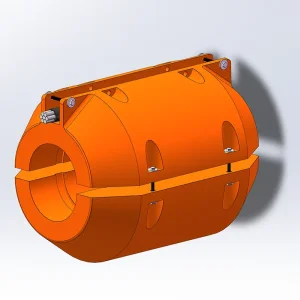
ODM Floating Pipe Floats with Cable Channels – Secure Buoyancy and Cable Protection for Marine Systems Quotes, Factories
Explore Product
High-Quality Water Boat Pontoon Floating – Stable and Modular Floating Platforms Supplier, Products
Explore Product
Custom Reliable Pipeline Floats for Marine and Engineering Projects Company, Pricelist
Explore Product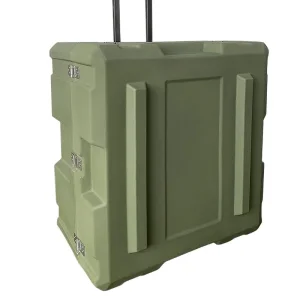
ODM Heavy-Duty Rotomolded Military Airdrop Storage Container Supplier, Factory
Explore Product
Custom Pipe Floats for Floating Pipeline Stability in Water Transfer and Industrial Projects Companies, Factory
Explore Product
Direct Technical Consultation
Partner Directly with China's Premier Float Manufacturing Facility
Bypass intermediary brokers. Communicate directly with Juhua's senior flotation tooling engineers for 3D CAD matching, exact buoyancy load assessments, container optimization plans, and competitive CIF container load quotes.