

Industrial Specification Catalog
Precision Marine Buoys: Core Engineering Portfolio (Part I)
Explore our foundational range of heavy-duty mooring buoys, cable-integrated pipeline floats, and hydro-barrier systems engineered to stringent offshore criteria.
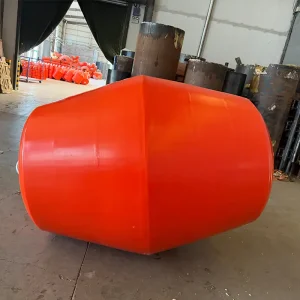
High-Quality Mooring Buoy with Reinforced Connections for Marine Projects
View Product & Companies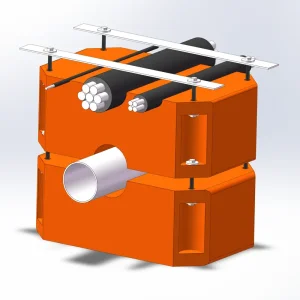
OEM Advanced Modular Pipe Floats with Integrated Cable Channels
OEM Manufacturer Data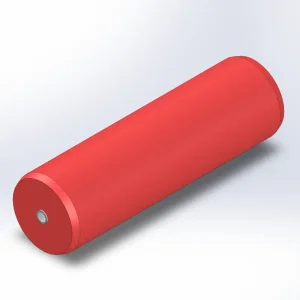
Best Reliable Floating Barriers for Marine and Industrial Protection
Factory Supply Details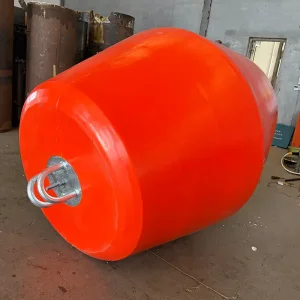
High-Quality Mooring Buoy For Aquaculture Grids And Floating Platforms
Aquaculture Pricelist
ODM Durable Cable-Integrated Pipe Floats for Submerged Infrastructure
Submerged Solutions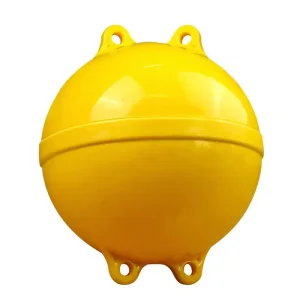
ODM ABS Float Ball for Reliable Marine and Freshwater Buoyancy
Manufacturer Factory
High-Quality Pipeline Float Tie-In – Modular Deepwater Buoyancy Solution
Deepwater Tie-In Specs
Supply Chain Resilience
Precision Marine Buoy Manufacturing Advantages in China
Integrating advanced rotational moulding engineering, integrated polymer material supply, and world-class port logistics to optimize capital expenditure and deployment timelines.
Advanced Continuous Rotomolding
Chinese production lines utilize variable-frequency thermal controls and electronic real-time pyrometric profiling. This eliminates internal residual stress within LLDPE hulls, delivering an even wall thickness (+/- 5%) and eliminating the weak seam lines common in conventional modular plastics.
Cost-to-Performance Ratio
By leveraging China's dense petrochemical supply chain and specialized mold tool fabrication clusters, we provide high-grade virgin polymers enhanced with Class 8 UV inhibitors at substantial procurement savings, directly optimizing Capex for international offshore installations.
Agile Tooling & Rapid Prototyping
Our dedicated mold engineering workshops allow transition from CAD/FEA simulation models to finished steel/aluminum rotomolding tooling within 15–20 days. Bespoke ballast distributions, specialized cable conduits, and internal mooring cores are rapidly validated and manufactured.
20+
Years Continuous Manufacturing
80+
Global Maritime Export Markets
100%
Virgin Polyethylene Formulation
1.3x
Standard Reserve Buoyancy Index
Navigational Evolution
Emerging Macro Trends in Marine Buoy Technologies
The offshore sector is transitioning from passive navigational floats to active, sensor-rich maritime nodes capable of operating across volatile open-sea environments.
Smart IoT & Telemetry Integration
Modern precision marine buoys now function as intelligent ocean telemetry hubs. Embedded with AIS (Automatic Identification System), real-time metocean sensors, and satellite transceiver links, these buoys transmit continuous wave-height, salinity, and position alerts directly to harbour master operations.
Polymer Superiority Over Steel
Maritime authorities are increasingly decommissioning conventional steel buoys. Rotomolded virgin polyethylene (PE) eliminates the chronic rust, hazardous recoating procedures, and explosive ballast tank corrosion of steel, yielding zero galvanic oxidation and lowering 15-year lifecycle maintenance overhead by up to 60%.
Modular Closed-Cell Polyurethane Infilling
Unsinkable design is no longer an optional benchmark. Advanced buoy shells are filled with pressurized, hydrophobic, closed-cell polyurethane foam. Even in the event of high-energy collision with commercial vessels or sharp coral hazards, the buoyancy core repels water absorption completely.
Field Deployment Profiles
Localized Engineering Use Cases & Application Environments
Custom precision marine buoys must withstand distinct physical forces depending on installation bathymetry, current dynamics, and operational duty.
Capital Dredging & Slurry Discharge Lines
Positioned along massive Cutter Suction Dredger (CSD) pipelines, these buoys and matched pipeline floats bear the deadweight of dense gravel-slurry conduits (densities up to 1.6–1.8 t/m³) amidst tidal surges, preventing pipeline buckling and catastrophic subsea sinking.
Harbor Deepwater Berthing & Ship Channels
Mooring buoys equipped with continuous through-hull structural tie-rods safely anchor cargo barges, container vessels, and tugs during turnarounds, distributing mooring loads directly to bottom anchor chains without shearing external plastic structures.
Offshore Grid Aquaculture & Floating PV Farms
Demanding prolonged marine resilience, these installations use UV-stabilized polymer floats to secure subsea cage geometry and tension arrays, resisting extreme wave action and preventing costly tether failures in open ocean mariculture.
Holistic Systems
Macro Industry Solutions: Integrated Flotation Architectures
Going beyond discrete hardware delivery: we architect integrated marine systems engineered to survive corrosive saline exposure, hydro-fatigue, and hydrodynamic shear.
Turnkey Silt, Trash & Spill Containment
Our integrated floating barriers combine rotomolded buoyancy bodies with marine-grade stainless tension cables, weighted subsurface curtains, and quick-release latching clevises. Deployed at port entrances, hydroelectric tailraces, and industrial discharge zones, they capture particulate debris while handling strong flood discharge currents.
Deepwater Dynamic Subsea Tie-In Engineering
For submerged pipeline deployment and deepwater spool installation, custom modular buoyancy tie-in units deliver calculated, staged buoyancy. This controls bottom touchdown speeds, mitigates strain on welded steel joints, and protects high-voltage subsea cables from tensile fracturing during dynamic installation maneuvers.
Procurement Diligence
Global Enterprise Sourcing & Procurement Protocols
What Tier-1 marine engineering contractors, EPC consortiums, and dredging operators rigorously evaluate prior to awarding custom marine buoy contracts.
Raw Polymer Certifications
Procurement teams demand audited Melt Flow Index (MFI) and Environmental Stress Crack Resistance (ESCR) documentation. Polymer grades must withstand over 1,000 hours under ASTM D1693 conditions without brittle micro-fracturing in saline conditions.
Proof Load Testing of Tension Members
Mooring and marker buoys are subjected to destructive and non-destructive axial pull-testing. Steel tie-rods, padeyes, and swivel shackles must demonstrate safety factors of 3.0x to 5.0x above Maximum Designed Working Load (MDWL).
Strict Reserve Buoyancy Indices
Rigorous specification sheets enforce a 20% to 30% surplus buoyancy index above combined submerged deadweight, accounting for slurry mass, anchor chain hanging weight, biofouling accretion, and hydrodynamic drag during spring tide scenarios.
Comprehensive Solutions Catalog
Precision Marine Buoys: Extended Product Portfolio (Part II)
Review our specialized dredge line floats, navigation channel buoys, heavy-duty offshore pontoons, and deepwater support systems manufactured for demanding sea conditions.
ODM Pipe Floats With Cable Troughs - Cable Protection Buoyancy
Check Product Specs
Custom Pipe Floats – Reliable Buoyancy for Marine Pipeline Projects
Pipeline Solutions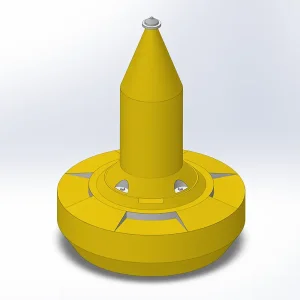
Custom High-Performance Marine Buoys for Safe and Efficient Waterways
Manufacturer Pricelist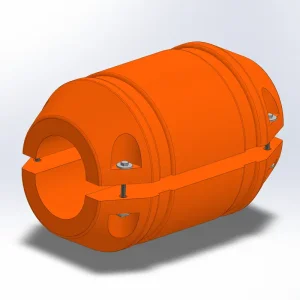
Custom Pipe Floats for Pipeline Stability in Water Transfer Projects
Factory Direct Pricing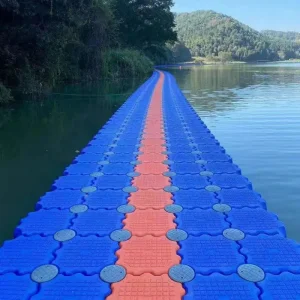
Custom Innovative Floating Boat Pontoon for Versatile Water Platforms
Platform Pricelist
ODM Deepwater Pipeline Support Floats – Subsea Buoyancy Solutions
Support Floats Specs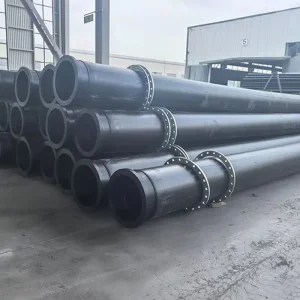
Best Heavy-Duty Pipeline for Safe and Efficient Transport
Pipeline Engineering
ODM Mooring Buoy for River Terminals and Workboat Berths
Terminal Buoy Quotes
Technical Clarity
Frequently Asked Questions: Marine Buoys Engineering & Sourcing
Definitive answers covering buoyancy calculations, polymer fatigue limits, mooring line geometry, and international delivery schedules.
What is the standard formula for calculating marine pipe float buoyancy?
+
Total required buoyancy is calculated based on working conditions: Total Buoyancy ≥ (Dry Pipe Weight + Maximum Conveyed Slurry Weight + Hardware/Accessories Weight) × 1.2 to 1.3. Sizing must always factor in slurry density (often 1.3–1.6 kg/L for dredged material) rather than clear water, ensuring at least 25% of the float diameter sits reliably above the waterline.
How do rotomolded polyethylene (PE) buoys outperform steel buoys?
+
Rotomolded LLDPE buoys do not rust, eliminate paint flaking into sensitive marine ecosystems, withstand high-energy impacts via elastic deformation, and reduce overall mass by over 40%. This facilitates smaller service craft requirements for offshore deployment and maintenance.
What warranty terms are applied to industrial maritime buoys and floats?
+
Our standard international industrial warranty takes effect when the purchaser hands over equipment to the project owner/operator, concluding 18 months from that handover or 12 months after active commissioning, whichever threshold is achieved first.
Can internal mooring components be customized for specific chain gauges?
+
Yes. Mooring buoy cores can be fabricated with hot-dip galvanized or 316 marine stainless steel through-rods, pad eyes, and heavy-duty swivel links configured to mate with your specified offshore stud link or studless anchor chain diameters.
What data is needed for a rapid engineering quote?
+
To provide an accurate technical proposal within 24 hours, our engineering staff requires: outer pipeline diameter (OD), pipe wall thickness, medium/slurry specific gravity, current velocity, wave height parameters, freeboard targets, and target destination seaport for containerization modeling.