
Direct Sourcing Catalog
Engineered Marine Buoyancy & Containment Systems
Precision-rotomolded polymer solutions designed to counter dynamic open-water shear, high UV degradation, and aggressive chemical loads.
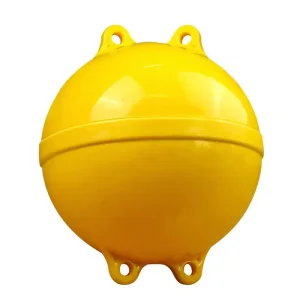


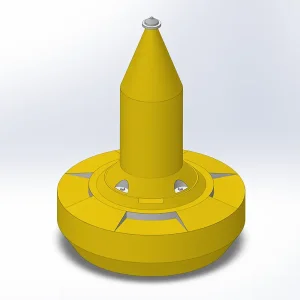
Whitepaper Abstract
Architecting Zero-Failure Marine Barriers for Critical Infrastructure
Modern coastal defense, hydraulic engineering, and industrial marine operations operate under increasingly violent hydrometeorological stresses. Surface barriers are no longer simple floating plastic markers; they are critical frontline assets tasked with intercepting heavy hydro-debris, retaining invasive surface algae, capturing industrial hydrocarbons, and securing perimeter exclusion zones around nuclear power intakes and military ports.
Shandong Binzhou Juhua Rubber & Plastic Co., Ltd. has spent over two decades pioneering seamless rotational molding chemistry. By fusing mechanical engineering with polymer science, Juhua manufactures flotation systems that eliminate traditional thermal-weld structural vulnerabilities. Engineered with integrated internal ballast chambers and closed-cell polyurethane cores, our barriers retain 100% operational buoyancy even after structural ballistic puncture or heavy mechanical collision.
HYDRODYNAMIC RESERVE FORMULA
ASTM F2107 / PIANC
            // Operational Buoyancy Reserve Threshold

            B_req = (W_shell + W_ballast + W_skirt) × Safety_Factor (1.35);


            // Hydrodynamic Current Load (Drag)

            F_drag = 0.5 × ρ_seawater × (V_flow)² × C_d × A_submerged;


            // Minimum Mooring Anchor Tension

            T_mooring = √( (F_drag + F_wind)² + (F_wave_drift)² ) × 2.5;
Application Engineering
Macro Industry Solutions: Engineered Waterway Security
Deploying site-specific barrier architectures calibrated against seasonal flood discharges, tidal shifts, sub-surface currents, and commercial shipping interference.
Hydroelectric Dams & Reservoirs
Heavy-duty trash booms stop waterborne timber, root balls, and municipal plastic debris from clogging turbine penstocks and intake trash racks. Reduces unforced plant outages and slashes dredging operational expenditures by up to 65%.
- Tensile capacity up to 450 kN load
- Self-clearing debris angle orientation
Nuclear & Desalination Water Intakes
Critical multi-tier jellyfish barriers, macro-algae deflectors, and marine life containment curtains. Continuous dual-skirt depth designs block seasonal blooms from choking cooling channels, averting multi-million dollar thermal trip events.
- Geotextile mesh with 500-micron filtration
- Bio-fouling resistant outer fluoropolymer shell
Harbor Dredging & Silt Control
Type III heavy-marine silt curtains and turbidity barriers deployed around capital dredging, land reclamation, and pile-driving operations. Prevents suspended particulate drift into protected marine sanctuaries and coral zones.
- Compliance with US EPA & IMO MARPOL
- Tidal compensator anchoring eyes
R&D Innovation
Technology Roadmap & Future Flotation Horizons
How next-generation structural mechanics, IoT-driven telemetry, and advanced polymer degradation resistance reshape marine asset lifecycle management.
Phase 1: Graphene-Enhanced Polymers
Infusing nano-graphene platelets into LLDPE matrix boosts tensile yield, flexural modulus, and abrasion resistance against sand slurries by 42% without adding parasitic dead-weight.
Phase 2: IoT Strain & Tension Sensors
Embedded solar LoRaWAN/NB-IoT load-cell shackles provide real-time continuous dynamic mooring tension monitoring, issuing early structural fatigue warnings prior to storm events.
Phase 3: Circular Polymer Upcycling
100% closed-loop recovery protocol allowing end-of-life barrier modules to be mechanically sanitized, micronized, and cross-blended into subsea pipeline non-pressure ballast casings.
Phase 4: Autonomous Anti-Intrusion
Integration of acoustic deterrence, autonomous non-lethal pulse arrays, and radar cross-section reflectors for automated military maritime defense perimeter control.
| Performance Dimension | Conventional Industrial Floats | Juhua 3rd-Gen Marine Flotation | Next-Gen 2026-2030 Smart Horizon |
|---|---|---|---|
| Raw Polymer Base | Standard recycled HDPE / non-stabilized | 100% Virgin LLDPE + UV20 chemical package | Nano-Graphene reinforced hybrid polymer |
| Internal Core Filling | Hollow or low-density expanded polystyrene | Hydrophobic Closed-Cell PU Foam (≥38 kg/m³) | Self-healing syntactic micro-cellular matrix |
| Structural Integrity | Extrusion welded seams susceptible to shear | Single-step monobloc rotational casting | Continuous multi-axis rotational matrix |
| Telemetry & Health | Zero monitoring; manual monthly diver visual | Dual identification RFID + marine QR stamping | Live satellite/LoRaWAN load, GPS drift & tilt |
Factory 4.0 Ecosystem
Precision Manufacturing & Global Supply Chain Resilience
Inside our advanced Binzhou manufacturing complex: How automation, digital twins, and integrated supply networks lower total cost of ownership (TCO) for global contractors.
Electronic Variable-Frequency Thermal Control
Our 1,000+ m² rotomolding facilities utilize computer-monitored variable frequency heating chambers. Infrared optical pyrometers track internal resin melt viscosities in real-time, eliminating wall-thinning defects at critical radius curves.
Standardized Mold Interchangeability
High-precision CNC-machined aluminum casting molds ensure strict micrometer-tolerance reproducibility. Spares dispatched three years later seamlessly interlock with barriers already floating on site, cutting offshore diver installation downtime.
Shandong Maritime Cluster Synergies
Positioned in Binzhou, Shandong's marine manufacturing belt, Juhua commands ultra-short vertical supply paths: instant access to raw petrochemical resin polymer plants, high-tensile hot-dip galvanizing lines, and major deepwater container ports (Qingdao & Tianjin).
EPC & Contractor Insights
Meeting Global Enterprise Procurement Specifications
International civil contractors, port authorities, and utility providers enforce rigorous compliance documentation before awarding multi-million dollar water management packages.
Material Traceability (MTR)
Raw material batch certificates detailing virgin resin melt flow index (MFI), carbon black dispersion, density testing under ASTM D1505, and raw chemical origin tracking.
Accelerated UV Weathering
Verified UV stability under ASTM G154 / ISO 4892-2 xenon-arc radiation testing (>20,000 continuous hours exposure) ensuring no premature chalking or micro-cracking.
Container Nesting Efficiency
Engineered dimensional footprints designed specifically around standard 40ft High Cube ocean containers, maximizing space utilization and reducing international freight cost per meter.
Pre-Assembled Hardware
Turnkey supply including hot-dip galvanized Grade 80 / SS316 connection shackles, load-bearing internal through-rods, swivel eyes, and specialized quick-release deployment pins.
Operational Assurance
Localized Support & International Compliance Assurance
From hydrodynamic sizing calculations to on-site assembly supervision, Juhua bridges technical manufacturing with global project execution.
Engineering Sizing Consultation
Our in-house technical department runs free computational fluid dynamics (CFD) assessments and catenary tension calculations based on customer bathymetry, current velocity, wave spectra, and tidal profiles.
Warranty & Lifecycle Protection
Comprehensive project warranty protection starting upon project handover (up to 18 months post-shipment or 12 months in-water operation). Includes rapid dispatch of factory replacement segments in the event of force majeure impacts.
Deployment Supervision & Rigging
Detailed step-by-step 3D rigging schematics, mooring catenary design guides, and available on-site/remote video engineer supervision to guide marine contractors through rapid mooring and anchor deployment.
Industrial Flotation Hardware
Specialized Pipelines, Floats & Mooring Solutions
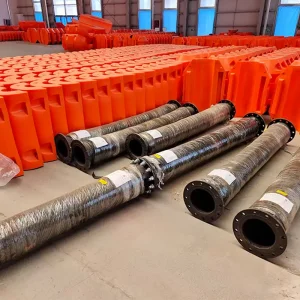
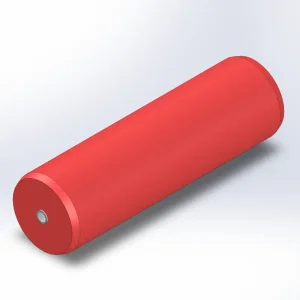
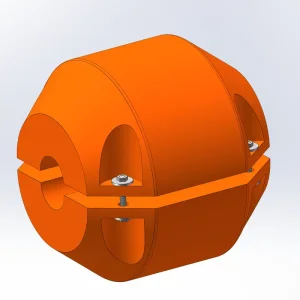
Complete heavy-duty flotation system components engineered for extreme offshore dredging, mining slurry transfer, and safe port management.

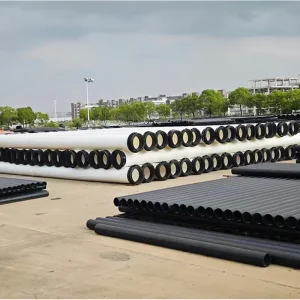
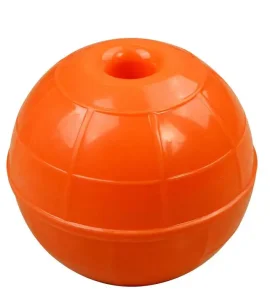




Procurement & Technical FAQ
Frequently Asked Technical Questions
Straightforward, engineering-backed answers addressing structural calculations, polymer kinetics, installation challenges, and ordering logistics.
What are floating barriers and how do they function in marine infrastructure?
Floating barriers (or containment booms) are modular surface-interlocking buoyancy units deployed across rivers, harbors, dam intakes, and coastal lagoons. Constructed from rotomolded UV-stabilized polyethylene shells filled with hydrophobic polyurethane foam, they create an impenetrable physical cordon to capture surface trash, deflect navigation hazards, retain marine silt, or prevent unauthorized vessel intrusion.
How do you calculate necessary buoyancy reserve for heavy dredging pipelines?
Flotation calculations must never assume an empty pipe. The correct formula calculates: Total Buoyancy ≥ (Dry Pipe Weight + Weight of Heaviest Slurry Mixture + Flanges & Fasteners) × Safety Factor (1.2 to 1.3). For standard dredging operations, this ensures roughly 25% of the pipe diameter remains consistently above the waterline under maximum flow velocities.
Why is rotomolded polyethylene superior to steel or fiberglass flotation hulls?
Unlike carbon steel, virgin LLDPE polymer is 100% chemically inert against saltwater corrosion, biological barnacle adhesion, and galvanic electrolysis, eliminating sandblasting and toxic anti-fouling recoating costs. Compared to rigid fiberglass, rotomolded PE possesses high ductile yield elasticity, allowing modules to absorb violent vessel impacts without fracture.
What anchoring system is recommended for high current river installations?
In river current regimes exceeding 1.5 m/s, we recommend an angled catenary layout (45° to 60° relative to bank flow) equipped with spring-loaded shore tensioners and intermediate Danforth or concrete gravity anchor sinkers. Angling prevents perpendicular debris accumulation pressure and enables water flow to self-guide debris toward bankside collection points.
How does closed-cell polyurethane foam filling prevent water ingress upon puncture?
We inject commercial high-density, rigid closed-cell polyurethane foam (minimum core density 38 kg/m³). Each microscopic foam cell is completely sealed. Even if a barrier's exterior PE skin is penetrated by sharp rock outcroppings, floating timber spikes, or propeller strikes, water penetration is strictly confined to the microscopic surface tear, preserving over 95% total net buoyancy.
What parameters are required to generate an accurate custom quote and drawing?
To deliver an engineered solution within 24 hours, our technical team requires: (1) Pipe outer diameter (OD) or barrier length; (2) Slurry density or debris type; (3) Water velocity and maximum tidal/wave height; (4) Required freeboard clearance; (5) Environmental salinity/temperature range; and (6) Target destination sea port for container nesting optimization.