
High-Integrity Mooring & Flotation Product Suite
Explore precision-molded floating mooring buoys, dredging pipe support modules, and containment systems manufactured under strict rotational molding QA protocols.
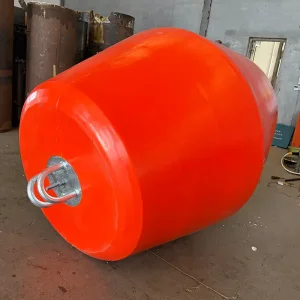
Best Offshore Mooring Buoy for Secure Vessel Anchoring and Marine Floating Systems Manufacturer, Companies
Request Quote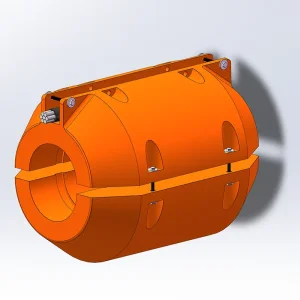
Custom Reliable Pipeline Floats for Marine and Engineering Projects Company, Pricelist
Request Quote
ODM Mooring Buoy for Marina Berths, Vessel Anchorage and Offshore Mooring Systems Suppliers, Manufacturers
Request Quote
High-Quality Offshore Polyethylene Mooring Buoy – Safe, Durable and Maintenance-Free Floating Mooring System Companies, Factories
Request Quote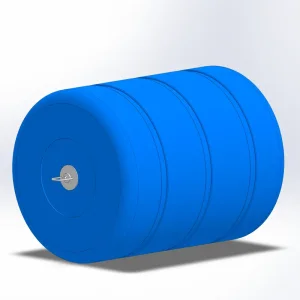
High-Quality Reliable Floating Barriers for Water Safety and Pollution Control Factory, Factories
Request Quote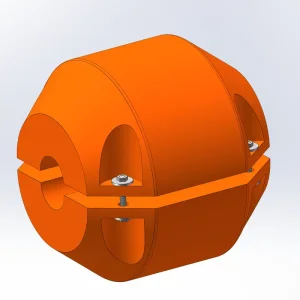
High-Quality Durable Pipe Floats for Safe Operations Products, Company
Request Quote
Best High-Performance Floating Boat Pontoon for Modular Water Platforms Company, Factories
Request Quote
ODM Reliable Pipe Floats for Marine Projects Supplier, Manufacturer
Request QuoteThe Paradigm Shift in Small Mooring Buoy Engineering
Transitioning from high-maintenance steel drum buoys to advanced rotomolded LLDPE/HDPE polymer composites for coastal, harbor, and industrial anchorage infrastructure.
Corrosion Immunity & Integrity
Traditional steel mooring buoys suffer from rapid galvanic degradation, pitting, and marine bio-fouling in aggressive saltwater zones. Shandong Binzhou Juhua Rubber & Plastic Co., Ltd. builds small mooring buoys using UV-stabilized, non-polar polyethylene shells that are entirely immune to electrochemical corrosion, eliminating dry-dock repainting cycles.
- No cathodic protection anode replacements required
- Zero risk of electrolytic rust in high-salinity waters
- Inherent elasticity absorbs continuous wave surge impact
Closed-Cell Unsinkable Core
Structural reliability depends on buoyancy preservation after potential surface breach. Our computerized rotational molding encapsulates a dense matrix of expanded polystyrene (EPS) or high-density rigid polyurethane foam (PU), retaining 100% operational buoyancy even in the event of major hull puncture by harbor traffic or debris collision.
- Core water absorption rates < 3% under continuous immersion
- Compressive core stabilization prevents hydrodynamic collapse
- Uniform internal bonding strengthens external wall rigidity
Through-Chain & Hawse Systems
Small mooring buoys are subjected to severe triaxial strain from storm surging, windage drift, and tidal currents. We incorporate central hawse pipes lined with ultra-heavy hot-dip galvanized steel (ASTM A123) or continuous load-bearing pad-eye tie rods that decouple tension loads from the polymer float shell directly to the ground tackle anchor chains.
- Safe Working Loads (SWL) verified via calibrated load cell rigs
- Replaceable wear sleeves on chain contact interfaces
- Dual mooring eye brackets for fail-safe bridle tethering
Small Mooring Buoy Pricing & Technical Quote Architecture
Understanding the critical hydrodynamic and mechanical metrics that define quote generation, total cost of ownership (TCO), and global delivery lead times.
1. Hydrodynamic Buoyancy Margin Calculations
A frequent error in commercial mooring buoy quotation is calculating dimensions based solely on static vessel weight. Quotation specifications require calculating total reserve buoyancy using the formula:
Gross Reserve Buoyancy (B_res) ≥ [W_chain + W_tackle + Dynamic Load] × 1.30 to 1.50
Small mooring buoys (typically ranging from 300mm to 1200mm diameter) must maintain a minimum 25% freeboard height above the water line during peak 100-year storm surges to ensure navigation visual line-of-sight and prevent complete sub-surface pulling.
2. Load-Bearing Internal Hardware Customization
Quotes vary significantly based on internal metallurgy and mooring tackle pass-through design. Shandong Binzhou Juhua supplies multiple configurations tailored to deployment severity:
- Through-Chain Hawse Design: Mooring chains pass directly through the buoy body, allowing quick depth adjustment; economical for sheltered marinas and commercial docks.
- Cruciform Tension Bar (Pad-Eye Assembly): Continuous internal high-tensile steel shaft with drop-forged upper and lower mooring eyes; ideal for heavy surge and coastal workboat anchoring.
- Subsea Swivel Joints: Integrated heavy-duty forged swivel shackles prevent destructive chain twisting in multi-directional tidal estuaries.
3. Polyethylene Polymer Formulation & UV Stabilization
Raw material grades govern lifecycle longevity. Our rotational molding plants process exclusively 100% virgin linear low-density polyethylene (LLDPE) compounded with UV-20 marine stabilization packages. Unlike cheap recycled re-grind plastics that suffer photo-oxidation micro-fissuring within 24 months, our formulations guarantee a minimum 15-year ultraviolet degradation resistance under extreme equatorial sunshine exposure.
| Model Series | Outer Diameter (mm) | Net Buoyancy (kg) | Reserve Buoyancy | Tension Shaft SWL | Typical Marine Application | Price Bracket |
|---|---|---|---|---|---|---|
| SMB-400-P | 400 mm | 32 kg | ≥ 40% | 1.5 Tons | Sheltered Marina Berths & Kayak Racks | Economic Tier |
| SMB-600-T | 600 mm | 105 kg | ≥ 35% | 3.5 Tons | Commercial Fishing & Aquafarm Anchor Lines | Standard Commercial |
| SMB-800-HD | 800 mm | 260 kg | ≥ 35% | 6.0 Tons | Workboat, Pilot Vessel & Tug Mooring Points | Heavy Duty |
| SMB-1000-OD | 1000 mm | 490 kg | ≥ 30% | 12.0 Tons | Offshore Dredge Pipe Anchoring & Bunkering | Offshore Spec |
| SMB-1200-MAX | 1200 mm | 850 kg | ≥ 30% | 18.0 Tons | Subsea Pipeline Tie-in & Coastal Navigation Terminals | Industrial Marine |
Bespoke Engineering Verification Note: Every custom small mooring buoy quotation from Shandong Binzhou Juhua includes full hydrodynamic sizing verifications, finite element analysis (FEA) of internal tension components, and exact ocean freight container packing volumes (CBM) to optimize landed logistics costs to any destination port worldwide.
End-to-End Solutions Across Global Maritime Sectors
How international harbor authorities, offshore contractors, and aquaculture operators leverage precision rotomolded mooring buoys for reliable asset protection.
Commercial Ports & High-Density Marinas
Small mooring buoys are critical for securing private yachts, pilot boats, and service tenders in congested berths. Soft-surfaced polyethylene hulls prevent hull scratch damage compared to steel buoys. High-visibility retroreflective striping and top-mounted navigation light brackets ensure 24/7 visibility for incoming maritime traffic.
- Non-marking polymer prevents gelcoat damage on vessels
- Custom identification stamping for berthing management
- Reduced tether chain shock via elastic buoy response
Dredging Operations & Floating Slurry Pipelines
In dredging and reclamation projects, floating discharge pipelines require continuous mooring to withstand river or tidal currents. Our small mooring buoys serve as anchor station markers and intermediate tension dampeners, holding heavy HDPE pipeline lines and flexible rubber dredge hoses in strict positional alignment without buckling.
- Prevents lateral deflection of floating slurry discharge lines
- Resists aggressive abrasive sands and slurry overflow spillage
- Easily repositioned as dredging advances along navigation channels
Offshore Aquaculture & Oceanographic Monitoring
Modern offshore fish farm cages and long-line kelp systems rely on distributed small mooring buoys for grid tensioning. In parallel, marine scientific agencies equip our custom small buoys with compact solar panels, acoustic telemetry sensors, and CTD probes, creating autonomous, long-endurance data collection platforms in remote ocean zones.
- High buoyancy-to-weight ratio simplifies vessel crane operations
- Custom internal hollow cavities accommodate instrument housings
- Biological foulants (barnacles, algae) release effortlessly from PE shells
Precision Rotomolding Manufacturing & Testing Roadmap
Our Lizhuang Town facility combines electronic automatic temperature tracking, variable-frequency speed regulation, and standardized precision steel molds for absolute dimensional repeatability.
1. Computational Mold Simulation
Every small mooring buoy mold design begins with rheological melt-flow simulation and thermal distribution modeling to eradicate thin-corner stress points, ensuring an ultra-uniform outer shell thickness (typically 8mm to 16mm).
2. Biaxial Rotational Fusion
Variable-frequency biaxial arms rotate the cast molds continuously through precisely controlled oven heat zones. Multi-point thermal sensors verify complete molecular crosslinking of virgin polyethylene polymers without thermal degradation.
3. Automated Core Foaming
Buoy hollows are pressure-injected with high-density polyurethane (PU) or expanded polystyrene (EPS) beads, reaching an in-situ core density of 38-45 kg/m³. This prevents moisture migration and creates a solid structural composite.
4. Rigorous Load Cell Destructive QA
Before batch dispatch, tension members and mooring eyes undergo hydraulic proof-load testing at 200% Safe Working Load (SWL). Float shells undergo ultrasonic thickness scans and drop-impact toughness tests at sub-zero temperatures.
Maritime Compliance, Certification & Warranty Architecture
Meeting rigorous international marine navigational aids and offshore installation mandates across ports worldwide.
IALA Chromaticity Compliance
Our small mooring buoys comply strictly with IALA (International Association of Marine Aids to Navigation and Lighthouse Authorities) chromaticity recommendations (E-108). Color pigments are melt-compounded throughout the entire wall thickness, eliminating visual fading or peeling over decades of oceanic UV bombardment.
- High-visibility safety yellow, aviation orange, signal red, and marine white
- Retroreflective bands comply with SOLAS high-intensity specifications
- Custom topmarks, stencils, and navigational daytime markers
Global Export & Project Documentation
Serving EPC marine contractors in over 80 countries, we provide comprehensive technical data submittals for port authority approval. Shipments include mill test certificates (MTC) for steel components, hot-dip galvanizing thickness verifications (ISO 1461), Certificate of Origin (CO), and formal third-party inspection dossiers (BV, SGS, ABS).
- Turnkey export packing (palletized or nested containerization)
- Direct coordination with international freight forwarders
- Complete CAD assembly drawings and tackle rigging schematics
Direct Manufacturer Warranty Commitment
We stand by our precision rotational molding craftsmanship with an ironclad industrial warranty. The standard warranty term commences when the buyer formally hands over the goods to the project investor and extends 18 months from that handover date, or 12 months after the completed marine installation date, whichever milestone arrives first.
- Rapid spare parts provisioning and interchangeable replacement bodies
- Lifetime engineering technical advisory on anchoring calculations
- Direct video link support with plant rotational molding specialists
Need an Exact Mooring Buoy Sizing Calculation & Quote?
Provide your vessel displacement, maximum wind speed, tidal surge depth, and preferred mooring tackle style. Our engineers will generate an optimization blueprint within 24 hours.
Complementary Pipeline, Buoy & Marine Infrastructure Catalog
Explore matching pipeline buoyancy rings, offshore containment barriers, and specialized marine safety floats manufactured to the highest international specifications.
Custom Pipe Floats for Floating Pipeline Stability in Water Transfer and Industrial Projects Companies, Factory
Request Quote
ODM Mooring Buoy for Reliable Vessel Anchoring and Floating Marine Infrastructure Product, Quotes
Request Quote
ODM Industrial-Strength Pipeline for Efficient Fluid and Material Transport Supplier, Quotes
Request Quote
ODM Deepwater Pipeline Support Floats – Reliable Subsea Buoyancy Solutions Manufacturer, Companies
Request Quote
ODM High-Visibility Floating LED Ball for Marine and Freshwater Safety Manufacturers, Pricelist
Request Quote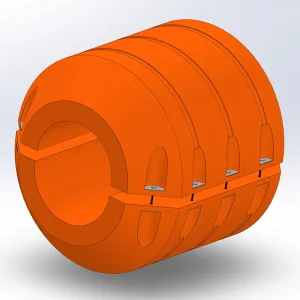
OEM Reliable Marine Pipe Floats for Pipeline Efficiency Manufacturer, Products
Request Quote
ODM High-Buoyancy Floats for Marine Projects Suppliers, Pricelist
Request Quote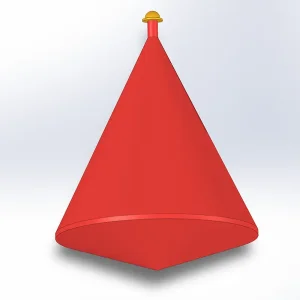
High-Quality High-Visibility Marine Buoys for Safe Offshore Operations Pricelist, Factory
Request QuoteFrequently Asked Questions: Mooring Buoy Engineering & Sourcing
Expert answers addressing sizing formulas, polyurethane foam filling, salinity durability, mooring hardware stress, and quotation variables.
What is the standard engineering calculation for small mooring buoy sizing?
The total gross buoyancy of the buoy must exceed the total combined submerged deadweight of the mooring assembly (including bottom chain weight, intermediate bridle tackle, shackles, swivels, and seasonal biofouling accretion) by at least 25% to 35% under normal conditions, and up to 50% for storm surge conditions. This guarantees adequate positive freeboard, preventing the buoy from becoming submerged under heavy drag tension.
Why is rotomolded polyethylene preferred over welded steel for mooring buoys?
Polyethylene (LLDPE/HDPE) provides absolute immunity to seawater corrosion, galvanic degradation, and pitting without requiring cathodic zinc anodes or routine drydock sandblasting and repainting. Additionally, PE has natural elasticity that absorbs impact from maneuvering workboats or pleasure craft without puncturing or scratching vessel gelcoats.
What ensures the mooring buoy will not sink if the outer skin is punctured?
Every Juhua mooring buoy is completely filled internally with high-density, closed-cell expanded polystyrene (EPS) or rigid closed-cell polyurethane (PU) foam. Because the foam possesses an independent closed-cell cellular structure, it absorbs virtually zero seawater (<3% by volume) even if the outer rotomolded shell is fractured by an extreme collision.
Can the buoy handle mooring tension directly, or is a central rod required?
Polyethylene shells are designed primarily for hydrostatic buoyancy, not direct tensile load transfer. For heavy vessel mooring, our buoys feature an internal hot-dip galvanized steel tension rod (cruciform pad-eye bar) or an ASTM A123 steel hawse pipe. Tensile forces travel directly through the steel assembly to the sea anchor, ensuring zero structural strain on the plastic body.
What specific details are required to receive an accurate, formal quote?
To deliver an optimized quote, please provide: (1) Maximum vessel tonnage or displacement; (2) Water depth and tidal variation range; (3) Mooring system type (through-chain hawse vs. central tension rod with pad-eyes); (4) Deployment environment (sheltered marina, open sea, or dredging river); (5) Order quantity; and (6) Preferred CIF/FOB destination discharge port.
What are the factory warranty terms for Shandong Binzhou Juhua buoys?
Our comprehensive quality warranty starts on the date the buyer officially hands over the equipment to the project investor and extends 18 months from that handover date, or 12 months after the completed installation date, whichever comes first. We guarantee structural integrity, core buoyancy retention, and UV stabilization against cracking.