
Standard & Heavy-Duty Offshore Buoyancy Assemblies
Verified structural stability, optimized hydrodynamic drag coefficients, and UV20+ stabilized polymers built to protect subsea assets and navigational waterways.



Buoy Technology Evolution: Trends in Modern Oceanic Engineering
The offshore flotation sector is transitioning from inert physical markers to intelligent, resilient composites designed for extreme lifecycle operations and zero-maintenance mandates.
Polymer Transition Dynamics
Traditional structural steel buoys are subject to severe biofouling, corrosion fatigue, and high recalibration costs. The global maritime sector is rapidly standardizing on rotational molded, high-density polyethylene (HDPE) shells combined with cross-linked closed-cell polyurethane cores, delivering an uncompromised 25+ year design life without cathodic protection systems.
IoT Telemetry Integration
Navigational and environmental buoys are no longer passive fixtures. Modern requirements specify integrated self-charging solar photovoltaic panels, low-power AIS transponders, multi-spectral oceanographic LiDAR, and Iridium satellite modems to transmit hydro-meteorological, wave parameter, and load data in real time directly to port control authorities.
Severe Environmental Tolerance
Rapid climate shifts require increased tolerance to hydraulic shock, scouring tidal dynamics, and Arctic freeze cycles. Advanced rotationally molded hulls utilize precision-controlled variable wall thicknesses and finite element optimized rib patterns to absorb vessel impact energy while preserving hydrostatic equilibrium and watertight compartmentation.
Global Enterprise Buoy Sourcing Criteria & Demand Realities
Comprehensive risk mitigation matrices used by EPCIC contractors, offshore energy operators, and port harbor bureaus to vet manufacturing partners.
Hydrostatic Margin Validation
Specifiers mandate 20% to 35% reserve buoyancy factors exceeding combined dynamic hydrodynamic load, pipeline slurry mass, accessory weight, and fouling drag to avoid negative freeboard states under maximum hydraulic transport heads.
Moulding Symmetry & Density
Automatic infrared closed-loop temperature control guarantees uniform polyolefin crystal crosslinking without hot spots or localized thinning, assuring bolt-hole shear strength and shell tensile modulus under cyclic sea state stresses.
Impact Dissipation & Recovery
Closed-cell core materials must resist water ingress even during high-energy collisions. The virgin polymeric outer skin must demonstrate high ductility and energy dissipation, eliminating micro-fracture propagation in sub-zero seawater conditions.
Comprehensive Traceability
Global operators require raw material melt flow indexing, pigment dispersion verification, tensile batch test certificates, and complete non-destructive ultrasonic skin thickness validation documentation prior to maritime export dispatch.
Macro-Sector Systems: Integrated Oceanic & Coastal Solutions
Delivering engineered flotation assemblies harmonized across hydraulic transport, port traffic control, and sensitive littoral ecosystem containment.
Capital Dredging & Tailings Transport
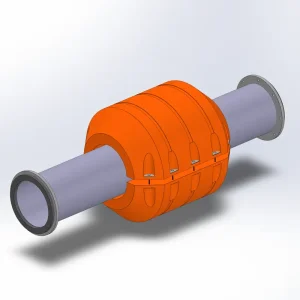
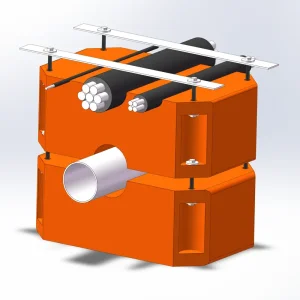
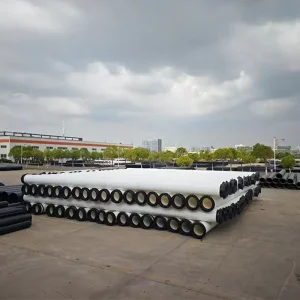
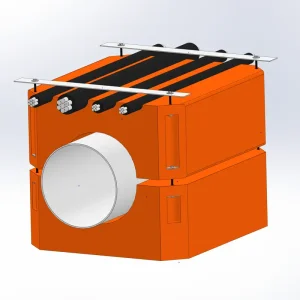
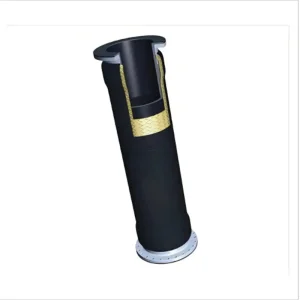
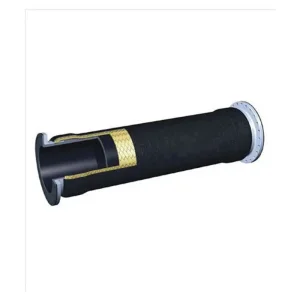
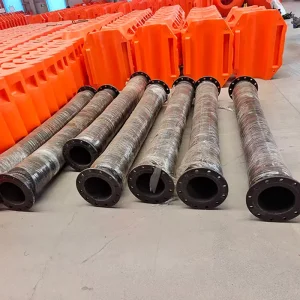
High-discharge dredging pipelines require modular clamp-on buoyancy capable of carrying dynamic slurry densities exceeding 1.6 t/m³. Our integrated floating lines, paired with heavy-duty abrasion-resistant rubber sleeves and HDPE spools, minimize hydrodynamic bending moments across tidal surge lines while maintaining strict pipeline alignment.
AtoN & Deep-Water Mooring Terminals
Aids to Navigation (AtoN) engineered strictly to IALA guidelines. We manufacture lateral, cardinal, and safe water buoys featuring molded-in pigments that resist UV degradation in equatorial waters. Mooring assemblies incorporate central high-tensile load shafts, swivel assemblies, and sacrificial anodes to accommodate continuous cyclic vessel anchor pulls.
Hydraulic Intake & Ecological Containment
Hydroelectric power dam intakes and desalination plants require robust floating debris deflection booms and silt turbidity barriers. Utilizing interconnected cylindrical and modular float assemblies with sub-surface ballast curtains, our systems isolate particulate trash, invasive biomass, and hydrocarbon spills while withstanding extreme riverine flash floods.
Engineering Roadmap: The Next Generation of Buoy Technology
Continuous investment in advanced material formulations, structural telemetry, and circular lifecycle designs for offshore infrastructure.
Graphene-Enhanced Polymers
Formulating nanocomposite polyethylene shells providing 40% higher tensile yield strength, elevated puncture resistance, and enhanced barrier properties against biological macro-fouling without toxic biocidal coatings.
Kinetic Micro-Harvesters
Integrating wave-motion electromagnetic induction generators directly inside mooring buoy cores, providing uninterruptible secondary power sources for autonomous acoustic monitoring and subsea transponder pingers.
Predictive Mooring Stress AI
Equipping mooring buoys with strain-gauge load pins and 9-axis IMUs connected to edge computing modules, detecting tension spikes, mooring fatigue, and anchor drift before critical structural failure occurs.
100% Closed-Loop Recyclability
Engineering non-stick, easily separable PU foam chemistries allowing complete polymer reclamation and re-granulation at end-of-service-life, cutting total project carbon footprints by over 65%.
Commercial Specifications & Indicative Pricing Matrix
Engineering parameters, physical volumetric dimensions, net payload capacities, and volume commercial procurement tiers.
| Product Classification | Typical Pipeline OD / Hull Dim. | Net Buoyancy Range | Core Shell Construction | Indicative Price Range (USD/Unit) | Lead Times (Standard Order) |
|---|---|---|---|---|---|
| Modular Dredge Pipe Float | 110mm – 315mm (4" – 12") | 120 kg – 680 kg | Virgin LLDPE + EPS/PU Closed-Cell | $75.00 – $240.00 | 7 – 12 Days |
| Heavy-Duty Slurry Pipe Float | 355mm – 630mm (14" – 24") | 850 kg – 2,400 kg | High-Impact UV-20 Polyethylene + PU | $280.00 – $760.00 | 10 – 15 Days |
| Deepwater Discharge Buoyancy | 710mm – 1200mm (28" – 48") | 3,100 kg – 7,800 kg | Multi-Chamber Rotomolded Poly + PU | $890.00 – $2,350.00 | 14 – 20 Days |
| AtoN Navigational Channel Buoy | Ø 1,200mm – 2,400mm Hull | 500 kg – 4,500 kg Reserve | Steel Framework Core + Poly Outer Skirt | $1,400.00 – $5,800.00 | 15 – 25 Days |
| Heavy Offshore Mooring Buoy | Ø 1,500mm – 3,200mm Hull | 2.5 Ton – 25 Ton Static Pull | Through-Chain / Central Tension Rod | $2,100.00 – $11,500.00 | 20 – 30 Days |
| Environmental Barrier Booms | L 1,000mm × Ø 300 – 500mm | 150 kg – 420 kg / section | Interlocking Modular Pins + Ballast Skirt | $95.00 – $285.00 / Meter | 7 – 14 Days |
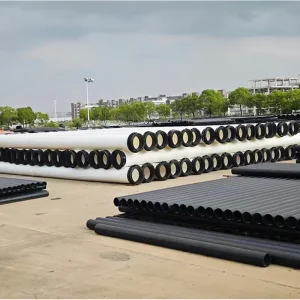
Engineered Fluid Conveyance, Pontoons & Mooring Buoys
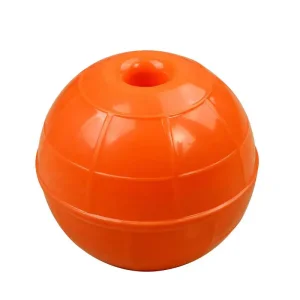
Certified assemblies engineered to interface directly with floating pipeline installations, marine workboats, and coastal intake channels.


Global Maritime Compliance & Engineering Assurance
Complete regulatory compliance with international maritime, pipeline, and environmental quality authorities.
IALA Guideline Compliance
All navigational buoys, topmarks, daymarks, and lantern supports adhere to the International Association of Marine Aids to Navigation and Lighthouse Authorities (IALA) Maritime Buoyage System standards (Region A and Region B) for chromaticity, luminescence, and day visual recognition angles.
ISO 9001:2015 & Full Batch Traceability
Production follows strict ISO-certified manufacturing protocols. Raw polymeric inputs undergo Differential Scanning Calorimetry (DSC), melt index evaluation, and tensile break tests. Wall thicknesses are validated using high-resolution pulse-echo ultrasonic thickness gauging at critical load radii.
Export Logistics & In-Port Support
Exporting to more than 80 countries, we provide standardized containerization stacking plans, pre-slung heavy export rigging, and corrosion-inhibiting vacuum packaging for structural hardware. Our applications team delivers comprehensive field bolt-torque matrices and onsite installation supervision.
Frequently Asked Questions: Buoyancy Engineering & Sourcing
Comprehensive technical and commercial clarifications directly addressing high-intent engineering queries.
What is the standard formula for determining pipeline float buoyancy?
The required gross buoyancy per unit length must satisfy: Total Buoyancy ≥ (Weight of Pipe + Weight of Max Density Conveyed Slurry + Weight of Flanges/Fasteners) × Safety Factor (typically 1.25 to 1.35). This reserve margin guarantees that approximately 25% to 30% of the pipe diameter remains exposed above the waterline, preventing pipeline sinking during high particulate surges or hydraulic shut-down.
Why is rotomolded polyethylene preferred over traditional welded steel for marine buoys?
Polyethylene eliminates corrosion, paint peeling, and the requirement for continuous cathodic protection anodes. Furthermore, rotomolded PE shells filled with closed-cell polyurethane foam retain positive hydrostatic buoyancy even if the exterior skin is punctured during vessel collisions, offering significantly lower lifecycle maintenance expenditure.
How do environmental conditions determine core filler specifications?
For surface dredging applications, expanded polystyrene (EPS) or lightweight polyurethane core foam provides economical and reliable hydrostatic performance. For submerged or deep subsea applications, rigid, high-density, closed-cell polyurethane (PU) or syntactic foams are mandatory to prevent hydrostatic compression and catastrophic water absorption under continuous hydrostatic pressure.
What quality certifications and material guarantees are supplied with orders?
Every production run includes Raw Material Certificate of Analysis (COA) confirming UV20+ stabilizers, wall thickness ultrasonic test logs, drop-impact structural reports at sub-zero temperatures, and formal EN 10204 3.1 inspection documentation. Standard marine warranties extend 18 months from delivery or 12 months from on-water commissioning.