
High-Performance HDPE Floating Pontoons & Pipeline Modules
Engineered with seamless rotomoulded virgin PE shells, UV8-stabilised compounding, and closed-cell polyurethane cores. Review the standard inventory and specialized engineering configurations below.


High-Density Polyethylene (HDPE) Floating Pontoons: Structural Mechanics & Manufacturing Discipline
A comprehensive examination of why heavy-duty virgin rotomoulded polyethylene pontoons have replaced legacy metal drums and timber buoyancy modules across mission-critical maritime, dredging, and industrial water infrastructure.
Technical Principle: Engineering True Freeboard & Working Hydrodynamic Safety Factors
In floating pipeline architecture and modular water platforms, an engineering failure occurs when pontoons are sized purely against static water displacement. In real-world operation, hydrodynamic drag, viscous boundary layer effects, wave slamming loads, internal slurry density spikes (often reaching 1.4 to 1.8 kg/m³ in sand and mining tailings), and bio-fouling marine growth add significant downward vector force.
Shandong Binzhou Juhua Rubber & Plastic Co., Ltd. (known globally as Juhua / Giant Rubber) incorporates automated electronic wall thickness controls and finite element stress analysis (FEA) to ensure that every modular pontoon shell maintains a persistent reserve buoyancy of 25% to 35%, guaranteeing that approximately one-quarter of the pipeline or floating pontoon hull remains elevated above the active water plane even under full hydraulic throughput.
Pure Virgin Polymer Purity
Fabricated exclusively from high-grade virgin Linear Low-Density Polyethylene (LLDPE) and High-Density Polyethylene (HDPE) polymer resins compounded with CIBA UV8 stabilizers, preventing premature environmental stress cracking (ESCR) from prolonged ultraviolet exposure in tropical maritime zones.
- Zero recycled scrap content in stress-bearing walls
- UV8 to UV12 additives ensure 15+ year operational life
- Chemical inertness against salt, diesel, and mild acids
Monolithic Rotomoulding Integrity
Unlike blow-moulded or twin-sheet welded tanks prone to seam rupture under wave cyclic shear, Juhua biaxial rotational moulds ensure uniform wall thickness across corner radii, ribs, and critical anchoring recesses, eliminating weak stress concentration points.
- Variable-frequency speed-controlled rotation
- Continuous digital thermocouple heat monitoring
- Strict batch-to-batch interchangeability tolerance
Closed-Cell Polyurethane Foam Core
For applications where impact puncture resistance is mandatory, Juhua pontoon modules are filled via high-pressure injection with hydrophobic closed-cell polyurethane foam (density 35–45 kg/m³). Even if the outer PE envelope is pierced by collision, water cannot enter.
- Zero moisture ingress < 0.05 g/cm²
- Unsinkable redundancy for deep-sea and navigational use
- Enhanced structural compressive damping
Enterprise Sourcing Checklist: RFP Specifications & TCO Analysis
Commercial marine contractors and EPC procurement departments must look beyond initial unit purchase prices. Marine flotation failure results in lost dredging downtime, broken slurry pipelines, and catastrophic environmental spill penalties.
1. Environmental Stress Crack Resistance (ESCR)
Polyethylene pontoon shells are subjected to tensile hoop stress when clamped to discharge pipes and battered by tidal swells. Standard ASTM D1693 testing must verify ESCR exceeding 1,000 hours under condition B (10% Igepal solution) to prevent sudden environmental splitting in hypersaline warm waters.
- ASTM D1693 Grade F50 > 1000h certified
- High Izod impact strength even at -30°C sub-zero environments
- Complete resistance to biocide cleaners and diesel spills
2. Fastener Integrity & Torque Retention
A pontoon is only as dependable as its fastening hardware. Inferior galvanic couples or low-grade galvanized bolts strip under marine vibration, causing pontoon displacement along the pipeline. Juhua equips units with marine-grade 304 or 316 stainless steel or hot-dip galvanized Grade 8.8 bolts.
- Engineered anti-slip rubber inserts prevent axial migration
- Reinforced moulded-in washer counter-bores prevent stress concentration
- Stainless 316 or HDG fasteners certified to ASTM A153
3. Total Cost of Ownership (TCO) vs Steel Floats
While traditional steel drum floats carry a lower upfront manufacturing cost in select domestic markets, their lifetime total cost of ownership is drastically higher due to paint maintenance, cathodic zinc replacement, heavy crane handling costs, and rapid pitting corrosion.
- Zero cathodic protection maintenance or recoating cycles
- Lightweight two-piece split modular handling saves crane time
- 100% recyclable end-of-life residual polymer value
Proven Flotation Deployments Across Industrial Ecosystems
From cutter suction dredgers in tidal navigation channels to hyper-dense slurry lines in the high Andes, explore how specialized HDPE pontoon geometry solves complex engineering demands.
Capital Port Dredging & Sand Disposal Lines
During berth deepening and navigation channel maintenance, heavy dredge discharge pipes (from OD 250mm to 1200mm) convey mixtures of coarse sand, crushed gravel, and seawater. Juhua pipeline floats deliver consistent hydrodynamic buoyancy, keeping discharge pipelines perfectly horizontal to reduce friction loss in long discharge pipelines while clearly demarcating hazardous maritime work corridors.
Mining Tailings Dewatering & Acid Waters
Copper, gold, and iron ore extraction plants generate abrasive, chemically aggressive slurries. Rotomoulded virgin PE floats resist chemical degradation from acidic mine waters, copper sulphate liquors, and tailing pond evaporation cycles without brittleness or stress cracking.
Floating Solar Photovoltaics (FPV) & Intake
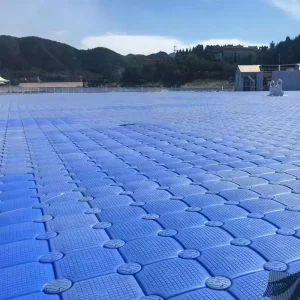
Reservoirs and hydro dams utilize high-buoyancy HDPE floating pontoons to support inverter platforms, cable conduits, and aeration pumping gear. UV-stabilised food-grade PE protects potable water reservoirs against chemical leaching or algae anchoring.
Commercial Marinas, Aqua Platforms & Navigation
Modern offshore fish farms and commercial marinas demand long-life modular boat pontoons, mooring buoys, and floating perimeter barriers. Seamless rotationally moulded designs handle continuous wave torsion, cyclical fatigue, and vessel impact without taking on ballast water or losing freeboard.
Engineering Roadmap: The Future of Smart Marine Flotation
As offshore operations expand into deeper waters and environmental regulations tighten under global decarbonization accords, Juhua is advancing next-generation rotational polymer and sensory architectures.
Graphene & Nano-Reinforced Polymers
Incorporating graphene nanoplatelets into virgin PE resins during pulverization to increase flexural modulus by up to 35%, significantly reducing wall thickness requirements while improving tensile impact resistance in extreme arctic and sub-zero dredging zones.
Bio-Circular Monomer Formulations
Transitioning toward ISCC PLUS-certified bio-attributed ethylene monomers derived from non-fossil bio-feedstocks. Ensuring 100% mechanical performance parity with petroleum-based HDPE while slashing lifetime embodied carbon by up to 60% for eco-tender compliance.
Digital Twin Buoyancy & Pipeline IoT
Embedding wireless MEMS inclination sensors, pressure transducers, and solar-charged LoRaWAN / NB-IoT modules directly inside sealed pontoon cavities. Operators receive real-time alerts regarding pipeline clogging, submergence tilt, and mooring chain tension spikes.
Robotic Laser Wall Verification
Implementation of non-destructive ultrasonic and laser wall-thickness scanning rigs on every finished demoulded pontoon body. Eliminating manual caliper sample errors to assure 100% verified compliance with ISO and ASTM thickness distribution standards.
Global Maritime Standards, Seaworthy Logistics & Compliance Assurance
Delivering heavy industrial flotation modules to remote ports across Southeast Asia, the Middle East, West Africa, and Latin America requires strict packaging engineering and international certification rigor.
International Quality Certifications
Every manufacturing cycle operates strictly under ISO 9001:2015 Quality Management, ISO 14001:2015 Environmental Management, and ISO 45001 Occupational Health systems. Flotation buoys conform to International Association of Marine Aids to Navigation and Lighthouse Authorities (IALA) colorimetric recommendations.
- Full traceability from raw resin melt flow index (MFI) to finished batch
- Third-party inspection support via SGS, Bureau Veritas (BV), or DNV
- Comprehensive hydrostatic pressure and buoyancy water immersion tests
High-Density Nesting & Freight Optimization
Because buoyancy pontoons are voluminous, freight costs can rapidly erode project margins if nesting geometry is poorly calculated. Juhua pontoon halves are engineered with tapered interlocking geometries, maximizing container loadability in standard 40-foot High Cube (40HQ) containers.
- Nested stack designs reduce maritime shipping volume by up to 40%
- Protective geotextile strapping prevents scuffing during ocean transit
- Dedicated customs packing documentation for fast port clearance
Field Installation & EPC Sizing Support
Juhua provides comprehensive installation manual dossiers, detailing bolt torque sequences, pipe bracket placement spacing, anti-surge anchors, and transition joint flex management between floating and shore pipelines. Our engineers evaluate slurry specific gravity to provide tailored buoyancy schedules.
- Detailed 3D CAD buoyancy calculations provided within 24 hours
- Custom color coding and high-visibility reflective bands for waterways
- Comprehensive warranty: 18 months from delivery or 12 months in service
Frequently Asked Questions: Technical Specifications & Procurement
In-depth engineering answers to the critical design, calculation, and operational questions asked by dredging project managers and marine buyers.
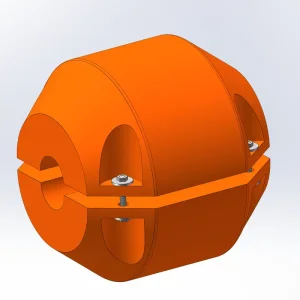
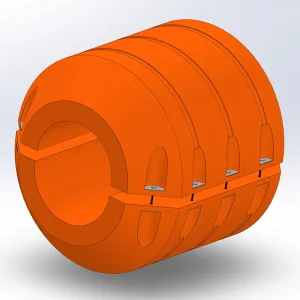
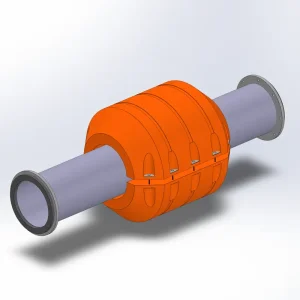
Pipeline floats are semi-cylindrical two-piece clamp-on shells designed specifically to clasp securely around steel, HDPE, or rubber dredging discharge lines. Their geometry is engineered to deliver dynamic buoyancy directly along the pipeline axis while resisting torsional rotation caused by water currents. In contrast, modular boat pontoons and platforms are cube-shaped or catamaran-form flotation bodies with interconnected interlocking lugs and flat working decks designed to support distributed live deck loads, pedestrian foot traffic, light machinery, or vessel berthing.
The total buoyancy calculation must account for the heaviest operational state rather than clean water. The equation requires summing: (1) Pipe dry tare weight per metre, (2) Weight of the conveyed medium calculated as internal pipe volume multiplied by maximum slurry density (e.g., 1.4 to 1.8 t/m³ in sand dredging), (3) Flange, bolt, and wear-liner weight, and (4) Weight of the pontoon body itself.
Total pontoon buoyancy must exceed this aggregated load by a safety reserve margin of 25% to 35%. This reserve ensures approximately 25% of the pipe diameter remains elevated as freeboard, mitigating wave drag. Spacing between floats is typically kept continuous or separated by short uniform gaps (0.5m to 1.5m) to prevent bending moments and sagging along flexible HDPE pipe runs.
Polyethylene is completely immune to galvanic and electrolytic corrosion, pitting, and marine atmospheric rust. Steel pontoons require regular epoxy painting, sandblasting, and sacrificial anode replacement; any coating scratch immediately invites severe corrosion. Fiberglass (FRP) is brittle, susceptible to micro-cracking upon impact with dredging tenders or floating debris, and suffers from osmotic blistering over time.
Rotomoulded HDPE pontoons possess high elasticity and ductility; they deform elastically upon vessel collision and bounce back without structural puncture. Additionally, virgin PE compounded with UV8 carbon or hindered amine light stabilizers (HALS) provides indefinite resistance to marine sunlight breakdown.
Filling the hollow rotationally moulded pontoon shell with high-density (35–45 kg/m³) closed-cell polyurethane foam serves as an unsinkability failsafe. If a pontoon experiences a catastrophic puncture from a boat propeller, sharp rock outcrop, or mechanical dredge bucket, water is strictly prevented from flooding the interior cavity because the cell structure of the foam is over 95% closed. The module retains more than 98% of its net design buoyancy even with a compromised outer shell.
To provide an accurate technical sizing dossier and quotation, our engineering team requires: (1) Pipe outer diameter (OD) and pipe wall thickness (SDR rating), (2) Pipe material (HDPE, steel, or rubber hose), (3) Specific gravity/density of the conveyed material, (4) Overall length of the discharge line, (5) Site deployment conditions (calm river, tidal estuary, sheltered port, or offshore swell), (6) Desired freeboard percentage, and (7) Required fastener metallurgy (SS304, SS316, or Grade 8.8 hot-dip galvanized).
Expanded Engineering Solutions: Mooring Buoys, Pontoons & Custom Modules
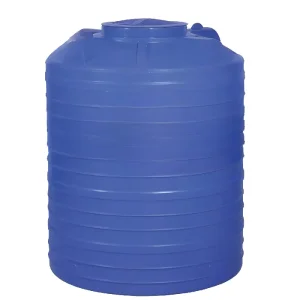
Explore specialized tie-in buoyancy modules, modular boat pontoons, and liquid storage systems developed to meet exact EPC contract criteria.



Connect with Juhua Marine Flotation Engineers
Bypass intermediary trading companies. Review pipeline schematics, hydrodynamic buoyancy reserves, container nesting plans, and factory price schedules directly with senior rotational moulding production engineers.
Technical CAD / RFP Submissions
Email your tender drawings, pipeline specifications, and required delivery schedules directly to our engineering desk for complete FEA buoyancy calculations within 24 hours.
[email protected]Immediate WhatsApp / Hotline
For urgent dredging pipeline spares, on-site float replacement sizing, or international container tracking updates, contact our international logistics hotline directly.
WhatsApp: +86-158-6665-7686Factory Production Plant
West Industrial Park, Lizhuang Town, Huimin County, Binzhou City, Shandong Province, China. Certified visits, factory acceptance tests (FAT), and third-party inspections welcomed.
Schedule Factory Inspection