

ODM Foam-Filled Mooring Buoy
Closed-cell polyurethane core engineered for harsh open-ocean marine terminals and ports.
Factory-tested high-density polyethylene floats, designed to integrate seamlessly with heavy industrial discharge lines, marinas, and nearshore anchoring structures.
Closed-cell polyurethane core engineered for harsh open-ocean marine terminals and ports.
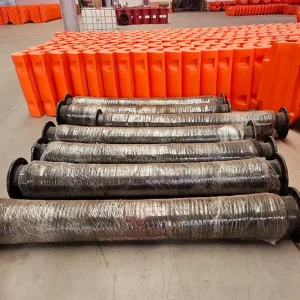
Reinforced elastomeric conduits for maximum abrasion resistance during heavy slurry transit.

Split-ring modular pontoon floats designed to secure continuous stability across currents.

Precision rotational molded shells providing fail-safe buoyancy margins under dynamic load.

Engineered for extreme subsea and deepwater pipe tension relief and positioning control.
Engineered geometric clamp modules that resist hydrostatic collapse at depth.

UV8/UV15 stabilized outer bodies built to survive corrosive maritime environments.
Impact-absorbing polymer design to safely dock commercial barges and dredging vessels.
In the contemporary maritime infrastructure and marine extraction sectors, legacy flotation devices based on painted carbon steel or thin unprotected metals have proven uneconomical. The continuous interaction of hypersaline waters, intense UV degradation, and mechanical shear forces leads to localized wall collapse, corrosion pitting, and sudden buoyancy loss.
High-Density Polyethylene (HDPE 100 resins) eliminates electrochemical oxidation entirely. Rotomolded hulls deliver completely homogeneous structures without welding joints, which are traditionally susceptible to salt stress cracking.
Even under sharp impact or extreme external hull penetration, the high-density interior expanded polystyrene (EPS) or hydrophobic polyurethane (PU) prevents water ingress, preserving net buoyant lift unconditionally.
Computational fluid dynamic (CFD) profiling mitigates drag coefficient under heavy crosscurrents, preventing critical torsion fatigue on flanged pipe joints and minimizing energy draw for towage.
Accurate buoyancy design must never be calculated based on an empty pipe or clean water density. Marine slurry lines must account for solid particle settlement, dynamic wave-slamming loads, and accessory hardware dead-weights.
Standard seawater has a specific gravity of ~1.025. Dredging tailing slurries often hit densities between 1.3 to 1.8 t/m³. Calculating buoyancy using clean water invariably causes pipeline sinking.
Standard operating criteria stipulate that a minimum of 25% of the floating pipe body diameter should sit above the baseline waterline to prevent wave overwash and pipeline swamping.
High-tensile, hot-dip galvanized or Marine Grade SS316 fasteners guarantee continuous friction fit without creating point load concentrations on the PE pipe's cylindrical walls.
From coastal reclamation projects to sensitive reservoir bypass networks, HDPE dock and pipeline floats fulfill diverse mechanical functions.
Continuous navigation clearance demands rigid line tracking. Floats secure massive dredger discharge lines, keeping clear visual markers via high-visibility pigments for navigating vessels.
Extreme pH values and abrasive slurry particles disintegrate conventional tanks. Chemical-resistant HDPE float shells operate reliably even in high-acid tailing environments.
River desilting demands flexible deployment around river bends. Modular pipe floats absorb bank collisions, providing agile maneuverability in tight municipal channels.
Open-ocean aquaculture requires massive structural support for feed delivery pipes and floating walkways that can survive persistent swell fatigue.
During civic maintenance or dam repairs, temporary pontoon systems maintain uninterrupted municipal freshwater feeds without contaminating reservoir ecology.
Integrated upper routing channels safely carry high-voltage electrical feeds and telemetry cables right beside the hydraulic slurry pipeline without submersing cabling.
Every unit produced by Shandong Binzhou Juhua Rubber & Plastic Co., Ltd. follows standardized quality protocols that guarantee full dimensional compatibility and repeatable wall thicknesses across multi-year global supply contracts.
Rotomolding furnaces incorporate closed-loop variable-frequency thermal controllers to ensure absolute polymerization throughout the shell, preventing internal thermal stresses and localized brittleness.
Random samples undergo low-temperature impact tests (-20°C) to guarantee that hulls do not crack under severe wave impacts, barge docking loads, or freezing weather operations.
Supplied with full batch material certifications. Exported systematically across 80+ countries with custom packaging profiles optimized for maximum ocean container cube utilization.
Buoyancy modules are evolving from simple passive supports to intelligent, connected marine infrastructure assets.
Embedding low-power LoRaWAN strain gauges directly inside the clamp structural bands allows real-time warnings of pipe bending fatigue or sudden slurry settling before failure occurs.
Research into high-tensile graphene-reinforced polyethylene and circular recycled polymers maintains peak burst-resistance while lowering the carbon footprint of marine infrastructure projects.
New floating profiles act as docking and solar replenishment platforms for autonomous water quality inspection drones and localized silt surveillance robotics.
Expanded configurations including utility cable troughs, specialized water pontoons, and ultra-high-pressure transport assemblies.
Sanitary, food-safe high-purity polyethylene bodies for temporary freshwater intakes.
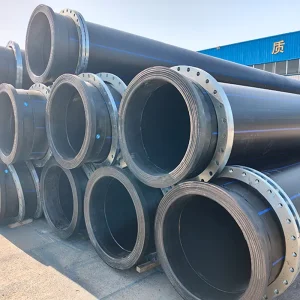
Pressure-rated fluid conduits for long-distance subsea outfall and fluid conveyance.
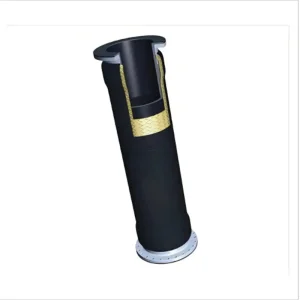
Heavy-duty flexible segments linking floating pipelines directly to the dredge hull.
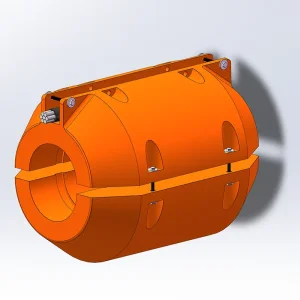
Standardized two-piece clamp shells providing uniform buoyancy across entire pipeline lengths.
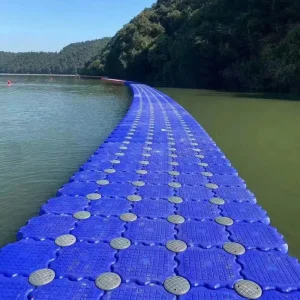
Modular interlocking dock units designed for pump stations and maintenance walkways.

Dual-channel upper profile engineered to transport power feeds and discharge pipes simultaneously.

Heavy-duty internal steel framework with polyurethane-coated exterior skin for vessel securing.
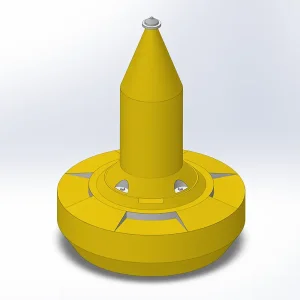
Fully compliant with IALA marine recommendations, equipped with solar panel mounts and radar rings.
Expert insights on installation, buoyancy sizing, environmental resistance, and manufacturer support protocols.