
High-Efficiency Marine Buoyancy & Pipe Conduit Assets
Engineered for mission-critical hydraulic discharge, open-sea dredging stability, and subsea tie-in infrastructure.
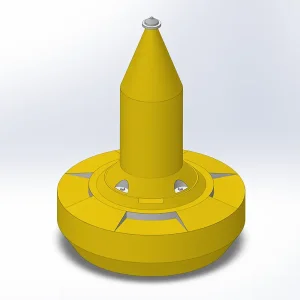


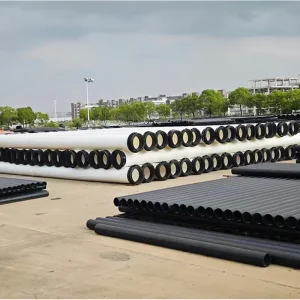
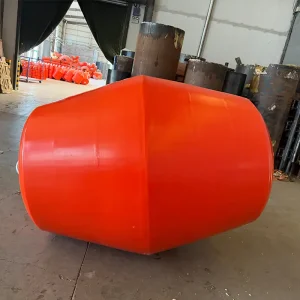
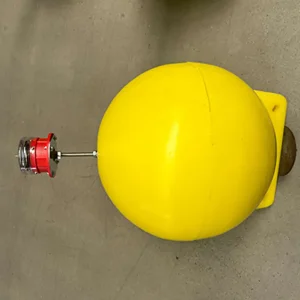
Engineering HDPE Pipe Specifications for Industrial & Marine Operations
A technical examination of polymer density, dimension ratios, stress crack resistance, and buoyancy dynamics under severe environmental loads.
Material Compound & PE100 Grading
Industrial piping integrity relies heavily on certified high-density polyethylene compounds. Utilizing virgin PE100 granules with bi-modal molecular distribution ensures high slow crack growth (SCG) resistance (>1,000 hours under PENT testing according to ASTM F1473). Wall thickness tolerances conform to ISO 4427 and ASTM D3035 specifications.
Dimension Ratio (SDR) & Working Pressure
Precise selection of Standard Dimension Ratio (SDR 9, SDR 11, SDR 17, SDR 21, SDR 26) balances internal working pressure from 6 bar up to 25 bar with pipeline flexibility. Lower SDR configurations prevent hydraulic collapse under negative pressure transients (water hammer) in deep-sea intake and booster pump extraction routes.
Buoyancy Dynamic Formulation
Coupling pipe floats to HDPE assemblies requires balancing hydrostatic displacement against slurry payload densities. Engineering formulas ensure continuous flotation with 25% to 30% safety reserves: Bnet = ΣVfloat × ρwater - (Wpipe + Wslurry + Whardware) ≥ 1.25.
| Nominal OD (mm) | Standard Dimension Ratio (SDR) | Nominal Pressure (PN) | Compatible Clamp Shell Float OD | Working Slurry S.G. Max |
|---|---|---|---|---|
| DN 250 (9.84") | SDR 17 / SDR 11 | PN 10 / PN 16 | 500 mm - 800 mm | 1.60 g/cm³ |
| DN 400 (15.75") | SDR 17 / SDR 13.6 | PN 10 / PN 12.5 | 850 mm - 1100 mm | 1.55 g/cm³ |
| DN 630 (24.80") | SDR 21 / SDR 17 | PN 8 / PN 10 | 1200 mm - 1500 mm | 1.45 g/cm³ |
| DN 800 (31.50") | SDR 26 / SDR 21 | PN 6.3 / PN 8 | 1400 mm - 1800 mm | 1.40 g/cm³ |
| DN 1000 (39.37") | SDR 26 / SDR 21 | PN 6.3 / PN 8 | 1800 mm - 2200 mm | 1.35 g/cm³ |
Global Operational Environments & Case Scenarios
How differing oceanic, climatic, and industrial variables demand targeted pipeline configurations.
Middle East Desalination & Brine Discharge
Thermal stability against hypersaline water up to 45°C. High UV stabilizer packages prevent premature polymer embrittlement under intense desert irradiance in Persian Gulf coastal zones.
South American High-Altitude Mining Tailings
High-abrasion slurry transport in the Chilean and Peruvian Andes. Robust SDR 9 and SDR 11 thick-wall pipelines mitigate inner surface shear forces caused by abrasive mineral waste.
North Sea Offshore Energy Dredging
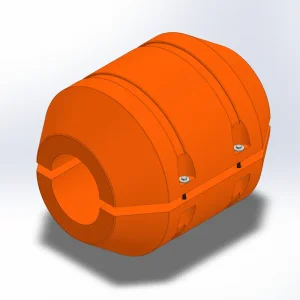
Flexibility to dynamic sea states. Clamp-on rotomolded polyethylene floats absorb mechanical wave impact loads while preserving continuous pipeline elasticity during major channel dredging.
Southeast Asian Port Expansion & Reclamation
High-discharge velocity projects moving silica sand. Standardized flange adapters and interchangeable float bodies allow round-the-clock replacement cycles without halting marine cutters.
Precision Chinese Manufacturing & Global Supply Chain Resilience
Combining world-scale polymer synthesis, automated rotational moulding, and robust logistics infrastructure.
Automated Process Control
Variable-frequency speed control combined with electronic automatic temperature measurement ensures uniform wall-thickness distribution. This eliminates micro-thin spots that cause stress fractures under severe hydrostatic pressure.
Years of Rotational Moulding Know-How
Over two decades of precision manufacturing in Shandong Province guarantees full tooling control. Our in-house mold designs allow rapid scaling for non-standard pipe diameters without prolonged tooling lead-times.
Global Export Corridors
Direct logistical proximity to Qingdao and Tianjin ports ensures seamless container stuffing and bulk-vessel staging. Even high-volume orders ship on tight delivery schedules without customs bottlenecks.
Technology Roadmap: Next-Gen Polymeric Flotation & Conduits
Where advanced material science meets telemetry to protect critical marine infrastructure.
Nano-Composite Abrasion Resistance
Integrating graphene and carbon-nanotube additives into inner pipe liners to elevate standard PE100 abrasion thresholds by 40%, tripling line life in abrasive gold and copper tailings pumping.
- Stage 1: Laboratory wear benchmarking
- Stage 2: Pilot dredging field tests
- Stage 3: Full commercial standardisation
Smart IoT Telemetry Floats
Embedding wireless load cells, GPS geofencing, and internal pressure sensors directly into rotomolded float shells to provide real-time structural health monitoring across offshore pipeline ribbons.
- Stage 1: Satellite & LoRaWAN transceivers
- Stage 2: Continuous stress-strain mapping
- Stage 3: Predictive preventative maintenance
Circular Closed-Loop Flotation Shells
Developing mechanically recyclable high-molecular-weight polymers that allow decommissioned floats and pipes to be reground and repurposed into non-critical marine barrier modules without thermal degradation.
- Stage 1: Closed-loop regrind formulation
- Stage 2: Carbon footprint documentation
- Stage 3: Zero-waste ocean operations
Engineering Compliance, Field Services & Quality Assurance
Factory-direct engineering oversight backed by rigorous inspection and clear global warranty terms.
Comprehensive Sizing Calculations
Never rely on generic catalogues. Our engineers generate tailored buoyancy simulations accounting for localized tidal current velocity, wave swell amplitudes, pipe wall schedule, and conveyed slurry specific gravity.
Third-Party Batch Testing
Full raw material traceability with mill certificates. Products undergo rigorous hydrostatic burst testing, melt flow index (MFI) verification, and drop-weight impact evaluation according to ASTM D2444.
Turnkey Installation Guidance
We provide comprehensive field assembly protocols covering bolt torquing patterns, anti-slip rubber liner placement, flexible joint alignment, and anchor spread layouts to extend hardware operating life.
Transparent Warranty Policy
Warranty coverage initiates when the purchaser transfers completed goods to the facility owner. It continues for 18 months post-handover or 12 months after active commissioning, whichever threshold matures first.
High-Durability Floats, Specialized Lines & Barrier Formats
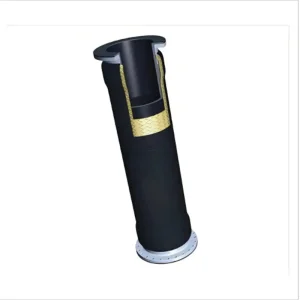
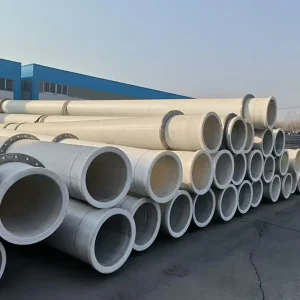
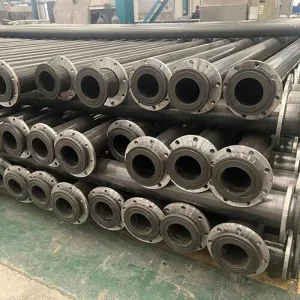
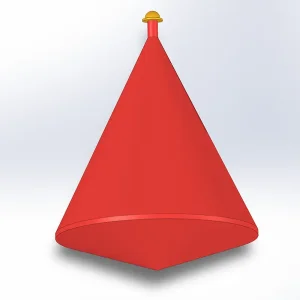
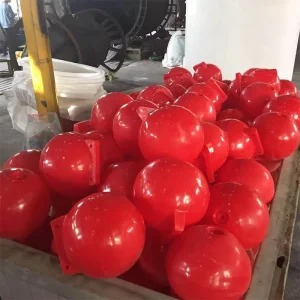
Explore heavy-duty discharge piping, flexible high-pressure slurry hoses, and environmental barrier enclosures.


Frequently Asked Questions Regarding HDPE Pipe Specifications & Flotation
In-depth responses covering pipeline calculations, installation practices, and maritime material performance.
What core parameters define HDPE pipe specifications for dredging and marine discharge?
Primary specifications include Outer Diameter (OD: DN 110mm up to 1200mm), Standard Dimension Ratio (SDR 9 to SDR 26), Material Classification (virgin PE100 or PE80 compound), Nominal Pressure rating (PN 4 to PN 25), Slow Crack Growth resistance (>1,000 hrs per ASTM F1473), and UV additive weight concentration (≥2.0% carbon black dispersion per ISO 6964).
How do you calculate buoyancy reserve margins for dynamic offshore dredging lines?
Total buoyancy must account for three active weights: total pipe empty mass, full wet slurry weight calculated at peak solid density (often 1.3 to 1.6 t/m³), and connected flange/bolt/coupling hardware. Safe oceanic engineering mandates providing a 25% to 30% buoyancy reserve, ensuring 1/4 to 1/3 of the pipe outer diameter remains consistently elevated above the mean water line.
Why is rotomolded polyethylene preferable to welded steel floats in coastal sea waters?
Polyethylene is completely immune to galvanic and biological seawater corrosion, eliminating the need for periodic dry-dock repainting or sacrificial anode replacement. In addition, closed-cell polyurethane foam fill inside the rotomolded PE shell ensures the float retains full positive buoyancy even in the event of an accidental hull puncture from workboats or floating debris.
What technical data must contractors submit to receive an accurate, customized buoyancy schedule?
Project teams should submit: exact pipe outer diameter (OD) and internal wall schedule (or SDR rating); specific gravity of the pumped medium (freshwater, seawater, silt slurry, or abrasive rock tailings); operational wave height and ocean current velocity; total continuous line length; required freeboard clearance; and target port of delivery.
How does automated temperature measurement during rotational moulding impact float life?
Rotational moulding depends heavily on uniform melt temperature cycles. Automated multi-point electronic monitoring prevents localized under-curing (which causes brittleness and poor impact resistance) and avoids polymer overheating (which degrades UV stabilizers and reduces tensile yield strength). The result is uniform wall thickness and reliable mechanical performance across all production batches.
What is the official warranty coverage period for Juhua marine flotation and pipe equipment?
Our comprehensive international manufacturer warranty takes effect on the date the direct purchaser formally transfers the installed assets to the facility investor or operator. Coverage remains valid for 18 calendar months from that handover milestone or 12 calendar months from the initial active fluid-commissioning date, whichever limit is reached first.