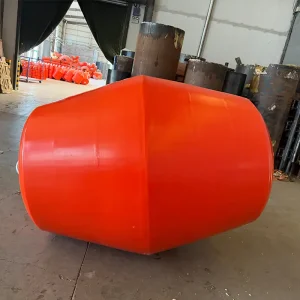
Primary Flotation Matrix
Featured Marine Flotation & Dredging Pipeline Units
Engineered for extreme hydrodynamic loads, unyielding UV endurance, and corrosion-free deployment across major global deepwater channels and civil dredging projects.
Custom Floating Barrier Systems for Effective Water Safety and Pollution Control
Explore Engineering Specs
High-Quality Pipe Floats for Water Transfer, Mining and Marine Pipeline Systems
Explore Engineering Specs
ODM Subsea Tie-In Pipeline Float – Reliable Buoyancy for Underwater Pipelines
Explore Engineering Specs
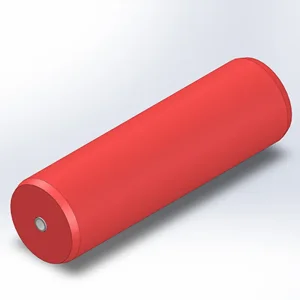
ODM Mooring Buoy for Marina Berths, Vessel Anchorage and Offshore Mooring Systems
Explore Engineering Specs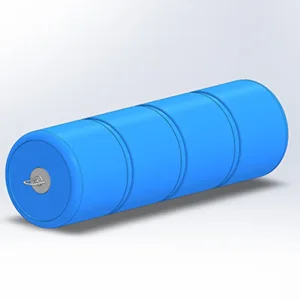
OEM Reliable Floating Barriers for Pollution Control and Water Safety
Explore Engineering Specs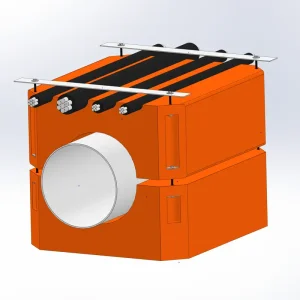
Custom Customizable Floating Pipe Supports with Cable Troughs
Explore Engineering Specs
Custom Pipe Floats for Long-Distance Floating Pipelines and Water Transfer Systems
Explore Engineering Specs
Global Maritime Overview
The Transformation of Ocean Navigation & Offshore Asset Safety
As commercial shipping lanes experience historic traffic densities and mega-dredging infrastructure expands, modern ports require a new paradigm of smart, maintenance-free buoyancy architectures.
From Steel to Polymer Paradigm
Traditional steel buoys and pontoons suffer catastrophic rust, bio-fouling, and heavy mass penalties, requiring costly drydock maintenance. Juhua's rotomolded polyethylene maritime buoys eliminate oxidation completely, providing superior kinetic impact deflection without denting or puncturing hull structures.
Surging Dredging Densities
Harbor deepening, land reclamation, and coastal defense programs demand heavier slurry transport. Modern pipelines handle high-viscosity solids (specific gravity > 1.6 t/m³), necessitating hydrodynamic floats that prevent line buckling, vortex-induced vibrations, and submerged stress failures.
Ecological & Waterway Stewardship
With strict IMO pollution limits and ESG mandates, port authorities and hydropower reservoirs mandate non-toxic containment barriers. Juhua's closed-cell, CFC-free, rotomolded matrices ensure zero hazardous particulate leaching even across decades of intense saline exposure.
Engineering Deep-Dive
Architectural Principles of Modern Polyethylene Flotation
Precision rotational molding coupled with high-density polyurethane core injection delivers unmatched structural resilience, hydrostatic stability, and standardized interchangeability.
Variable Frequency Control
Our proprietary multi-axis rotation molds employ automated variable-frequency drives and digital infrared pyrometry. This guarantees isotropic wall-thickness uniformity without the internal stresses or microscopic porosity common in conventional open-flame molding.
Hydrophobic Core Integration
Internal cavities are reinforced with pressure-injected rigid polyurethane foam (density 35–45 kg/m³) with closed-cell content exceeding 92%. In the rare event of puncture by heavy vessels, water ingress is physically prevented, preserving positive net buoyancy indefinitely.
Standardized Interchangeability
Every float pair is manufactured using CNC-machined master patterns. Shell halves, galvanized fasteners, and anti-slip ribbed inner profiles remain 100% identical across production batches, allowing plug-and-play spares integration into active dredge lines.
Senior Hydrodynamic Engineer's Rule: Pipeline Buoyancy Calculation
A fatal field mistake in dredging installation is calculating pipeline buoyancy against clean water and empty pipes. Working conditions involve slurry gravity fluctuations, internal turbulence, wave action, and accumulated sediment weight. Buoyancy must satisfy the safety reserve ratio:
Total Float Buoyancy ≥ (W_pipe + W_slurry + W_hardware) × Safety Factor (1.20 - 1.30)
This dynamic safety reserve ensures an optimal freeboard where roughly 25% of the outer diameter stays safely above the water level, reducing wave dragging resistance and eliminating seabed rubbing during low-tide operations.
| Performance Metric | Juhua Rotomolded Polyethylene Buoy | Traditional Welded Steel Buoy | Fiberglass / GRP Marine Buoy |
|---|---|---|---|
| Corrosion & Oxidation Resistance | 100% Impervious to saltwater, brine & H2S | Rapid rust; requires cathodic zinc protection | Good, but subject to osmotic blistering |
| Impact Kinetic Absorption | Elastic deformation recovers instantly from collision | Permanent denting, weld cracking, hull rupture | Brittle fracture; hazardous internal delamination |
| Lifespan in Marine Class C5-M | 15 – 25+ Years with UV8 to UV16 stabilizers | 5 – 8 Years between complete sandblast relinings | 8 – 12 Years before severe surface degradation |
| Weight & Handling Logistics | Ultra-lightweight; installed with basic crane gear | Heavy; necessitates high-tonnage crane vessels | Moderate weight; delicate hoisting points |
Macro Application Scenarios
Mission-Critical Deployment Scenarios
From subsea oil & gas pipeline tie-ins to municipal reservoir spillways, our products deliver verified hydrostatic performance across dynamic water engineering environments.
Commercial Ports & Channel Navigation
IALA-compliant lateral marks, cardinal aids, and anchorage mooring buoys designed for constant ship traffic. High-visibility molded colors remain saturated under equatorial sunlight, with integrated brackets for solar lanterns and radar reflectors.
Reclamation & Tailings Transport
High-tonnage dredging pipelines require sustained buoyancy when discharging heavy coarse sand and mine tailings. Equipped with cable trough channels, our floats simultaneously carry high-voltage power conduits for submerged pump suites.
Hydroelectric Reservoirs & Debris Booms
Heavy-duty floating barrier assemblies integrated with galvanized or stainless subsurface trash screens. They prevent floating logs, hyacinths, and industrial plastics from choking turbine water intakes, protecting critical power infrastructure.
Subsea Tie-In & Underwater Pulling
Specialized deep-rated subsea flotation blocks assist marine contractors during pipe-pulling, trench lowering, and spool-piece installations by offsetting subsea weight and maintaining delicate bending radius thresholds.
Public Water Safety & Demarcation
Modular PE float balls and linked safety boom strings define swimming perimeters, warn recreational craft away from spillways, and control industrial effluent outflow boundaries with zero maintenance overhead.
Regulatory & Field Assurance
Compliance Safeguards & Global EPC Readiness
International tenders require uncompromising traceability, certified metallurgical fasteners, and rigorous raw-material test reports. We align our manufacturing directly with major global standards.
IALA E-108 Alignment
Navigational buoys conform to International Association of Marine Aids to Navigation guidelines for color chromaticity, topmark geometries, and focal-plane light stability.
Class-A Virgin LLDPE
All hulls are formulated exclusively from high-grade virgin linear low-density polyethylene with UV8 to UV16 compound masterbatches. No recycled scrap or chalk fillers.
Hot-Dip Galvanized / 316 Hardware
Through-bolts, brackets, locknuts, and padeyes are provided in ISO 1461 hot-dip galvanized steel or AISI 316 marine-grade stainless steel to ensure zero galvanic corrosion.
Port-to-Port Container Optimization
Nested semicircular float configurations maximize volume utilization in 40ft High Cube containers, substantially slashing sea-freight overhead per cubic meter of shipped buoyancy.
Technological Roadmap
The Future of Marine Flotation: IoT, AI & Smart Telemetry
Buoys and pipeline floats are transitioning from passive buoyant markers into connected, real-time sensing nodes within digitized maritime infrastructure.
AIS & Satellite IoT Telemetry
Integrating solar-harvested AIS (Automatic Identification System) Transponders, satellite micro-beacons, and GPS geo-fencing into buoy topmarks to send automated alert triggers if mooring lines part or navigation stations drift outside designated watch circles.
Acoustic & Stress Wave Pipeline Monitoring
Next-generation dredging floats are engineered with internal acoustic sensors and wireless strain gauges. By monitoring vibrational frequencies along the floating line, dredge masters can anticipate slurry blockages, pipe-wall abrasion, and joint decoupling before blowouts occur.
Bio-Circular Resins & Recyclable Polymers
Research initiatives are focusing on closed-loop chemically recyclable polyethylene blends with advanced anti-biofouling non-biocide surface treatments, reducing algae and barnacle colonization without leaching copper ions into delicate marine habitats.
Consultative Answers
Frequently Asked Questions for EPC Contractors & Port Authorities
Clear, technically verified answers to the most common questions raised during marine flotation procurement and pipeline specification.
What are pipeline floats, and why are they vital in dredging operations?
Pipeline floats (also termed dredge buoyancy modules) are precision-molded clamp-on polyethylene bodies designed to encase discharge steel or HDPE pipes. They hold the slurry line reliably afloat, maintain operational freeboard, protect pipelines against subsurface rocks, and ensure clear surface visibility for navigation.
How do engineers accurately calculate the number of floats required for a pipeline?
Buoyancy calculations require calculating the combined mass of the dry pipe, pipeline flanges/bolts, rubber flexible joints, and the conveyed medium at maximum slurry density. Total gross buoyancy provided by the floats should exceed this sum by 20% to 30%, keeping 1/4 of the pipe's outer diameter above the waterline to avoid excessive drag.
Are rotomolded polyethylene floats fully resistant to open seawater?
Yes. High-grade virgin LLDPE with UV stabilizers is totally chemically inert to marine brine, corrosive salts, UV degradation, and chemical runoff. Unlike traditional steel shells, rotomolded PE never rusts, never peels coatings, and eliminates cathodic anode maintenance.
What is the standard warranty and life-expectancy policy?
Our commercial warranty starts on the date the client hands over the flotation equipment to the project investor and extends 18 months from the handover date, or 12 months after field installation, whichever occurs first. The typical structural service life of our polyethylene shells exceeds 15 to 20 years.
What parameters are required for custom buoy and float production?
Please supply: pipe outer diameter (OD), pipe wall thickness and raw material, slurry density (t/m³), environmental parameters (tides, currents, significant wave heights), target freeboard percentage, required pigment/visibility requirements, total project length, and destination port.
Can internal cores and outer shells be customized for unique projects?
Yes. We offer fully custom CNC tool design. Customizations include internal polyurethane foam densities, molded-in cable troughs for electrical power cables, customized reflective bands, mooring chain hawse holes, and IALA-standard topmarks.
Complete Marine Solutions
Specialized Mooring Buoys, Navigation Aids & Slurry Hoses
Complete your marine installation with heavy-duty single-point mooring buoys, impact-resistant navigational markers, and high-abrasion rubber discharge lines.
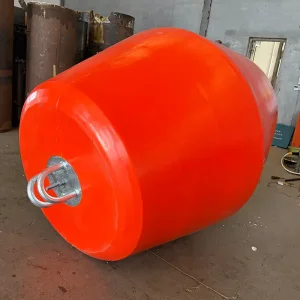
Best Offshore Mooring Buoy for Secure Vessel Anchoring and Marine Floating Systems
Explore Engineering Specs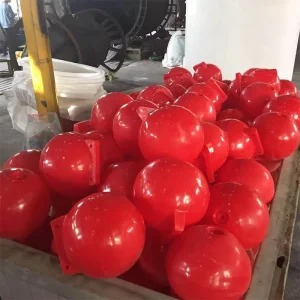
Best PE Float Ball for Safe and Efficient Water Operations Companies
Explore Engineering Specs
Custom Reliable Marine Buoys for Safe Waterway Operations Suppliers
Explore Engineering Specs
OEM Pipe Floats For Reservoir Intake And Temporary Bypass Lines
Explore Engineering Specs
High-Quality High-Visibility Marine Buoys for Safe Offshore Operations
Explore Engineering Specs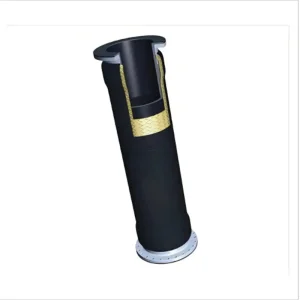
Custom Premium Rubber Hoses for Reliable Water and Slurry Transport
Explore Engineering Specs
Custom Custom Mooring Buoy for Marina Berths and Offshore
Explore Engineering Specs