Standard & Custom Pipe Flotation Catalog (Batch I)
Featuring precision-moulded clamp-on dredge floats, heavy-duty ABS ballast modules, subsea tie-in platforms, and industrial fluid conduction pipelines verified under real ocean wave dynamics.



Engineering Superiority in Marine Slurry & Dredging Pipe Buoyancy
Modern offshore dredging and hydraulic tailings conveyance necessitate strict hydrodynamic calculations, material structural resilience, and absolute resistance to cyclic fatigue and harsh oceanic chemical environments.
Monolithic Rotomoulded Virgin PE
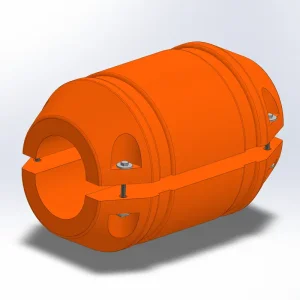
Unlike steel buoyancy pontoons susceptible to corrosive pits or weld fractures, our shells leverage premium UV-stabilized linear low-density polyethylene (LLDPE). Moulded in single-piece architectures without seams, the casing eliminates leakage pathways and offers superior anti-impact ductility against collision with maritime hulls and river shoals.
Impact Energy DissipationClosed-Cell Polyurethane Foam Core
Every float body core is injected under closed hydraulic pressure with high-density polyurethane (PU) foam with 95%+ closed-cell structure. Even in extreme catastrophic puncture scenarios from vessel propellers or rock abrasion, moisture ingestion is localized, guaranteeing the retained buoyant force remains above 98% throughout service life.
Zero-Sink AssuranceVariable-Frequency Thermal Calibration
Shandong Binzhou Juhua Rubber & Plastic Co., Ltd. (Giant Rubber) deploys electronic automatic temperature monitoring systems and dynamic frequency speed calibration during the rotational cycle. This maintains strict uniform thickness throughout all planar zones, external contours, and bolt channel flanges.
Uniform Shell ThicknessThe Marine Engineering Rule of Thumb
A fatal pitfall in pipeline flotation design is sizing units according to an empty pipe. Sizing must be evaluated under maximum hydraulic slurry loading, specific gravity shifts, turbulent wave slapping, and marine fouling bio-accretion.
Our direct engineering support configures reserve margins up to 130% to stabilize freeboard at 25% of pipe outer diameter above the waterline, mitigating line torsion and subsea dredging cavitation.
B_total ≥ (W_pipe + W_medium + W_acc) × (1.20 ~ 1.30)
- Size using highest slurry density (ρ ≥ 1.3–1.8 t/m³)
- Maintain minimum 25% pipe diameter elevation
- Incorporate dynamic load spikes during initial pump priming
- Factor bolt tension stress across tidal current differentials
End-to-End Flotation Architecture Across Heavy Industries
From complex offshore land reclamation works to deep-well slurry transfers, our buoyancy platforms and pipeline structures satisfy the most demanding global specifications.
Deepwater Dredging & Land Reclamation
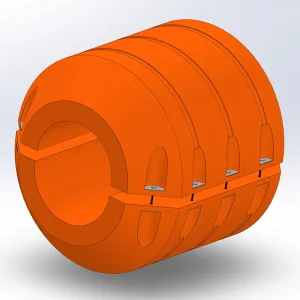
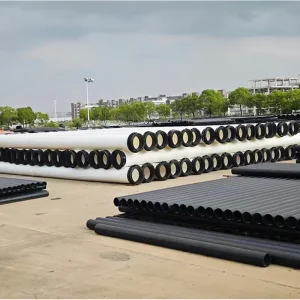
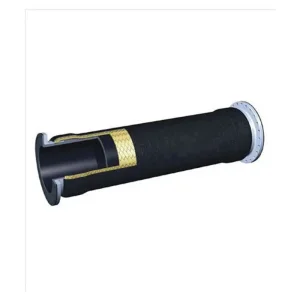
Trailing suction hopper dredgers (TSHD) and cutter suction dredgers (CSD) generate intensive hydrodynamic backpressure. Clamp-on PE dredge floats keep large-diameter steel and HDPE discharge pipes afloat, minimizing submerged hydrodynamic drag and shielding flexible rubber dredge hoses from destructive bending moments during offshore sediment relocation.
High Discharge ThroughputMining Tailings & Slurry Hydraulic Transfer
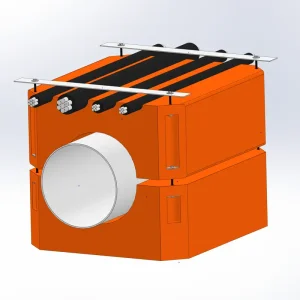
Mineral concentrates and industrial tailings characterized by aggressive particulate abrasiveness and high specific gravities require specialized flotation solutions. Modular pipe floats with integrated cable channels enable concurrent delivery of power cables, sensors, and telemetry systems alongside high-pressure slurry conduits over open tailings storage facilities (TSF).
Heavy Tailings StabilityEcological Barriers & Waterway Security
Hydropower intake gates, municipal reservoirs, and critical river mouths require dependable pollution containment. Our rotomoulded floating barriers and silt curtains stop surface floating garbage, industrial runoff, and aquatic weeds, functioning continuously across wide seasonal temperature fluctuations without brittle mechanical fatigue.
Intake & Reservoir ProtectionOffshore Energy & Subsea Tie-In Deployments
Precise subsea positioning of pipelines during tie-in operations demands variable, phased buoyancy modules. Our heavy-duty subsea installation float systems mitigate pipeline structural stress throughout offshore lowering maneuvers, safeguarding welded connections from irregular sea-bottom contours and dynamic ocean undercurrents.
Controlled Buoyant PlacementMunicipal Water Intakes & Temporary Bypass Lines
During reservoir maintenance, municipal aqueduct refurbishments, or emergency flood diversions, high-performance clamp-on floats allow swift surface deployment of temporary water lines. Lightweight half-shell configurations enable expedited bolt assembly using standard shore crews without heavy floating cranes.
Rapid Field InstallationFloating Working Platforms & Workboat Berths
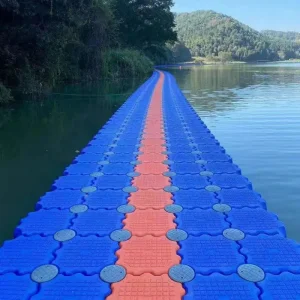
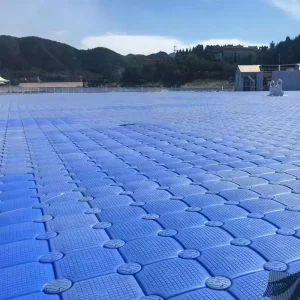
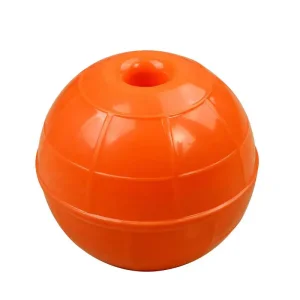
Coupling pipe floats with robust water boat pontoons and heavy mooring buoys generates versatile floating infrastructure. These modular platforms serve as secure work stages for pipeline technicians, booster pump rafts, floating solar panel arrays, and river harbor navigation aid mooring points.
Modular Pontoon IntegrationStandard Engineering Parameters for Dredge & Slurry Pipe Floats
Manufactured with exact inner diameter tolerances to deliver non-slip, concentric clamping onto HDPE, steel, and flanged rubber discharge pipes.
| Pipe Outer Diameter (OD) | Float Outer Diameter (mm) | Total Length (mm) | Wall Thickness (mm) | Gross Buoyancy (kg) | Core Infill Spec | Fastener Configuration |
|---|---|---|---|---|---|---|
| 110 mm – 160 mm | 400 – 500 | 800 – 1000 | 6.0 – 7.5 | 110 – 210 | PU Foam 35–45 kg/m³ | Galvanized / SS316 M12 Bolts |
| 200 mm – 280 mm | 600 – 700 | 1000 – 1200 | 7.0 – 9.0 | 280 – 480 | PU Foam 38–48 kg/m³ | Galvanized / SS316 M14 Bolts |
| 315 mm – 450 mm | 800 – 1100 | 1200 – 1500 | 8.5 – 11.0 | 620 – 1400 | PU Foam 40–50 kg/m³ | High-Tensile M16-M20 Sets |
| 500 mm – 630 mm | 1200 – 1400 | 1500 – 2000 | 10.0 – 13.5 | 1700 – 3200 | PU Foam 42–52 kg/m³ | Heavy-Duty Marine Flange Sets |
| 710 mm – 900 mm | 1500 – 1800 | 2000 – 2200 | 12.0 – 15.0 | 3500 – 5800 | PU Foam 45–55 kg/m³ | Anti-Loosening SS316 Bolt Packs |
| 1000 mm – 1200 mm | 2000 – 2400 | 2200 – 2600 | 14.0 – 18.0 | 6500 – 11500 | PU Foam 48–58 kg/m³ | Custom Engineered Fastener Racks |
- Virgin UV-stabilized food/ocean safe polymer grade raw material
- Internal anti-slip friction grooves to lock float against pipe displacement
- Recessed fastener channels avoiding impact abrasion with support barges
- Standardized factory moulds guaranteeing interchangeable replacement halves
Global Enterprise Procurement Requirements & Compliance
Procurement teams for major EPC projects, international port authorities, and mineral extraction sites demand rigorous supplier reliability, full traceability, and long-term warranties.
Raw Material Traceability & Environmental Safety
Global procurement standards forbid contaminated post-consumer plastic scrap in heavy marine infrastructure due to stress cracking under cyclic ocean tides. Juhua adheres strictly to virgin-grade LLDPE resins certified against marine chemical degradation, ensuring non-leaching performance in sensitive coastal wetlands and municipal potable water catchments.
ISO 9001 & REACH AlignedHandover-Anchored Warranty Coverage
We stand firmly behind our operational excellence with an explicit warranty timeline: our coverage begins on the date the buyer formally hands over the completed pipeline installation to the project investor, extending 18 months post-handover or 12 months from original installation, safeguarding EPC contractor risk exposure.
18-Month Guaranteed ProtectionConsolidated Turnkey Port Dispatch
Avoid coordinating separate contracts for floats, pipes, and joinery. Juhua engineers and dispatches matched system architectures comprising rotomolded PE floats, ultra-wear-resistant HDPE dredge lines, suction rubber discharge hoses, and mooring systems directly packaged for maximum maritime container cube utilization.
Single-Source ProcurementTechnological Evolution & Future Marine Flotation Trends
The convergence of sensor IoT, advanced circular materials, and mega-scale green energy offshore installations is reshaping the future of pipeline buoyancy engineering.
IoT-Integrated Pipeline Health & Buoyancy Telemetry
Future dredging and slurry operations are shifting from visual line surveys to automated condition monitoring. Embedded strain gauges, inclinometers, and wireless LoRaWAN / Satellite transponders integrated inside float cable troughs now provide real-time alerts on ballast leakage, excessive pipe bend stress, and wave drift before joint fractures occur.
Bio-Circular Polyethylene Formulations & Recycled Polymers
Global environmental mandates push toward reducing life-cycle carbon footprints. Ongoing R&D balances post-industrial closed-loop PE recovery with nano-silica reinforcement to achieve high yield tensile strength, delivering sustainable marine pipeline floats that comply with rigorous European carbon tax directives without sacrificing impact resilience.
Hydrodynamic Low-Drag Geometries for High-Velocity Currents
As offshore operations migrate toward high-energy tidal corridors, conventional cylindrical floats cause hydrodynamic vortex shedding, resulting in cross-flow oscillation and anchor fatigue. Next-generation teardrop and elliptic float cross-sections decrease drag coefficients by up to 28%, significantly lowering anchoring line loads.
Synergy with Floating Offshore Wind & Hydrogen Pipelines
Subsea green hydrogen lines and dynamic power export umbilicals require resilient, staged float tethering systems. Engineered modular floats with custom thermal insulation cores are being deployed to prevent temperature-induced slurry flow friction and dynamic subsea line fatigue in offshore green energy sectors.
Pipe Flotation & Marine Infrastructure Q&A
Comprehensive engineering clarifications addressing sizing calculations, chemical survivability, field installation procedures, and supply chain timelines.
Marine Buoys, Floating Barriers & Specialized Systems (Batch II)
Explore our heavy-duty environmental management barriers, ocean navigation buoys, modular boat pontoon water platforms, and high-buoyancy marine floats.