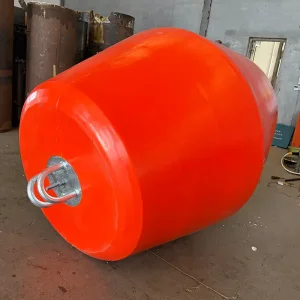
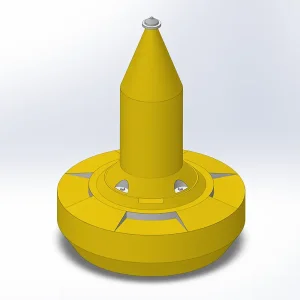
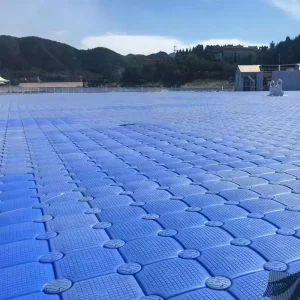
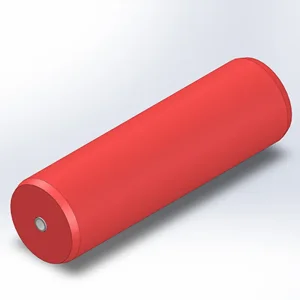
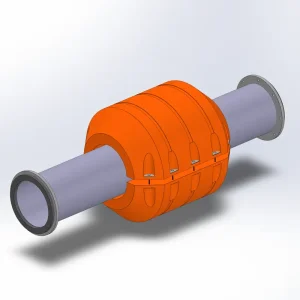
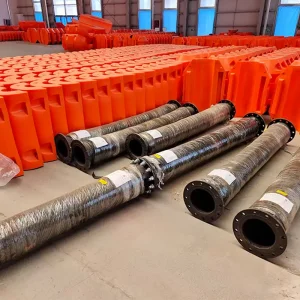
Featured Industrial Pipeline & Modular Floats
Explore heavy-duty rotomolded PE and composite buoyancy systems precision-configured to resist hydraulic surge, extreme UV exposure, and abrasive slurry loads across global operational environments.
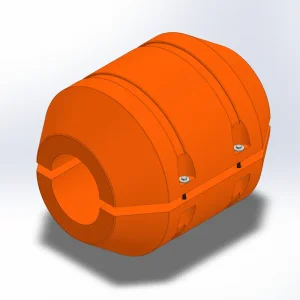
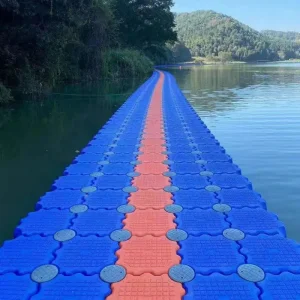
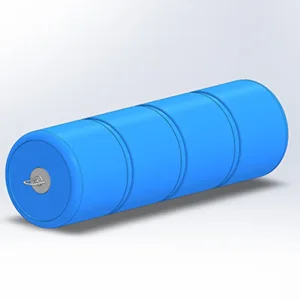

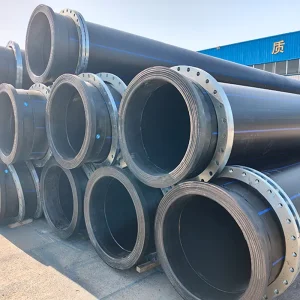
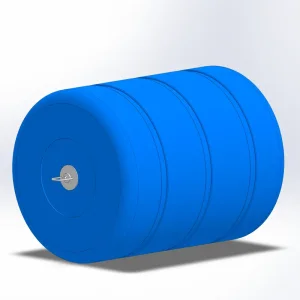
Technological Evolution & Global Industry Drivers
From conventional dock installations to deep-sea hydro-slurry dredging, PVC and rotational polyethylene (PE) buoyancy architectures have undergone a generational shift, responding directly to harsh maritime criteria.
Advanced Polymeric Compounding
Contemporary marine pipe and dock floats rely on modified, UV-stabilized, high-density polyethylene and structural polymer jackets filled with closed-cell polyurethane foam. This replaces traditional steel and brittle PVC shells, guaranteeing complete rust elimination, microplastic minimization, and resilience against aggressive saline and acidic environments.
Hydrodynamic Stability Under Shear
High-velocity tidal currents and cross-winds exert tremendous rotational shear on floating discharge and dock assemblies. Modern dual-half clamp designs utilize engineered anti-slip ribs, specialized bolt recess geometries, and variable center-of-gravity ballast chambers to ensure lines remain stably aligned without dynamic axial slippage.
Closed-Loop Environmental Safety
Stringent global marine regulations, such as MARPOL standards and regional ecological directives, prohibit unjacketed expanded polystyrene (EPS) due to crumb disintegrations. Advanced closed-cell foaming within seamless rotomolded shells delivers 100% moisture barrier protection, ensuring continuous service life without toxic leaching into sensitive aquatic zones.
Global Procurement Criteria & Strategic Risk Mitigation
International EPC contractors, port authorities, and maritime engineers scrutinize buoyancy suppliers on quantitative risk profiles, total cost of ownership (TCO), and fail-safe field redundancy.
Wall Thickness Consistency
Conventional rotomolding suffers from corner thinning and mechanical weak spots. Procurement audits require variable-frequency automated rotational speeds paired with continuous infrared thermography to guarantee uniform outer shell wall thickness (+/-0.5mm), eliminating puncture vulnerability.
Standardized Interchangeability
In operational dredging or marina expansion, replacing split modules cannot involve pipeline disassembly. Shells must feature CNC-machined split-mold tolerances where any unit from batch 'A' seamlessly mates with batch 'B', ensuring minimal downtime during routine rotation maintenance.
Container Nesting & Logistics
Buoyancy products are inherently volumetric, driving freight expenses disproportionately. Sophisticated procurement favors semi-circular nesting architectures and bolt-flat integration that double container volume utilization (FEU efficiency), drastically lowering landed cost per displacement ton.
Traceable Material Certification
Engineering firms enforce strict verification against uncertified regrind plastics. Tier-1 procurement necessitates 100% virgin LLDPE/HDPE documentation, ASTM D1693 Environmental Stress Crack Resistance (ESCR) certificates, and ISO 9001 factory qualification.
Total Required Buoyancy (F_buoyant) ≥ (Weight_dry_pipe + Weight_slurry_medium + Weight_hardware) × Safety Factor [1.25 to 1.30]
*Rule of thumb: Maintain a minimum 25% freeboard pipeline height above calm water line under 100% full-bore solid fluid transit.
China Industry 4.0: Supply Chain Agility & Production Control
Based in the industrial manufacturing hub of Lizhuang, Huimin County, Binzhou, Shandong, Juhua integrates intelligent factory workflows to solve the classic trilemma of high speed, bespoke mold precision, and cost scale.
Automated Electronic Pyrometry
Rotational heating chambers incorporate multi-point electronic infrared pyrometers synced to closed-loop digital controllers. By managing thermal soak ramps to the exact polymer crystallization window, our facility completely prevents thermal degradation or incomplete fusion, yielding optimal impact elongation.
Cluster Tooling & Scalable Capacity
With over 1,000 m² of specialized rotational molding apparatus and an array of standardized internal core tools, Juhua swiftly transitions between pipeline ODs from 110mm up to 1200mm. Tool changeouts require hours rather than days, ensuring rapid fulfillment of mega-meter offshore EPC schedules.
End-to-End System Sourcing
Rather than forcing contractors to coordinate disparate vendors, our ecosystem manufactures matching HDPE pipelines, abrasion-resistant flanged rubber hoses, cable-trough buoyancy jackets, and hot-dip galvanized marine fastening systems under one rigorous ISO quality envelope.
Localized Application Environments & Field Configurations
Different hydrodynamic environments place vastly distinct stress spectra on floating pipeline structures. Discover how our assemblies are optimized for various sectors.
Estuary Dredging & Port Deepening
Harbor fairway dredging involves dense silt transits, variable ship-wake surges, and constant tidal oscillations. Pipe floats with bright orange/yellow safety coloration and integrated radar-reflective bands keep channels clearly visible to commercial maritime vessel navigation.
Mining Tailings & Pond Evacuation
Mining process slurries regularly exceed 1.4 to 1.8 t/m³ specific gravities. Custom high-displacement buoyancy modules prevent slurry sinking, and our integrated cable troughs isolate three-phase pontoon pump electrical feeds securely out of toxic tailings fluids.
Reservoir Desilting & River Diverters
In hydraulic flood control dams and municipal water storage, floating trash barriers and desilting pipeline lines must operate without polluting pristine potable drinking water sources, utilizing certifiably non-toxic, virgin polymer chemistry.
Offshore Aquaculture & Marinas
Supporting marine floating walkways, watercraft docks, and deep-sea aquaculture pen servicing, these modular buoyant structures withstand sustained salt mist, biological fouling attachment, and repetitive dynamic wave fatigue.
Engineering & Procurement Questions Answered
Direct answers to the most critical technical sizing, material suitability, and logistics questions asked by international piping engineers and procurement officers.
What is the structural difference between PVC pipe dock floats and rotomolded PE floats?
While historically referred to colloquially as "PVC floats," modern heavy-duty marine pipe floats are almost universally manufactured from Linear Low-Density or High-Density Polyethylene (LLDPE/HDPE). Pure PVC is inherently rigid and subject to brittle fracturing under dynamic wave impacts and low temperatures. Rotomolded PE offers vastly superior elongation-at-break, high flexural fatigue strength, and complete resilience against environmental stress cracking in marine water.
How do engineers accurately calculate the number and sizing of pipeline floats?
The system calculation begins by establishing total downward operating weight: dry weight of the pipeline (steel or HDPE), weight of flange bolts and couplings, plus the gross displacement weight of the internal slurry medium at peak operating specific gravity (e.g., 1.3 to 1.6 t/m³ for dredging sand). The total required float displacement must provide 120% to 130% of this aggregate weight. This guarantees that 25% of the pipe remains above the water line, preventing sub-surface sagging and fatigue cracking.
Are rotomolded polyethylene floats fully impervious to saltwater and UV aging?
Yes. High-grade rotational molding uses virgin polymer compounded with Carbon Black or high-performance chemical UV stabilizers (UV8 to UV16 rating). The shell is entirely non-polar, preventing chemical attack from saltwater, acidic industrial runoff, or maritime diesel sheens. Unlike steel buoyancy cans, PE shells never require abrasive blasting or toxic anti-fouling coatings.
What is the standard manufacturing and installation warranty period?
Our standard commercial warranty coverage initiates when the buyer formally hands over the goods to the project investor, terminating either 18 months following the handover milestone or 12 months after the completed water installation date, whichever occurs first. Material test reports and batch-specific inspection certificates are provided with all export shipments.
What parameters are required to generate an accurate technical float specification?
To deliver an exact engineering proposal, our technical team requires: exact Pipe Outer Diameter (OD), pipe substrate material and SDR/wall thickness, maximum density and composition of conveyed fluid (water, gravel slurry, or mine tailings), pipeline working length, deployment site conditions (inland lake, estuarine harbor, or open sea), local wind/current forces, and destination port for freight optimization.
Can floats accommodate power cables or auxiliary discharge lines?
Yes. We engineer customized pipe floats equipped with top or side cable troughs. These grooves allow electric power feeds, GPS telemetry wires, and auxiliary air/water hoses to run cleanly alongside the main pipeline without entanglement or separate flotation lines, ensuring safe, organized field management.
Specialized Flotation, Pontoon & Buoy Solutions
Explore our complete range of certified maritime solutions, from offshore mooring buoys to modular boat pontoons and subsea tie-in buoyancy equipment.