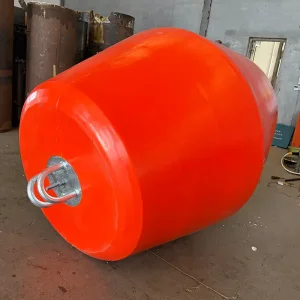
Featured Flotation Systems & Mooring Hardware
Precision-moulded polyethylene solutions engineered for harsh marine, dredge discharge, and nearshore waterways.



Commercial & Industrial Landscape of Marine Navigation Buoys
Navigational aids (AtoN) represent the foundational safety spine of maritime economies, guiding deep-draft container vessels, managing dredging operations, and safeguarding offshore installations.
IALA Regulatory Compliance
Modern waterways mandate compliance with the International Association of Marine Aids to Navigation and Lighthouse Authorities (IALA). Navigational buoys operating in Region A and Region B require stringent chromatic accuracy, calibrated radar reflectors, and daylight visibility metrics to prevent commercial fairway hazards.
Steel vs. PE Evolution
Traditional marine operations previously utilized welded steel buoys, which suffered high maintenance costs, rust degradation, heavy deployment displacement, and paint leaching. Global engineering specifications have decisively pivoted to rotationally moulded UV-stabilised Linear Low-Density Polyethylene (LLDPE) filled with closed-cell polyurethane foam.
Dynamic Ocean Mooring Stresses
Buoys deployed in estuaries, high-tidal bays, and open offshore channels encounter continuous cycloid loading, salt crusting, and extreme wave impact. Reliable navigation buoys feature integrated internal structural steel frameworks with welded ballast counterweights to ensure a low center of gravity and upright telemetry stability.
Why Global Contractors Source from Juhua (Binzhou, Shandong)
Combining high-capacity automated rotational moulding facilities with vertically integrated supply chains to provide unmatched production velocity and cost efficiencies.
Electronic Thermal Control
Our facility employs variable-frequency rotational speeds and electronic automated thermal measurement. This eliminates hot spots, air cavities, and brittle molecular fractures, yielding uniform wall thickness across complex buoy hulls and dredge shells.
30–45% Capex Reduction
By sourcing primary LLDPE polymers locally and executing mould tooling and assembly in-house, Juhua provides international port authorities and marine EPCs with direct manufacturer pricing, bypassing middle-tier trading markups.
Interchangeable Parts
Strict dimensional standardization ensures every replacement float shell, modular pipe ring, and mooring topmark aligns seamlessly with deployed field hardware, drastically reducing downtime during scheduled marine overhauls.
Marine Flotation & Pipeline Sizing Principles
Calculations must never rely on dry pipe or calm water conditions. Engineers must account for the high specific gravity of dredging slurry, tidal currents, and continuous cyclic dynamics.
Localized Deployment Scenarios & Modern Industry Trends
From mega-port capital dredging to smart offshore IoT buoys, our products are tailored to meet complex environmental challenges.
Commercial Ports & Fairways
Essential for demarcation of safe water channels, harbor turning basins, and dangerous wrecks. Paired with high-intensity solar marine lanterns, these AtoN markers safeguard cargo liners navigating tight access corridors.
- High-visibility pigments resistant to solar fading
- Integrated battery and lantern top platforms
Land Reclamation & Dredging
During hydraulic hopper discharge and capital dredging, pipelines transport hundreds of tons of abrasive sand slurry per hour. Our modular pipeline floats provide stable buoyancy that prevents bending fractures along the discharge string.
- Impact-absorbing LLDPE outer skin
- Corrosion-proof galvanized / stainless fastner sets
Offshore Energy & Smart AtoN
The marine sector is experiencing rapid digital transformation. Modern buoys are upgraded with IoT telemetry, including AIS transponders, meteorological sensors, and satellite links to monitor oceanographic conditions in real-time.
- Internal cable pathways and sensor wells
- Modular configurations for subsea tie-ins
Global EPC Marine Equipment Sourcing Guide
International buyers and marine engineers should ensure the following technical parameters are finalized before submitting tender inquiries.
Pipe Outer Diameter (OD)
Ensure precise calibration to the outer wall dimensions of the steel or HDPE pipe, preventing slippage or point-load damage along the hull.
Slurry Density & Flow
Define the exact percentage of dry solids and target specific gravity to allow engineers to size polyurethane density and internal ballast weight.
Solar & AtoN Specs
Specify luminous range (nautical miles), flash codes, autonomous solar operational days, and battery reserve requirements according to IALA recommendations.
Mooring Tension Load
Detail bottom seabed parameters, chain bridle links, sinker block mass, and maximum wave heights to calculate the mooring eye tensile strength.
Frequently Asked Questions for Marine Engineers
Clear answers addressing procurement procedures, material performance standards, and field warranties.
What are pipeline floats?
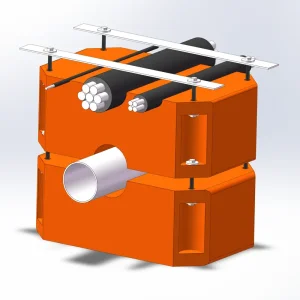
Pipeline floats, also referred to as dredge floats or buoyancy modules, are clamp-on polyethylene bodies fitted tightly around discharge pipes. They maintain dredging pipelines, slurry tubes, and intake conduits afloat, aligned, and visually traceable across ocean, river, and port projects.
How do I calculate how many floats are required?
Total float buoyancy must exceed the aggregate weight of the pipe shell, the internal conveyed medium (slurry or water), and all structural connections. As a standard engineering rule, floats must provide 20% to 30% surplus reserve buoyancy so roughly one-quarter of the pipe diameter sits steadily above water level.
Are polyethylene floats suitable for seawater use?
Yes. High-grade rotational polyethylene is completely resistant to saltwater galvanic corrosion, aggressive bio-fouling, and continuous solar UV degradation. Unlike steel pontoons, polyethylene hulls never rust, require no marine anti-corrosion recoating, and eliminate environmental chemical run-off.
How long is the standard warranty period?
The warranty starts when the buyer hands over the goods to the investor and ends 18 months after that handover date or 12 months after the initial project installation date, whichever comes first.
What information is needed for an accurate quote?
Please provide pipe outer diameter (OD), wall thickness, conveyed medium type and solid density, total pipeline run length, site bathymetry (river, reservoir, port, or offshore), required freeboard margin, topmark colors, quantity, and discharge port name.
Can buoys and flotation shells be customized?
Yes. Floats are customized to match pipe specifications, and custom colors, lettering, solar brackets, and mooring bridle eyes can be manufactured to customer drawings. Our engineering division creates specialized CNC tooling for turnkey rotomolded components.
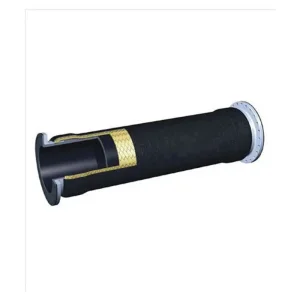
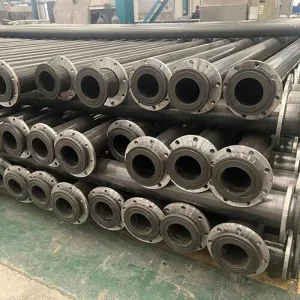
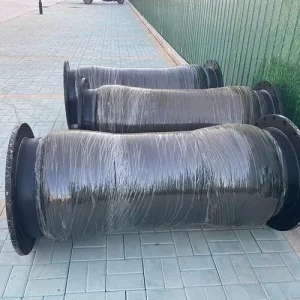
Dredge Infrastructure & Offshore Tie-In Hardware
Heavy-duty rotomolded pontoons, pipelines, and flexible dredging delivery hoses manufactured under certified ISO quality management systems.