
High-Performance Discharge Systems & Buoyancy Units
Explore our heavy-duty marine hardware engineered to integrate seamlessly with dredge pipelines, water transfer systems, and open-ocean discharge arrays.
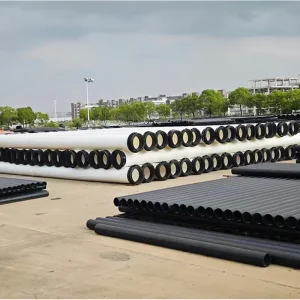

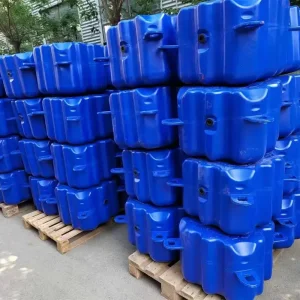

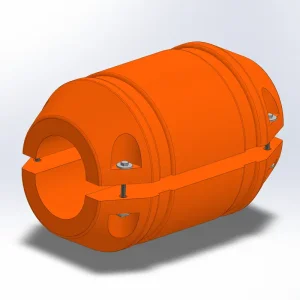

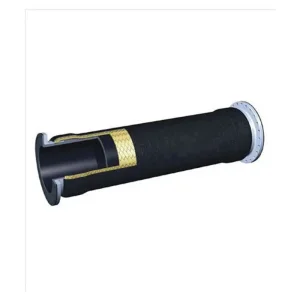
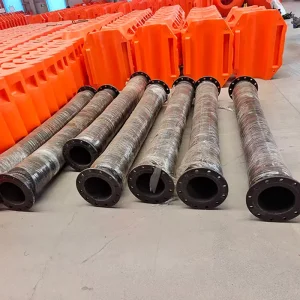
Engineering Superiority: ODM Discharge Rubber Hose Ecosystem
A rigorous examination of elastomer dynamics, fabric reinforcements, and manufacturing infrastructure delivering unmatched hydrodynamic fluid conveyance.
In modern hydraulic engineering, dredging projects, land reclamation, and high-volume tailing disposal operations require fluid conduction interfaces that can survive intense hydraulic shockwaves, sharp particulate erosion, and cyclic mechanical fatigue. An ODM Discharge Rubber Hose serves as the critical flexible link between rigid pipelines and dredging vessels or shore facilities. Unlike standard industrial hoses, these specialized conduits integrate high-tensile multi-ply synthetic cords, synthetic wear-resistant inner tubes, and robust meteorological covers built for aggressive marine climates.
Advanced Polymeric Formulations
Utilizing high-grade natural rubber (NR), styrene-butadiene (SBR), and nitrile (NBR) matrix compounds calibrated for abrasion resilience, tensile elasticity, and chemical inertia against hyper-saline slurries and heavy hydrocarbons.
Integrated Vulcanization Process
Fabricated using state-of-the-art electronic automatic temperature measuring units and variable-frequency mandrel lines ensuring uniform liner thickness, flawless flange consolidation, and zero-delamination risk under negative suction spikes.
Chinese Supply-Chain Optimization
Binzhou, Shandong's world-renowned industrial cluster delivers direct raw-material synthesis, lower tooling lead times, and massive cost efficiency, offering end-users direct-from-source wholesale economics without compromising metallurgical or rubber compliance.
Macro Industry Trends & Comprehensive Operational Frameworks
How the rapid shift toward ultra-deep dredging, green environmental standards, and large-bore slurry transport is redesigning hydraulic infrastructure.
1. Transition to Smart Self-Floating Architectures
While traditional configurations rely on external rotomolded clamp-on polyethylene floats, modern offshore initiatives leverage self-buoyant integrated discharge lines. Nevertheless, modular combinations of rigid HDPE pipes supported by PE clamp floats and flexible rubber joints remain the globally dominant cost-to-performance paradigm.
2. Severe Abrasion Resistance Demands
As offshore reclamation projects encounter harder coral sand, sharp quartz granules, and heavy sediment densities up to 1.6 t/m³, inner synthetic elastomeric liners are fortified with ceramic ring inserts or optimized polybutadiene blends to quadruple operational lifespan.
3. Decarbonization & Longevity Cycle
Global procurement teams prioritize extended MTBF (Mean Time Between Failures). Premature rupture causes catastrophic slurry leaks, massive financial downtime, and environmental fines. Our vulcanized design ensures an operational horizon that comfortably surpasses traditional fabric lines.
Field Deployment Environments & Strategic Deployments
Engineered to conquer localized mechanical stresses, hydrodynamic wave currents, and chemical-heavy mediums across challenging job sites worldwide.
Harbor Deepening & Berth Maintenance
Absorbs the violent motions of trailing suction hopper dredgers (TSHD) in tidal chop. Provides flexibility between vessel discharge connections and rigid floating pipelines while handling dense marine mud.
Land Reclamation & Coastal Expansion
Handles the continuous abrasive assault of high-velocity sand-water slurries over vast distances. Engineered with high bursting ratios to prevent pipeline blowout under sudden shoreline line blockages.
Mining Tailings & Slurry Transport
Facilitates the safe overland and over-water routing of tailings across settling ponds. Resistant to chemical leaching, process reagents, and extreme pH ranges commonly encountered in mineral processing facilities.
Municipal Flood Control & Intake Lines
Deploys rapidly during emergency desilting, water diversion, and seasonal reservoir bypass installations. Lightweight handling compared to steel spools reduces crane hire costs and setup schedules.
ODM Discharge Rubber Hose Dimensional & Pricing Framework
Indicative ODM wholesale pricelist based on standard operating pressures (10 to 20 Bar). Custom flange standards (DIN, ANSI, JIS) and lining thicknesses available upon engineering review.
| Nominal Bore (ID mm / Inch) | Working Pressure (WP) | Burst Pressure (BP) | Inner Liner Thickness | Min. Bending Radius | Indicative Price (USD / Meter) |
|---|---|---|---|---|---|
| DN150 (6") | 1.0 - 1.5 MPa | ≥ 3.0 MPa | 6 - 8 mm | 1,200 mm | $85 - $130 / m |
| DN200 (8") | 1.0 - 1.5 MPa | ≥ 3.0 MPa | 8 - 10 mm | 1,600 mm | $140 - $210 / m |
| DN300 (12") | 1.0 - 2.0 MPa | ≥ 4.0 MPa | 10 - 14 mm | 2,400 mm | $260 - $390 / m |
| DN450 (18") | 1.0 - 2.0 MPa | ≥ 4.0 MPa | 12 - 16 mm | 3,600 mm | $480 - $720 / m |
| DN600 (24") | 1.2 - 2.5 MPa | ≥ 5.0 MPa | 14 - 20 mm | 4,800 mm | $850 - $1,350 / m |
| DN800 (32") | 1.2 - 2.5 MPa | ≥ 5.0 MPa | 16 - 22 mm | 6,400 mm | $1,600 - $2,400 / m |
| DN1000 (40") | 1.5 - 2.5 MPa | ≥ 5.0 MPa | 18 - 25 mm | 8,000 mm | $2,500 - $3,800 / m |
*Note: Pricing fluctuates based on global crude elastomer indices, fabric tensile density, and customized end flange fittings (carbon steel with hot-dip galvanizing, polyurethane coatings, or stainless-steel backing). Contact sales for a project-specific formal quotation.
Global EPC Procurement Criteria & Buoyancy Calculations
How international buyers reduce lifecycle expenditure and mitigate hydraulic risks through disciplined engineering checks.
The Buoyancy Reserve Equation
When engineering floating lines that incorporate heavy discharge hoses and steel couplings, static water displacement calculations are inadequate. Engineers must calculate total combined weight including slurry density ($P_s$), outer hose wall mass ($W_h$), and clamp fittings ($W_f$).
This margin guarantees roughly 25% freeboard exposure above the water line, reducing hydrodynamic dragging force from surface waves and current tides.
Procurement Vetting & Inspection Protocols
Quality management for large-scale maritime supply contracts should never rely strictly on visual checks. Prior to dispatch from the factory floor, international buyers should stipulate:
- Hydrostatic Proof Testing: Sustained hold at 1.5× Working Pressure.
- Elongation & Dilation Checks: Confirming radial expansion remains under 5%.
- Adhesion Strength Tests: Verifying inter-ply adhesion exceeds 6.0 N/mm.
- Hardness Verification: Shore A durometer inspection of inner liner.
Supporting Conduit, Pontoon & Marine Barrier Assemblies
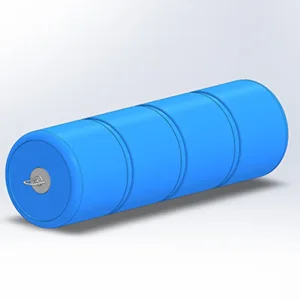
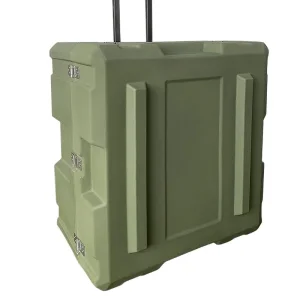
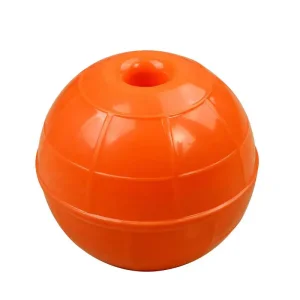
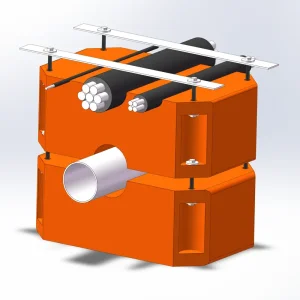
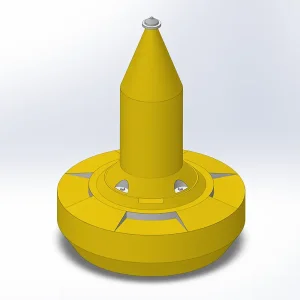
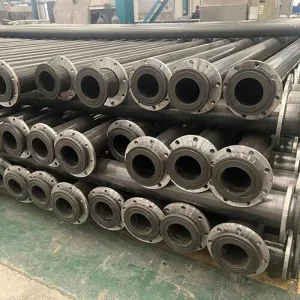
Broaden your installation with matched pipeline components, marine safety booms, deepwater floats, and rotomolded structural elements.
Frequently Asked Questions: Discharge Hoses & Flotation Integration
Clear, direct engineering answers to operational, specification, and maintenance questions faced by dredging directors and procurement officers.
What is the structural difference between a discharge rubber hose and a suction hose?
A discharge rubber hose is engineered specifically to withstand positive internal hydraulic pressure (burst resistance) without collapsing under normal line conditions; it relies on high-tensile fabric layers or multi-strand steel cord plies. In contrast, suction hoses incorporate heavy, continuous helical steel wire skeletons designed to prevent vacuum collapse under high negative pressure at pump inlets.
What are pipeline floats, and how do they interact with discharge hoses?
Pipeline floats—also known as dredge floats or buoyancy modules—are clamp-on rotational-molded polyethylene shells filled with closed-cell polyurethane foam. While rubber hoses provide flexible joint articulation between sections, floats are clamped along the rigid pipeline or directly around heavy hose bodies to keep slurry conduits afloat, straight, and visible above the waterline.
How do you accurately calculate the float requirements for an active dredge line?
Total system buoyancy must always exceed the cumulative deadweight. You must aggregate the tare weight of the pipe/hose, connecting steel flanges, nuts, bolts, and critically, the full internal volume of conveyed medium calculated at target slurry density (typically 1.3 to 1.6 t/m³, rather than pure water at 1.0 t/m³). Floats must provide 20% to 30% reserve buoyancy over this grand total so one-quarter of the pipe remains above the surface.
Why is polyethylene preferred over welded steel pontoons for marine float bodies?
UV-stabilized virgin polyethylene is inert to saltwater corrosion, bio-fouling, and aggressive chemicals. Unlike steel floats, PE never oxidizes, does not require cathodic anode replacement or anti-fouling coatings, and easily absorbs collision shocks from support vessels without cracking or denting.
What is the standard warranty coverage on your marine fluid conduit systems?
The standard warranty period commences on the date the buyer formally delivers the equipment to the project location and extends for 18 months from that handover date, or exactly 12 months after the official pipeline installation and commissioning date—whichever milestone occurs first.
What exact engineering parameters are required for a custom ODM quote?
To deliver an accurate specification and quote, please supply: nominal internal diameter (ID), required working and bursting pressures, media characteristics (particle sizing, pH, slurry density), working bend radius limitations, total pipeline length, flange drilling standards (e.g., ANSI 150#, PN10/16), and intended destination port for containerization optimization.