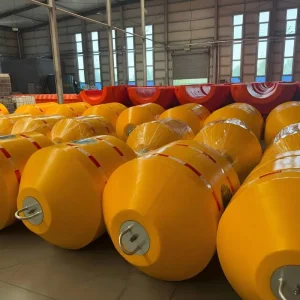
Precision Flotation Modules & Offshore Systems
High-integrity rotomolded polyethylene pipe floats, modular vessel platforms, and slurry conduit solutions engineered to maximize project uptime in demanding marine topographies.
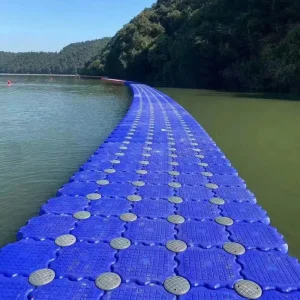
OEM Advanced Floating Boat Pontoon for Custom Water Platforms
Product Specifications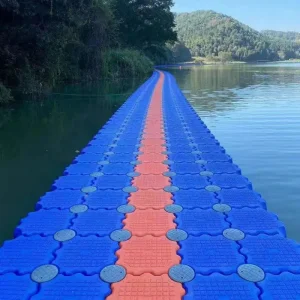
High-Quality Robust Floating Boat Pontoon for Safe and Flexible Water Platforms
Product Specifications
ODM Pipe Floats for Floating Water Pipelines and Marine Support Systems
Product Specifications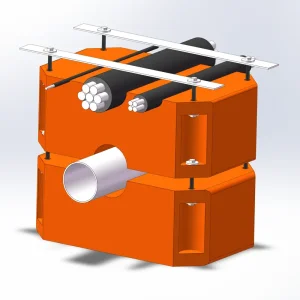
High-Quality Reliable Pipe Floats with Cable Troughs for Marine Operations
Product Specifications
Custom Deepwater Pipeline Support Float – Modular and Reliable Marine Supplier
Product Specifications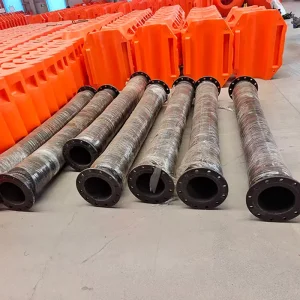
High-Performance Rubber Hoses for Water and Slurry Transport
Product Specifications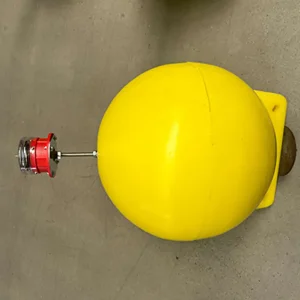
ODM Floating Ball with LED Light – Marine Navigation and Safety
Product Specifications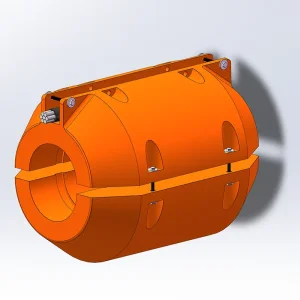
ODM Floating Pipe Floats with Integrated Cable Channels & Cable Protection
Product SpecificationsMacro Trends & Global Hydrodynamic Conveyance Realities
Navigating abrasive mining slurries, coastal storm surge, and mechanical wear through customized high-density polyethylene pipeline architecture and buoyancy integration.
Global Harbor Deepening & Maintenance
Next-generation post-Panamax and Newcastlemax cargo container ships require continuous harbor channel depth dredging between 16 to 22 meters. Marine contractors demand ODM floating HDPE discharge pipe assemblies that endure harsh tidal surges without snapping or fatiguing at welded joints, maintaining unbroken containment over multi-kilometer offshore discharge lines.
Mining Tailings & Heavy Mineral Sand Slurry
Conveying heavy particulate slurries with specific gravities from 1.25 to 1.85 g/cm³ rapidly compromises inferior steel or thin-walled conduits. Engineered PE100 / PE4710 resin formulas combined with hydrodynamic clamp-on polyethylene floats mitigate structural sagging, minimize line cavitation, and drastically lower interior wall gouging during non-stop tailings transport.
Civil Flooding, Bypass & Desalination Effluent
Coastal desalination discharge requires high brine resistance, where salty reject water induces severe galvanic oxidation in metallic conduits. Virgin UV-stabilized rotomolded floats provide indefinite zero-corrosion life, providing environmental defense barriers, floating municipal bypass routing, and safe brine dispersal across fragile marine shorelines.
| Performance Characteristic | Juhua Engineered ODM Floating HDPE Systems | Conventional Welded Steel Discharge Pipes | Non-Reinforced Thin PVC Conduit Lines |
|---|---|---|---|
| Seawater Galvanic Corrosion | 100% Inert (Immune to electrolytic & microbial attack) | Severe rusting; requires frequent recoating/cathodic anodes | Inert, but severely brittle under solar UV degradation |
| Slurry Abrasion Coefficient | 4x higher wear life than mild steel under slurry flow | High wall erosion rate; localized gouging & pinholing | Rapid interior scour wear; prone to shattering |
| Wave Induced Flexural Fatigue | Elastic yield accommodates high-amplitude swell dynamics | Brittle crack propagation at flanged or welded seams | Catastrophic structural rupture under cyclic bending stress |
| Installation & Towing Logistics | Lightweight, buoyant modular units assembled offshore with minimal crane support | Requires heavy crane barges and continuous marine tugboat staging | Lightweight, but cannot survive rough marine towing friction |
| Lifespan in Marine Open Water | 25–50 Years (Standardized UV20+ additive stabilization) | 5–10 Years before costly refurbishment or patch welding | 2–4 Years before photochemical breakdown |
Buoyancy Reserve Calculation & Hydrodynamic Equilibrium
Proper engineering prevents the catastrophic submarine sinking of a loaded dredge line. The buoyancy must be calculated for working conditions under peak slurry density—never an empty pipe.
Where:
• W_pipe = π × (OD_pipe - t_wall) × t_wall × ρ_HDPE × L_section
• W_slurry = π × (OD_pipe - 2 × t_wall)² / 4 × ρ_slurry × L_section
• W_hardware = Net mass of metallic stubs, galvanized fasteners, flanges, & flexible joints
• SF_buoyancy = Buoyancy Safety Reserve Factor (1.20 to 1.35 for open sea currents)
- Freeboard Criterion: When pumping peak solids density (e.g., ρ_slurry = 1.45 kg/L), minimum freeboard requires roughly 25% to 30% of the pipe float outer shell diameter to sit proudly above the active waterline.
- Water Ingress Mitigation: Our rotomolded shells are vacuum-injected with high-density closed-cell polyurethane foam (≥ 35 kg/m³), guaranteeing that even if a collision breaches the virgin polyethylene exterior shell, water absorption remains under 1.5% by volume.
- Hydrodynamic Drag Reduction: Contoured teardrop transition profiles on float module noses cut current resistance drag by up to 28% compared to blunt cylindrical profiles, mitigating lateral anchor drift.
Rotational Molding Wall Consistency
Utilizing high-precision electronic temperature scanning and variable frequency rotational axis drives, Juhua eliminates localized wall thinning at curved radiuses, ensuring every float clamp half exhibits uniform structural strength and puncture resistance.
Interlocking Anti-Slip Grooves
Discharge pipes subject to hydraulic pressure surges experience axial recoil. Our internal bore profiles feature elastomeric traction rings and precision clamping channels, preventing the buoyancy halves from creeping or shearing along the HDPE pipe barrel.
Hot-Dip Galvanized Fastener Sets
Buoyancy halves are secured using grade 8.8 or stainless steel 316 studs, oversized load-distributing washers, and nylon-insert locking double nuts to eliminate dynamic vibration-loosening caused by turbulent pump cavitation.
Localized Applications & Stringent Compliance Assurance
Certified marine infrastructure deployed across high-salinity Persian Gulf ports, sub-zero Scandinavian fjords, and demanding Western Australian mining basins.
Hypersaline Middle Eastern Waters
Location: Arabian Gulf & Red Sea coastal projects.
Condition: Seawater salinity exceeding 45 practical salinity units (PSU), ambient solar radiation above 50°C.
Outcome: Juhua custom UV20-stabilized orange PE floats exhibited zero embrittlement or environmental stress cracking (ESC) after 48 months of continuous service.
Sub-Zero Nordic Arctic Estuaries
Location: Baltic desiltation & industrial waterway clearance.
Condition: Winter operational temperatures dipping to -30°C with surface drift-ice collision risk.
Outcome: High-impact virgin LLDPE polymer matrix retains Charpy impact notch ductility down to -40°C, sustaining crushing ice loads without structural fracture.
Hard-Rock Tailings Transport
Location: Western Australia & Chilean copper mining tailings lagoons.
Condition: Abrasive quartz & silica slurry requiring constant pipeline rotation and re-positioning.
Outcome: Lightweight modular split-collars enable maintenance crews to decouple, rotate the wear-face of HDPE conduits by 90 degrees, and re-torque clamps within hours.
Regulatory Auditing & International Verification Protocols
All Juhua manufacturing runs undergo stringent validation under third-party marine and pipeline testing regimens:
Polyethylene piping systems for water supply, discharge, and pressure transport.
Standard cell classifications for high-density polyethylene pipe dimensions and raw virgin resin properties.
Global marine navigation, chromatic visibility standards, and offshore hazard marking.
Zero toxic leaching guarantee into potable reservoirs, aquaculture zones, and marine sanctuaries.
Engineering Roadmap: The Next Era of Smart Offshore Flotation
Bridging polymer engineering with digital telemetry and decarbonized manufacturing processes for next-generation marine infrastructure.
IoT-Enabled Telemetry & Stress Sensors
Development is underway for rotomolded pipe floats with embedded solar micro-nodes, acoustic thickness probes, and GPS transponders. Project teams receive automated warnings regarding pipeline bending stress, internal line scour, and unexpected mooring drift directly to SCADA consoles.
Bio-Based & Closed-Loop Recycled Resins
Aligning with worldwide ESG mandates, Juhua is pioneering high-impact multi-layer rotomolding. Outer virgin skins ensure weather resistance and chemical inertness, while inner core geometries incorporate high-grade recycled ocean plastics, cutting scope-3 carbon footprints by up to 34%.
Dynamic CFD Low-Drag Contours
Utilizing computational fluid dynamics (CFD) modeling, our next generation float bodies incorporate hydrofoil-inspired exterior surfaces. These contours dissipate vortex shedding caused by heavy ocean cross-currents, reducing towing fuel expenditures during marine re-positioning.
Procurement Framework: Streamlining Sizing & Quotes
Eliminate estimation guesswork. Our direct technical engineering team requires specific pipeline boundary conditions to supply firm pricing and container load plans within 24 hours.
Pipe Geometry
Outer diameter (OD from 110mm to 1200mm), Standard Dimension Ratio (SDR 9 to SDR 26), and pipe wall thickness.
Slurry Density
Specific gravity of fluid, solids ratio, quartz abrasiveness, and flow velocity (m/s) to ascertain dynamic submerged weight.
Metocean Variables
Significant wave height (Hs), ambient current speed, salinity, tidal fluctuation, and seasonal wind load exposure.
Fastener & Ancillaries
Bolt metallurgy (Galvanized Grade 8.8 vs Stainless 316), integrated cable channels for power cables, and luminescent markers.
Request an Authoritative Project Sizing & Pricing Estimate
Connect immediately with Juhua's direct marine design department. We produce CAD drawings, custom buoyancy calculations, and FOB/CIF container optimization models tailored precisely to your project tenders.
Frequently Asked Questions: Engineering & Procurement
Clear, technically rigorous answers addressing operational sizing, polymer mechanics, warranties, and international logistics.
What are the core advantages of PE floats over welded steel pontoons?
Polyethylene floats will never corrode, scale, or suffer electrolytic pitting in marine waters, eliminating annual repainting and sacrificial anode replacements. Furthermore, their closed-cell PU foam core prevents sinking even under hull puncture, unlike steel pontoon compartments which flood upon breach.
How do you accurately calculate the quantity of pipe floats required?
Total buoyancy is calculated using the combined mass of the pipe, maximum slurry density (e.g., 1.3–1.6 kg/L), joint hardware, and dynamic wave loading, factored by a 1.25x to 1.30x buoyancy safety reserve. This ensures the pipeline maintains approximately 25% of its diameter above the waterline for continuous visual monitoring.
Can Juhua provide custom molded bores for unusual pipe diameters?
Yes. As an authentic ODM/OEM manufacturer with internal tooling capabilities, we configure custom CNC steel molds to match unique outside pipe diameters, imperial dimensions, spiral-welded steel pipe coatings, or integrated cable/hydraulic control line runs.
What is the standard warranty coverage on marine pipe float orders?
Standard industrial warranty commences upon handover of cargo to the site operator and covers 18 months from delivery or 12 months from first operational installation, whichever comes first, backed by complete raw material batch traceability.
How do clamp-on floats endure severe UV exposure in tropical locations?
We compound virgin LLDPE / HDPE resins with specialized high-molecular-weight Hindered Amine Light Stabilizers (HALS) and UV20 carbon/rutile titanium dioxide pigment masterbatches, preventing brittle polymer degradation for 20+ years under high solar radiation.
Can high-power electric pump cables run directly along the floating line?
Yes. We manufacture customized pipe floats engineered with specialized top-mounted or side-recessed cable troughs. These channels isolate electric cables and signal wiring from abrasion against the pipe shell, wave slap, and floating marine flotsam.
What prevents pipe floats from sliding axially on smooth HDPE pipe?
Our floats feature precision internal gripping channels and optional internal elastomeric friction sleeves that mate directly around the HDPE outer diameter. Combined with correctly torqued fasteners, axial slippage is effectively eliminated during tidal surge cycles.
How are float modules packed to optimize sea freight container costs?
Individual float halves are nested efficiently within 40ft High Cube containers. Unassembled halves nest inside each other to optimize shipping cube utilization, substantially reducing shipping freight costs per unit.
Specialized Pipeline, Barrier & Mooring Modules
Heavy-duty marine navigational buoys, durable high-pressure rubber discharge hoses, and mooring anchoring units engineered to complete your marine equipment fleet.
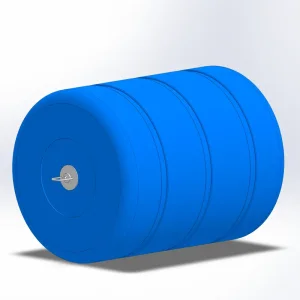
Best Reliable Floating Barrier Solutions for Water Protection and Project Control
Product Specifications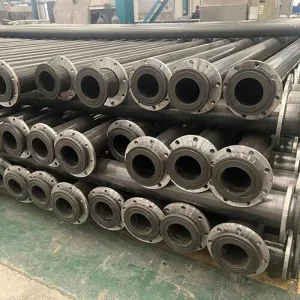
High-Quality Robust Pipeline for Reliable Fluid and Material Transport
Product Specifications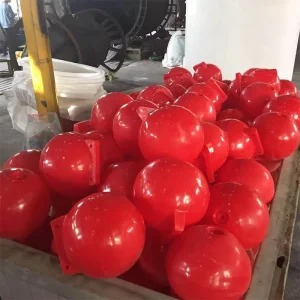
Best PE Float Ball for Safe and Efficient Water Operations
Product Specifications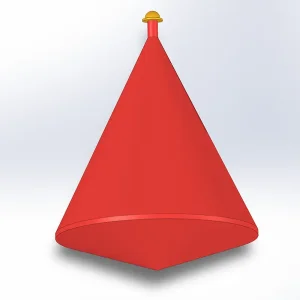
High-Quality High-Visibility Marine Buoys for Safe Offshore Operations
Product Specifications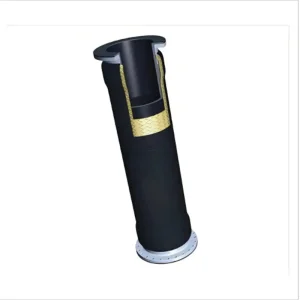
Custom Premium Rubber Hoses for Reliable Water and Slurry Transport
Product Specifications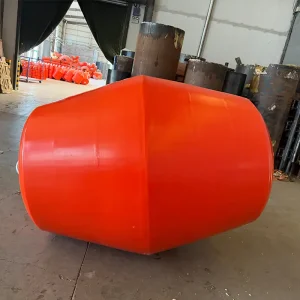
High-Quality Mooring Buoy with Reinforced Connections for Marine Projects
Product Specifications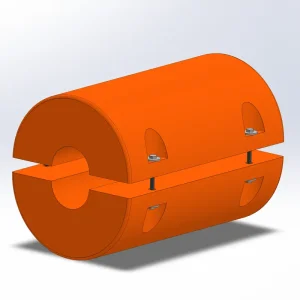
Best Pipe Floats for Floating Pipeline Support and Water Transfer Projects
Product Specifications