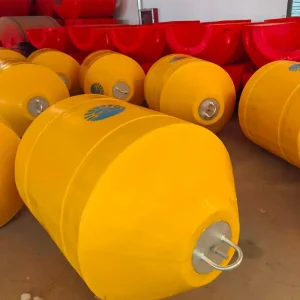
Featured Heavy-Duty Piping & Flotation Units
High-density polyethylene dredging pipe floats, subsea buoyancy modules, and reinforced transport systems engineered to withstand intense offshore hydrodynamics and corrosive industrial slimes.

Global Landscape & Industrial Realities of HDPE Pipeline Vendors
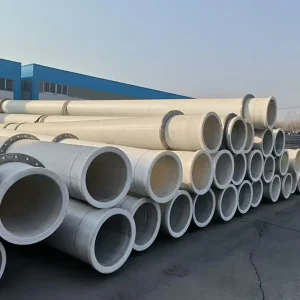
High-Density Polyethylene (HDPE) systems paired with rotational-molded flotation units have become the undisputed standard across the worldwide dredging, municipal marine discharge, and offshore mining sectors. As traditional carbon steel and unlined ductile iron piping succumb to electrolytic corrosion, excessive friction losses, and mechanical fatigue, the modern procurement landscape mandates PE100 and PE100-RC virgin thermoplastic solutions.
Supply Chain Decentralization
Global supply chains are transitioning from raw product brokering to certified Original Design Manufacturing (ODM). Tier-1 civil contractors prioritize manufacturers with direct extrusion and rotomolding capabilities to circumvent high freight surcharges through nested assembly layouts.
Total Cost of Ownership (TCO)
Lifecycle assessments show HDPE dredge strings reduce fuel draw on booster pumps by up to 22% due to lower surface roughness (Hazen-Williams C factor of 150–155), yielding superior amortized project economics compared to coated steel alternatives.
Stringent Offshore Compliance
International safety standards across maritime projects mandate non-destructive testing (NDT), automated ultrasonic wall-thickness tracking, and zero-corrosion structural certifications for offshore land reclamation and high-density tailings discard.
Technical Roadmap: Advanced Rotomolding & Buoyancy Calculations
Operating a robust marine discharge line demands uncompromising fluid dynamics calculations and manufacturing precision. Empty-line calibration creates catastrophic failure vectors when slurry surges hit. Our technical roadmap integrates real-time slurry density variables with rotational mold thermal monitoring.
Required Net Buoyancy (Bnet) ≥ (Wpipe + Wmedium + Waccessories) × Safety Factor (1.20 - 1.30)
* Crucial target: Maintain 25% of the overall HDPE pipe diameter visible above waterline (freeboard margin) to manage wave pounding and transient density spikes.
Frequency-Controlled Rotomolding
Our plant incorporates automated speed variation and multi-probe infrared shell temperature sensors to ensure seamless polyethylene float walls with uniform structural density free from internal voids.
- UV8-stabilized virgin LLDPE polymers
- Polyurethane foam filling core (32-35 kg/m³)
Subsea Tie-In Dynamics
Positioning marine lines at varying water depths requires variable positive buoyancy. Modular subsea tie-in modules guarantee stage-managed submersion or positive retention during pipeline installation.
- Bolt-on structural anti-slip clamps
- Corrosion-proof 304/316 stainless hardware
Integrated Cable Troughs
Modern cutter suction dredgers require power, fiber-optic data transfer, and hydraulic lines routed alongside discharge strings. Integrated cable troughs eliminate chaotic external lashed lines.
- Molded recesses for high-voltage cables
- Streamlined hydro-drag profile
Localized Field Scenarios & Macro Industrial Solutions
Operating parameters diverge wildly across different geographic conditions. Whether working in high-salinity oceanic ports or hypersaline mine tailings dams, tailor-made solutions prevent pipeline ruptures and critical operational downtime.
Port Expansion & Harbors
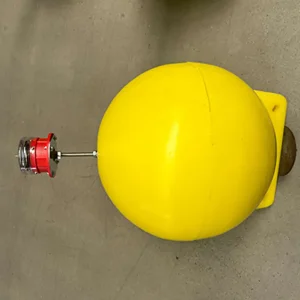
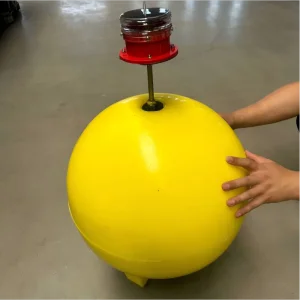
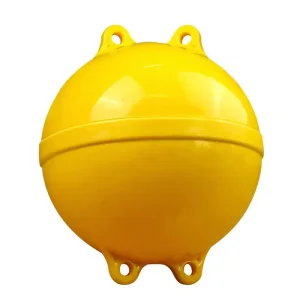
Discharge lines in navigational channels face continuous tidal wash and commercial vessel proximity. High-visibility orange and yellow rotomolded shells equipped with autonomous LED warning markers keep pipelines floating reliably without obstructing channel safety.
Tailings & Mineral Slurry Transport
Mining operations handle highly abrasive ores at specific gravities well beyond 1.4 t/m³. Specialized thick-wall HDPE pipes coupled with high-buoyancy oversized floats withstand internal particle erosion and chemical tailings without degradation.
Reservoir Desilting & Flood Control
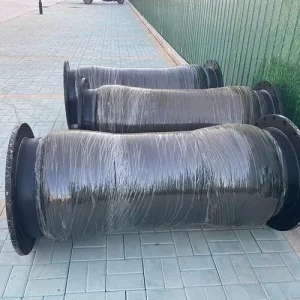
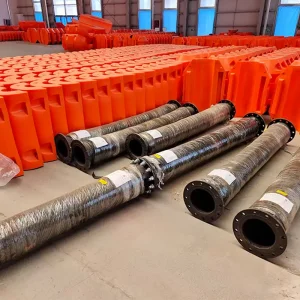
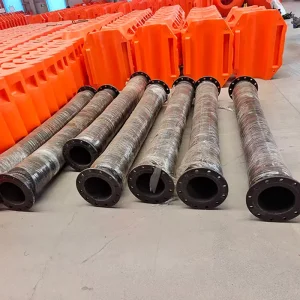
Freshwater intake dams require continuous bypass pumping during maintenance dredging. Segmented floats clamped over flexible rubber hoses absorb localized currents, flex with water levels, and protect sensitive dam structures.
Engineering & Procurement Frequently Asked Questions (FAQ)
Detailed technical responses satisfying structural queries, warranty verification, and international sourcing criteria for municipal and offshore buyers.
What are pipeline floats and how do they function?
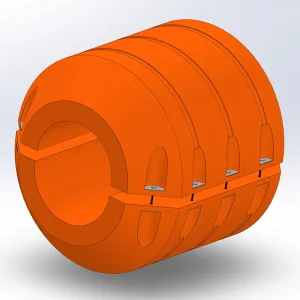
Pipeline floats (dredge floats or buoyancy modules) are rotationally molded clamp-on polyethylene structures designed to hold dredging lines, steel discharge pipes, and rubber hoses afloat. They ensure continuous visible orientation, prevent line buckling, and decrease hydrodynamic drag on pumping engines.
How do engineers calculate the precise number of floats needed?
Calculations require compiling: weight of pipe section + fluid/slurry weight at max density + accessory weight (bolts, flanges, rubber hoses). The total float buoyancy must provide a safety margin of at least 20% to 30% above this cumulative weight, ensuring approximately 25% of the pipe diameter floats clearly above the waterline.
Why choose polyethylene (PE) floats over traditional welded steel pontoons?
Polyethylene never rusts, exhibits high elasticity upon impact from service vessels, is fully UV-stabilized, and requires no anti-corrosion repainting. Steel floats suffer internal water intrusion over time through corrosion, creating dangerous unbalance along the dredge line.
What are the standard warranty coverage terms for international tenders?
Warranty commences when the buyer delivers the equipment to the project developer or client site, concluding 18 months post-delivery or 12 months after active waterborne installation, whichever milestone occurs first.
Can floats and moorings be customized to non-standard pipe diameters?
Yes. As an ODM supplier, mold tooling can be adapted to exact pipe outside diameters (OD), ranging from 110mm up to 1200mm+, complete with embedded cable pathways, internal ribs for rubber hose protection, and localized solar LED bracket configurations.
Specialized Buoyancy, Moorings & Floating Barrier Systems
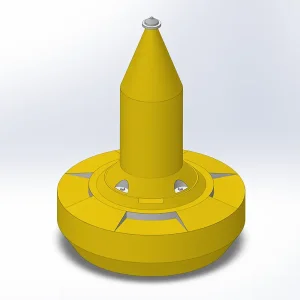
Explore custom navigation buoys, modular debris barriers, mooring stations, and durable polyethylene pontoons configured for international EPC engineering standards.