Featured ODM Mooring & Flotation Solutions
Direct-from-factory rotationally molded marine marker systems, dredging pontoons, and deep-buoyancy modules manufactured with strict wall thickness control.
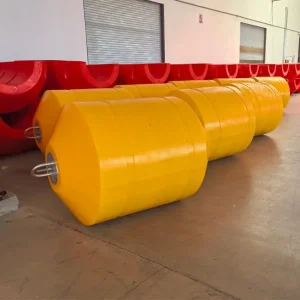
ODM Polyethylene Mooring Buoy for Harbors and Floating Facilities Manufacturers, Pricelist
View Product Specs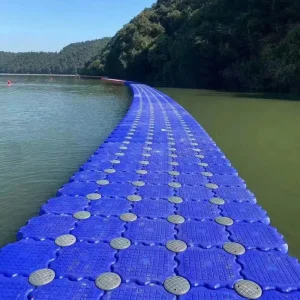
OEM Advanced Floating Boat Pontoon for Custom Water Platforms Supplier, Factory
View Product Specs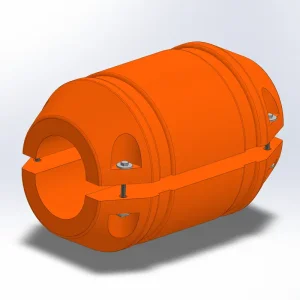
Custom Pipe Floats for Floating Pipeline Stability in Water Transfer and Industrial Projects Companies, Factory
View Product Specs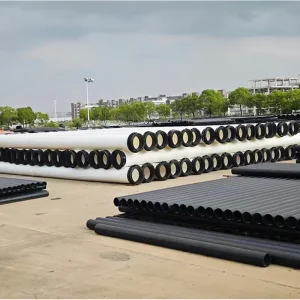
OEM Industrial-Grade Pipeline for Reliable Fluid Transport Companies, Factory
View Product Specs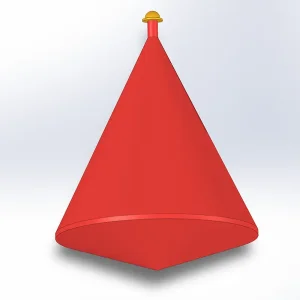
Best Precision Marine Buoys for Safe and Efficient Navigation Manufacturer, Factories
View Product Specs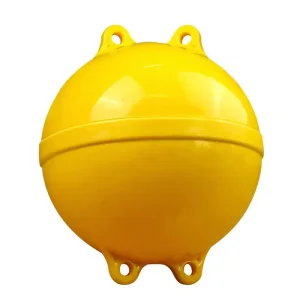
ODM ABS Float Ball for Reliable Marine and Freshwater Buoyancy Manufacturers, Factories
View Product Specs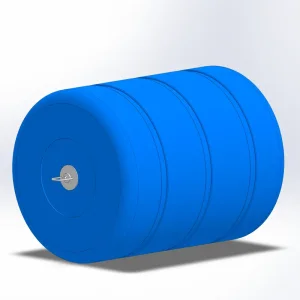
ODM Floating Barriers for Water Protection and Environmental Management Supplier, Factories
View Product Specs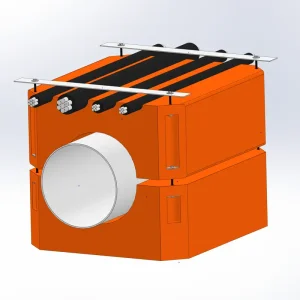
Custom Customizable Floating Pipe Supports with Cable Troughs Company, Pricelist
View Product SpecsThe Engineering Paradigm: Transitioning from Steel to Virgin LLDPE Mooring Markers
Evaluating galvanic corrosion vectors, mechanical impact dissipation, and life-cycle asset management in severe marine environments.
In high-salinity offshore zones, commercial port terminals, and abrasive dredging corridors, maritime assets are continuously subjected to extreme hydrodynamic stress, chemical oxidation, and cyclic thermal shock. Historically, civil port engineers relied on painted or galvanized mild-steel mooring buoys and navigational channel markers. However, empirical lifecycle assessment (LCA) data across major global shipping hubs reveals that steel marker assemblies exhibit an alarming total cost of ownership (TCO) trajectory. Steel buoys suffer from inevitable paint degradation, bio-fouling incrustation, and aggressive galvanic micro-cracking within 36 to 48 months of submerged deployment. This necessitates costly dry-dock extraction, toxic sandblasting, and recurrent lead-free re-coating cycles.
The modern marine civil engineering standard has systematically shifted toward original design manufacturing (ODM) virgin rotational-molded linear low-density polyethylene (LLDPE) and high-density polyethylene (HDPE) marker bodies. Shandong Binzhou Juhua Rubber & Plastic Co., Ltd. (known globally as Juhua / Giant Rubber) pioneers this technological transition by leveraging automated rotational molding cells with electronic multizone infrared temperature sensors. This yields completely seamless, stress-relieved outer shells with continuous wall thicknesses from 9mm to over 22mm. Unlike fabricated steel, advanced cross-linked polyethylene compounds possess an innate chemical inertness to sodium chloride, diesel slicks, and harsh industrial tailings, while providing high elastic ductility that absorbs berthing ship kinetic impact without permanent plastic shell deformation.
Corrosion Kinetics & Zero Rust
Polyethylene polymers eliminate electrochemical electron transfer between the seawater electrolyte and buoy body. The hull remains impervious to pitting, rust scale, and intergranular cracking, slashing routine inspection intervals from 6 months to 36 months.
Dynamic Elastic Impact Recovery
Utilizing polymer resins with elongation at yield exceeding 450% (tested under ASTM D638), our rotomolded shells deflect vessel collisions and wave-battered rocks without cracking. The hull elastically rebounds, guarding internal structures from structural failure.
UV26 Photostabilization Chemistry
Every ton of virgin polymer is compounded with hindered amine light stabilizers (HALS) rated at UV26. This molecular shield protects polymer backbone chains from photochemical solar degradation, even under high-UV equatorial exposures exceeding 180 kLy/year.
Strategic Sourcing: Why Global EPC Contractors Choose China ODM Mooring Marker Factories
Inside Shandong Binzhou's advanced rotomolding cluster: tooling speed, raw material vertical integration, and heavy load testing rigs.
In offshore dredging and port infrastructure procurement, international buyers frequently struggle with long mold-fabrication lead times, constrained mold chamber sizes, and uneven quality from decentralized fabrication shops. The Shandong Binzhou manufacturing ecosystem—anchored by Shandong Binzhou Juhua Rubber & Plastic Co., Ltd.—has overcome these historical bottlenecks by vertically integrating polymer compounding, CNC aluminum and cast iron mold tooling, automated rotomolding, and specialized internal polyurethane foam injection.
Chinese modern rotomolding plants maintain specialized multi-arm rock-and-roll and carousel furnaces capable of forming single-piece seamless hulls up to 4.5 meters in spherical diameter. By controlling resin pulverization down to precise mesh tolerances (35 mesh standard), the melt flow index (MFI) remains remarkably uniform at 4.0 to 5.0 g/10 min. This guarantees void-free walls, eliminates pinhole micro-cavitations, and maximizes structural integrity against heavy mechanical mooring loads.
Rapid Tooling Agility
Rapid CNC mold tooling produces custom geometries—such as recessed solar lantern brackets, mooring cable troughs, and ballast wells—in just 10 to 14 working days.
Deep Supply Chain Integration
Located beside major petrochemical corridors and steel casting hubs, factories secure prime polymer resin and certified Q235B/316 stainless mooring hardware at predictable factory-direct costs.
Hydrostatic Testing QA
Every batch undergoes rigorous pressure testing, spectrophotometer color matching (complying with IALA chromaticity boundaries), and tensile destructive pull checks up to 600 kN.
Global Container Packing
Modular designs allow demountable daymarks, nestable pipe float shells, and optimized ballast skirts that reduce ocean freight volume, fitting up to 35% more units into 40ft HQ containers.
Macro Solutions: Strategic Deployment Across Marine & Industrial Environments
From heavy slurry discharge lines to multi-berth commercial navigation channels, Juhua mooring markers deliver customized buoyancy and structural reliability.
1. Commercial Harbors & Port Anchorage
In busy multi-berth terminals, ODM mooring marker buoys secure tugboats, pilot vessels, and auxiliary barges. Built with internal hot-dip galvanized steel tie-rods (Grade 8.8 tensile strength) extending directly between upper and lower lifting eyes, mooring tension bypasses the outer plastic shell. This eliminates tensile shear strain on the rotomolded polyethylene hull while supporting high safe working loads (SWL) up to 45 tons.
2. Capital Dredging & Sand Reclamation
During hydraulic cutter suction dredging and coastal reclamation projects, floating discharge pipelines encounter high wave shear and thick sediment slurries (density up to 1.65 t/m³). High-visibility marker buoys and half-shell pipeline floats hold HDPE or steel lines in place, preventing pipe buckling, catenary snagging, and catastrophic submerged pipe drops that can halt dredging operations.
3. Offshore Wind & Subsea Power Cable Corridors
Dynamic inter-array cables and subsea export conduits require designated exclusion zones. Modular marker buoys with self-contained autonomous solar LED lanterns, radar reflectors, and topmarks demarcate marine protected areas and wind-turbine foundations, alerting cargo vessels and fishing trawlers to avert costly anchor drags.
4. Mining Tailings Ponds & Toxic Water Containment
Acidic or highly alkaline industrial process waters destroy metallic buoys within months. Chemically resistant LLDPE marker floats and interlocking floating barriers enclose slurry pump pontoons, prevent unauthorized boat entry, and absorb continuous mechanical sloshing without environmental chemical leakage.
5. Inland Waterways, Locks & Hydroelectric Dams
Reservoir intakes and spillways demand rapid-deployment debris booms and security perimeter buoys. Juhua's interconnected float arrays feature high reserve buoyancy to withstand seasonal flash floods, tree log collisions, and massive floating trash accumulations, protecting intake turbine gates from catastrophic mechanical jams.
6. Aquaculture & Offshore Mariculture Demarcation
Deep-sea fish cages and offshore mussel lines require highly buoyant, biofouling-resistant surface markers. Non-toxic, food-contact grade polyethylene prevents water contamination while providing stable moorings for dynamic cage feed supply ships.
Engineering Verification: Material Comparison & Hydrodynamic Design Criteria
Objective comparative benchmarks evaluating modern rotomolded polymer buoys against traditional steel and fiberglass assemblies.
| Evaluation Parameter | Rotomolded LLDPE Buoys (Juhua ODM) | Traditional Welded Steel Buoys | Glass-Reinforced Plastic (GRP) |
|---|---|---|---|
| Corrosion & Rust Resistance | 100% Non-corrosive, impervious to saltwater, diesel & acids | Severe rusting; requires sacrificial zinc anodes & repaint | Corrosion-resistant; prone to osmotic blistering |
| Impact Mechanics & Ductility | High elastic recovery; absorbs kinetic impact without permanent denting | Prone to deep denting, weld seam fractures, and paint rupture | Brittle failure modes; easily cracks on vessel berthing impact |
| Buoy Body Tare Weight | Low tare weight (approx. 1/3 of steel), simplified small crane deployment | Heavy tare weight, demands heavy offshore crane vessels | Moderate weight; requires delicate sling handling |
| Internal Core Structural Security | Filled with 100% closed-cell EPS / rigid PU foam (38-45 kg/m³) | Often hollow; pinhole leaks cause silent sinking | Hollow or partial foam; foam core water absorption risk |
| Maintenance Cycle & TCO | Zero hull maintenance over 15+ years; routine marine growth wash | Requires bi-annual sandblasting, repainting, and hull plate tests | Requires structural patch repairs and gelcoat resealing |
| Color Fastness & Pigmentation | Compounded in-depth UV pigment; no peeling or flaking throughout life | Surface paint scratches expose bare steel to prompt flash rusting | Gelcoat surface fading under extreme equatorial solar exposure |
In accordance with PIANC and IALA mooring engineering recommendations, buoy net reserve buoyancy must provide adequate freeboard under full static and dynamic current loads. Calculating the gross float displacement strictly accounts for line catenary weight, submerged anchor tension, and slurry payload:
- Vhull: Total displaced exterior hull volume (m³).
- ρseawater: Seawater density (standard: 1.025 t/m³; for freshwater lakes: 1.000 t/m³).
- Tcatenary × sin θ: Vertical downward mooring chain drag vector under maximum storm current and tidal amplitude.
- Reserve Margin (1.30): Essential 30% reserve buoyancy ensures the marker remains visible, preventing wash-over in rough swell conditions.
The Future of Marine Markers: IoT Integration, Telemetry & Sustainable Polymers
Exploring the intersection of physical rotational molding and smart maritime digitalization for next-generation waterway tracking.
AIS AtoN & LoRaWAN Telemetry
Modern mooring and navigation buoys are transforming into connected navigational nodes. Integrating Type 1 or Type 3 AIS (Aids to Navigation) transmitters enables buoys to broadcast GPS coordinates, battery health, and collision alerts directly to ship radar and coastal ECDIS platforms.
Predictive Moor Tension Sensing
Smart mooring markers feature internal strain gauges within the pass-through tie-rod assembly. Real-time load cell data warns port masters via 4G/NB-IoT whenever ship surge or tidal storm squalls exceed safe working tension, pre-empting anchor snap failures.
Circular Economy Resins
Addressing global ESG mandates, rotomolding research is engineering recyclable metallocene LLDPE blends with closed-loop reprocessing protocols. This eliminates hazardous industrial disposal fees and slashes end-of-life environmental footprints for marine infrastructure assets.
Specialized Deepwater Floats, Pontoon Floaters & Fluid Conduits
Engineered for offshore tie-ins, heavy pipeline flotation, intake reservoir bypasses, and multi-buoy mooring installations.
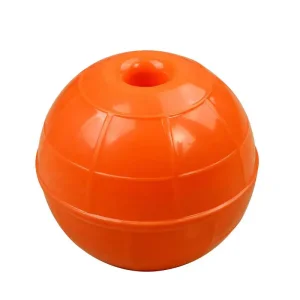
ODM Heavy-Duty ABS Float Ball for Water Engineering Projects Suppliers, Quotes
View Product Specs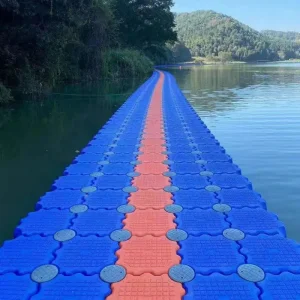
High-Quality Versatile Floating Boat Pontoon for Water Projects Products, Company
View Product Specs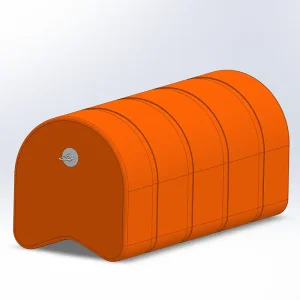
ODM Subsea Tie-In Pipeline Float – Reliable Buoyancy for Underwater Pipelines Products, Pricelist
View Product Specs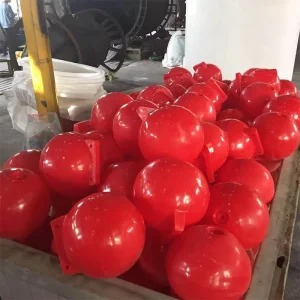
Best PE Float Ball for Safe and Efficient Water Operations Companies, Pricelist
View Product Specs
Best Modular Subsea Pipeline Float – Reliable Deepwater Support Manufacturer, Factories
View Product Specs
Custom Deepwater Pipeline Support Float – Modular and Reliable Supplier, Manufacturers
View Product Specs
ODM Heavy-Duty Pipeline for Versatile Water and Fluid Transport Product, Quotes
View Product Specs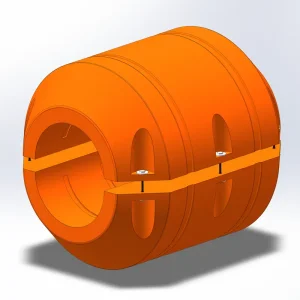
OEM Pipe Floats For Reservoir Intake And Temporary Bypass Lines Quotes, Pricelist
View Product SpecsThe International EPC Procurement Blueprint: Data Parameters for Flotation RFQs
Save weeks of technical inquiry cycles by standardizing your operational and environmental tender requirements.
When purchasing engineers submit vague tender requests such as "need 50 marine buoys" or "require pipe floats for 500mm pipeline", factory engineering teams must spend days seeking operational clarifications. Sizing errors risk catastrophic consequences: under-buoyant floats submerge beneath slurry pipeline payloads, and insufficiently ballasted navigation markers heel over under tidal crosscurrents, obscuring topmark focal planes and violating maritime safety laws.
To obtain an exact, turnkey engineering quote—complete with finite element analysis (FEA) drawings, buoyancy reserve proofs, and container load configurations—submit the following primary design parameters:
1. Hydrodynamic Conditions
Provide maximum current speed (knots or m/s), maximum wave height (Hs in meters), tidal variation range, and water salinity (freshwater lake, brackish estuary, or deep oceanic seawater).
2. Payload & Conveyance Data
For pipeline floats: Outer diameter (OD in mm), pipe wall thickness, material grade (HDPE, steel, rubber), medium conveyed, and exact slurry density (e.g., iron tailings at 1.45 t/m³ vs. sand slurry at 1.30 t/m³).
3. Mooring & Anchoring Array
Specify water depth at Lowest Astronomical Tide (LAT), seabed soil classification (soft silt, sand, coral reef), anchor type (Danforth, deadweight concrete sinker), and ground chain grade (Studlink vs. open link).
Frequently Asked Questions: Mooring Markers & Marine Flotation Systems
In-depth technical answers addressing polymer physics, mooring load calculations, delivery lead times, and global IALA compliance.