High-Efficiency Dredging Pipeline & Buoyancy Products
Tested under rigorous offshore marine conditions: certified buoyancy reserve ratios, crack-resistant outer skins, and tailored wall thicknesses for international dredging operations.

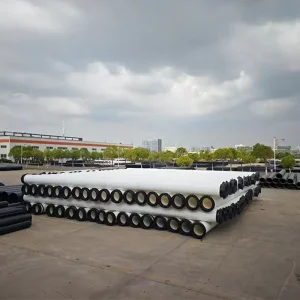


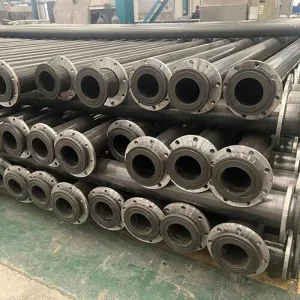

Macro Dynamics & Evolution in Dredging Pipe Manufacturing
The global dredging pipeline market is undergoing rapid transformations driven by deep-water port expansions, massive coastal reclamation, and strict ecological compliance mandates.
Corrosion Elimination
Traditional carbon steel discharge pipes and steel pontoons suffer severe electrochemical degradation in saline conditions. The industry shift towards rotationally molded virgin polyethylene (PE) shells with closed-cell polyurethane foam cores eliminates oxidation, significantly reducing maintenance overhead.
Hydraulic Slurry Resistance
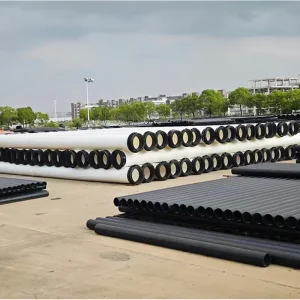
Deep-sea dredging slurry consists of abrasive sand, gravel, and coral fragments moving under high flow velocities. High-density polyethylene (HDPE) lines coupled with precision-molded pipe floats absorb hydraulic hammer stress and prevent premature pipe wall fatigue.
Predictive Flotation Modeling
Modern EPC buyers mandate hydrodynamic stability analyses. Floats are now sized via finite element calculation taking into account specific slurry gravity (1.3 to 1.8 t/m³), tidal currents, wind drag, and wave heave to maintain stable hydrodynamic alignment.
International Procurement Criteria for EPC Dredging Contractors
Procuring specialized dredging pipe floats and modular pipelines requires balancing strict engineering tolerances with rapid logistics execution.
Wall Thickness Uniformity
Procurement teams demand electronic temperature monitoring during rotational moulding. Inconsistent wall thickness results in localized stress fractures during wave impact, making dimensional verification non-negotiable.
Interchangeability & Spares
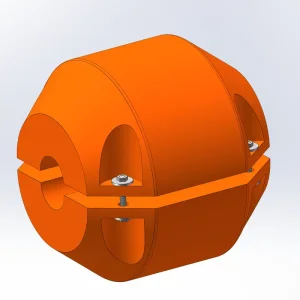
Standardized mold configurations allow replacement halves to mate seamlessly with pipelines already in service, avoiding costly vessel standby charges and on-site re-fabrication.
Certified Material Traceability
Global operators require raw material test certificates (MTC) proving virgin PE polymer content, high environmental stress crack resistance (ESCR > 1000 hrs), and UV8/UV16 stabilization additives.
Macro-Level Engineering Flotation Solutions
Comprehensive turnkey pipeline systems engineered to seamlessly combine pipe bodies, floats, flexible rubber hoses, and navigational hardware.
Subsea Tie-In Floats
Specifically contoured buoyant modules for controlled pipeline submersion, deep-water positioning, and pipeline recovery without placing localized bending stress on welded joints.
Cable-Trough Floats
Integrated pipeline modules with recessed upper troughs designed to bundle heavy power feeds, hydraulic hoses, and telemetry cables securely along the discharge pipeline route.
Modular Floating Barriers
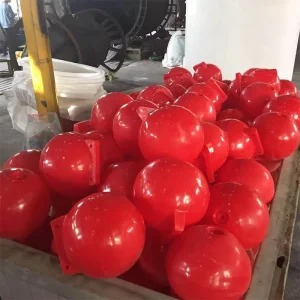
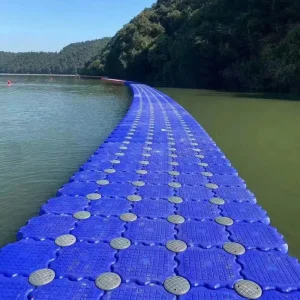
Interlinked barrier units and floating balls designed for silt curtain deployment, water surface trash containment, and hydrodynamic waterway perimeter protection.
Localized Support, Global Export & Compliance Standards
Operating with global accountability: meeting rigorous maritime safety regulations and providing end-to-end commissioning supervision.
On-Site Engineering Support
Direct technical guidance from Shandong Binzhou factory engineers, offering on-site flange bolt torque specs, pipeline ballasting setup, and float spacing calculations based on exact slurry density.
Global Compliance Warranty
Industry-leading warranty coverage lasting 18 months from buyer handover or 12 months after active commissioning, supported by rapid spare parts replenishment from strategic export centers.
Maritime Regulatory Alignment
High-visibility maritime safety colors (RAL 1003 yellow, RAL 2004 orange) complying with IALA recommendations for marine navigation aids and channel demarcation buoys.
Technological Roadmap & Dredging Pipeline Outlook
Our sustained R&D investments focus on smart sensors, bio-based rotational polymers, and ultra-high-pressure slurry transport solutions.
Automated Rotomolding
Closed-loop electronic temperature measurement, variable-frequency speed controls, and high-density foam injection for void-free buoyancy cores.
IoT-Enabled Buoys
Integration of wireless strain gauges and draft monitoring sensors inside pipe floats to broadcast real-time slurry payload and freeboard data to dredger bridge consoles.
Circular Polymers
Commercialization of 100% recyclable, marine-grade bio-polymers with zero microplastic degradation in harsh ultraviolet and saline operating environments.
Extreme Deep-Sea Flotation
Syntactic foam hollow microsphere matrix shells engineered to withstand extreme hydrostatic pressures exceed 300 meters subsea for offshore mining pipelines.
Frequently Asked Questions on Dredging Pipes & Floats
Expert engineering answers to critical inquiries raised by marine procurement specialists and project directors.
What is the standard buoyancy safety margin recommended for dredging pipelines?
We recommend sizing dredging pipe floats to deliver total buoyancy equivalent to at least 1.2 to 1.3 times the combined weight of the pipe shell, joint couplings, electrical cable additions, and the highest expected density of the discharged slurry. This safety margin guarantees that approximately 25% of the pipe diameter remains visible above the waterline, preventing submergence under heavy wave wash or surge pressures.
How do rotomolded PE floats compare against traditional welded steel pontoons?
Polyethylene pipe floats will never corrode or pit in ocean environments, completely eliminating periodic blasting and epoxy repainting costs. In addition, their rotomolded outer skin is inherently resilient; accidental bumps from auxiliary tender craft or floating debris result in elastic deformation rather than the severe hull punctures and catastrophic sinking typical of hollow steel pontoons.
Can you customize internal diameters and bolt patterns for non-standard pipelines?
Yes. As a comprehensive ODM/OEM manufacturer with on-site mold tooling, we manufacture internal clamp profiles matched to any nominal pipe OD (ranging from 110mm up to 1200mm+). We can incorporate anti-slip rubber pads, reinforce bolt pockets with galvanized steel inserts, and integrate custom cable conduits to match your specific offshore requirements.
What data must an EPC provide to receive a detailed engineering quote?
To produce an exact buoyancy design and formal quotation, provide: (1) Pipe outer diameter (OD) and material, (2) Pipe wall thickness and single segment length, (3) Expected slurry dry density or mixture gravity, (4) Operational marine conditions (river desilting, reservoir intake, or exposed coastal dredging), and (5) Project port destination for container loading calculations.
How does Juhua ensure quality consistency across thousands of float shells?
Every manufacturing cycle utilizes high-precision CNC molds, variable-frequency rotational speed control, and electronic automatic infrared pyrometry. This guarantees that polyethylene wall thickness remains uniform across complex radii and that the polyurethane core achieves closed-cell density of 35-40 kg/m³, preventing water infiltration even if the outer skin is abraded by rocks.
Heavy-Duty Dredging Floats, Mooring Buoys & Pontoon Hardware
Engineered for seamless compatibility with our pipelines, hoses, and subsea structures across global maritime sectors.