Industrial Water Buoys & Flotation Catalogue (Tier-1)
Precision-engineered rotomolded polyethylene hulls designed for harsh maritime environments, dredging logistics, and critical floating pipeline infrastructure.

Custom Pipe Floats for Floating Water Pipeline and Marine Support Projects Suppliers, Manufacturers
Configure & Quote
Custom Custom Mooring Buoy for Marina Berths and Offshore Supplier, Manufacturer
Configure & Quote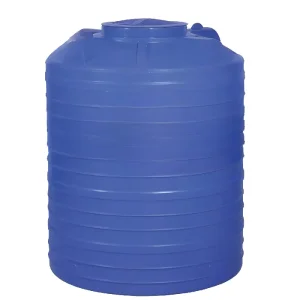
Custom Polyethylene Rotomolded Water Storage Tank – Durable and Safe Liquid Storage Solution Supplier, Factories
Configure & Quote
High-Quality Reliable Pipe Floats with Cable Troughs for Efficient Marine and Pipeline Operations Quotes, Factory
Configure & Quote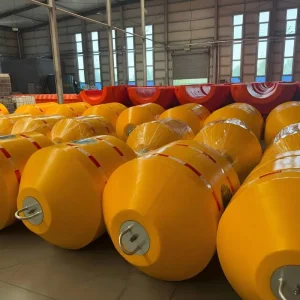
High-Quality Mooring Buoy for Commercial Berths, Marinas and Offshore Holding Areas Manufacturers, Products
Configure & Quote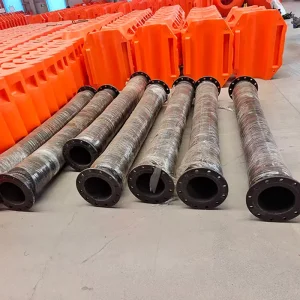
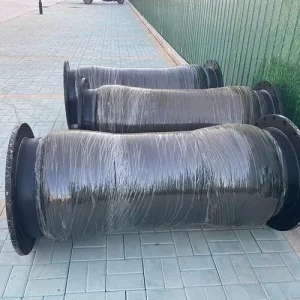
Custom Flexible Rubber Hoses for Advanced Fluid and Sediment Transport Products, Quotes
Configure & Quote
OEM Offshore Mooring Buoy for Safe Vessel Anchoring and Marine Infrastructure Company, Factories
Configure & Quote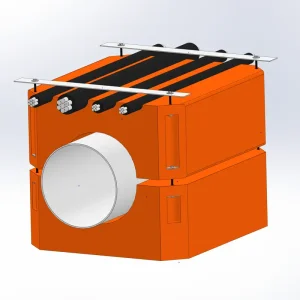
Best Advanced Pipe Floats with Cable Troughs – Reliable Floating Support for Marine and Industrial Pipelines Company, Quotes
Configure & QuoteGlobal Commercial & Industrial Landscape for Water Buoys
The global marine infrastructure market is witnessing a profound transformation. As international shipping lanes intensify, nearshore renewable installations (floating solar PV, offshore wind farms) expand, and deep-sea mineral dredging activities escalate, the operational demands on water buoys and hydrodynamic flotation bodies have increased exponentially. Traditional welded steel buoys, once the industry benchmark, are succumbing to terminal lifecycle vulnerabilities: electrochemical corrosion, biofouling degradation, heavy ballast ballast costs, and frequent repainting logistics.
Original Design Manufacturers (ODM) specializing in high-performance polymers have restructured the offshore marine asset landscape. Modern water buoy systems must satisfy stringent hydrodynamic buoyancy retention standards, withstand high-velocity tidal shears, and remain immune to prolonged UV degradation. In this context, ODM sourcing from specialized production centers offers EPC contractors, port authorities, and dredging operators the ability to customize buoyancy curves, ballast structures, integrated telemetry, and internal load-bearing skeletons with shortened capital payback horizons.
Port & Maritime Navigation
Deploying IALA-compliant navigation buoys, fairway markers, and ocean-grade mooring points capable of enduring cyclical wave motion, heavy vessel moorings, and continuous tidal scouring.
Offshore Dredging & Slurry Transport
Providing specialized clamp-on pipeline floats and discharge line support units that sustain operational freeboard under dense mining tailings, silt mixtures, and abrasive hydraulic conditions.
Hydrological Safety & Waste Curtains
Implementing modular floating barriers, debris diversion walls, and security demarcations around municipal reservoirs, hydro-power dams, and aquaculture reserves.
ODM Water Buoy Technical Matrix & Indicative Pricelist
Parametric pricing references designed for marine engineering procurement managers, incorporating material grade, structural wall thickness, and reserve buoyancy calculations.
Understanding Industrial Buoyancy Calculation
In accordance with marine structural engineering principles, a floating assembly must not be sized solely for static equilibrium. When designing dredge lines or floating barriers, engineers apply the strict buoyancy-to-weight ratio: Total Float Buoyancy ≥ (W_pipe + W_medium + W_accessories) × 1.20 ~ 1.30. This guarantees a safe working reserve freeboard (roughly 25% to 30% of the buoy's volumetric axis above water), preventing submersible swamping under surge velocity or unexpected slurry density spikes.
| Category / Application | Standard Dimensional Range | Outer Shell / Core Matrix | Net Buoyancy Capacity | Indicative Price Range (USD/Unit) |
|---|---|---|---|---|
| Dredge Pipe Floats (Clamp-on) | Inner Ø 110mm – 1200mm | Rotomolded Virgin PE / EPS / PU Foam | 80 kg – 5,500 kg | $45.00 – $680.00 |
| Offshore Mooring Buoys | Diameter 800mm – 2400mm | Seamless PE Shell + Central Steel Core | 650 kg – 12,000 kg | $320.00 – $3,400.00 |
| Marine Navigation Buoys (IALA) | Height 1.5m – 4.5m | High-Impact UV-Stabilized Polyethylene | 400 kg – 8,000 kg | $580.00 – $4,200.00 |
| Modular Debris & Security Barriers | Length 800mm – 2000mm / unit | Twin-Wall Monolithic Polyethylene | 120 kg – 850 kg / unit | $65.00 – $240.00 / section |
| Cable-Trough Floats (Telemetry) | Inner Ø 200mm – 800mm + Trench | Reinforced PE + Dual Fastening Grooves | 180 kg – 2,200 kg | $95.00 – $580.00 |
Chinese Factory Supply Chain Resilience & Production Efficiency
How advanced cluster integration, raw material synthesis, and multi-axis rotational molding deliver unmatched total cost of ownership (TCO).
Monolithic Rotomolding
Employing multi-axis carousel rotomolding machines with automated infrared temperature monitoring ensures zero residual internal stress, consistent wall thicknesses, and leak-proof seamless shells.
End-to-End Cluster Efficiency
Situated in Shandong's primary industrial polymers corridor, our proximity to upstream polyethylene refining and downstream hardware manufacturing minimizes logistics lead-times and bill-of-materials overhead.
Continuous Quality Control
Every production batch undergoes comprehensive destructive hydrostatic drop testing, tensile elongation verification (ISO 527), and high-pressure polyurethane closed-cell foam density validation.
High Modular Interchangeability
Strict mold tolerances guarantee that replacement halves and spare buoyancy bodies seamlessly match existing working installations, eliminating on-site machining and project downtime.
Engineered Flotation Scenarios Across Global Geographies
Tailoring buoyancy physics, hydrodynamic profiles, and mooring anchorages to extreme regional hydrological stresses.
Middle East Offshore Desalination
Configured with extreme UV-stabilizer packages (UV rating > 18) to resist degradation from high solar radiation, ultra-high saline concentrations, and water surface temperatures exceeding 42°C.
Nordic & Arctic Navigational Fairways
Formulated with impact-modified low-density linear polyethylene (LLDPE) yielding high izod notch toughness down to -40°C, absorbing moving ice sheet collisions without hull fracturing.
Tropical High-Current River Siltation
Low-drag hydrodynamic teardrop hulls equipped with galvanized load-bearing internal struts that maintain channel station-keeping amidst strong monsoon currents and heavy floating debris.
Technology Roadmap: The Future of Smart Water Buoyancy
Integration of edge telemetry, IoT sensor integration, and bio-circular polymers into oceanic and inland flotation.
Smart IoT Telemetry & AIS Integration
Seamless embedding of self-charging solar photovoltaic top-decks, satellite (Iridium/BeiDou) transmitting nodes, water quality multi-parameter probes, and autonomous tracking AIS beacons within standard buoy hulls.
Recyclable & Bio-Based Polyethylene
Transitioning toward closed-loop circular rotomolding materials, utilizing chemical recycling processes that retain 98% of virgin tensile performance while reducing embodied supply chain carbon emissions.
AI-Assisted Hydrodynamic Geometries
Computational Fluid Dynamics (CFD) algorithms deployed directly during mold design phases to minimize vortex-induced vibrations (VIV) and optimize mooring line tension in extreme offshore currents.
Compliance Assurance & Worldwide Project Support
International marine classification compliance, third-party inspection certifications, and complete delivery provenance.
Procuring offshore flotation requires rigorous adherence to maritime regulatory frameworks. Our complete manufacturing ecosystem complies with IALA Guideline 1078 (Use of Plastic Buoys and Light Beacons), ensuring chromaticity compliance under CIE chrominance coordinates, surface reflectivity retention, and impact resilience. Structural steel tie-rods, internal ballasts, and mooring brackets are manufactured according to ASTM A36 / BS EN 10025-2 standards and hot-dip galvanized to ISO 1461 requirements (minimum zinc coating 85µm) to guarantee rust prevention in hyper-saline oceanic environments.
We provide full third-party test verification dossiers through global inspection authorities including SGS, Bureau Veritas (BV), Lloyd's Register (LR), and DNV. Factory Acceptance Tests (FAT) encompass water absorption tests (ASTM D570 < 0.1%), polyurethane closed-cell core ratio analysis (> 92% closed cells), tensile strength checks, and environmental stress cracking resistance (ESCR > 1,000 hours per ASTM D1693).
Frequently Asked Questions on Buoy Sourcing & Engineering
In-depth technical answers addressing operational mechanics, custom rotomolding, warranty terms, and mooring safety margins.
What is the standard lifetime expectancy of rotationally molded PE buoys compared to traditional steel hulls?
Polyethylene buoys engineered with high UV-stabilizer concentrations (UV15–UV20) provide an operational lifespan exceeding 15 to 20 years in direct offshore environments. Unlike steel buoys, they never suffer from electrochemical rusting, require no cathodic sacrificial anodes or toxic anti-fouling repainting, and exhibit excellent self-elasticity that prevents permanent denting during accidental service vessel collisions.
How do you calculate the required float size and spacing for a slurry discharge pipeline?
The total buoyancy calculation must account for the empty pipe dry weight, flange/bolt connections, and the maximum density of the transported medium (slurry densities frequently range between 1.3 to 1.6 t/m³). We recommend maintaining a net buoyancy safety factor of 1.25 to 1.30. Spacing is governed by pipe flexibility: floats are placed adjacent to pipe joints and evenly along sections to avoid localized bending moments and excessive pipe fatigue.
What happens if the outer polymer shell is punctured by external impact?
Our marine buoys and pipe floats are internal core-infilled with closed-cell polyurethane (PU) or expanded polystyrene (EPS) foam with a closed-cell ratio exceeding 92% to 95%. Even in the catastrophic event of a deep puncture through the rotomolded outer skin, the closed-cell microstructure inhibits water absorption (water ingress < 0.1 g/cm³), completely preserving the unit's net buoyancy and preventing submerged sinking.
What is the standard warranty and post-handover guarantee policy?
Standard industrial warranty begins when the buyer hands over the equipment to the project investor and ends 18 months after that handover milestone, or 12 months after the on-site commissioning/installation date, whichever occurs first. Extended warranty packages up to 36 months are available depending on project risk profile and engineering review.
Can internal mooring structures, lifting eyes, and topsides be customized per project drawings?
Yes. Our factory provides full ODM/OEM flexibility. Central internal mooring tension bars can be forged from hot-dip galvanized carbon steel, stainless steel 316, or specialized marine alloys. Lifting points, radar reflector brackets, solar panel skirts, and lantern towers can be engineered to exact specifications, complete with finite element analysis (FEA) stress reports.
What data must the procurement team submit to receive a binding price quote?
To provide an accurate technical sizing and firm commercial quotation within 24 hours, we require: (1) Pipe outer diameter (OD) and material (HDPE/Steel), (2) Conveyed medium specific gravity, (3) Water body environment (open ocean, port channel, tailings pond), (4) Required freeboard height, (5) Total project pipeline length or buoy units, and (6) Destination sea port for container loading analysis.
Engineered Dredging & Marine Flotation Portfolio (Tier-2)
Explore our full line of offshore mooring buoys, channel navigation markers, cable-trough pipe floats, and debris barriers.
Custom Pipe Floats – Reliable Buoyancy for Marine Pipeline Projects Products, Companies
Configure & Quote
ODM Floating Barriers for Water Protection and Environmental Management Supplier, Factories
Configure & Quote
Custom Custom Pipe Floats for Floating Pipeline Buoyancy and Water Transfer Systems Product, Quotes
Configure & Quote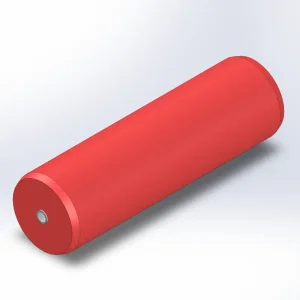
Best Reliable Floating Barriers for Marine and Industrial Protection Supplier, Factory
Configure & Quote
Custom High-Performance Marine Buoys for Safe and Efficient Waterways Manufacturers, Pricelist
Configure & Quote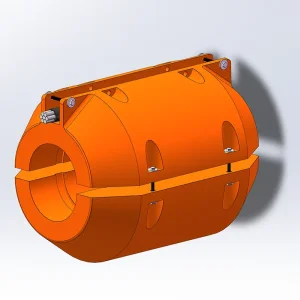
Custom Reliable Pipeline Floats for Marine and Engineering Projects Company, Pricelist
Configure & Quote
OEM Advanced Cable-Supporting Pipe Floats for Marine Projects Products, Factories
Configure & Quote