OEM Ball Buoys Suppliers & Products
High-buoyancy rotomolded polyethylene spherical markers, mooring systems, and offshore flotation solutions engineered for severe oceanographic loads, dredging stability, and marine navigation.
Heavy-Duty Flotation & Buoy Systems (Part I)
Explore our primary tier of OEM/ODM rotational-molded floating modules, industrial dredge ball systems, and heavy-duty ocean infrastructure components.
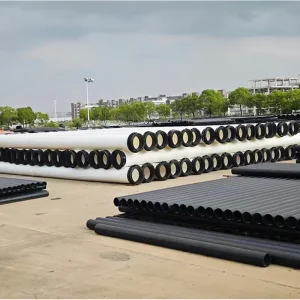
OEM Industrial-Grade Pipeline for Reliable Fluid Transport Companies, Factory
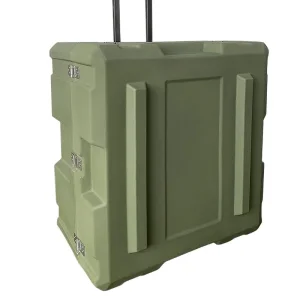
ODM Heavy-Duty Rotomolded Military Airdrop Storage Container Supplier, Factory
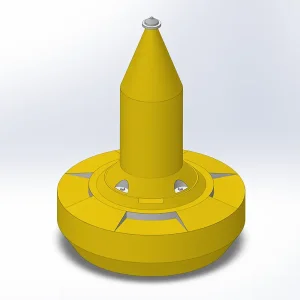
Best Reliable Floating Buoys for Coastal Navigation and Offshore Projects Suppliers, Factory
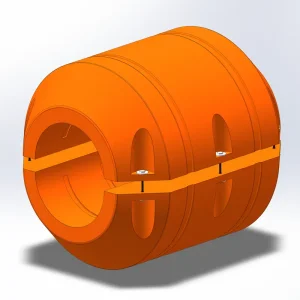
OEM Heavy-Duty Pipeline Float for Stable Floating Pipeline Systems Company, Factory
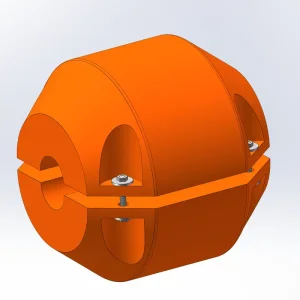
ODM Pipe Floats for Pump Discharge and Water Transfer Lines Manufacturers, Company
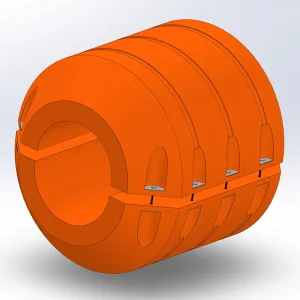
ODM High-Buoyancy Floats for Marine Projects Suppliers, Pricelist
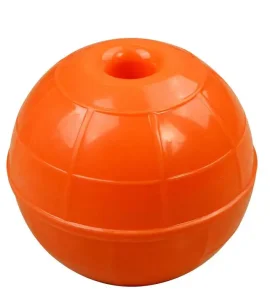
OEM ABS Float Ball – Durable Buoyancy Support for Water Projects Manufacturers, Manufacturer
ODM Ocean-Grade Navigation Buoys for Safe Maritime Operations Products, Factory
The Evolution of Ball Buoys in Modern Marine Infrastructure
How spherical flotation geometry has evolved from simple surface mooring indicators into critical, engineered assets for offshore energy, mineral extraction, and maritime safety.
In contemporary marine engineering, the spherical float ball—commonly referenced as a ball buoy—represents one of the most mechanically balanced and hydrodynamically efficient structures deployed across open ocean, estuarine, and industrial water bodies. Unlike cylindrical spar buoys or flat pontoon designs, the isotropic geometry of a ball buoy yields an identical cross-sectional resistance profile regardless of wave incidence angles, tidal drift, or multidirectional cross-currents.
Over the past decade, the global demand for OEM spherical buoys has surged, driven primarily by three converging industrial sectors:
- Offshore Renewable Energy & Subsea Cabling: Floating wind farms, tidal energy arrays, and transatlantic fiber-optic installations require surface and mid-water ball buoys with calibrated net positive buoyancy to counteract umbilical line sag, dynamic wave fatigue, and dynamic anchor line tension.
- Dredging, Tailings Management & Land Reclamation: Large-scale capital dredging vessels discharging abrasive slurries rely on high-integrity floating pipelines supported by spherical floats and cylindrical clamp buoys that endure continuous UV index spikes, aggressive saltwater salinity, and internal hydrodynamic shocks.
- Harbor Management, Channel Demarcation & Navigational Security: Compliance with IALA (International Association of Marine Aids to Navigation and Lighthouse Authorities) mandates has accelerated the transition from outdated welded steel ball buoys to rotational-molded high-density polyethylene (HDPE/LLDPE) buoyant spheres, which completely eliminate marine corrosion, galvanic pitting, and environmental flaking.
Omnidirectional Hydrodynamics
A true sphere presents a uniform drag coefficient (Cd ≈ 0.47) across 360 degrees of ocean current, minimizing rolling turbulence and preventing excessive mooring hawser twist during storm surge conditions.
Optimized Buoyancy-to-Weight Ratio
Spherical bodies maximize internal displaced volume relative to shell surface area ($V = \frac{4}{3}\pi r^3$), yielding superior reserve buoyancy per kilogram of polymer consumed compared to rectangular pontoons.
Zero Galvanic Degradation
Rotomolded linear low-density polyethylene (LLDPE) formulations offer total immunity to electrolytic marine corrosion, bi-metallic reactions, and acid-base attacks in aggressive mining tailings ponds.
China Factory Efficiencies: The Binzhou Rotomolding Manufacturing Ecosystem
Why international EPC contractors, port authorities, and offshore operators source rotational-molded flotation systems directly from our specialized facility in Shandong, China.
Manufacturing marine-grade ball buoys and heavy pipeline floats requires more than simple polymer processing; it demands precision temperature tracking, CNC steel tooling, high-pressure foam injection, and rigorous impact validation. Situated in Huimin County, Binzhou City, Shandong Province, Shandong Binzhou Juhua Rubber & Plastic Co., Ltd. sits at the heart of the world’s most concentrated industrial plastics and rubber supply chain.
This geographic centralization produces decisive operational and commercial efficiencies for international procurement teams:
Polymer Compounding Control
Direct access to Sinopec and PetroChina virgin polyethylene polymerization plants enables custom-formulated resins with high melt flow index (MFI), UV8 to UV20 stabilization, and carbon black masterbatches.
In-House CNC Tooling
Rapid mold turnaround using cast aluminum and fabricated steel molds. Custom OEM spherical buoyancy prototypes move from CAD simulation to sea trial casting in as little as 14 to 21 business days.
Electronic Temperature Sensing
Automated variable-frequency thermal tracking monitors interior mold air temperatures (PIAT) across bi-axial rotation cycles, guaranteeing uniform wall thickness and zero residual shear stress.
Qingdao Port Logistics
Direct multi-lane highway proximity to Qingdao and Tianjin deepwater ports allows high-cube container packing (40HQ) with optimized nesting designs, cutting transpacific and European freight expenses by up to 30%.
Rotational Molding Engineering vs. Standard Blow Molding
Technical differentiation between light commercial consumer floats and heavy industrial rotational-molded ball buoys subjected to cyclic hydrostatic loads.
When specifying OEM ball buoys for municipal water intakes, dredging conduits, or maritime harbors, engineering teams must evaluate the underlying thermoforming methodology. Standard commercial marker balls are frequently manufactured via extrusion blow molding. While cost-effective for static swimming pool lines, blow-molded floats suffer from non-uniform wall thickness at the mold parting line and residual cooling stress that precipitates environmental stress cracking (ESC).
In contrast, our industrial rotomolded ball buoys utilize bi-axial centrifugal tumbling in heated chambers. The powdered polymer resin (typically 35-mesh rotational-grade LLDPE) coats the interior mold walls in uniform laminar layers without mechanical stretching. This produces a monolithic, seamless hollow sphere devoid of parting-line weld weaknesses.
| Performance Parameter | Juhua Industrial OEM Rotomolded Buoy | Standard Commercial Blow-Molded Ball | Fabricated Welded Steel Buoy |
|---|---|---|---|
| Manufacturing Process | Bi-axial rotational molding (Zero internal stress) | Extrusion blow molding (High residual stress) | Plate roll bending & submerged arc welding |
| Wall Thickness Range | 6.0 mm – 22.0 mm (Uniform calibrated) | 1.5 mm – 3.5 mm (Thin at poles/equator) | 4.0 mm – 10.0 mm (Heavy dry weight) |
| Internal Core Material | Closed-cell Polyurethane (PUR) 38-45 kg/m³ | Hollow / Air-filled only | Hollow with multi-compartment steel bulkheads |
| Saltwater Corrosion Rate | 0.00 mm/year (Completely inert) | 0.00 mm/year (Polymer inert) | 0.12 - 0.35 mm/year (Requires zinc sacrificial anodes) |
| UV Degradation Resistance | UV8 to UV20 compound (ASTM D2565 standard) | Minimal surface UV coat (Prone to chalking) | Requires regular epoxy recoating & blasting |
| Environmental Stress Crack (ESCR) | > 1,000 Hours (ASTM D1693 Condition B) | < 150 Hours before micro-fracture | N/A (Susceptible to weld fatigue & pitting) |
| Puncture Impact Behavior | Maintains 95%+ buoyancy even if shell punctured | Immediate water ingestion & catastrophic sinkage | Floods individual bulkhead chambers if punctured |
Hydrophobic Foam Injection Architecture: To prevent moisture ingress from projectile impacts or workboat collisions, every heavy-duty spherical buoy undergoes secondary high-pressure injection with two-component closed-cell polyurethane foam. The foam bonds chemically to the internal polyethylene shell, yielding a density of 38–45 kg/m³ with a closed-cell ratio exceeding 92%. In the rare event of severe outer shell breach, the closed-cell structure rejects water penetration, maintaining positive buoyancy and preventing project downtime.
Engineered Field Applications: Where Ball Buoys Operate
From sub-zero tailing ponds in Canadian mining districts to high-salinity harbors in the Arabian Gulf, discover how our flotation modules are configured.
Pipeline Flotation & Tailings Slurry
Used as auxiliary surface supports and valve-station floaters along cutter suction dredger (CSD) lines. Spherical ball floats provide calibrated roll articulation, absorbing the pitching forces exerted by fluctuating slurry densities without binding adjacent steel or HDPE discharge pipes.
Subsea Umbilical & Hawser Pick-Up
Configured with hot-dip galvanized or AISI 316 stainless steel central pass-through tension rods. These pick-up ball buoys support mooring pennants, anchor chains, and ROV umbilical cables, keeping rigging gear away from seabed debris and propellers.
IALA Navigational Marking & Hazard Zones
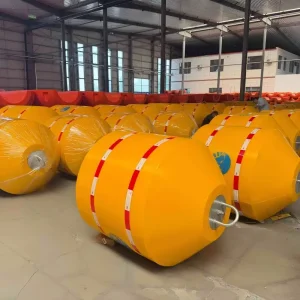
Molded in high-visibility international warning colors (fluorescent yellow, safety orange, cardinal red, and maritime green). Fitted with retro-reflective tape bands and optional self-contained solar LED top beacons to demarcate underwater shoals, outfall pipes, and construction perimeters.
Debris Booms & Trash Racks
Linked via heavy-duty alloy steel chains or synthetic lines to establish continuous floating barriers. Spherical floats deflect drifting timber, aquatic weeds, and floating plastics away from turbine intakes, spillway gates, and municipal potable water treatment pumps.
Deep-Sea Aquaculture Cage Tensioning
Open-ocean fish pens and longline seaweed/mussel farms require consistent buoyancy under variable storm loads. Our foam-filled spherical buoys maintain static line tension without waterlogged subsidence, preventing net-wall collapse during heavy tidal surges.
Harbor Perimeter & Speed Control Zones
Deployed along sensitive naval ports, military docks, and commercial tanker berths to create visible nautical boundary barriers. High-impact rotomolded shells resist accidental bump impact from crew workboats and patrol cutters without fracturing.
Technological Trajectories: The Next Generation of Marine Flotation
How IoT telematics, low-carbon circular polymers, and biomimetic surface treatments are transforming traditional passive buoys into connected ocean assets.
Smart Telemetry & Remote IoT Monitoring
The integration of low-power NarrowBand-IoT (NB-IoT) and Satellite LoRaWAN modules within the top mold cavities of OEM ball buoys. These units report GPS drift alarms, mooring line tension anomalies, wave accelerations, and surface water temperatures directly to port control SCADA platforms in real time.
Circular Polyethylene Formulations
Aligning with global ESG mandates, manufacturing advances now incorporate chemically recycled ocean plastics into the middle layers of co-rotomolded three-layer skins. Virgin LLDPE retains external UV and impact integrity while core layers utilize up to 40% certified PCR (Post-Consumer Recycled) polymer.
Eco-Friendly Anti-Fouling Additives
Rather than applying toxic copper-based marine antifouling paints that leach into fragile aquatic biomes, modern rotomolding incorporates non-biocidal fluoropolymer slip additives. These compounds produce ultra-low surface energy, causing barnacles, algae, and bryozoans to slide off during normal wave motions.
Global Procurement Matrix: Engineering Calculations & RFP Validation
Standard operating procedures for calculating required spherical displacement, reserve buoyancy margins, and moorage tether configurations.
When submitting tenders or issuing RFPs (Request for Proposals) for OEM ball buoys, procurement managers and project engineers must prevent under-sizing. An under-buoyant sphere risks partial submersion under heavy current draw-down, resulting in reduced visual detectability and accelerated mooring line fatigue.
The Buoyancy Reserve Engineering Formula:
Gross Buoyancy (B_gross) = V_displaced × ρ_water
Net Buoyancy (B_net) = B_gross - (W_buoy_shell + W_foam_core + W_internal_steelwork)
Working Reserve Margin = (B_net - W_rigging_load) / B_net × 100%
*Note: ρ_water for open-ocean seawater is typically calculated at 1,025 kg/m³, whereas freshwater reservoirs require 1,000 kg/m³. A conservative reserve buoyancy margin of 35% to 50% is required for navigation buoys, while heavy slurry dredge lines recommend a minimum 50% to 100% reserve factor.
1. Dimensional & Load Verification
Specify exact spherical outer diameter (OD), center-hole/pad-eye dimensions, and total static suspended chain/shackle weight under maximum low tide.
2. Environmental Dynamic Variables
Indicate maximum wave crest height (Hs), peak surface current velocity (knots), extreme solar UV exposure, and water temperature extremes (-20°C to +55°C).
3. QA/QC & Factory Inspection Tests
Require certified hydrostatic leak testing, drop impact testing at sub-zero temperatures (ASTM D5420), and raw material tensile strength reports (ISO 527).
Heavy-Duty Flotation & Buoy Systems (Part II)
Review our secondary tier of OEM/ODM floating ball modules, marine mooring buoys, flexible delivery hoses, and modular marine pontoons.
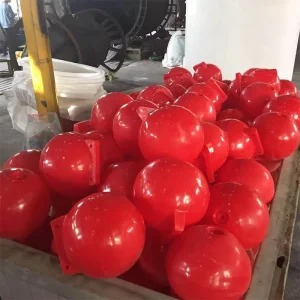
Best PE Float Ball – Durable Buoyancy Solution for Water Projects Products, Quotes
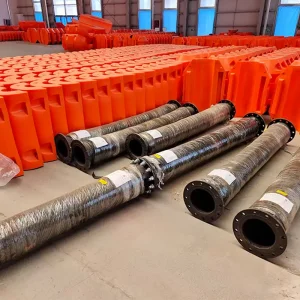
Custom Heavy-Duty Rubber Hose for Marine and Water Management Projects Suppliers, Manufacturers
High-Quality Pipe Floats for Water Transfer, Mining and Marine Pipeline Systems Manufacturer, Pricelist
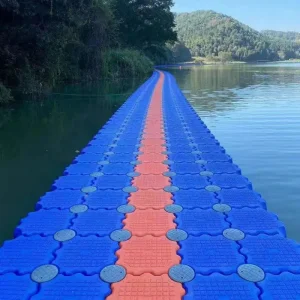
High-Quality Water Boat Pontoon Floating – Stable and Modular Floating Platforms Supplier, Products
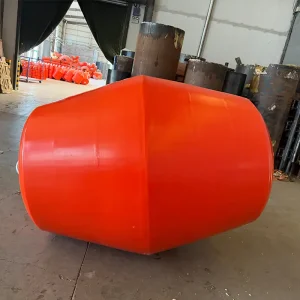
High-Quality Mooring Buoy with Reinforced Connections for Marine Projects Product, Companies
Custom Innovative Floating Boat Pontoon for Versatile Water Platforms Products, Pricelist
ODM Mooring Buoy For River Terminals And Workboat Berths Product, Quotes
OEM Pipe Floats For Reservoir Intake And Temporary Bypass Lines Quotes, Pricelist
Frequently Asked Questions by Marine Engineers & Buyers
In-depth technical answers addressing rotational molding parameters, polyurethane core dynamics, mooring mechanics, and global delivery standards.
What is the primary operational advantage of choosing a spherical ball buoy over a cylindrical spar buoy?
Spherical buoys present a completely symmetrical cross-section regardless of current or wind vector directions. A cylindrical spar buoy creates variable vortex shedding and yaw oscillations when currents shift. In contrast, the ball buoy distributes wave drag symmetrically across its surface (drag coefficient Cd ≈ 0.47), which drastically reduces bending moments on mooring attachments and prevents hawser line fouling.
How does Shandong Binzhou Juhua ensure that the rotomolded polyethylene shell achieves uniform wall thickness?
Our manufacturing facility utilizes advanced bi-axial rotomolding machines equipped with electronic automated temperature sensing and variable-frequency rotational control. By adjusting primary and secondary rotation ratios in real time based on the Peak Internal Air Temperature (PIAT), the molten polymer resin flows uniformly across all internal cavities. This prevents resin pooling at the bottom and ensures that pole and equator thicknesses remain consistent to within ±0.5 mm of project specifications.
Can your ball buoys withstand long-term exposure to intense ultraviolet solar radiation in equatorial or desert environments?
Yes. All rotomolded flotation products from Juhua are produced using virgin LLDPE/HDPE compounded with Class UV8 to UV20 stabilization packages (hindered amine light stabilizers - HALS). The compound complies with ASTM D2565 and ASTM G154 accelerated weathering standards, demonstrating over 80% retention of ultimate tensile strength and elongation after 15,000 hours of continuous UV and saline spray exposure.
What happens if the outer polymer shell is ruptured by a vessel propeller or sharp debris?
Our heavy-duty ball buoys and marine floats feature an internal filling of high-pressure injected closed-cell polyurethane (PUR) foam with a density between 38 and 45 kg/m³. With a closed-cell ratio exceeding 92%, water cannot migrate through the cell matrix. Even if the outer polyethylene skin suffers significant mechanical tearing, the buoy retains more than 95% of its gross buoyancy and will not flood or sink.
What connection hardware is available for anchoring and chain mooring arrangements?
We engineer three principal anchoring architectures depending on tensile loads: (1) Internal Central Tension Shaft: A continuous hot-dip galvanized or AISI 316 stainless steel rod passing directly through the sphere with welded pad-eyes at both ends, transferring mooring loads across steel rather than the plastic shell; (2) Molded-In Through-Hole: A central axial passage allowing customer wire ropes or mooring chains to pass completely through, seated with heavy urethane end collars; (3) Reinforced Integrated Flanged Eyes: Heavy-duty rotational-molded lugs reinforced with internal stainless steel backup backing plates for low-to-medium tension applications.
What standard warranty terms govern OEM purchases, and what is the typical service life?
Our products carry a formal warranty that initiates upon handover to the project investor, extending for 18 months from the handover date or 12 months from the formal installation date, whichever occurs first. Due to the inert characteristics of rotational-molded virgin LLDPE and closed-cell polyurethane, the design operational lifespan under normal marine immersion ranges between 10 to 15+ years with zero required recoating, blasting, or structural re-welding.