
Heavy-Duty Buoyancy Modules & Subsea Flotation Assemblies
Integrated rotomolded hulls, clamp-on buoyancy cells, and containment float lines designed for severe hydrodynamic loads and continuous subsea deployment.

Best Modular Subsea Pipeline Float – Reliable Deepwater Support Manufacturer, Factories
Request Specs & RFQ
ODM Floating Barrier Systems for Water Safety and Project Efficiency Manufacturer, Company
Request Specs & RFQ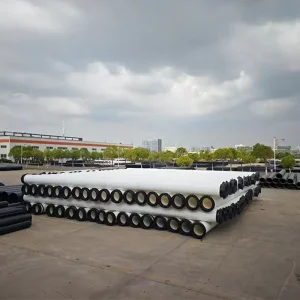
ODM High-Density Pipeline for Efficient Liquid and Gas Transport Manufacturers, Factories
Request Specs & RFQ
ODM Subsea Tie-In Pipeline Float – Reliable Buoyancy for Underwater Pipelines Products, Pricelist
Request Specs & RFQ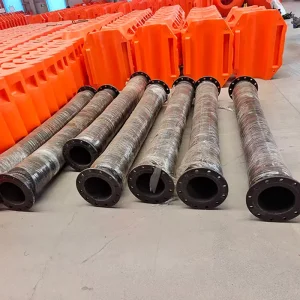
High-Quality High-Performance Rubber Hoses for Water and Slurry Transport Suppliers, Factories
Request Specs & RFQ
ODM Durable Cable-Integrated Pipe Floats for Submerged Infrastructure Supplier, Manufacturer
Request Specs & RFQ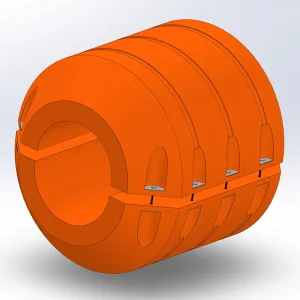
OEM Reliable Marine Pipe Floats for Pipeline Efficiency Manufacturer, Products
Request Specs & RFQ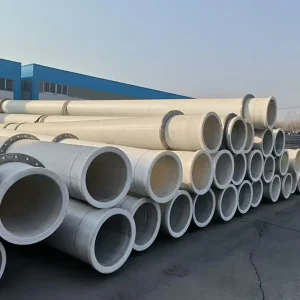
ODM Industrial-Strength Pipeline for Efficient Fluid and Material Transport Supplier, Quotes
Request Specs & RFQOEM Buoy Sensor Pricelist & Procurement Tiers
Understanding unit economics, sensor well integration, telemetry modules, and volumetric rotomolding amortization for international tenders and procurement teams.
Navigating the total expenditure for OEM buoy sensor platforms requires segmenting between the hydrodynamic rotomolded shell, the electronic instrumentation core, and the mooring/anchoring telemetry array. Global EPC contractors, port authorities, and environmental surveillance ministries often face significant cost inflation when procuring buoy systems from traditional Western integrators who outsource bare hulls and markup off-the-shelf instrumentation. By partnering directly with Chinese tier-one rotational molding and subsea flotation factories like Shandong Binzhou Juhua Rubber & Plastic Co., Ltd. (Giant Rubber), procurement agencies save between 35% and 55% across capital expenditures while maintaining strict adherence to ClassNK, DNV-GL, and ISO 9001 standards.
| Buoy Sensor Configuration | Sensor Payload / Instrument Compatibility | Hull Material & Core Core Fill | Typical OEM Price (FOB) | Batch Lead Time |
|---|---|---|---|---|
| Hydrological Metocean Buoy (0.8m - 1.2m) | Water temperature, dissolved oxygen (DO), pH, conductivity, turbidity, 4G/NB-IoT logger | Virgin UV-stabilized LLDPE shell + closed-cell EPS/PU marine foam | $1,850 – $3,600 / set | 12 – 18 Calendar Days |
| Offshore Acoustic Wave & Current Buoy (1.5m - 2.2m) | ADCP (Acoustic Doppler Current Profiler), 9-axis IMU wave sensor, satellite Iridium transceiver | Seamless rotationally molded virgin PE hull, 316L central ballast core | $5,800 – $11,500 / set | 18 – 25 Calendar Days |
| Dredging Silt Curtain & Slurry Sensor Float | Optical backscatter nephelometer, fluorometer, pipe stress transducers, telemetry | Split-cylinder modular HDPE shell with recessed instrument wells & cable troughs | $420 – $1,280 / unit | 7 – 14 Calendar Days |
| Deepwater Subsea Pipeline Sensor Beacon | Cathodic protection monitoring probes, subsea ultrasonic thickness sensors, acoustic pinger | High-density syntactic foam / rotomolded composite rated to 600m depth | $3,200 – $7,900 / set | 20 – 30 Calendar Days |
| Harbor Navigation & AIS Telemetry Buoy (2.4m - 3.0m) | IALA-compliant solar lantern, Class-B AIS AtoN transceiver, meteorological anemometer | Multi-compartment rotomolded PE hull, hot-dip galvanized internal steel framework | $4,900 – $9,800 / set | 15 – 22 Calendar Days |
*Note on Pricing Variables: Pricing scales directly with the degree of sensor integration, hazardous zone certifications (such as ATEX Zone 1/2 for refinery outfalls or offshore oil fields), and the volume of tooling amortization. Custom cavity tooling for proprietary hydrodynamic drag minimization generally entails an initial non-recurring engineering (NRE) charge of $4,500 to $12,000, which is fully amortized across orders surpassing 50 units.
Why Tier-1 Chinese Factories Dominate the Global Sensor Buoy Sector
Analyzing the synergy of automated high-precision rotational molding, comprehensive metallurgical ecosystems, and rapid sensor prototyping.
Consistent Wall Thickness Control
Utilizing variable-frequency rotational equipment paired with electronic multi-point temperature sensors, Juhua eliminates the typical thin-shoulder failure points of standard rotomolded buoys, maintaining uniform wall thicknesses up to 18mm.
Integrated Sensor Well Encapsulation
Rather than relying on post-drill fittings that jeopardize watertight structural integrity, our factories cast internal titanium, 316L, and polymer sensor payload wells directly during the rotational cycle, yielding zero-leak IP68 assemblies.
Massive Raw Polymer Supply Security
Direct pipeline supply partnerships with domestic polymer giants ensure medical and marine-grade Linear Low-Density Polyethylene (LLDPE) enriched with CIBA Tinuvin 783 UV stabilizers, preventing microcrack degradation in harsh tropical waters.
Hydrostatic Pressure Validation Labs
In-house hydraulic and hyperbaric pressure chambers simulate subsea pipeline depths up to 300 meters, ensuring that tie-in floats, subsea beacon housings, and acoustic transponders resist hydrostatic crushing under deepwater conditions.
Seamless Port Logistics via Bohai Rim
Located in Binzhou, Shandong Province, our central manufacturing complex connects directly to Qingdao and Tianjin ports within 4 hours, minimizing overland transit risk and enabling containerized high-cube loading for large marine floats.
Full Interchangeability & CNC Tooling
Precision CNC-milled aluminum molds eliminate dimension variance across multi-year expansion projects. When replacement halves or sensor housings are ordered five years later, they mate perfectly with existing hardware.
Emerging Trends Shaping Oceanographic & Industrial Sensing
From low-power edge telemetry to self-scouring anti-biofouling arrays, modern buoy architectures are transforming into active intelligent edge nodes.
The marine sensor buoy domain is undergoing a massive evolutionary leap driven by low-earth-orbit (LEO) satellite communications, hyper-efficient embedded microprocessors, and stringent environmental policies. Historically, marine sensor buoys acted as passive floats storing raw data onto local SD cards that required risky manual extraction at sea every six months. Today, international marine infrastructure demands autonomous, edge-processing telemetry platforms capable of functioning uninterrupted for years in remote offshore expanses.
1. Dual-Path Satellite & Terrestrial Hybrid Uplinks: Modern OEM buoy sensors now routinely integrate fallback communications. Near-shore operations (within 15km of port towers or offshore wind turbines) leverage private LoRaWAN or NB-IoT networks to transmit telemetry data at minimal operational cost. Once oceanic current drag or long-distance dredging moves the platform outside cellular coverage, the system triggers internal Iridium Edge or BeiDou Short Message modules, ensuring uncompromised real-time positional and water-quality visibility.
2. Dynamic Onboard Edge AI & Sensor Drift Mitigation: The primary failure mode of marine hydrographic sensors has always been biofouling (barnacles, macroalgae, microbial biofilms) and subsequent calibration drift. Modern buoy integrations feature self-actuated mechanical silicone wipers, combined with onboard machine learning models that analyze the rate of signal attenuation. When optical turbidity or dissolved oxygen readings diverge from tidal baseline predictions, the edge microcontroller runs automatic offset calibrations and alerts the control station before data integrity is compromised.
3. Hybrid Kinetic & Photovoltaic Micro-Harvesting: While crystalline solar panels remain standard atop buoy superstructures, high-latitude winter operations or cloudy estuarine environments suffer from energy deficits. Tier-one factories are actively integrating internal pendulum-driven kinetic wave energy harvesters housed safely inside the rotomolded hull core. This redundant energy source trickle-charges LiFePO4 battery banks even during 14-day storms, eliminating telemetry blackouts.
Turnkey Industry Solutions Across Severe Marine Environments
Real-world integration protocols where buoyancy dynamics directly dictate sensor reliability and offshore project profitability.
Offshore Wind Metocean Surveillance
Deploying 2.2m wave-rider buoys fitted with 9-axis motion sensors and acoustic doppler current profilers to calculate significant wave height (Hs), wave period (Tp), and seabed drift vectors prior to offshore turbine jacket installation.
Port Dredging Silt Curtain Compliance
Harbor authorities mandate strict nephelometric turbidity limits. Modular pipe floats equipped with cable troughs and optical sensors track slurry leakage along dredge discharge pipelines in real time, preventing regulatory shutdowns.
Open-Ocean Aquaculture Telemetry
Offshore fish farming cages require sub-surface environmental tracking. Buoy hulls equipped with integrated multiplexers monitor dissolved oxygen saturation, chlorophyll-a levels, and water salinity to optimize automated feeding cycles.
Subsea Pipeline Stress & Cathodic Protection
Subsea tie-in pipeline floats prevent structural buckling on the ocean bed. Embedded sensors capture pipeline flex, galvanic corrosion potential, and internal slurry pressure, relaying status via acoustic modems to surface buoys.
Reservoir Intake & Dam Security Barriers
Hydroelectric power dams deploy heavy-duty floating barriers to block debris while monitoring municipal intake water quality, incorporating hydrocarbon sniffer sensors to alert operators instantly of upstream oil spills.
River Navigation & Flood Level Early Warning
Inland waterway bureaus utilize solar-powered navigation buoys integrated with millimeter-wave radar level gauges to continuously broadcast river stage, surface velocity, and channel obstructions via AIS AtoN broadcasts.
Engineering Procurement Checklist for International Buyers
Essential validation parameters, certification standards, and quality benchmarks required when qualifying Chinese buoy sensor suppliers.
Global procurement engineers responsible for marine, mining, and oil & gas projects must guard against consumer-grade rotational molders lacking maritime certification. Specifying an OEM buoy platform requires evaluating five indispensable technical benchmarks:
1. Hull Integrity & Buoyancy Reserve Ratios: When sourcing pipeline floats or telemetry buoys, total float buoyancy must never be sized against dry, static weights. Engineering calculations mandate that total buoy volume provides at least 120% to 130% of total payload weight (including pipe wall mass, conveyed high-density slurry, mooring chains, marine fouling allowances, and wave-induced dynamic downward drag). Buoy hulls must be filled with 100% closed-cell polyurethane foam with water absorption under 0.05 g/cm³ to prevent waterlogging upon accidental hull puncture.
2. Environmental Stress Crack Resistance (ESCR): The raw polymer resin must be certified under ASTM D1693 condition B for over 1,000 hours without failure. Low-grade recycled polyethylene fails rapidly under continuous seawater flexure and cyclic solar heating. Factory audits must verify virgin LLDPE batch inspection certificates with high-impact resistance down to -40°C.
3. Ingress Protection (IP) & Galvanic Compatibility: Central instrumentation canisters must maintain dual O-ring compression seals achieving IP68 immersion ratings (continuous immersion at 5m depth) or IP69K high-pressure washdown ratings. Furthermore, where metallic mooring eyes or instrument sleeves interface with the polymer shell, all hardware must be AISI 316L stainless steel, Grade 5 titanium, or marine bronze to eliminate galvanic degradation.
4. Factory Acceptance Testing (FAT) Protocols: Prior to port departure, rigorous tier-one suppliers execute multi-step FAT regimens: a 24-hour pneumatic helium leak test of the sensor well, spectroscopic verification of polymer wall thickness at 12 critical stress points, and load proof-testing of mooring eyelets up to 300% of maximum rated working load (SWL).
Frequently Asked Questions on Buoy Sensors & Factory Procurement
Direct engineering responses to critical questions submitted by EPC contractors, ocean engineers, and project managers.
How do you guarantee watertightness around embedded sensor sleeves?
Rather than machining openings into a finished hollow shell, our automated rotomolding molds incorporate pre-engineered mold-in inserts and flanged 316L or titanium collars. The molten LLDPE molecularly bonds with the knurled exterior of the insert at 220°C, forming an impenetrable, unified barrier that eliminates mechanical seal leaks.
What is the standard warranty period for marine flotation products?
Our baseline warranty begins when the buyer delivers the equipment to the site/investor and spans 18 months from the delivery date, or 12 months after active water commissioning, whichever arrives first. Shell fatigue life is engineered to exceed 10 to 15 years under harsh marine conditions.
How does slurry density affect pipeline float sizing?
Slurry density dramatically shifts submerged mass. Standard dredging discharge carries mineral slurries with specific gravities between 1.3 and 1.8 kg/L (contrasted with clean seawater at 1.025 kg/L). Buoyancy calculations must compute: Total Weight = Pipe Self-Weight + (Slurry Volume × Slurry Density) + Hardware. Floats must supply at least 25% surplus buoyancy above this sum to keep one-quarter of the pipe crown visible.
Can you provide custom rotomolded parts based on 3D STEP drawings?
Yes. Our in-house engineering team operates multi-axis CNC tooling centers. We accept STEP, IGES, and SolidWorks files, evaluate drafts and thermal shrinkage allowances, fabricate cast-aluminum or CNC tooling, and supply physical first-article samples within 25 calendar days.
How do PE floats compare against welded steel flotation tanks?
Polyethylene floats never corrode, completely bypassing sandblasting, recoating, and sacrificial anode replacements required by steel tanks. In addition, our high-density elastic shell absorbs heavy kinetic impacts from service workboats without denting or puncturing, reducing lifetime operating costs by over 60%.
What documentation accompanies an export shipment of buoy sensors?
Every export shipment includes raw material resin certificates (FDA/marine-grade compliance), Factory Acceptance Test reports (wall thickness ultrasonic surveys and hydro-pressure tests), buoyancy calculation verification signed by project engineers, bill of lading, commercial invoice, packing list, and Certificate of Origin.
Offshore Mooring Buoys, Cable Floats & Specialized Pipeline Systems
Comprehensive marine hardware engineered to withstand severe oceanic tidal currents, UV radiation, and continuous mechanical stress.
High-Quality Advanced Pipeline Float System for Secure Subsea Installations Supplier, Factories
Request Specs & RFQ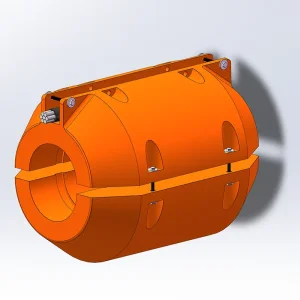
ODM Floating Pipe Floats with Cable Channels – Secure Buoyancy and Cable Protection for Marine Systems Quotes, Factories
Request Specs & RFQ
ODM Mooring Buoy for Reliable Vessel Anchoring and Floating Marine Infrastructure Product, Quotes
Request Specs & RFQ
OEM Innovative Pipeline Float System for Reliable Deepwater Support Companies, Quotes
Request Specs & RFQ
Custom Pipe Floats for Stable Pipeline Support and Reliable Floating Systems Quotes, Factory
Request Specs & RFQ
OEM Advanced Modular Pipe Floats with Integrated Cable Channels Manufacturer, Company
Request Specs & RFQ
Best Polyethylene Mooring Buoy – Reliable Floating Solutions for Modern Marine Projects Suppliers, Company
Request Specs & RFQ