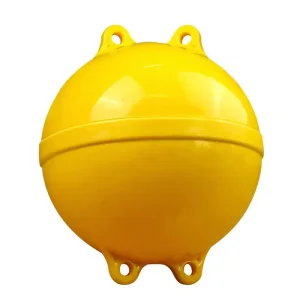
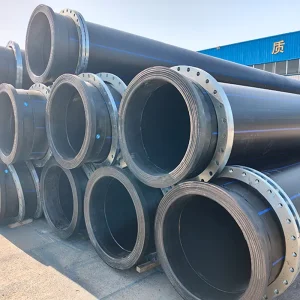
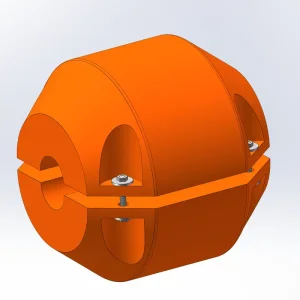
Primary Line Showcase
OEM Mooring & Buoyancy Engineered Systems
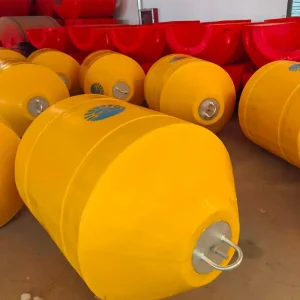
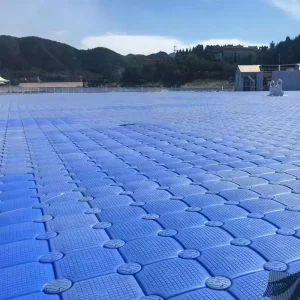
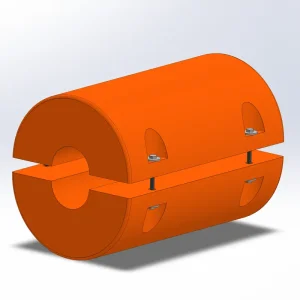
Explore heavy-duty rotomolded buoys, subsea tie-in modules, and specialized pontoons fabricated for port authorities, commercial marinas, and extreme northern climates.

Technical White Paper
Mooring Buoy Engineering in Cold-Climate Maritime Ecosystems
A rigorous review of thermodynamic stress, freeze-thaw cycles, and structural dynamics shaping Canadian harbor and marine procurement.
Sub-Zero Polyethylene Ductility
Traditional mooring assets constructed of low-grade steel or rigid composites suffer brittle fractures under Canadian winter conditions where temperatures plummet below -40°C. By deploying premium virgin LLDPE with proprietary elastomer additives, our rotational molding yields extraordinary low-temperature impact strength (tested up to -50°C), dissipating surface pack-ice crush forces without cracking.
Closed-Cell EPS Solid Core Matrix
Puncture risk represents a catastrophic vulnerability in high-traffic commercial navigation and industrial aquaculture zones. Juhua's OEM mooring buoys utilize a high-density, closed-cell expanding polystyrene (EPS) interior core fused seamlessly to the outer shell. In the event of a catastrophic hull puncture, 100% positive buoyancy is maintained indefinitely, preventing vessel breakaway and sinkage.
UV-15 Marine Stabilization
Northern latitudes experience prolonged solar reflection spikes across snow and ice pack. Standard industrial plastics degrade rapidly under high albedo conditions. Our rotational casting integrates UV-15 to UV-20 grade light stabilizers within the polymer matrix itself rather than relying on surface sprays, guaranteeing non-fading chromatic visibility (CCG yellow, red, white) and long structural integrity across a 15-year service life.
| Performance Parameter | Juhua OEM Standard (Canada Spec) | Conventional Steel Buoys | Standard Commercial Grade |
|---|---|---|---|
| Operating Temperature | -45°C to +60°C (Impact Modified) | -20°C (Prone to Weld Cleavage) | -10°C (Rapid Embrittlement) |
| Corrosion Resistance | 100% Saltwater & Chemical Inert | Requires Annual Cathodic Zinc Anodes | Moderate (Fittings corrode rapidly) |
| Buoyancy Maintenance | Closed-Cell EPS Core (Zero Ingress) | Hollow Air Chamber (Floods on Breach) | Semi-foamed or low-density fill |
| Maintenance Overhead | Maintenance-Free Shell (Zero Painting) | High (Bi-annual sandblast & paint) | Regular inspections for micro-cracks |
Industry 4.0 Manufacturing
Precision Rotomolding & Scalable OEM Architecture
How Shandong Binzhou Juhua Rubber & Plastic Co., Ltd. fuses advanced automation, electronic thermal controls, and supply chain speed to serve Tier-1 maritime buyers.
Dynamic Multi-Axis Thermal Control
Our automated rotomolding arms utilize multi-point infrared internal mold temperature sensors and variable frequency speed controllers. This eliminates cold spots and wall thinning, delivering uniform wall thickness (±0.5mm tolerance) across all complex curvature stress-risers and mooring eye attachment points.
Integrated Heavy Steel Load-Frames
OEM mooring buoys require immense safe working load (SWL) capacities. Juhua inserts hot-dip galvanized internal steel framework structures (central tension shafts or cross-bolted plates) directly into the rotational tooling before encapsulation, ensuring direct transmission of mooring tensions without mechanical stress on the polymer shell.
Full Quality Traceability & Testing
Every production batch undergoes hydro-static buoyancy verification, tensile coupon testings, dart impact rupture tests at sub-zero temperatures, and raw material melt-flow index checks. Full mill test certificates and third-party Lloyd's/DNV inspection verifications are provided for all Canadian municipal and industrial contracts.
Deployment Scenarios
Targeted Applications Across Canadian Regional Waterways
Customizing mooring and floating equipment to the distinct physical realities of Canada's coastlines, inland industrial lakes, and cold-weather rivers.
British Columbia & Pacific
Deep Fjord & Aquaculture Moorings
High tidal variations and profound depths along the BC coastline demand mooring buoys with optimized buoyancy-to-weight ratios. Resilient against heavy wood debris collisions and high salinity.
Atlantic & Maritimes
Offshore Energy & Fishing Harbors
Designed for Nova Scotia and Newfoundland harbors facing severe North Atlantic gales and continuous salt-spray. Closed-cell foam maintains structural integrity despite freezing ocean swells.
Great Lakes & St. Lawrence
Commercial Shipping & Seaway Marks
Heavy shipping transit channels requiring IALA-compliant colors, high daymark visibility, and rapid interchangeability during seasonal freeze-in and thaw maintenance operations.
Northern Territories & Mines
Tailings Ponds & Dewatering Lines
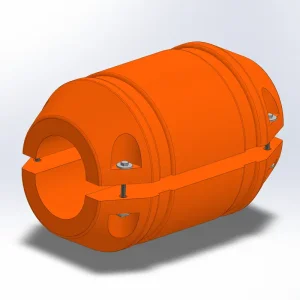
Tailored pipe floats and industrial mooring stations engineered to carry heavy mineral slurry pipelines and intake pumps without polymer degradation in remote subarctic mining operations.
Engineering Guide
Mooring Buoy Reserve Buoyancy Calculation Methodology
Eliminate premature line submergence by accurately calculating reserve buoyancy under dynamic environmental loading.
1. Deadweight Calculation
Sum the suspended weight in seawater of the total ground chain, riser chain, heavy-duty swivel shackles, and connection bridles. The buoy must support this static downward vertical load with at least 50% of the buoy body remaining above the baseline still-water line.
2. Dynamic Hydrodynamic Drag
Canadian spring tides and river currents induce heavy lateral drag against both the mooring vessel and buoy hull. Factor in current velocity squared (v²) and wave crest impact force to calculate the resultant pull angle, ensuring the buoy does not submarine during peak surge.
3. Reserve Buoyancy Safety Factor
For commercial mooring installations in Atlantic Canada or Pacific ports, Juhua recommends a safety reserve factor of 1.3 to 1.5 times the combined deadweight and peak dynamic draw. This preserves clear visual freeboard, ensuring mariners can spot the mooring pick-up pennant easily.
Procurement Q&A
Frequently Asked Questions: Mooring Buoy Procurement for Canada
Key technical specifications, export logistic details, and warranty terms for project engineers and procurement officers.
Our buoys are rotationally molded using high-density polyethylene modified with cold-resistance compounds that retain high impact ductility down to -45°C. The conical or spherical smooth-skinned geometry allows sheet ice and slush to slide upward and around the hull instead of pinching it, eliminating the crushing damage commonly suffered by thin-gauge steel buoys.
We provide three primary internal configurations: (1) Through-Chain design where the riser chain passes directly through a reinforced central HDPE hawse pipe; (2) Traditional Central Steel Tension Bar featuring heavy forged mooring pad-eyes and hot-dip galvanization; and (3) Cross-Bolted Pad-Eye assemblies for distributed tension in floating barrier systems.
Standard OEM production runs are completed in 15 to 25 business days depending on order size. We regularly route shipments directly to the Port of Vancouver, Port of Prince Rupert, Montreal, or Halifax via 40ft High Cube containers. Products are nest-packed to maximize container volumetric efficiency and minimize ocean freight costs per unit.
Yes. We mold our bodies in direct compliance with IALA Region B standards (custom yellow, green, red, or white UV-stable pigments), complete with high-intensity 3M marine retro-reflective tape, topmark solar beacon brackets, radar reflectors, and molded identification numbering for harbor berth tracking.
The warranty starts on the date the buyer hands over the goods to the investor/operator and ends 18 months after that handover date, or 12 months after the installation date—whichever comes first. We guarantee against rotomolding structural cracking, wall delamination, and UV discoloration under standard operating conditions.
Comprehensive Solutions
Offshore Infrastructure & Specialized Flotation Range
Select from specialized offshore pipeline buoys, ABS float balls, high-performance transport lines, and navigation buoys engineered to industrial specifications.