
Engineered Pipe Barrier & Marine Buoyancy Modules
Explore precision-molded flotation modules designed for critical containment, cable suspension, and dredging slurry transport operations.

High-Quality Advanced Pipeline Float System for Secure Subsea Installations Supplier, Factories
View Specifications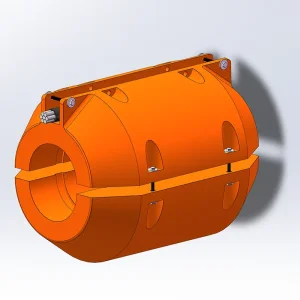
OEM Advanced Cable-Supporting Pipe Floats for Marine Projects Products, Factories
View Specifications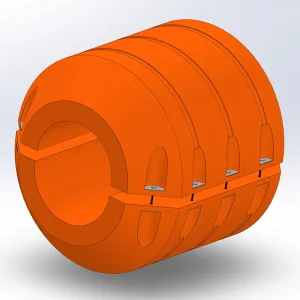
ODM High-Buoyancy Floats for Marine Projects Suppliers, Pricelist
View Specifications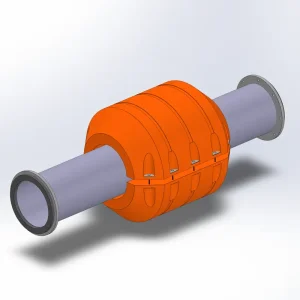
High-Quality Pipeline Float With Modular Buoyancy for Subsea Installation Manufacturers, Manufacturer
View Specifications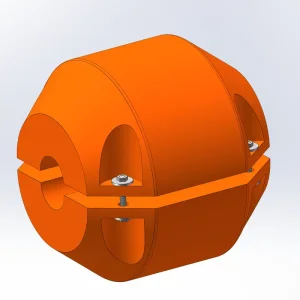
High-Quality Durable Pipe Floats for Safe Operations Products, Company
View Specifications
ODM Deepwater Pipeline Support Floats – Reliable Subsea Buoyancy Solutions Manufacturer, Companies
View Specifications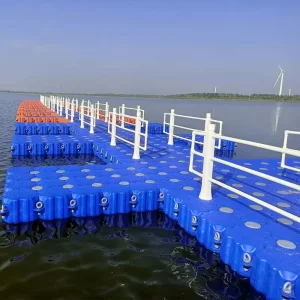
Custom Premium Floating Boat Pontoon for Safe and Stable Water Platforms Products, Quotes
View Specifications
ODM Rotomolded Surfboard – Durable, Safe, and Low-Maintenance Water Sports Solution Manufacturers, Pricelist
View SpecificationsChinese Manufacturing Capabilities in Rotomolded Flotation Engineering
Operating from Huimin County, Binzhou City, Shandong Binzhou Juhua Rubber & Plastic Co., Ltd. (Giant Rubber) bridges heavy polymer science with automated rotomolding mechanics.
Thermal & Wall Consistency
Our rotomolding infrastructure integrates variable-frequency speed control and electronic automated temperature matrix sensors. This eliminates stress concentrations and guarantees uniform shell thickness across massive cylindrical shells ranging from 200mm to 1200mm OD.
Standardized Mold Tooling
Precision CNC-cut modular aluminum molds guarantee 100% interchangeability. Whether supplying replacement halves for long-serving dredging lines or installing new pipe barriers, our semi-circular modules fit existing pipe ODs without localized buckling or slipping.
Closed-Cell Core Infill
Every containment float and pipe barrier shell is filled with high-density polyurethane (PU) foam with a closed-cell ratio exceeding 92%. In the event of catastrophic collision or puncture by maritime debris, the float remains virtually non-absorbent, sustaining structural buoyancy.
Industry Trends & Macro-Engineering Solutions
Shifting environmental compliance frameworks and megaproject investments are reshaping the requirements for pipe barrier assemblies across global waterways.
Environmental Silt & Debris Defense
Coastal and freshwater preservation initiatives mandate impermeable floating barriers. Combined HDPE pipe barriers fitted with subsurface geotextile skirts restrict turbidity, intercept urban macro-plastics, and safeguard intake reservoirs against invasive aquatic vegetation.
High-Density Mining Tailings Transportation
Modern tailings dam management relies heavily on modular pipe barriers carrying heavy abrasive slurry (density > 1.35 t/m³). Sizing calculations must factor in slurry weights to maintain minimum critical freeboard (typically 25% to 30% above the water level) during pump pauses.
Transition to Non-Corrosive Synthetics
Traditional coated-steel float drums are being decommissioned across ports and offshore terminals. Marine engineers specify UV-stabilized virgin LLDPE shells that eliminate rust, minimize biological fouling adhesion, and remove the need for periodic cathodic protection.
OEM Pipe Barrier & Pipeline Float Engineering Pricelist
Estimated industrial export price matrix (FOB Qingdao/Tianjin port). Final project quotations vary according to polyurethane core filling density, wall thickness, and hardware options.
| Model / Application | Pipe Outer Dia. (OD) | Outer Diameter × Length (mm) | Net Buoyancy (kg) | Shell Material / Infill | Est. Unit Price (USD) |
|---|---|---|---|---|---|
| PB-200 Light Dredge | 110 – 160 mm | Ø 500 × 800 mm | 130 kg | LLDPE / Empty or PU Filled | $45.00 – $65.00 |
| PB-315 Tailings Barrier | 200 – 250 mm | Ø 680 × 1100 mm | 350 kg | Virgin PE / Closed-cell PU | $85.00 – $130.00 |
| PB-450 Harbor Slurry | 315 – 355 mm | Ø 900 × 1300 mm | 720 kg | UV-8 Stabilized / PU Core | $160.00 – $220.00 |
| PB-630 Deepwater Offshore | 450 – 560 mm | Ø 1200 × 1800 mm | 1,800 kg | Impact Resistant PE / 40kg/m³ PU | $380.00 – $490.00 |
| PB-800 Megaproject Modular | 630 – 710 mm | Ø 1400 × 2200 mm | 3,100 kg | Rotomolded Seamless / Solid PU | $680.00 – $890.00 |
| PB-1000 High-Buoyancy Custom | 800 – 900 mm | Ø 1800 × 2500 mm | 5,800 kg | Heavy-Duty Marine Shell + Rigging | $1,250.00 – $1,650.00 |
Global Enterprise Sourcing Criteria & Engineering Formulae
Ensure seamless deployment across hydraulic and marine operations by addressing rigorous design calculations and lifecycle specifications.
Buoyancy Margin Calculation
Calculating pipeline buoyancy solely on dry pipe weight leads to marine line failures. Safe design follows: Total Buoyancy ≥ (Wpipe + Wslurry + Waccessories) × 1.25. This ensures approximately 25% to 30% of the pipe shell rides safely above current dynamics.
Mechanical Anchor Point Redundancy
Floating barriers installed in tidal estuaries experience dynamic drag forces. OEM procurement requires reinforced internal structural ribs, galvanized or 316 stainless-steel fastening kits, and integrated cable troughs that distribute tensile loads across adjacent floats.
Warranty & Handover Assurance
Every commercial production batch is backed by our standardized export warranty: running 18 months from the date of client handover or 12 months following marine deployment. Materials strictly comply with ASTM D1693 environmental stress-crack resistance criteria.
Frequently Asked Questions: Pipe Barriers & Pipeline Floats
Essential technical answers addressing sizing, environmental resilience, custom manufacturing, and logistics.
What is the functional difference between a pipe float and a floating barrier?
A pipeline float is clamped directly onto discharge pipelines (HDPE or steel) or subsea cables to deliver calculated hydrodynamic buoyancy. A floating barrier connects multiple modular units with internal steel tension chains or wire ropes to create an impermeable floating boom that intercepts trash, oil, and sediment, or delineates maritime exclusion boundaries.
How do engineers size pipe barriers for heavy mining slurry?
Slurry densities frequently exceed 1.25 to 1.45 kg/L, significantly surpassing fresh water. Sizing must calculate total weight combining the pipe wall, fully flooded slurry volume, and connection flange bolts. Applying a 25% to 30% buoyancy reserve ensures stable floatation without sub-surface drag.
Why is rotomolded polyethylene superior to welded steel drums?
Unlike steel drums, rotomolded UV-stabilized LLDPE shells are completely immune to saltwater rust, acid/alkali slurry exposure, and localized puncture corrosion. Furthermore, flexible polymer shells absorb impact shocks from debris or workboats without denting or splitting weld joints.
What key technical parameters must clients supply for quotes?
To deliver an exact technical quote, please provide: (1) Pipe outer diameter (OD) and material, (2) Conveyed medium type and density, (3) Total pipeline or barrier length, (4) Operational environment (wave height, river velocity), and (5) Destination port for shipping optimization.
Can pipeline floats accommodate integrated electrical power cables?
Yes. Juhua engineers custom float modules equipped with molded longitudinal troughs along the top perimeter. This protects power cables, telemetry, or auxiliary hydraulic hoses, running them securely alongside discharge pipes without external tethering straps.
What is the standard manufacturing lead time and export packaging?
Standard model orders of 100 to 500 units typically dispatch in 7 to 15 days. Floats are packaged nested or strapped with protective PE film wrapping to maximize container cube utilization for standard 40ft High Cube (HC) maritime containers.
Specialized Offshore Flotation, Navigation & Infrastructure
Explore our extended series of rotationally molded navigation buoys, deepwater floats, mooring assemblies, and floating platforms.

Custom Pipe Floats – Reliable Buoyancy for Marine Pipeline Projects Products, Companies
View Specifications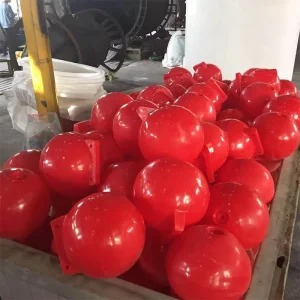
Best PE Float Ball for Safe and Efficient Water Operations Companies, Pricelist
View Specifications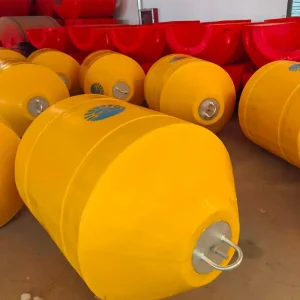
Best Foam-Filled Mooring Buoy for Marinas, Anchorages and Offshore Facilities Manufacturer, Factories
View Specifications
Custom Pipe Floats for Stable Pipeline Support and Reliable Floating Systems Quotes, Factory
View Specifications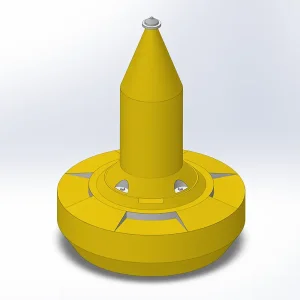
ODM Ocean-Grade Navigation Buoys for Safe Maritime Operations Products, Factory
View Specifications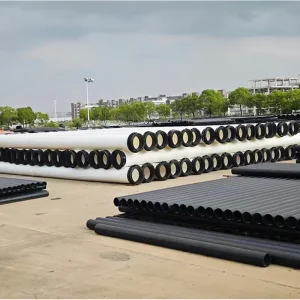
OEM Industrial-Grade Pipeline for Reliable Fluid Transport Companies, Factory
View Specifications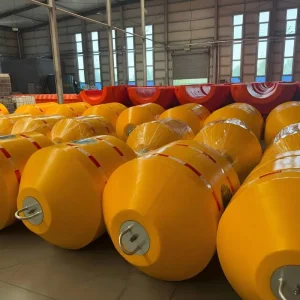
OEM Offshore Mooring Buoy for Safe Vessel Anchoring and Marine Infrastructure Company, Factories
View Specifications