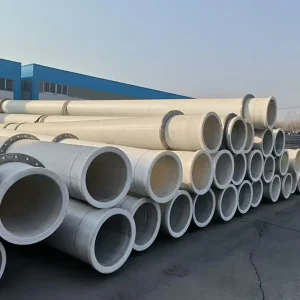
Featured Marine Pipeline & Buoyancy Units
Precision-manufactured rotational molded flotation products, industrial dredge discharge accessories, and marine navigation hardware built for severe oceanographic parameters.
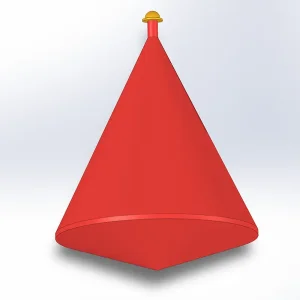
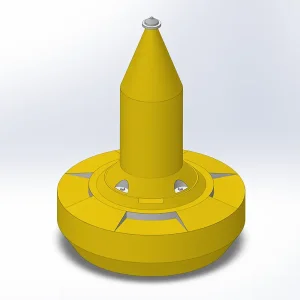

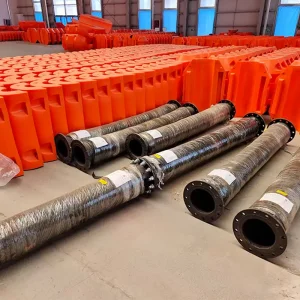
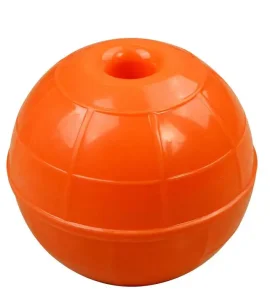
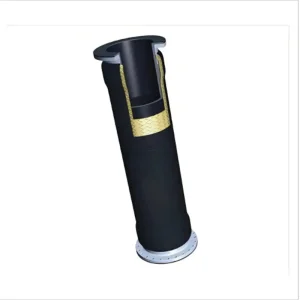
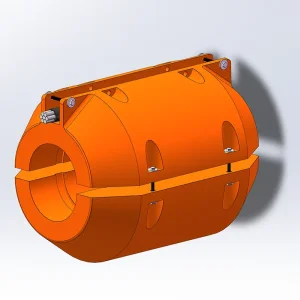
Global Evolution of Marine Pipeline Flotation Systems
Strategic shift from obsolete welded steel pontoon drums to high-impact virgin polyethylene shells filled with closed-cell non-absorbent polyurethane core matrices.
Rotomolded High-Polymer Polymerics
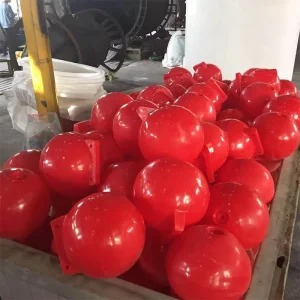
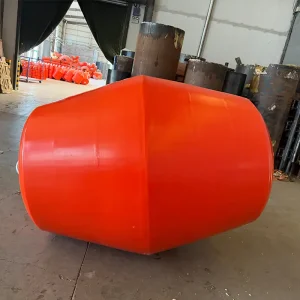
Modern dredging operators are completely phasing out carbon steel pontoons due to galvanic reaction and marine bio-fouling. Contemporary marine engineering favors rotationally molded linear low-density polyethylene (LLDPE) reinforced with UV stabilizers (UV8 to UV15 rating). These polymer shells deliver zero corrosion, chemical inertia against aggressive tailings, and phenomenal mechanical energy absorption against heavy harbor swells.
Closed-Cell Hydrophobic Polyurethane Core
To safeguard critical offshore operations against catastrophic line sinking during collisions, high-grade floats utilize internal high-density polyurethane (PU) foam injection (≥32 to 45 kg/m³). The closed-cell structure ensures that even if an exterior plastic skin suffers puncture damage from ship propellers or sharp rock riprap, water absorption remains under 1.5% by volume, sustaining essential positive buoyancy reserves indefinitely.
Cable Trough & Hybrid Utility Integration
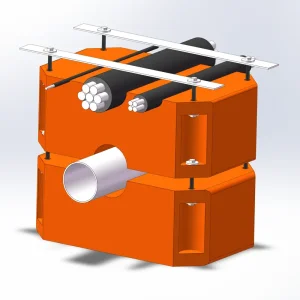
Offshore reclamation projects increasingly employ electro-hydraulic booster stations and real-time density acoustic telemetry along discharge pipelines. High-specification pipeline floats now feature integrated dual-cavity conduits and molded cable troughs, permitting auxiliary high-voltage electric umbilical power cables and GPS control lines to route concurrently along the floating pipe without chafing or snag hazards.
China Factory 4.0: Supply Chain Resilience & Efficiency
Leveraging comprehensive vertical manufacturing integration from virgin polymer compounding to automated multi-axis rotational molding and robotic foam dispensing.
Automated Thermal Cycle & Wall Consistency
Variable-frequency multi-axis shuttle and rock-and-roll rotational molding systems operate under electronic infrared pyrometer closed-loop temperature control. This guarantees uniform wall thickness throughout the complex outer curvatures and internal pipe-clamping recesses of each float body, completely eradicating cold-joint thermal defects and localized thin spots commonly witnessed in manual workshops.
Stringent production standardization enables complete interchangeability across half-shell segments. Clients stocking replacement spares can mate brand-new halves with modular units installed years prior with zero variance in bolt-hole alignment or internal clamping diameter.
| Process Parameter | Standard Commercial Grade | Juhua Factory 4.0 Standard |
|---|---|---|
| Resin Material | Recycled Blends | 100% Virgin LLDPE Polymer |
| Wall Thickness Tolerance | ± 2.5 mm Manual Gauge | ± 0.5 mm Ultrasonic Measurement |
| Internal Foam Density | 28–30 kg/m³ Variable | ≥ 35–45 kg/m³ Monitored Mass |
| Fastener Corrosion Class | Standard Galvanized Steel | Hot-Dip Galvanized / Grade 316 Stainless |
Rapid Tooling Deployment & Scale Economy
Housing in-house 5-axis CNC mold manufacturing facilities, Juhua rapidly conceptualizes, machines, and casts heavy aluminum alloy molds for bespoke non-standard pipe diameters (from 110 mm up to 1400 mm OD). Production turnaround for custom OEM geometries is compressed from customary industry averages of 8–10 weeks down to just 14 calendar days.
Situated in Binzhou, Shandong—a prime logistics and chemical corridor—our integrated raw material sourcing shields international procurement teams from sudden resin market fluctuations while ensuring uninterrupted container shipments directly to major maritime hubs globally.
Total Quality Control Protocols
Every single production batch is subjected to destructive drop testing at sub-zero temperatures, hydrostatic watertight immersion pressure validation, and tensile shear stress testing of fastening flanges before export packing sign-off.
Global Commercial Landscapes & EPC Sourcing Demands
Procurement strategies across global marine contractors are dictating higher standards of total cost of ownership (TCO) and rapid logistical compliance.
Port Expansion & Capital Dredging
Large maritime authorities and dredging contractors (such as Boskalis, DEME, and Jan De Nul) require ultra-reliable discharge lines able to handle continuous 24/7 pumping of highly abrasive sand and coral slurry without line buckling under dynamic oceanic wave cycles.
Mining Slurry & Tailings Transport
Remote copper, gold, and iron mining operations in South America, Africa, and Australia demand rugged floats capable of supporting heavy steel or HDPE pipelines traversing highly acidic or alkaline tailing retention dams where structural corrosion is fatal.
Offshore Energy & Subsea Tie-Ins
Offshore hydrocarbon and renewable wind fields utilize specialized buoyancy modules during subsea pipeline shore landings and umbilical cable pulls to precisely manage bend radius stress, minimize seabed friction, and avoid bottom-skidding damage.
Municipal Water Intake & Effluent Outfalls
Coastal desalination facilities and wastewater treatment infrastructure employ modular flotation assemblies for the safe deployment, positioning, and scheduled inspection of long-distance oceanic outfall lines and submerged intakes.
Hydrostatic Pipeline Buoyancy Calculation Methodology
Engineering rules of thumb and physics-based hydro-mechanical formulation for sizing pipeline floats under active slurry load conditions.
The Core Formula for Safe Buoyancy Design
Under-sizing buoyancy is the single largest operational fault in marine pipeline engineering. Sizing calculations must account for the fully loaded line carrying heavy slurry solids rather than pure water, coupled with a mandatory safety factor to maintain 25% to 30% pipe freeboard above the water line:
Where W_slurry = V_internal × ρ_mixture (with slurry specific gravity typically reaching 1.3 to 1.6 kg/L for silica sand or 1.8 to 2.2 kg/L for iron ore tailings). W_hardware includes heavy carbon steel flanges, backing rings, rubber joint gaskets, and clamping bolt assemblies.
Engineering & Procurement Knowledge Base
Comprehensive technical answers addressing rotational mold design, buoyancy stability, installation protocols, and lifecycle durability.
Polyethylene floats eliminate internal and external oxidation completely, offering zero corrosion even in tropical saltwater with high salinity. Unlike steel pontoons which require recurrent sandblasting and epoxy repainting, PE bodies require zero coatings. Furthermore, the elastic nature of virgin LLDPE provides high kinetic energy absorption during vessel bumps, returning to shape where steel sustains permanent denting and joint seam cracking.
Our floats feature precision-machined internal friction ribs that contour intimately to standard HDPE or steel pipeline tolerances. When torqued to specified clamp values, the high coefficient of friction prevents axial longitudinal sliding. For severe wave action or vertical slope transitions, integrated rubber friction pads or mechanical pipe stop collars can be accommodated within the molded float recess.
We inject dense, closed-cell rigid polyurethane foam rated at ≥35 kg/m³ to 45 kg/m³. Lower commercial densities (below 25 kg/m³) suffer from open-cell structures that can absorb moisture under hydrostatic water head pressure. Juhua's closed-cell formulations provide structural support to the polyethylene outer skin against crushing wave impacts while guaranteeing permanent hydro-stability.
Every production run ships with comprehensive Factory Acceptance Test (FAT) dossiers, including Raw Material Mill Test Certificates (MTC) verifying virgin resin grade, ultrasonic wall thickness scanning logs, polyurethane foam core compression and density test certificates, and bolt tensile reports for hot-dip galvanized or stainless steel fasteners.
Yes. Floats are individually matched to the outer diameter (OD) of the pipe body. When applied to flexible rubber slurry hoses or armored discharge dredge lines, custom float dimensions account for hose expansion under pulsating hydraulic pump pressures, incorporating rounded transition lips to prevent localized edge pinching or premature rubber jacket wear.
With UV12+ compounding stabilization, our PE shells boast an outdoor UV exposure lifespan exceeding 10 to 15 years in high-insolation environments (such as the Arabian Gulf, Australia, and equatorial Africa). The factory warranty runs for 18 months from shipment handover or 12 months from final project installation commissioning, backed by global engineering support.
Explore Additional Industrial Marine Flotation Lines
Modular pontoons, subsea pipeline support units, cable-trough floats, and specialized fluid transport pipelines engineered for mission-critical marine operations.