
Heavy-Duty Marine Flotation & Buoyancy Systems
Engineered rotationally molded polyethylene systems, mooring buoys, subsea tie-ins, and flexible sediment transport hardware built to ASTM and ISO standards.


Defining Type 2 Medium-Duty Turbidity Curtains: Beyond Basic Sediment Control
In modern hydraulic engineering, port dredging, and coastal civil construction, controlling suspended solids is not merely a localized site requirement; it is a critical regulatory mandate enforced by environmental protection agencies globally (such as the US EPA Clean Water Act, EU Water Framework Directive 2000/60/EC, and IMO MARPOL Annex VI regulations). A Type 2 Turbidity Curtain (also designated as a medium-duty silt barrier or sediment containment screen) is specifically engineered for dynamic aquatic zones where moderate currents, sustained winds, and moderate wave energy make Type 1 light-duty calm-water silt curtains inadequate.
Type 2 systems are hydrodynamically sized to withstand sustained horizontal current velocities up to 1.03 meters per second (approx. 2 knots / 3.4 feet per second) and significant wave heights up to 0.9 meters (approx. 3 feet). Unlike entry-level pond barriers that rely merely on fabric pockets, an authentic OEM Type 2 curtain incorporates top load-bearing tension members—either high-tensile galvanized aircraft cables (typically 5/16-inch 7x19 construction) or dual heavy-duty polyester load-distribution webbings (break strength ≥ 44 kN)—to isolate the underwater curtain fabric from destructive tensile forces created by drag and hydrodynamic surging.
Structural Anatomy of an Industrial-Grade Type 2 Turbidity Curtain
The standard OEM Type 2 assembly consists of three integrated zones: (1) A continuous marine-grade flotation collar filled with expanded polystyrene (EPS) or closed-cell polyethylene foam, encased in heavy-duty UV-stabilized PVC; (2) A flexible submerged barrier skirt ranging in depth from 1.5 meters to 15 meters, fabricated from either impermeable PVC-coated polyester or permeable geotextile monofilaments; and (3) A bottom ballast pocket lined with hot-dip galvanized proof coil chain that maintains verticality and tension against hydraulic lift forces.
Top Tension Member
Aircraft-grade 5/16" (8mm) galvanized or 316 stainless steel wire rope routed inside a heat-sealed sleeve, or continuous dual 10,000 lb polyester load lines delivering exceptional longitudinal stability under cross-current shear stress.
Tough Skirt Geotextiles
18 oz to 22 oz/yd² PVC-coated high-tenacity woven polyester (impermeable) for total containment, or woven polypropylene monofilament (permeable, AOS 40-70 US Sieve) to reduce hydrostatic pressure while filtering silt.
ASTM End Connectors
Marine-grade extruded aluminum slide connectors (Universal ASTM F962 compliant) or heavy-gauge stainless steel grommet plates, allowing rapid, zero-gap inter-section coupling directly from project service vessels.
Macro Industry Solutions for High-Stakes Marine Engineering
From commercial harbor expansion to subsea renewable foundations, discover how custom-configured Type 2 Turbidity Curtains prevent regulatory shutdowns.
Capital Port & Harbor Dredging
During cutter suction dredging (CSD) or trailing suction hopper dredging (TSHD), sediment resuspension threatens nearby fish hatcheries and coral reefs. Type 2 curtains establish an impermeable or micro-porous perimeter, keeping Total Suspended Solids (TSS) within the regulatory <25 mg/L threshold beyond the mixing zone.
Offshore Wind & Subsea Piling
Installing monopile foundations and jacket scour mattresses creates intense benthic turbidity plumes. Heavy-duty Type 2 curtains equipped with marine-grade foam buoyancy cells and 3/8" Grade 43 ballast chains remain vertical despite tidal oscillations and coastal current shears.
Highway Bridge Piers & Cofferdams
Bridge foundation excavation, sheet pile driving, and tremie concrete pouring generate localized plumes in navigable rivers. Type 2 curtains isolate the work corridor without obstructing passing barge channels, preventing environmental stop-work orders and stiff municipal fines.
Mining Tailings & Ash Ponds
Tailings decant ponds and industrial settling basins require permanent or semi-permanent sediment segregation. Chemical-resistant PVC/PU formulations with UV-20 stabilization endure harsh acidic or alkaline pH environments (pH 2 to 12) without chemical degradation or embrittlement.
Desalination & Power Intakes
Marine intake channels for RO desalination plants and thermal power cooling requires continuous protection against silt, jellyfish, and surface debris. Type 2 permeable curtains with mono-filament weaves allow unhindered water intake while screening out destructive particulates.
Technical Roadmap & Future Outlook (2025–2030)
Next-generation sediment containment is evolving from passive physical barriers into intelligent, hydrodynamically active marine containment networks.
IoT-Connected Turbidity Telemetry
Integration of solar-powered nephelometric turbidity units (NTU) directly on the curtain float collar. Wireless LoRaWAN/Satellite modules stream real-time TSS readings to project EPC dashboards, triggering automated alerts if turbidity levels approach regulatory thresholds.
Self-Relieving Hydrodynamic Flaps
Patented one-way pressure equalization vents incorporated into the lower skirt section. In episodic peak tidal surges, these flap-valves release hydrodynamic load, preventing the curtain skirt from lifting ("bellying up") while maintaining full sediment trapping efficiency.
Microplastic-Free Circular Geotextiles
Development of fluoropolymer-free, recyclable high-density polyolefin weaves and bio-compatible barrier coatings designed to withstand severe UV exposure without shedding microplastic fibers into sensitive marine sanctuaries.
China Factory 4.0: Supply Chain Resilience & Manufacturing Superiority
How high-throughput automation, computerized hot-air welding, and localized resin sourcing deliver unmatched quality and cost-efficiency.
Automated High-Frequency Thermal Welding
Traditional sewn curtains leak along needle punctures under hydraulic tension. Our Huimin County production base operates computerized continuous radio-frequency (RF) and automated hot-air wedge seamers, achieving a weld shear bond exceeding 480 N per 5 cm—yielding 100% seam air-and-water tightness.
Raw Material Vertical Integration
By controlling the supply chain from base polymer compounding (adding masterbatch anti-UV agents and hindered amine light stabilizers) to internal metal stamping of ASTM universal end plates, we eliminate intermediate markups, passing 25% to 40% direct cost savings to global contractors.
Standardized Interchangeability & QA
Every 50-foot or 100-foot section follows rigorous ISO 9001 quality audits. Modular sections link seamlessly via Universal ASTM F962 extruded connectors, allowing rapid replacement of damaged sections in minutes without removing the entire curtain array from the waterway.
OEM Type 2 Turbidity Curtain Pricelist & Engineering Matrix
Representative FOB export pricing per standard 50-foot (15.24m) section. Customized skirt depths up to 45 ft (13.7m) available upon formal engineering submittal.
| Model Series | Skirt Depth | Fabric Weight & Type | Tension Member Spec | Ballast Chain | Est. FOB Price / 50ft | Availability |
|---|---|---|---|---|---|---|
| TC2-IMP-05 | 5 ft (1.52 m) | 18 oz Impermeable PVC | 5/16" Galv. Cable (9,800 lbs) | 1/4" Proof Coil HDG | $245 – $295 | In Stock / 3 Days |
| TC2-IMP-10 | 10 ft (3.05 m) | 22 oz Heavy PVC-Polyester | 5/16" 7x19 Galv. Wire Rope | 5/16" Proof Coil HDG | $360 – $420 | In Stock / 5 Days |
| TC2-IMP-15 | 15 ft (4.57 m) | 22 oz UV20 Stabilized PVC | 3/8" Wire Rope + Dual Webbing | 5/16" Grade 43 Chain | $490 – $560 | Production: 7 Days |
| TC2-PERM-10 | 10 ft (3.05 m) | Woven PP Monofilament Permeable | Dual 10,000 lbs Tensile Webbing | 5/16" Proof Coil HDG | $385 – $440 | Production: 5 Days |
| TC2-PERM-20 | 20 ft (6.10 m) | Dual-Layer Polypropylene Filter | Dual 3/8" SS316 Cable Option | 3/8" Grade 43 Ballast | $690 – $780 | Production: 10 Days |
| TC2-CUSTOM-HD | 25–40 ft (Special) | 26 oz PU/PVC Chem-Resistant | Engineered Multi-Tension Harness | Dual Segmented Ballast HDG | Contact for RFQ | Custom Engineering |
Variables Governing Commercial Quotations:
1. Fabric Permeability vs. Impermeability: High-flow tidal inlets typically mandate permeable woven monofilament (e.g., Mirafi or Propex equivalent weaves) to allow water transmission while trapping fines down to 40 microns, slightly increasing base geotextile raw material costs.
2. Flotation Collar Volume: The required freeboard (typically 2 to 4 inches above water) dictates float diameter. Standard collars feature 6" to 12" diameter marine EPS foam logs. Deep-skirt deployments in turbulent ocean channels require up to 16" flotation diameters to guarantee positive buoyancy under sustained dragging loads.
3. Container Freight Optimization: Curtains are vacuum-compressed and accordion-folded onto custom pallets. A single 40ft High Cube container accommodates up to 2,500 linear meters of 10ft Type 2 curtain, minimizing ocean freight amortized cost to less than $1.20 per linear foot worldwide.
International Compliance & Global Engineering Approvals
Our manufacturing processes and QA verification protocols adhere strictly to recognized global maritime, civil, and environmental engineering bodies.
US EPA & AASHTO M288 Specifications
Fully compliant with the National Pollutant Discharge Elimination System (NPDES) Phase II storm-water regulations and AASHTO M288 physical geotextile survivability metrics for filtration, tear strength, and puncture resistance.
ASTM International Adherence
Fabricated in accordance with ASTM F962 (Standard Specification for Oil Spill Response Boom Connection: Z-Connector / Slide Connector) and ASTM D4884 for thermal seam tensile strength retention after prolonged immersion.
REACH & RoHS Environmental Safety
All formulated PVC plastics and closed-cell buoyancy foams are chemically certified free of toxic plasticizers, heavy metals, and lead phthalates, guaranteeing non-leaching performance in sensitive marine protected areas.
Global Enterprise Procurement: Essential Hydraulic RFQ Parameters
To avoid costly installation failures or regulatory delays, prepare these critical environmental measurements when submitting your Type 2 curtain RFQ.
1. Hydrodynamic Current & Tidal Range
Measure both mean and peak current velocities at the project coordinates. In tidal regions, skirt depth must account for mean low water (MLW) to prevent the bottom chain from dragging continuously on the seabed during low tide.
2. Bathymetry & 1-Foot Ground Clearance Rule
A common engineering pitfall is ordering curtain skirt depth equal to total water depth. Silt curtains must maintain a minimum 0.3m to 0.5m (1 to 1.5 ft) clearance above the bed to prevent silt deposition on the skirt, which will drag the flotation submerged.
3. Mooring & Anchoring Load Distribution
Specify Danforth-type marine anchors or helical screw piles spaced at 50-ft intervals along the curtain array. Bridle lines must hook to the top tension member and bottom chain, isolating the geotextile membrane from direct mechanical pull.
Frequently Asked Technical & Sourcing Questions (FAQ)
Authoritative insights from senior flotation engineers to guide your marine containment system design and procurement.
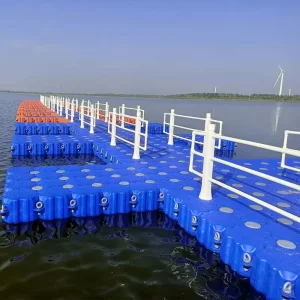
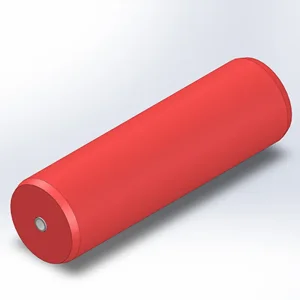
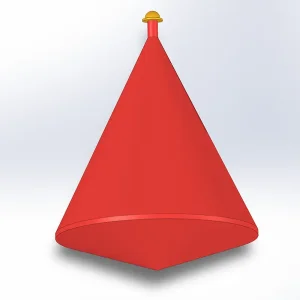
Associated Marine Barriers, Pontoons & Pipeline Supports
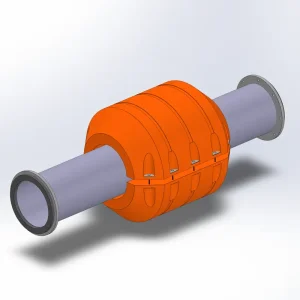
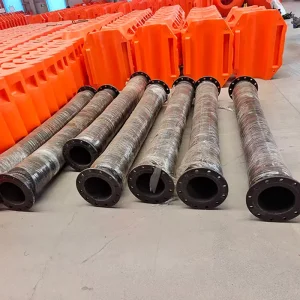
Complete your aquatic infrastructure layout with modular floating barriers, ocean navigation buoys, and heavy-duty sediment discharge piping floats.
Request an Engineering Submittal & Formal Pricelist
Send your hydraulic current speeds, maximum depth profile, and water quality requirements directly to our senior manufacturing engineers in Shandong. We deliver CAD drawings, buoyancy calculations, and factory-direct volume quotes within 24 hours.