
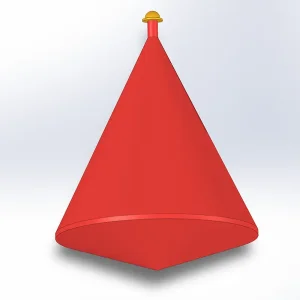
Featured Marine AtoN Series
High-Integrity Navigational Buoys for Barcelona Fairways & Harbors
Engineered with UV-stabilized virgin polymer matrix, high-density closed-cell polyurethane cores, and internal structural galvanization for the Port of Barcelona, Llobregat fairway approaches, and outer coastal basins.
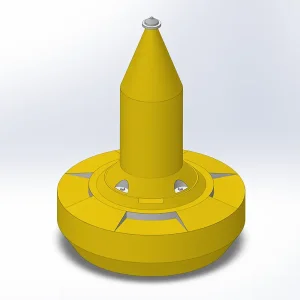
Barcelona Custom High-Performance Buoy for Dense Fairways
Explore Technical Specs
Barcelona High-Visibility Marine Buoy for Coastal Operations
Explore Technical Specs
Barcelona ODM Ocean-Grade Deepwater Navigation Buoy
Explore Technical Specs
Local Commercial & Hydrodynamic Context
Barcelona’s Maritime Corridor: Critical AtoN Requirements
The Port of Barcelona (Puerto de Barcelona) represents one of the Mediterranean's most intricate and dense nautical intersections. Functioning as a premier intermodal gateway connecting southern Europe with global container trade lanes, northern Africa, and the Balearic archipelago, its channels accommodate ultra-large container vessels (ULCVs), massive cruise ships at the Adossat Wharf, chemical gas tankers at the Energy Wharf, and elite yacht traffic in Port Vell.
This operational complexity is compounded by physical coastal dynamics. The littoral drift generated along the Llobregat River delta initiates continuous fine sediment shifts, requiring regular hydrographic realignment of lateral markers, channel approach beacons, and temporary dredging exclusion zones. Furthermore, during autumn and spring cyclonic events, Mediterranean "Garbinada" and easterly "Llevantades" generate steep, short-period chop (significant wave heights exceeding 4.2m) combined with aggressive saline conditions.
Engineering Compliance for Barcelona Waters
AtoN assets deployed in Catalonia’s waters must strictly comply with Spanish Port Authority standards (Puertos del Estado) and IALA Maritime Buoyage System Region A guidelines, demanding chromatic fidelity (CIE chromaticity bounds for Red/Green/Yellow) and UV20+ stabilization against intense Mediterranean solar radiation.
70M+
Tons Freight Handled
9,000+
Annual Vessel Calls
IALA-A
System Standard
UV20+
Polymer Rating
Addressing Barcelona Fairway Demarcation Challenges
Traditional fabricated steel buoys suffer from galvanic degradation in high-salinity warm waters and heavy hull impact liability. Modern port administration in Barcelona demands modular, rotationally molded polyethene (PE) AtoN units that yield zero hull abrasion, eliminate maritime paint flaking, and offer integrated sensor payload capacities for environmental tracking.
Macro Engineering Framework
Global Technological Benchmarks for Marine Flotation Infrastructure
Modern navigational safety relies on high-molecular polymer chemistry, automated rotomolding, and interconnected telemetry to replace obsolete painted-metal buoyage networks.
Advanced Polyethylene Polymer Matrices
Transitioning from riveted/welded naval steel to high-density polyethylene (HDPE) provides superior energy absorption during vessel collision. Linear low-density polyethylene (LLDPE) rotational molding yields stress-crack-resistant, seam-free hulls impermeable to salt brine, eliminating sandblasting and toxic biocide recoating cycles.
Closed-Cell Polyurethane Foam Core
Unsinkability is paramount for major port approaches. Rotomolded hulls are filled via computer-controlled high-pressure injection with 100% closed-cell hydrophobic polyurethane foam (density 35–45 kg/m³). Even if the outer shell experiences ballistic puncturing or heavy tug impact, water ingress is mechanically isolated, preserving full displacement.
Integrated Structural Mooring Skeleton
Rather than anchoring directly to plastic skin, professional-grade navigation buoys incorporate an internal hot-dip galvanized steel core structure (complying with EN ISO 1461). Mooring pull loads, ballast counterweights, and lifting eyes interconnect directly with the internal frame, shielding the polymer body from tensile shear failure.
| Performance Parameter | Legacy Marine Steel Buoys | Fiberglass / GRP Buoyage | Advanced Rotomolded HDPE / LLDPE (Juhua Grade) |
|---|---|---|---|
| Impact Mechanics | Permanent denting, weld fracture, hull perforation risks | Brittle fractures, micro-cracking, osmotic gelcoat blistering | Elastic deformation with 100% memory rebound, non-damaging to ships |
| Corrosion & UV Lifespan | Rapid oxidation; requires sacrificial anodes & 3-year repainting | UV yellowing, resin breakdown; 8-10 years coastal lifespan | Chemically inert; UV20+ stabilized; zero oxidation; 15-20+ years service |
| Maintenance Overhead | High dry-docking costs, sandblasting, heavy crane operations | Moderate maintenance; prone to structural repairs after impact | Ultra-low; smooth surface deters biofouling; field interchangeable spares |
| Ecological Footprint | Toxic paint shedding into marine benthic sediment | Non-recyclable composite waste upon decommissioning | 100% recyclable virgin polyethylene; zero toxic leachate |
Tactical Maritime Engineering
Engineered Deployment Scenarios in Barcelona Waters
Specific maritime infrastructure operations across the Catalan coastal zone require specialized buoy architectures tailored to hydrodynamic profiles and nautical traffic density.
Harbor Approaches & Breakwaters
South Entrance (Bocana Sur) & Commercial Fairway
Vessels exceeding 360 meters require unmistakable channel alignment. Rapid current shear around the Dique del Este breakwater demands navigation buoys with a low center of gravity, heavy cast-iron internal trim ballasting, and high visual daylight focal heights equipped with high-candela LED lanterns and AIS AtoN transponders.
Industrial Infrastructure
Muelle de la Energía Hydrocarbon Offloading
Safety perimeters surrounding volatile LNG receiving points and petroleum discharge manifolds enforce strict non-sparking, explosive-environment parameters. Non-metallic rotational polyethylene buoys paired with marine floating barriers isolate berths, stopping accidental marine intrusion and containing hydrocarbon drift.
Nautical & Mega-Yacht Hubs
Port Vell & Olympic Marina Fairway Isolation
Accommodating high-frequency leisure vessels and world-class superyachts demands non-marking elastomeric contact skins. These buoys demarcate recreational transit lanes from commercial tug staging bases, mitigating hull damage during high-traffic Mediterranean regattas and summer seasons.
Coastal Dredging Management
Llobregat Delta Sand Bypass & Channel Maintenance
Maintenance dredging preserves draft integrity along approach tracks. Submerged discharge pipelines use modular split PE pipe floats, while warning buoys mark moving floating pipelines and anchor cables, safeguarding commercial keels from underwater fouling.
Offshore Environmental Monitoring
Catalan Shelf Oceanographic & Weather Buoys
Positioned seaward of the Barcelona traffic separation scheme, dedicated data buoys host acoustic Doppler current profilers (ADCP), meteorological mast sensors, and solar recharging arrays, supplying Port Authority dispatchers with real-time swell and wind velocity telematics.
Worksite Protection
Waterfront Expansion & Berth Fortification
Quayside reinforcement and dock extensions necessitate heavy-duty floating barriers and yellow special-mark buoys. These delineate marine construction equipment zones, preventing errant commercial watercraft from encroaching upon derrick barges and piling rigs.
Statutory Assurance & Logistics
Regulatory Framework & Mediterranean Quality Protocols
Procurement for public infrastructure in Spain demands rigorous certification. Buoyage systems serving Port Authority concessions must withstand the aggressive thermal cycling of the Iberian peninsula while guaranteeing unbroken signal consistency.
- IALA Recommendation E-108: Strict compliance with chromaticity tables for surface colors under daylight and illuminated nocturnal states.
- Puertos del Estado Technical Directives: Moorings engineered for coastal shelf catenary profiles, matching anchor clump weights to local seabed compositions (mud, silt, and sandy gravel typical of the Catalan shelf).
- CE & ISO 9001 / ISO 14001 Quality Benchmarks: Documented traceability of raw linear polyethylene batches, melt flow index (MFI) control, and full resin batch testing.
- Streamlined CIF/DDP Barcelona Port Delivery: Compact, nested export packing designs allow international transport via standard 40ft High Cube containers direct to terminal gates at Port of Barcelona, minimizing drayage and terminal handling costs.
Engineered Catenary & Mooring Calculation
A buoy is only as dependable as its anchoring geometry. Juhua engineers support Barcelona port contractors with comprehensive hydrodynamic sizing calculations:
Mooring Design Parameters Factored:
1. Water Depth & Tidal Fluctuation Range (Barcelona Micro-tidal Mediterranean system ~0.5m).
2. Significant Wave Height (Hs) up to 4.5m in severe offshore easterly storms.
3. Surface Current Velocities (0.8 to 1.5 knots along the littoral drift axis).
4. Scope Ratio Calculation (Typically 2.5:1 to 3.5:1 chain-to-depth catenary ratio).
5. Sinker Weight: Cast iron sinkers sized to counteract surge uplift without drag.
Equipping a Maritime Project in Barcelona or the Mediterranean?
Receive engineered catenary calculations, 3D mooring schematics, and customized pricing tailored to your port or marina project.
Industry 4.0 Maritime
Technical Roadmap: Smart Digital AtoN Ecosystems (2025–2030)
Marine navigation is transitioning from passive visual signposts into smart, interconnected maritime edge nodes that feed vessel traffic services (VTS) real-time data.
AIS Type 1 & Type 3 Message Transceivers
Future-ready buoys integrate synthetic and real AIS transceivers. Autonomous and piloted ships receive buoy coordinates, status, and identification directly on their Electronic Chart Display and Information Systems (ECDIS), guaranteeing uninterrupted navigation even in dense Mediterranean sea fog.
IoT Environmental Sensing Arrays
Navigational buoys double as continuous ecological monitoring stations. Compact optical sensors measure water turbidity, hydrocarbon sheen, chlorophyll levels, water salinity, and sea surface temperature, wirelessly transmitting real-time ecological health data back to port authorities.
Circular Rotomolding Polymers
Aligning with the European Green Deal and Net Zero Port goals, modern buoy production utilizes post-industrial and ocean-recovered polymers without compromising tensile elongation or fracture toughness. Closed-loop recycling programs allow aged buoys to be re-ground and remolded into brand-new flotation shells.
Engineering Knowledge Base
Frequently Asked Questions: Marine Buoys for Barcelona Operations
Comprehensive engineering clarifications addressing design standards, mooring calculations, material properties, and operational lifetimes.
Why is rotomolded polyethylene superior to steel for navigation buoys in Barcelona waters?
The high ambient temperatures and elevated salinity of the Western Mediterranean accelerate galvanic oxidation on steel buoys, necessitating sandblasting and protective paint reapplication every 2 to 3 years. Rotomolded polyethylene (PE) is 100% rustproof, chemically inert, and pigment-compounded throughout its cross-section (UV20+ stabilization). When struck by tugs, catamarans, or pilot craft, PE elastic hulls deform and rebound without puncturing or causing paint-transfer damage to vessel hulls.
How do you guarantee colorfastness under high-intensity Mediterranean UV radiation?
Our manufacturing utilizes virgin LLDPE / HDPE resins pre-compounded with chemical light stabilizers (Hindered Amine Light Stabilizers - HALS) and color masterbatches certified according to IALA Recommendation E-108. This molecular compounding prevents chalking, brittleness, and color drift across 15+ years of intense solar exposure in Catalonia, ensuring red, green, yellow, and cardinal markers remain within the standard CIE chromaticity diagrams.
What happens if a navigation buoy is struck by a commercial vessel in the port channel?
The buoy hull features a robust rotomolded skin (ranging from 12mm to 20mm+ wall thickness) supported by high-density closed-cell polyurethane foam (35–45 kg/m³). In a severe impact, the kinetic energy is absorbed by the elastic polymer. Even if an impact ruptures the exterior wall, the closed-cell polyurethane matrix refuses water ingress, ensuring the buoy retains positive buoyancy and remains afloat with uninterrupted lantern visibility.
How do you calculate the correct buoyancy reserve for an offshore mooring installation?
Buoyancy calculations must never evaluate solely the dry static weight. For safe marine operation, the total gross displacement must equal the dry buoy weight PLUS the suspended catenary weight of mooring chains, shackles, bridles, plus marine biological growth allowances, multiplied by a safety buoyancy factor of 2.0 to 3.0. In exposed Mediterranean waters with 4m wave actions, this reserve ensures that downward chain drag does not submerge the buoy tower during wave troughs.
Can your AtoN buoys integrate self-contained solar marine lanterns and telemetry?
Yes. Every navigation buoy superstructure incorporates standardized top-flange drill patterns compatible with leading international marine lantern manufacturers (e.g., Sabik, Sealite, Carmanah). Top towers provide integrated battery enclosures, marine solar panel mounting surfaces, and internal conduits for sensor cables, radar reflectors, and AIS Class A/B transmitters.
What is the standard warranty and life expectancy of Juhua marine buoys?
Under standard operational conditions, Juhua rotomolded buoy hulls possess a design life expectancy of 15 to 20 years. Warranty terms commence when the equipment is formally handed over to the client/investor and extend up to 18 months post-handover, or 12 months after field marine installation, backed by full technical documentation, material certifications, and replacement parts availability.
Comprehensive Flotation & Barrier Catalog
Specialized Flotation, Demarcation & Mooring Solutions for Barcelona
Browse our complete rotationally molded line for coastal ports, dredging infrastructure, environmental safety barriers, and harbor mooring networks.
Barcelona Precision Marine Buoy for Channel Navigation
Explore Technical Specs
Barcelona Coastal Marine Buoy for Marine Construction
Explore Technical Specs
Barcelona Custom Marine Buoy for Safe Waterway Demarcation
Explore Technical Specs
Barcelona Cardinal & Fairway Marine Navigation Buoy
Explore Technical Specs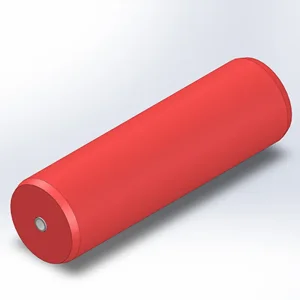
Barcelona Heavy Debris & Security Floating Barrier System
Explore Technical Specs
Barcelona Commercial Harbor Polyethylene Mooring Buoy
Explore Technical Specs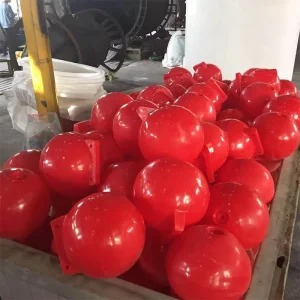
Barcelona Rotomolded PE Float Ball for Marina Utility
Explore Technical Specs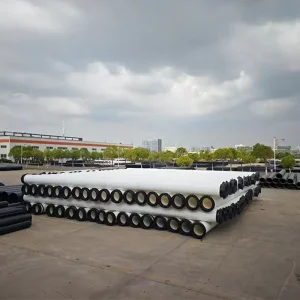
Barcelona Dredging HDPE Pipeline for Sand Bypassing Lines
Explore Technical SpecsGlobal Manufacturing Authority · Juhua Flotation Engineering
Backing Mediterranean marine contractors with over 20 years of rotational molding excellence, 100+ skilled personnel, and supply experience extending across 80+ nations. From individual IALA Region A fairway buoys to complete multi-kilometer port perimeter floating barriers, every unit is engineered to perform reliably through the most demanding oceanic conditions.